Every year, it’s estimated that around 25% of a B2B email list becomes obsolete. Job changes, account closures, abandoned domains – your B2B data silently decays. And when your bounce rate exceeds 2%, Gmail and Outlook spam filters start to give you the stink eye.
This is where email validation tools. Among them, ZeroBounce has established itself as a benchmark, particularly among key accounts. But please note: we’re not talking about a simple address checker here. ZeroBounce is a complete deliverability suite that goes far beyond list cleansing.
In this article, we break down the tool: features, pricing, strengths, limitations, and above all, we tell you who it’s really made for. Because spoiler: ZeroBounce isn’t for everyone.
Sommaire
Our review of ZeroBounce in brief
| Perimeter | Score | Our opinion |
|---|---|---|
| Overall rating | 4,1 | ZeroBounce is a comprehensive suite for deliverability and security. Precision is excellent, advanced tools (warmup, blacklist monitoring, DMARC) make all the difference, and support is beyond reproach. On the other hand, the price positioning is clearly premium and can only be justified if you really use the whole suite. |
| Validation accuracy | 4,5 | 99.6% accuracy claimed and globally confirmed by user feedback. The 9 result categories (valid, invalid, catch-all, spam trap, disposable, etc.) provide a detailed reading of the lists. AI scoring on catch-alls enables us to recover a significant proportion of exploitable B2B emails. |
| Deliverability suite | 4,3 | Email validation, automatic warmup, blacklist monitoring (200+), inbox placement tests and DMARC tracking. ZeroBounce goes far beyond a simple email verifier. That’s what sets it apart from more basic solutions. |
| Quality-price ratio | 3,2 | From $20 for 2,000 credits (about $0.010 per email) and $99/month for the ZeroBounce ONE offer. We’re more expensive than the competition. The price is justified if you use the full suite, otherwise there are more cost-effective alternatives. |
| Safety & compliance | 4,8 | SOC 2 Type II, ISO 27001, HIPAA, RGPD compliance and advanced encryption: in fact, very few competitors boast this level of certification. This is a strong argument for large accounts and regulated sectors. |
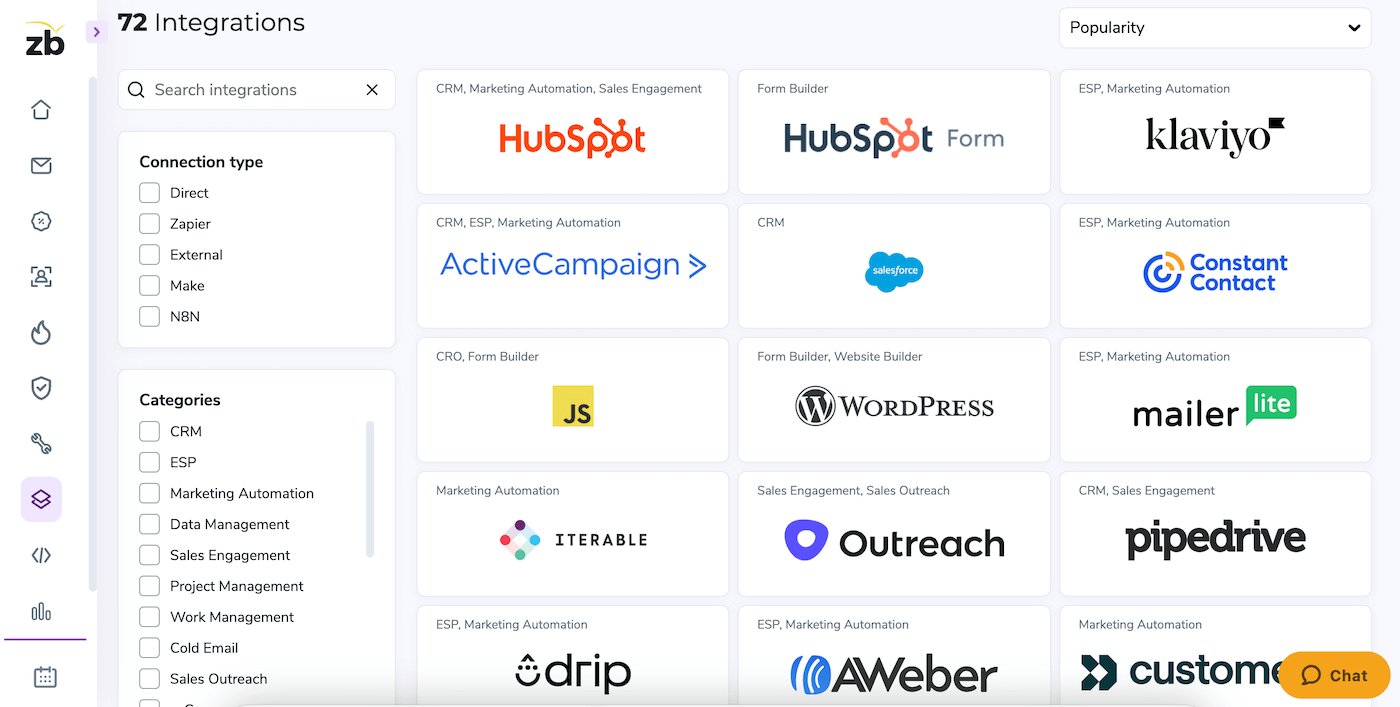
| Integrations & APIs | 4,0 | Over 70 native integrations (Salesforce, HubSpot, Mailchimp, Zapier) and a well-documented REST API with SDKs. Non-expiring credits are a real advantage, especially for irregular use. |
| Customer support | 4,5 | 24/7 support with live chat and fast responses. This is one of the points most often praised in customer reviews. In a field where a blockage can bring an entire campaign to a halt, this is a real asset. |
ZeroBounce offers 100 free credits per month for business accounts. It’s the perfect way to find out what ZeroBounce is all about.
What exactly is ZeroBounce?
ZeroBounce is an American email validation platform founded with a clear ambition: to secure corporate email communications.
And growth has followed, to say the least. The company has ranked for several consecutive years in the Inc. 5000 of fastest-growing U.S. companies – all the way up to 40th place nationally in 2020.
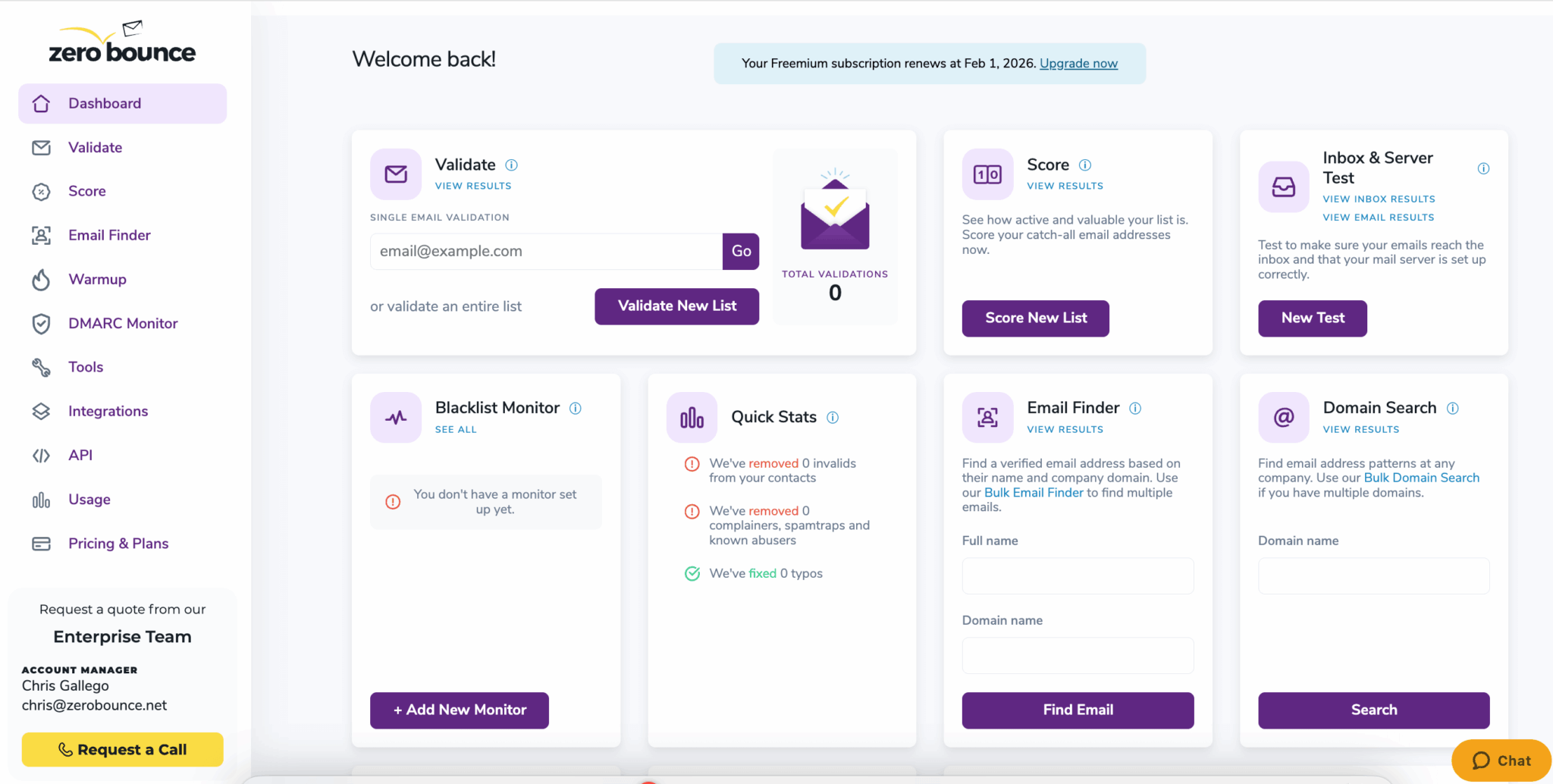
Today, ZeroBounce boasts over 185,000 customers, including names such as Amazon, Netflix, Disney, LinkedIn and Sephora. More than 13 billion emails validated to date. We’re clearly dealing with an established player, not a startup still seeking its market.
The central promise: 99.6% accuracy in email validation. In a market where the average fluctuates between 95% and 97%, these few points of difference count. For a company sending 1 million emails a month, a 2% difference represents 20,000 potential bounces, more than enough to trigger an IP block.
But ZeroBounce is more than just a validator. It’s a complete deliverability suite that integrates validation, AI scoring, warmup, blacklist monitoring and inbox placement testing. …
All this with a level of security certifications (SOC 2 Type II, ISO 27001, HIPAA) rarely found among competitors. Clearly positioned for mid-market and key accounts.
ZeroBounce’s key features
Email validation: the heart of the reactor
ZeroBounce’s email validation is more than just a syntax check. The tool subjects each address to a multi-step process that interrogates the actual state of the mailbox – without ever sending a message (which would constitute spam).
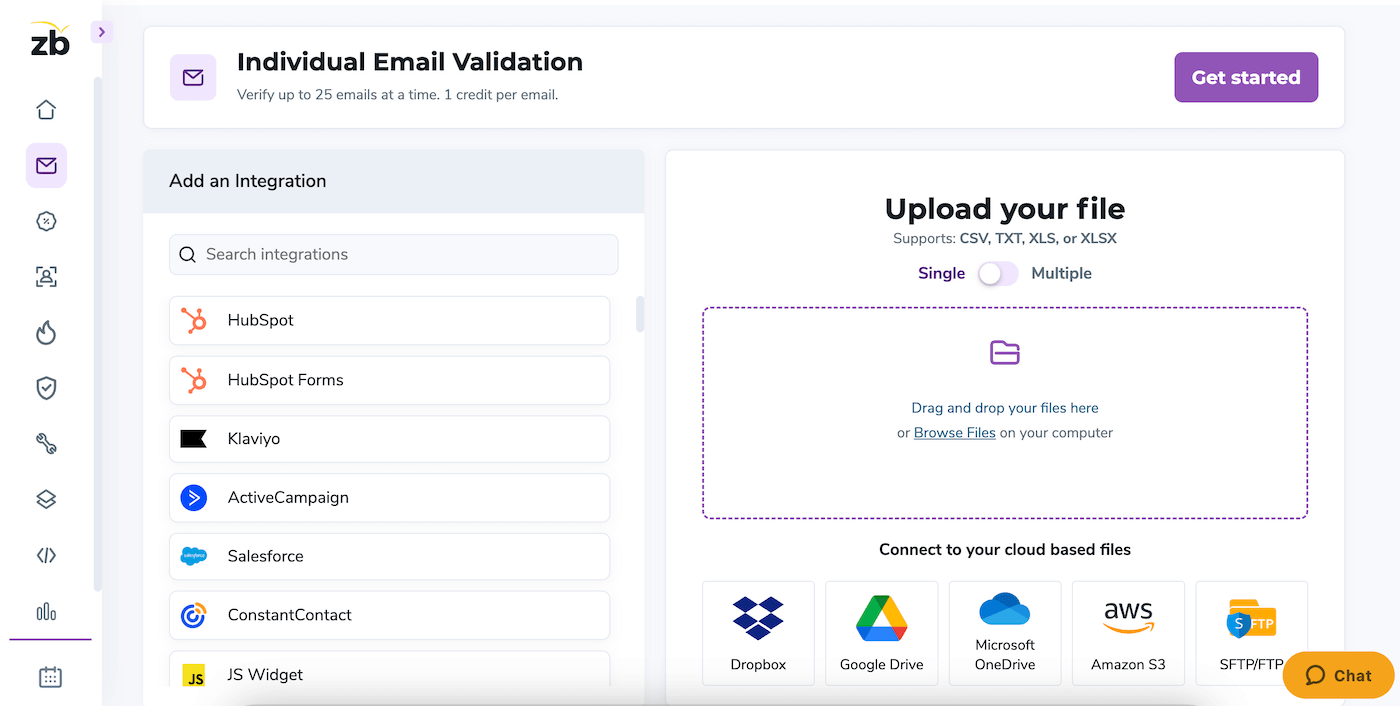
What sets ZeroBounce apart is the granularity of its results.
Rather than a simple “valid/invalid”, the tool categorizes emails into 9 distinct classes:
- Valid: confirmed addresses, ready for dispatch
- Invalides: addresses that don’t exist or no longer exist
- Catch-all: servers that accept everything (impossible to check directly)
- Spam traps: remove them immediately
- Abuse: addresses known to flag emails as spam
- Role-based: generic addresses (info@, support@, contact@)
- Disposables: temporary emails (Guerrillamail, 10minutemail…)
- Do-not-mail: high-risk addresses
- Unknown : impossible to determine (not billed by ZeroBounce)
This granularity enables finer decisions to be made. Role-based addresses, for example, have a high bounce rate, but can be retained for certain targeted campaigns. Disposables, on the other hand, should be systematically deleted.
Performance: 100,000 emails processed in 45 minutes in bulk, around 3 seconds per address via the API. Speeds compatible with real-time use on registration forms.
ZeroBounce offers 100 free credits per month for business accounts. It’s the perfect way to find out what ZeroBounce is all about.
AI scoring for catch-all: the real differentiator
Catch-all servers are a headache for all validators. These servers accept all e-mails sent to their domain, whether they exist or not. As a result, it’s impossible to confirm the actual existence of a specific address using conventional methods.
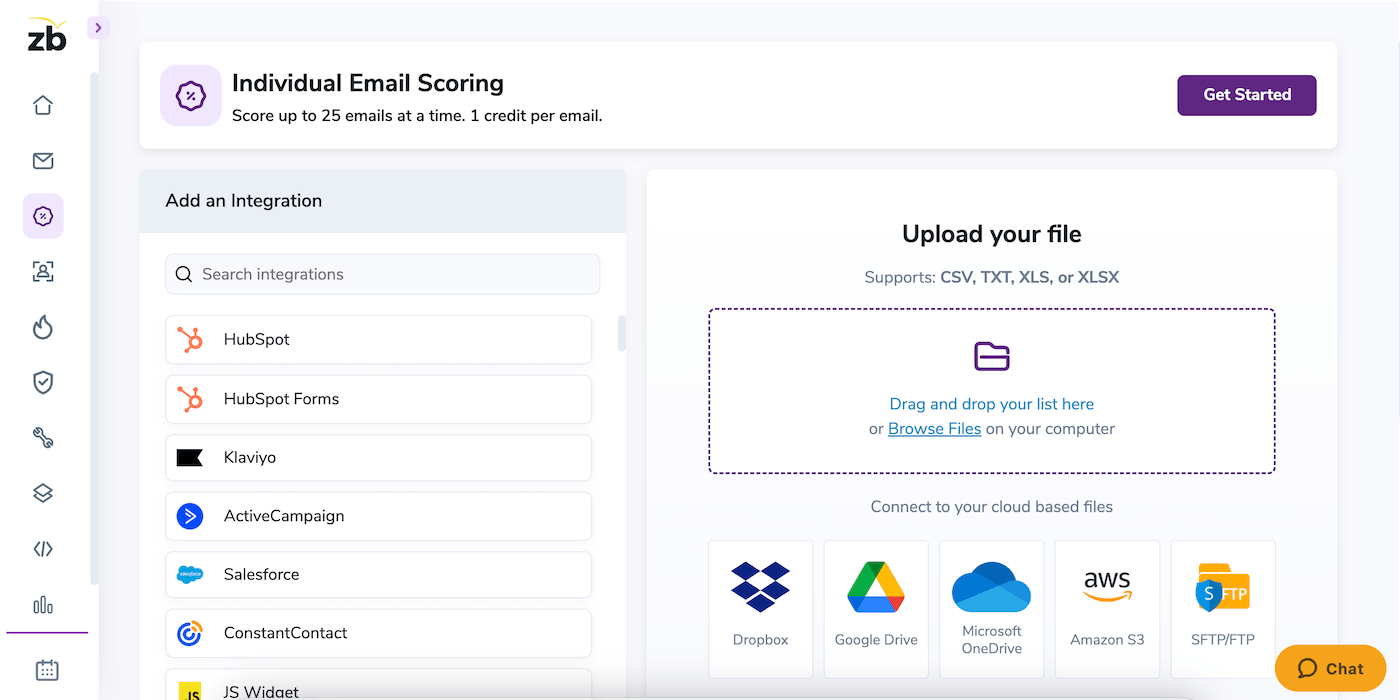
ZeroBounce has developed an AI scoring tool to overcome this problem. The tool cross-references billions of behavioral signals (opening history, web presence, metadata) to assign a probability score from 0 to 10 :
- 0-2: low quality, high risk of bounce or inactivity
- 3-8: average quality, treat with caution
- 9-10: high quality, high probability of an active user
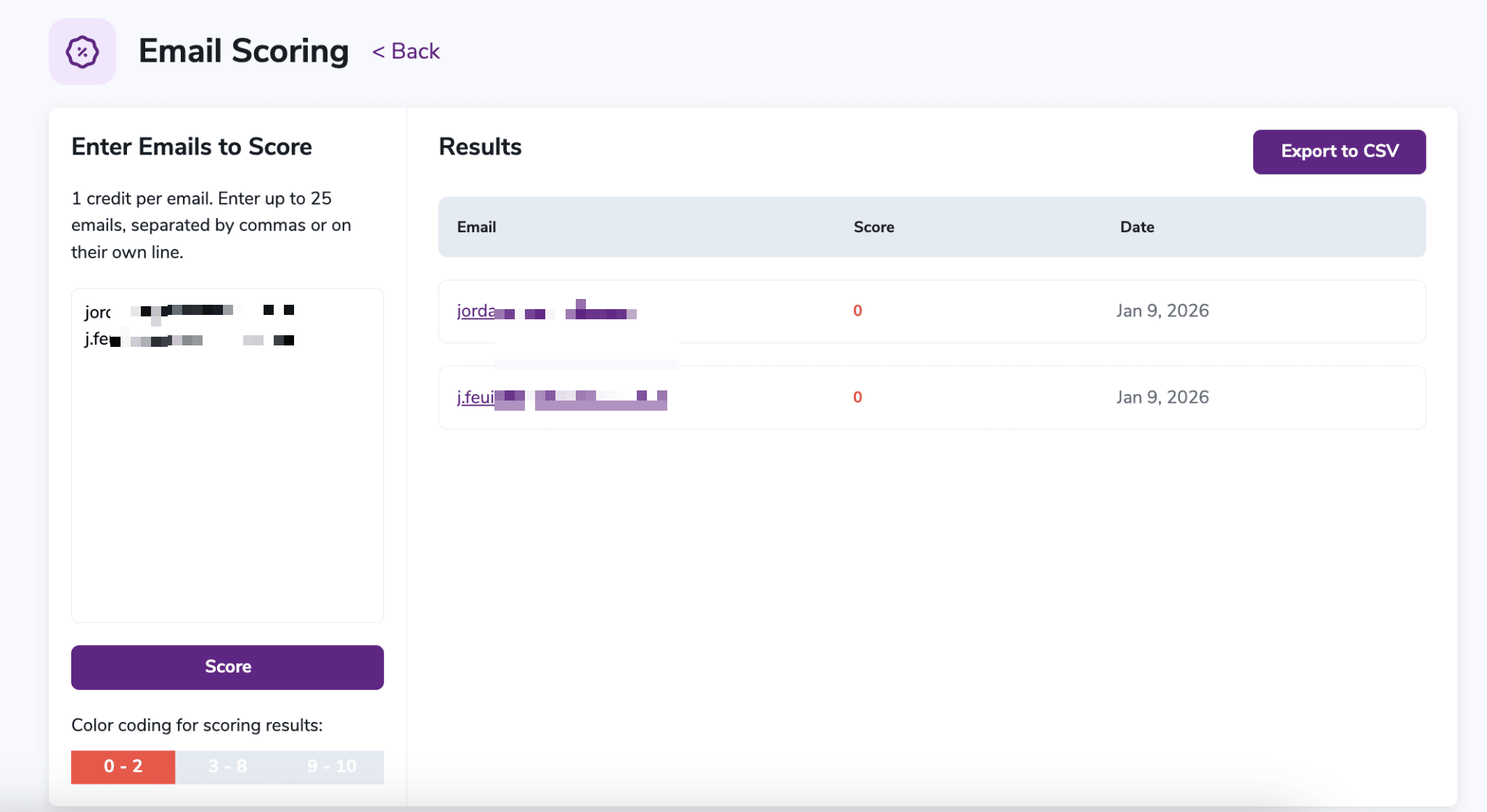
In concrete terms, this feature can “save” 10 to 30% of B2B lists that would otherwise be discarded as a precautionary measure. On a list of 100,000 contacts with 20% catch-all, that’s potentially 6,000 to 8,000 leads recovered.
Email Warmup: for new domains
When you launch a new domain or a new sending IP, email providers (Gmail, Outlook) look at you with suspicion. Your first mailings are likely to land directly in the spam folder.
ZeroBounce’s Email Warmup automates the “preparation” process: the platform simulates natural engagement behavior (opens, clicks, replies) from a network of real mailboxes. The aim is to gradually build up your reputation as a sender.
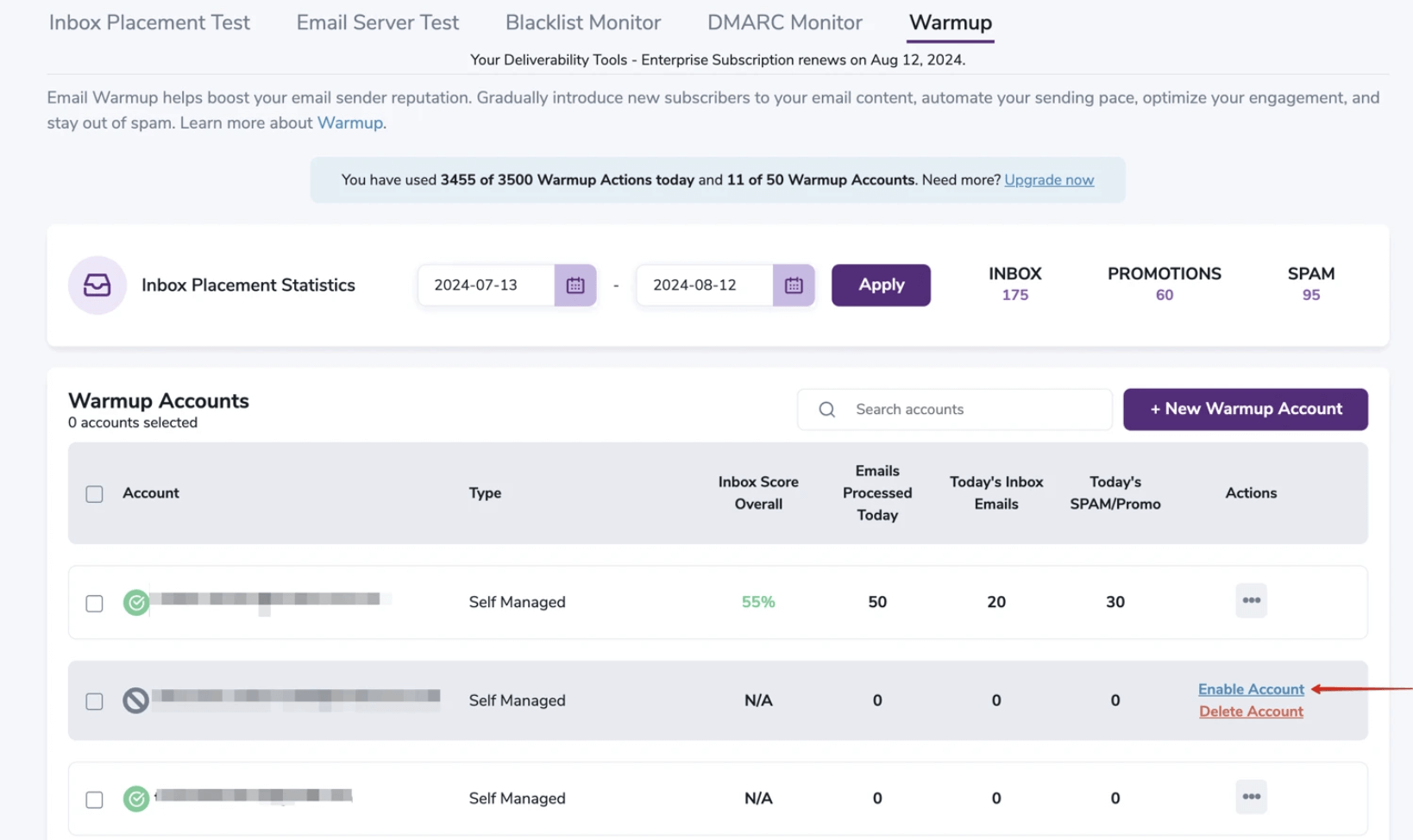
The dashboard tracks your inbox placement rate in real time (inbox vs. spam vs. promotions) and checks the alignment of your authentication protocols (SPF, DKIM, DMARC).
Deliverability tools: blacklist monitoring, inbox test, DMARC
This is where ZeroBounce differs from “basic” validators.
The platform includes a complete suite of tools for monitoring and optimizing your deliverability:
- Blacklist Monitoring: real-time monitoring of over 200 blacklists. If your IP or domain is listed on an RBL (Spamhaus, etc.), you are alerted immediately. Scans are performed every 24 hours (8 hours for ZeroBounce ONE subscribers).
- Inbox Placement Test: before sending a campaign to 100,000 recipients, you can test the actual placement of your email with over 20 providers (Gmail, Outlook, Yahoo, iCloud…). The report shows whether you land in inbox, promotions or spam.
- DMARC Monitor: with new requirements from Gmail and Yahoo in 2024, the DMARC protocol has become mandatory for volume senders. ZeroBounce integrates a monitoring tool that visualizes who is sending emails on behalf of your domain, useful for detecting spoofing attempts.
- Email Server Test: technical audit of your sending infrastructure (SPF, DKIM, reverse DNS, TLS configuration). A diagnostic tool for technical teams.
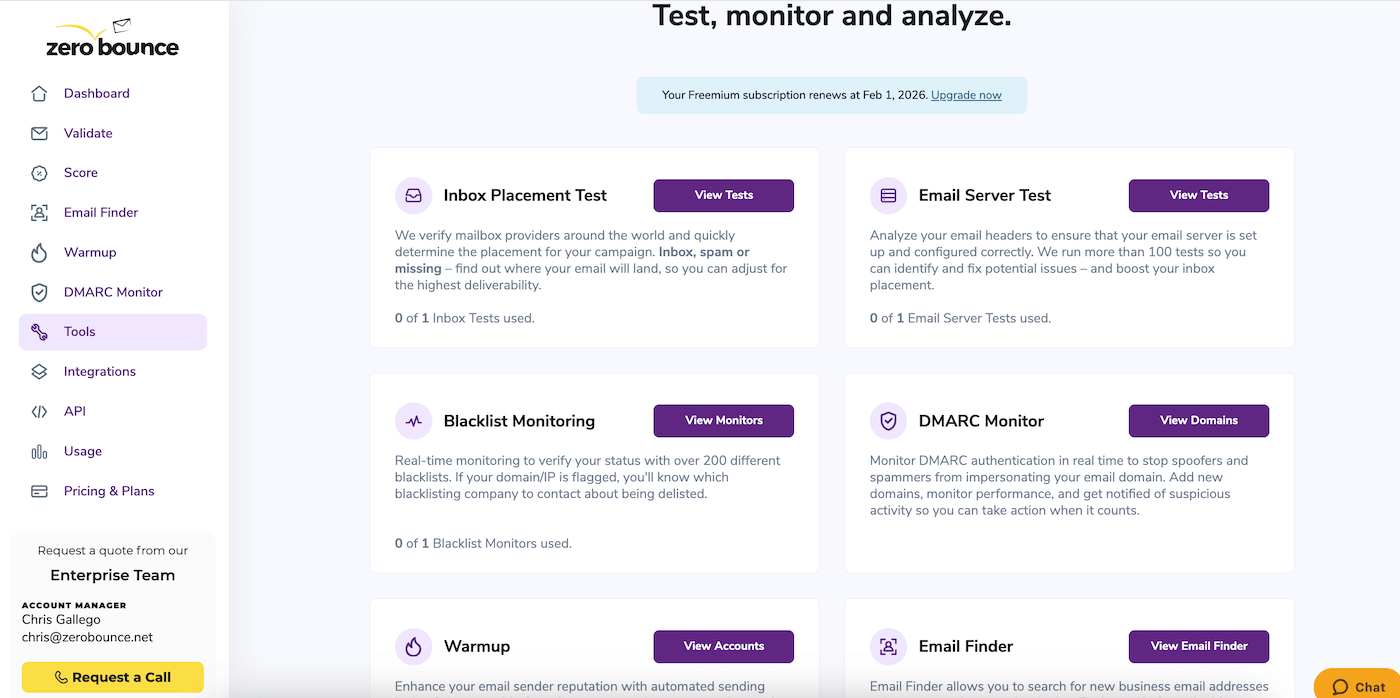
The deliverability suite (warmup, blacklist monitoring, inbox test) is actually ZeroBounce’s real differentiator. If all you need is pure validation, cheaper alternatives will do the trick. But if you’re managing a marketing team’s sending reputation, this integrated suite means you don’t have to juggle 4 different tools.
Email Finder: a complement, not the core business
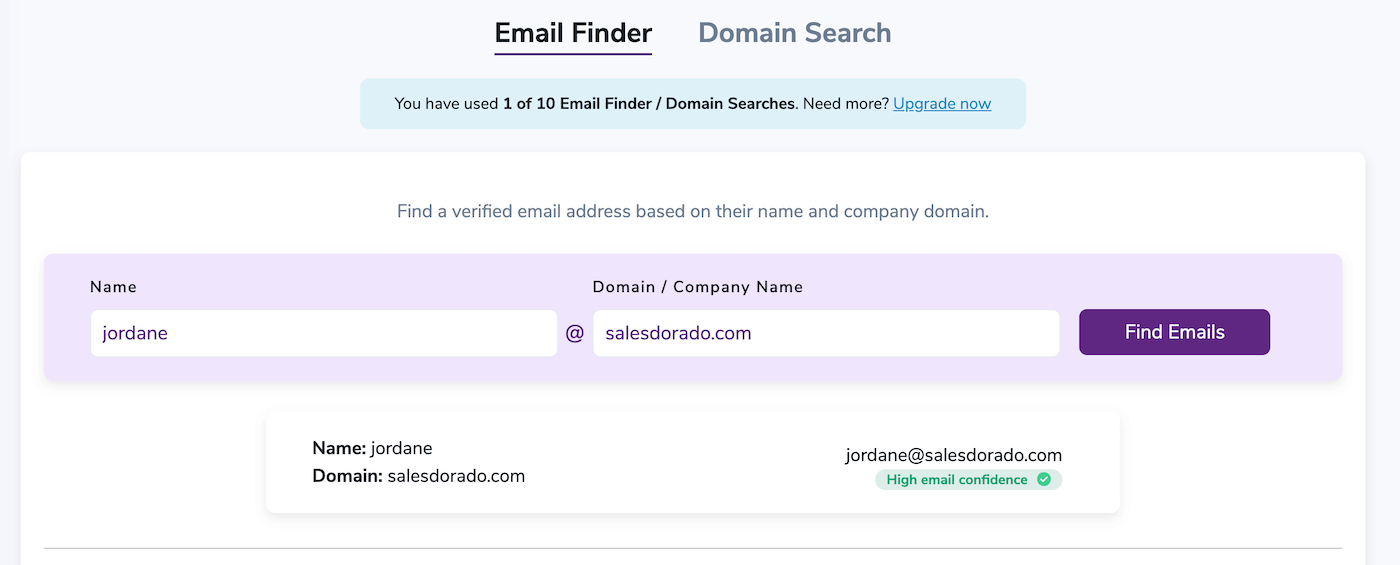
ZeroBounce also offers an Email Finder that allows you to discover email addresses by name and domain. Each search consumes 20 credits and returns a confidence score (HIGH, MEDIUM, LOW).
Let’s be clear: this is not ZeroBounce’s strong point. If your primary need is B2B email discovery, tools like Hunter, Kaspr or Apollo are better suited and less expensive for this specific purpose. ZeroBounce’s Email Finder is a complement, not an alternative.
ZeroBounce offers 100 free credits per month for business accounts. It’s the perfect way to find out what ZeroBounce is all about.
ZeroBounce prices: how much does it cost?
ZeroBounce offers a hybrid model: pay-as-you-go or monthly subscription. Here are the details.
Pay-as-you-go rates (credits)
The principle: 1 credit = 1 validated email. Credits are degressive according to volume:
| Volume | Price | Cost per email |
| 2,000 credits | 20 $ | 0,010 $ |
| 10,000 credits | 80 $ | 0,008 $ |
| 50,000 credits | 375 $ | 0,007 $ |
| 100,000 credits | 425 $ | 0,004 $ |
| 500,000 credits | 1 800 $ | 0,004 $ |
| 1,000,000+ credits | 2 750 $ | 0,003 $ |
Key point: credits never expire. This is a significant competitive advantage over tools that require monthly use. You can buy in bulk to benefit from discounts and use over several years.
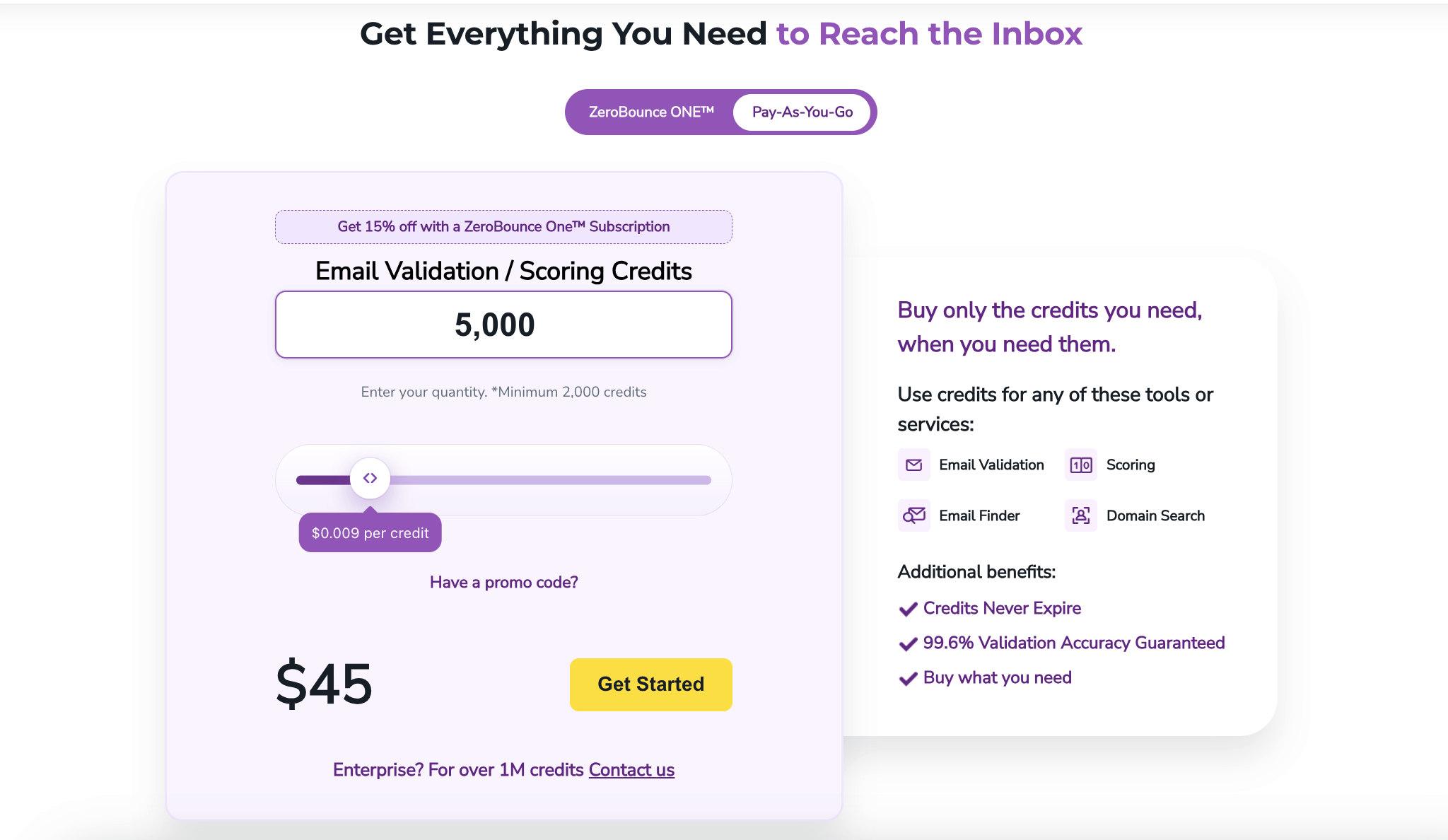
More good news: “Unknown” results (impossible to determine) are not billed. If ZeroBounce can’t make a decision, the credit is returned. Duplicates are also detected and deleted free of charge before validation.
ZeroBounce ONE subscription
For teams with recurring needs, the ZeroBounce ONE subscription starts at $99/month and includes :
- 25,000 monthly credits (carryover)
- Full access to deliverability tools (Blacklist Monitor, Inbox Test, Warmup, etc.)
- Blacklist scans every 8h (vs 24h as standard)
- Priority support
It’s easy to calculate: 25,000 Pay-as-you-go credits cost around $175. At $99/month with access to the full suite, the subscription pays for itself as soon as you start using the deliverability tools on a regular basis.
Free version
ZeroBounce offers 100 free credits per month for accounts with a professional domain. This is enough to test the tool, not for regular use.
At $0.010/email at entry-level, ZeroBounce is more expensive than most of its competitors. This difference is justified if you really use the full suite (AI scoring, warmup, blacklist monitoring). For pure validation, look first at the less expensive alternatives.
ZeroBounce offers 100 free credits per month for business accounts. It’s the perfect way to find out what ZeroBounce is all about.
What we like (and don’t like)
- High precision, confirmed by users: the claimed 99.6% translates into concrete results. In public reviews, users report a drop in bounce rates from 10%+ to less than 1% after cleaning.
- A truly comprehensive suite: unlike “basic” validators, ZeroBounce centralizes validation, scoring, warmup, monitoring and deliverability testing. Fewer tools to juggle, fewer integrations to maintain.
- Concrete security: SOC 2 Type II, ISO 27001, HIPAA, RGPD compliance, military-grade encryption. This is the level of certification expected by CIOs of major accounts.
- Highly responsive 24/7 customer support: live chat available at all times, answers within minutes, technically competent agents. In a field where a blockage can stop a campaign, that counts for something.
- 70+ native integrations: Salesforce, HubSpot, Mailchimp, Klaviyo, Brevo, Zapier. ZeroBounce connects to virtually the entire modern marketing stack.
- Non-expiring loans: a detail that makes all the difference for companies with irregular needs.
ZeroBounce offers 100 free credits per month for business accounts. It’s the perfect way to find out what ZeroBounce is all about.
- Assumed premium price: at $0.010/email, ZeroBounce costs more overall than its competitors. For SMEs on a tight budget or with one-off needs, the bill can be hard to justify.
- Complexity for simple needs: if you just want to validate a list of 5,000 emails once a year, ZeroBounce is probably overkill.
- Catch-all scoring sometimes inconsistent: some users report variable scores over time for the same addresses. The feature remains useful, but requires careful interpretation.
- Less relevant for the French market: ZeroBounce is American, with a database and behavioral signals focused on the US market. For B2B prospecting in France, tools like Dropcontact (French, RGPD-native) are often more suitable.
Our verdict: who is ZeroBounce for?
ZeroBounce is for you if :
- You manage lists of 50,000+ contacts and deliverability has a direct impact on your ROI.
- You need a complete suite (validation + warmup + monitoring), not just a validator
- You work in a regulated sector (finance, healthcare) where safety certifications are a prerequisite
- You are an agency managing the lists of several customers
- Your stack is already on HubSpot, Salesforce or Klaviyo (native integrations make deployment easier)
Skip it if :
- You’re on a tight budget (cheaper solutions are available)
- You’re targeting the French market: Dropcontact is more suitable (French, RGPD-native, enrichment included)
- Looking for B2B email discovery: Hunter or Kaspr are more relevant
- You just want to punctually validate a small list
ZeroBounce is the obvious choice for organizations that regard email as a critical asset requiring constant protection, maintenance and optimization. For others, less expensive alternatives will do just fine.