



- Templates approved upfront by lawyers limit badly inserted clauses and multiple versions.
- Recurring contracts are the best fit for automation: sales and purchase, HR, service agreements, NDAs.
- A useful tool covers the whole cycle: templates, e-signature, audit trail, deadline reminders and integration with the CRM or ERP.
- Before choosing a solution, map your contract types, volumes, average turnaround times and bottlenecks.
Contract management sits at the heart of business dealings, yet it remains a time-consuming and complex activity. Between drafting, approval and signature, companies have to handle a heavy flow of documents that ties up resources and creates room for error.
Automating contract management changes that. By digitizing and systematizing each stage of the contract cycle, organizations streamline their processes, secure their data and speed up turnaround times. This article explains why and how automating contract management can change the way sales, legal and administrative teams work.
What is contract management automation?
Automation means relying on technology to cut down manual tasks in contract management. In practice, drafting, approval, signature and tracking are centralized in a digital environment.
Instead of handling Word or PDF files sent by email, each step is structured inside a tool: standardized templates, automated approvals, e-signature and secure archiving. The full lifecycle of a contract is managed from a single interface.
Why automate contract management?
In a business environment where speed and reliability have become decisive levers, traditional contract management quickly hits its limits. Multiple versions, endless email threads, approval delays. All of these slow down deals and weaken relationships with customers and partners alike.
Fewer human errors and legal risks
Manual management brings the risk of incorrect data entry, badly inserted clauses or several versions circulating in parallel. With an automated system, templates are standardized and approved upfront by the legal team, which limits discrepancies and strengthens compliance.
Time savings and operational efficiency
Automation removes many repetitive steps: copy-pasting, printing, mailing or manual reminders. Signature times shrink and teams can focus on higher-value work, such as negotiation or managing customer relationships.
Better collaboration between teams
A shared digital environment smooths exchanges between departments. Sales, legal, procurement and HR work on a single approved version, which cuts back-and-forth and speeds up decisions.
More visibility on the contract lifecycle
A centralized tool makes precise tracking possible. You know where each contract stands, which clauses were changed, which signatures are still pending. This visibility gives managers better control over progress and reduces bottlenecks.
Which types of contracts can be automated?
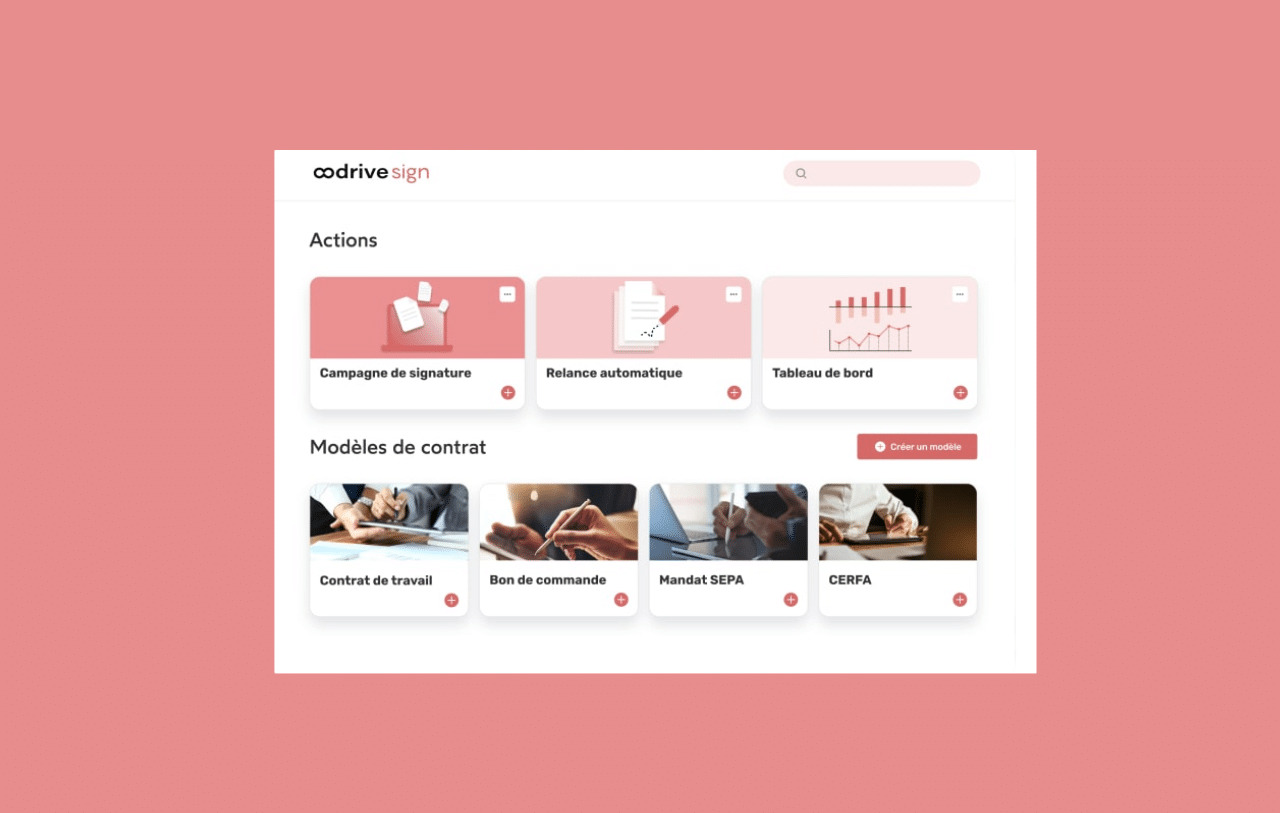
Not all contracts have the same complexity or the same processing volume. Some need heavy customization and close legal follow-up, others rely on recurring templates that lend themselves perfectly to automation. Identifying these contract categories is a decisive step to know where to focus your efforts and get measurable gains quickly:
- Sales and purchase contracts: Commercial contracts, whether for selling products or buying from suppliers, are particularly well suited to automation. Standardizing them shortens closing times and secures transactions.
- Employment and HR contracts: HR handles a large volume of contracts: hires, amendments, mutual termination agreements. Predefined templates speed up creation and limit errors.
- Service agreements: External providers often need contracts that frame duration, scope and pay. Automation makes them easier to create and track, especially at renewal time.
- Non-disclosure agreements (NDAs): NDAs are short but very frequent, especially during commercial negotiations. Automating their generation and signature smooths this step without slowing down discussions.
The features of an automation tool
Setting up a contract management solution is not just about digitizing the signature. A genuinely useful tool must cover the whole contract lifecycle: creation, approval, tracking and archiving. To get there, some features are a must if you want speed, security and transparency.
- Preconfigured contract templates: Templates approved by lawyers let you quickly create compliant documents, without starting from scratch every time.
- E-signature and authentication: E-signature secures commitments and speeds up the process. It is legally recognized and is a better replacement for handwritten signatures.
- Version tracking and audit trail: Every change is recorded, which avoids confusion between different versions of the same contract and provides full traceability.
- Automated notifications and reminders: Tools can send alerts about upcoming deadlines, such as a contract renewal or a termination date. This prevents oversights and unexpected terminations.
- Integration with business tools (CRM, ERP, etc.): Connecting contract management to the software you already use (CRM, ERP, document management) keeps data consistent and limits manual re-entry.

Concrete steps to set up contract automation
Moving from manual management to an automated system does not happen overnight. It is a structural project that requires analyzing current practices, choosing the right technology and supporting teams as they adopt new tools. Following a clear approach secures the transition and delivers the benefits of automation quickly.
- Analyze needs and existing processes: Before deploying a solution, map current practices: types of contracts handled, volumes, average turnaround times, bottlenecks.
- Choose the right technology: The market offers many specialized platforms. The choice should depend on the company’s goals, its budget and compatibility with its existing tools.
- Create custom contract templates: Lawyers define standard templates that serve as a base. These templates are then built into the tool and made available to all teams.
- Train teams and manage the change: Users need support to adopt the solution: training, documentation and help desk.
- Track performance and keep improving: Once the solution is live, regularly analyze turnaround times, volumes processed and team feedback to adjust processes.
How an API can simplify the process: the Oodrive example
Integrating an e-signature API into a contract management system makes things even simpler. With Oodrive’s solution, teams send documents for signature without leaving their work environment.
This cuts turnaround times, limits errors caused by manual handling and strengthens traceability. Every action is recorded and timestamped, which constitutes legal proof in the event of a dispute.
The API integrates with existing solutions (CRM, ERP, document management) and centralizes data in a single space. Information is updated in real time and security is ensured by advanced encryption and strong authentication.
The impact of automation on legal and sales teams
Automating contract management frees lawyers from repetitive tasks (initial drafting, version tracking, follow-ups) so they can focus on clause strategy and supporting negotiations, while sales teams shorten their signature times, free up time for customer relationships and move faster from quote to contract. By working in a single shared space (approved templates, approval workflows, audit trail), exchanges between legal, sales, procurement and finance run more smoothly, with fewer email back-and-forths, fewer misunderstandings about the « latest version » and faster approvals, which limits administrative bottlenecks and better aligns everyone’s priorities.
Trends and developments to watch
Three dynamics are emerging: generative AI, which produces draft contracts from simple instructions and speeds up the scoping phase; blockchain, used as a tamper-proof register of signatures and versions to strengthen traceability and authenticity; and the move toward a fully digital contract cycle, from creation to archiving, where workflows, signatures and storage are integrated, with human intervention refocused on negotiation and handling exceptions.
The questions we get over and over.
What is contract management automation?
It is the use of technology to reduce manual tasks in contract management: drafting, approval, signature and tracking are centralized in a digital environment, instead of Word or PDF files sent by email.
Which contracts can be automated?
Sales and purchase contracts, employment and HR contracts (hires, amendments, mutual termination agreements), service agreements and non-disclosure agreements, which are short but very frequent during commercial negotiations.
What features should you expect from a contract management tool?
Preconfigured contract templates, e-signature with authentication, version tracking and an audit trail, notifications about deadlines and integration with business tools such as the CRM or ERP.
How do you set up contract automation?
In five steps: analyze needs and existing processes, choose the right solution, create contract templates with the lawyers, train teams, then track turnaround times and volumes to adjust processes.



What the community says.