



- Identify your needs before consulting anyone: objectives, processes, existing tools, technical, human and budget constraints.
- Check the certifications, but also the number of certified consultants who will actually work on your project.
- Call client references directly: that is where meeting deadlines and the quality of support come to light.
- An abnormally low quote or a global flat fee with no breakdown signals change requests mid-project.
- Choosing on price alone, neglecting the post-project phase or internal steering are among the most common mistakes.
Selecting the right CRM integrator for your company can radically transform your customer management and push your business to new heights. With so many players on the market, how do you pick the right one? Here are the key points for a successful project:
- The integrator’s role goes well beyond installing software: it transforms your business processes and makes sure the new tool is actually adopted
- The choice of an experienced partner determines the success of your project: 70% of CRM failures come from poor integration
- The essential criteria go beyond price: technical expertise and knowledge of the market are decisive
- A precise CRM requirements document remains your best weapon: it lets you get the most out of the proposals
This complete guide walks you through every stage of the process, from the first step of identifying your needs to post-integration follow-up and maintenance.
Why work with a CRM integrator?
Integrating CRM software is much more than a simple IT project. It is a genuine digital transformation that touches your entire organization and needs an expert to make it succeed.
What a CRM project means for a company
A CRM project deeply transforms your approach to customer management. Setting up a centralized database transforms your workflows and improves the interaction between your teams. This has a direct impact on your results. A successful implementation increases productivity by 29% and customer satisfaction by 34% on average.
Within your organization, the CRM redefines the way your teams manage customer relationships. It unifies your view of customer relationship management across all departments, creating a personalized experience that becomes your main competitive advantage against today’s market challenges.
What an integrator brings compared with an in-house solution
The specialist integrator brings in-depth knowledge of the management software you have chosen, whether it is Microsoft Dynamics, HubSpot or Salesforce CRM. This expertise lets it offer a customization of the solution that fits your needs perfectly and optimize the software’s configuration around your specific processes.
Beyond the technical configuration, the agency offers a proven agile methodology. Its job is to structure your project into clear phases, from selecting the software to the final rollout. This approach considerably reduces the risks and ensures effective project management throughout the life cycle of your CRM.
The Masao exampleSome integrators have recognized experience, such as the French integrator Masao on Microsoft Dynamics 365, with more than 13 awards in 10 years
The risks behind choosing the wrong integrator
A bad choice can jeopardize your whole project, even one that is already defined. The consequences show up quickly: budget overruns, configuration problems, poorly adapted features. Worse, a badly executed migration compromises the integrity of your data and creates inconsistencies that are hard to resolve.
The long-term impact on your company is particularly worrying. A poorly integrated CRM limits your ability to evolve and locks you into a rigid environment. Without the possibility of getting the most out of your investment, the expected return turns into a financial sinkhole, preventing the best use of your resources.
Identifying your needs before choosing a CRM integrator
A successful project starts with an in-depth analysis that defines your expectations precisely. This crucial phase shapes the entire CRM rollout and directly influences your decision-making.
Defining your CRM objectives
Your objectives determine the type of software suite you need and guide the implementation plan. Are you looking to improve steering with real-time insights? Develop your marketing automation? Or optimize your customer relationship management? Each use case calls for specific features.
Involve all stakeholders to build a relationship of trust from the start. Sales reps, marketers and customer service have different expectations that need to be reconciled. This collaborative approach makes CRM adoption easier and ensures that every function finds its place in the new system.
Mapping your internal processes and existing tools
Analyzing your current processes is the foundation for a successful transformation. Examine every customer touchpoint, identify the main information flows and spot where the company can become more efficient. This mapping highlights the process optimization opportunities your future software will have to address.
List your entire current technology environment. For each application in place, note the interactions required and the data to be integrated. This overall view guides the expert in designing the architecture and helps anticipate the technical challenges of the integration.
Choosing between a standard or a custom CRM
Standard solutions offer a wealth of features covering most needs. Configuration usually lets you adapt the tool without custom development, which reduces the number of interventions required. This option is a perfect fit for companies whose processes follow market best practices.
Custom development becomes relevant when your way of working is a differentiating factor. If your unique approach creates value, specific development preserves that advantage. This route does, however, require more resources and a longer rollout time.
Assessing your technical, human and budget constraints
A self-assessment is necessary to make sure you are ready:
- The technical assessment examines your current infrastructure and its ability to support the new solution
- Analyze the digital culture of your teams: their maturity directly influences the team training strategy and the change management plan
- The budget covers much more than licenses. Plan for all the costs: initial consulting, configuration, training, maintenance
- Also anticipate the effect on productivity during the rollout phase
This complete view avoids nasty surprises and lets you negotiate suitable packages.
The criteria for selecting a good CRM integrator
Evaluating the integrator rests on several objective criteria. Each element plays a role in the quality of the partnership and directly influences the success of the project.
Business expertise and industry experience
The integrator’s experience in your industry makes the difference. A partner who understands your market grasps your challenges immediately and proposes suitable solutions. This knowledge translates into ready-made templates and an ability to respond precisely to your specific challenges.
Check this expertise by asking for concrete references. How many similar projects has the integrator carried out? For which companies? With what measurable results? These tangible examples validate the provider’s proven experience.
Certifications and partnerships with CRM vendors
Official certifications guarantee a level of competence verified by the vendor. A certified partner has an in-depth command of the technology and enjoys privileged access to technical support. This closeness to the vendor translates into faster response to complex problems.
Beyond the badge itself, check how many certified consultants will work on your project. A consulting firm can display certifications without having enough competent people. Make sure the dedicated team really has the expertise it claims.
Ability to support you over the long term
A CRM project is a long-term undertaking. Personalized support does not stop at go-live. Your integrator must show it can provide follow-up over the entire life cycle of your solution, including regular updates and functional changes.
Assess the stability of the partner company. Its reputation, financial health and team retention are reliable indicators. High turnover jeopardizes continuity of service and the build-up of knowledge about your specific environment.
Client references and case studies
Client references are tangible proof of competence. Ask for detailed use cases presenting the context, the challenges and the results achieved. The best case studies include precise metrics that confirm the impact of the work on the client’s business.
Contact these references directly to discuss their experience. These unfiltered testimonials reveal what the collaboration is really like: meeting deadlines, quality of support, ability to adapt. Gathering this information first-hand will inform your final decision.
Quality of listening and understanding of your needs
From the very first conversation, watch how the integrator approaches your project. Does it ask relevant questions? Does it pick up your business vocabulary? This capacity to listen and analyze is what separates real consulting from a mere technical service.
The quality of the relationship directly influences the success of the collaboration. You are going to work closely with this team, in confidence, for several months. Is the main contact available? Is communication smooth? These human aspects largely determine the success of your project.
Project methodology and change management
A structured methodology reassures and guides everyone involved. The integrator must present its method clearly, whether agile or traditional. Each phase must have precise deliverables that allow rigorous tracking of progress.
Change management goes beyond technical training. It covers communication, handling resistance and measuring adoption. A good integrator offers a detailed plan to guide each group of users toward successful adoption of the new system.
After-sales service and technical support
After-sales service reveals the real quality of a provider. Ask precisely about the terms: hotline, tickets, on-site intervention. The guaranteed response times and service levels must match your operational needs.
Evolutive maintenance keeps your CRM performing over time. Does the integrator offer packages that include changes and optimizations? How does it handle version upgrades? These services ensure that your investment keeps its value over time.
Comparing several CRM integrators
An objective comparison requires method and rigor. This phase lets you identify the best integrator among the candidates and secure your final choice.
Where to look for reliable integrators?
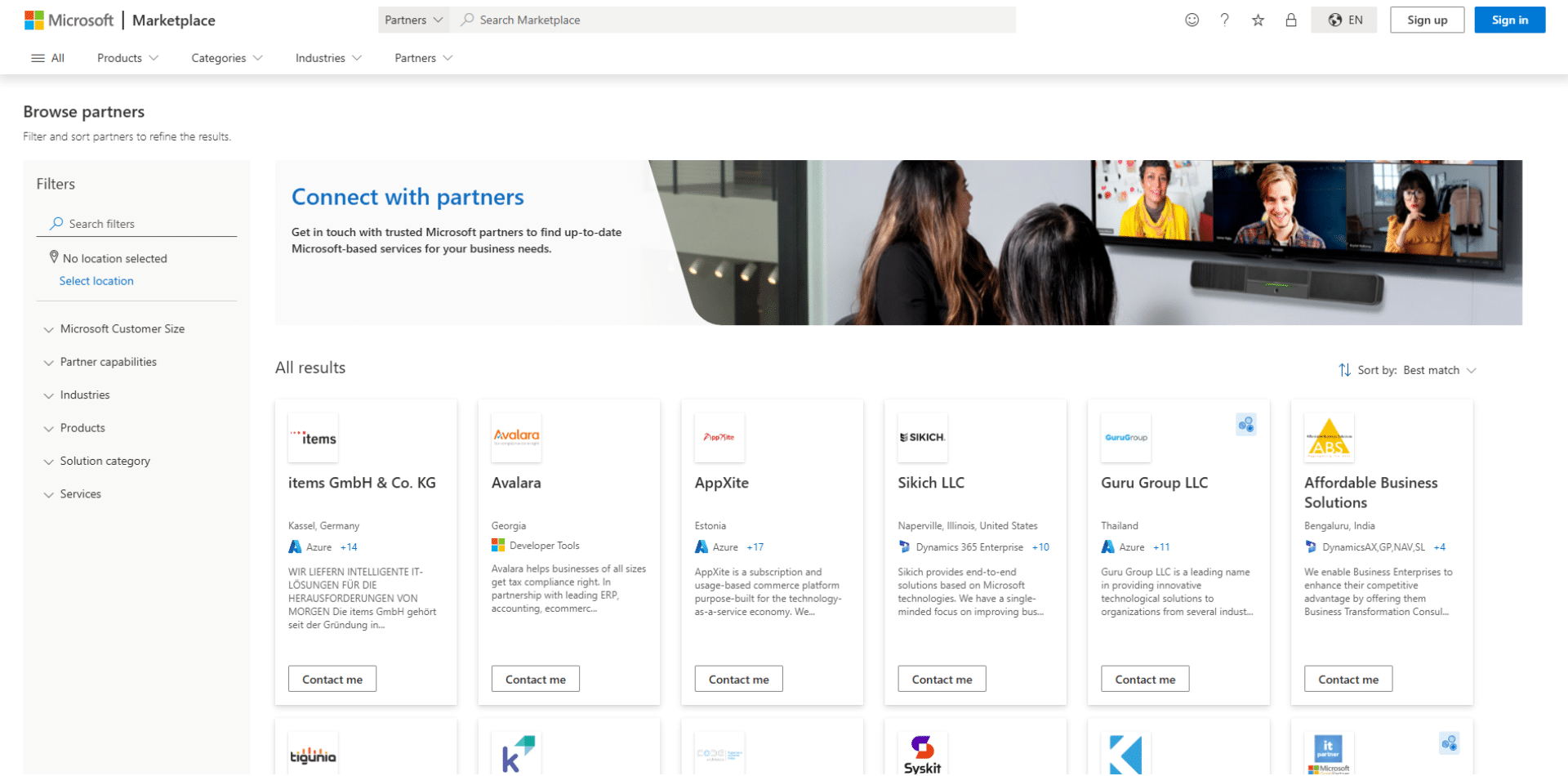
The vendors’ official directories are your starting point. These platforms list certified partners with their specializations. Add recommendations from your network: nothing beats direct feedback from a company that has carried out a similar project.
Specialist blogs and professional events also offer valuable insights into the players on the market. Attend webinars where you can talk directly with the experts and assess their approach.
How to read and compare commercial proposals?
Use an analysis grid to compare each proposal objectively. Check that every point in your requirements document is addressed and that the budget breakdown is transparent. The make-up of the project team deserves attention: who will be your main contact? Which profiles will be involved?
Pay particular attention to exclusions and conditions. An attractive quote can hide significant additional costs. The golden rule: demand full transparency on all services and the conditions under which they will be delivered.
Avoiding the traps of vague quotes
An abnormally low price often hides surprises. Be wary of global flat fees with no breakdown, which make it impossible to assess the services actually provided. Unrealistic estimates invariably turn into change requests in the middle of the project.
Watch out for unbalanced payment terms. A payment schedule tied to reaching precise milestones protects both parties and keeps motivation up throughout the project.
The importance of demos and POCs
Personalized demos reveal how well your needs are really understood. The integrator must show how the solution adapts concretely to your processes, not just present standard features.
The Proof of Concept tests feasibility on a limited scope. This approach lets you assess the provider’s way of working and validate the technical choices before the final commitment. It is an investment that considerably secures your project.
Key questions to ask a CRM integrator
The right questions let you assess each candidate objectively. Here are the essential questions to inform your choice.
- What is your deployment methodology? Ask for a detailed presentation of the proposed approach. How is each phase organized? What are the expected deliverables? A proven methodology shows the provider’s professionalism and experience.
- How do you handle training and change management? Training must be adapted to each user profile and use your real data. Beyond getting to grips with the tool, ask about the overall support plan: communication, handling resistance, measuring adoption.
- What are your timelines and contractual commitments? Demand a realistic, detailed schedule. Commitments should cover measurable results, not just resources. Clarify the conditions for changing the scope and any penalties.
- What project tracking tools do you offer? A collaborative project space makes tracking and communication easier. Check the frequency and format of the reporting on offer. These tools keep things transparent and help anticipate difficulties.
Common mistakes to avoid when choosing an integrator
Some classic mistakes regularly compromise promising projects. Identifying them helps you avoid them and improves your chances of success.
Basing your choice on price alone
A choice based on price alone often leads to failure. The initial savings quickly turn into extra costs: rework, insufficient training, failing support. Favor overall value for money.
Neglecting post-project support
The first months of use reveal many adjustment needs. Without adequate support, these requests go unanswered and adoption stalls. Plan the terms of long-term support from the start.
Underestimating internal steering needs
Internal steering takes significant resources. Appoint a dedicated project manager and put together a cross-functional team. This strong governance is what keeps the collaboration with the integrator running smoothly.
Choosing an integrator with no expertise in your industry
Industry expertise brings considerable value: immediate understanding of the challenges, ready-made processes, the right vocabulary. A generalist will waste precious time discovering the specifics of your business.
Post-integration support: a deciding criterion?
The real test begins after go-live. The quality of the support determines the lasting success of your CRM investment.
Application maintenance and support
Application maintenance ensures that everything runs smoothly day to day: fixes, user assistance, minor adjustments. Size this support correctly according to your real needs and how critical the tool is to your business.
Continuous improvement and functional changes
Your CRM must evolve with your company. A proactive integrator regularly proposes optimizations based on analysis of how the tool is used. This continuous improvement keeps your system performing and aligned with your business needs.
Measuring performance and ROI
Business indicators objectively confirm success: a better conversion rate, a shorter sales cycle, higher customer satisfaction. Regular analysis of these metrics guides changes and maximizes the return on investment.
Overview of CRM integrators in France
The French market offers a wide range of players to meet every need. Understanding how they position themselves makes your final selection easier.
Generalist vs specialist integrators
Generalists excel at complex projects that require integrating multiple systems. Specialists bring in-depth expertise on their solution of choice. Your context determines the most relevant option.
A closer look at certified integrators
Each ecosystem (Salesforce, Microsoft, HubSpot) has quality partners. The highest partnership levels (Summit at Salesforce, Solutions Partner at Microsoft, Platinum, Diamond or Elite at HubSpot) guarantee a verified level of expertise and privileged access to the vendor’s support.
Small local agencies vs large consulting firms
Local agencies offer proximity and agility, ideal for SMBs looking for personalized support. Large firms bring proven methodologies and significant resources for large-scale projects. Fit with your needs matters more than the size of the provider.
To conclude, choosing your CRM integrator takes method and thought. By following this guide, you maximize your chances of finding the ideal partner for a successful digital transformation. Do not hesitate to contact several providers, ask all your questions and take the time this crucial decision deserves, as it will have a lasting impact on your company.
The questions we get over and over.
Why use a CRM integrator rather than deploying in-house?
The specialist integrator knows the chosen software in depth (Microsoft Dynamics, HubSpot, Salesforce) and adapts its configuration to your processes. It also brings a methodology that breaks the project into clear phases, from selecting the software to the rollout, which reduces the risks.
What criteria should you use to select a CRM integrator?
Business expertise and experience in your industry, certifications and partnerships with vendors, the ability to support you over the long term, client references, the quality of listening, the project and change management methodology, and after-sales service.
Where can you find reliable CRM integrators?
In the vendors’ official directories, which list certified partners and their specializations, then through your network. Specialist blogs, professional events and webinars are also a way to talk with the experts.
What questions should you ask a CRM integrator?
What its deployment methodology is, how it handles training and change management, what its timelines and contractual commitments are, and what project tracking tools it offers.
What is a POC for when choosing an integrator?
The Proof of Concept tests feasibility on a limited scope. It lets you assess the provider’s way of working and validate the technical choices before the final commitment.



What the community says.