Choosing a CRM for the industry has nothing to do with choosing a CRM for a service company or SaaS startup. That’s what this article is all about.
Here, we focus exclusively on CRMs that really know how to handle industrial reality.
We have selected 5 of them:
- Microsoft Dynamics 365
- Salesforce
- SAP
- Divalto
- HubSpot.
Before presenting them to you, we’ll look at what fundamentally distinguishes an industrial CRM from a generic CRM, and which functionalities are really indispensable when managing an industrial activity. The choice of integrator (a decisive factor!) will be discussed at the end of the article.
For French industrial companies in 2026, our recommendation is Microsoft Dynamics 365 as a CRM and Masao as a specialist integrator. If you want to save time, you can talk to their teams right now. Otherwise, the rest of this article explains why.
Sommaire
Why an industrial CRM is not a CRM like any other
Before comparing tools, we need to understand what makes industrial sales structurally different from SaaS or service sales.
Here are the five specific features that should guide your choice.
#1 Long sales cycles (6 to 18 months) require perfect sales memory
In the industry, the “one shot” is the exception. The norm is a sales cycle of six to eighteen months.with several clearly identified phases:
- Contact us.
- Technical qualification.
- Consultation.
- Prototype or sample.
- Purchase validation.
- Contract negotiation.
- Signature.
Between the first meeting and the signature, your sales representative will interact thirty to fifty times with the customer, potentially with several contacts.
An industrial CRM must be the reliable memory of all this history, of every call, every email, every technical document sent, every sales concession, every partial validation. A generic CRM designed for short-cycle sales (typically two to four weeks) is simply not designed to track this depth of information.
Fields are missing, workflows don’t adapt and, after three months, your sales rep finds himself maintaining a parallel Excel spreadsheet “to get his bearings”.The CRM project is guaranteed to fail.
#2 Mapping the purchasing committee: who really decides?
In most B2B industrial sales, the purchasing decision involves between 5 and 10 people.
A good industrial CRM enables you to map this complexity:
- Who is the specifier (often the design office, maintenance manager or methods manager)?
- Who is the economic decision-maker (plant manager, CFO, chairman)?
- Who is the potential blocker (purchasing, quality, legal)?
- Who’s the in-house sponsor for your project?
Mapping the purchasing committee is not a luxury. It’s a prerequisite for success. A technically validated file can be buried by purchasing if you haven’t secured this link. A generic CRM offering just a “contact form” with a link to a “customer account” is insufficient.
You need a tool that lets you model decision-making roles, plot influences and track the evolution of positions over time.
#3 The installed base: an asset that lives 10 to 20 years
When you sell an industrial machine, a production line or a piece of measuring equipment, you’re not selling a product, you’re opening up a relationship that will last several years, even decades. The machine will be installed, maintained, repaired, upgraded and eventually resold.
Your CRM needs to manage this “installed base”: which machine is with which customer, with which serial number, which exact configuration, which installation date, which associated maintenance contracts, which service history, which spare parts ordered, and so on.
Tracking the installed base is probably the number-one blind spot for generalist CRMs. HubSpot, Pipedrive, Sellsy or Axonaut do not natively manage this notion. .
You can, of course, create customized objects, but then you leave the standard framework of the tool and become dependent on specific development. With Dynamics 365 or Salesforce, the notion of “installed base” is natively supported by Field Service modules. This is a key difference.

#4 ERP integration is not an option, it’s a prerequisite
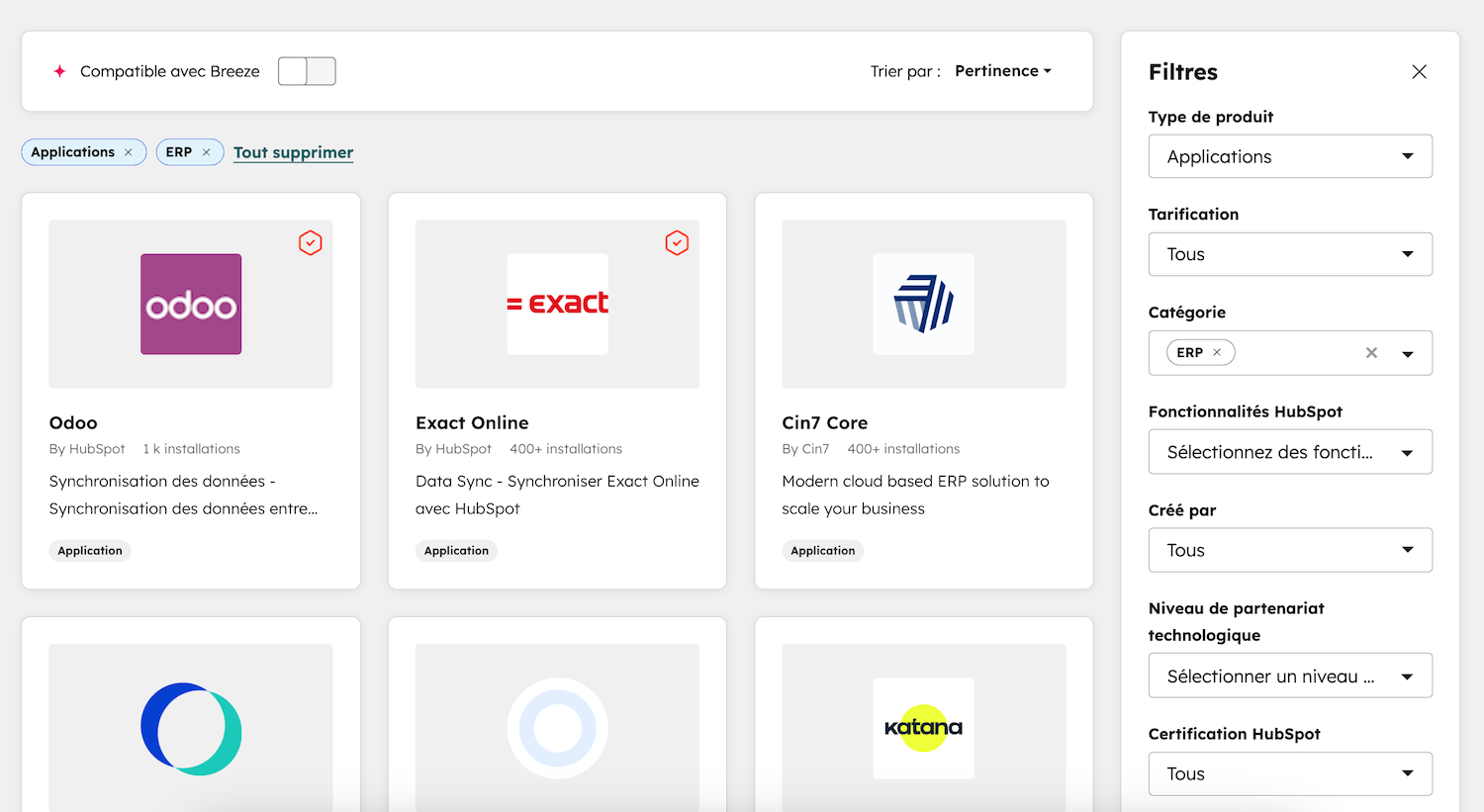
In industry, CRM can’t live in isolation: it has to interact with the ERP system that manages inventory, production, invoicing and accounting.
This dialogue is bidirectional:
- CRM needs to know in real time if a product is available and when it can be delivered.
- ERP needs sales forecasts to plan production.
Depending on the level of integration required (simple periodic synchronization or real-time flow with complex workflows), the choice of CRM and ERP cannot be made independently. To find out more, see our article on the differences between CRM and ERP and how to make them work together.
A good industrial CRM must offer standard connectors with the market’s major ERP systems (SAP, Microsoft Dynamics Finance & Operations, Microsoft Business Central, Sage, Cegid, Infor), as well as an open API for specific integrations.
#5 Distributors and the indirect channel
A significant proportion of industrial business is conducted through distributors, integrators or resellers.
Your CRM must be able to manage these partners as players in their own right:
- Share some (but not all) data.
- Track the opportunities they bring up.
- Measure their individual performance.
- Manage commissions and incentives.
CRMs natively designed for direct sales don’t know how to do this properly, and adding this brick after the fact is very expensive.
The 6 essential features of industrial CRM software
Beyond the specific features we’ve just mentioned, here are the six features on which you shouldn’t compromise. If a CRM you’re considering doesn’t tick these boxes natively (or via an official vendor module), it’s probably not for you.
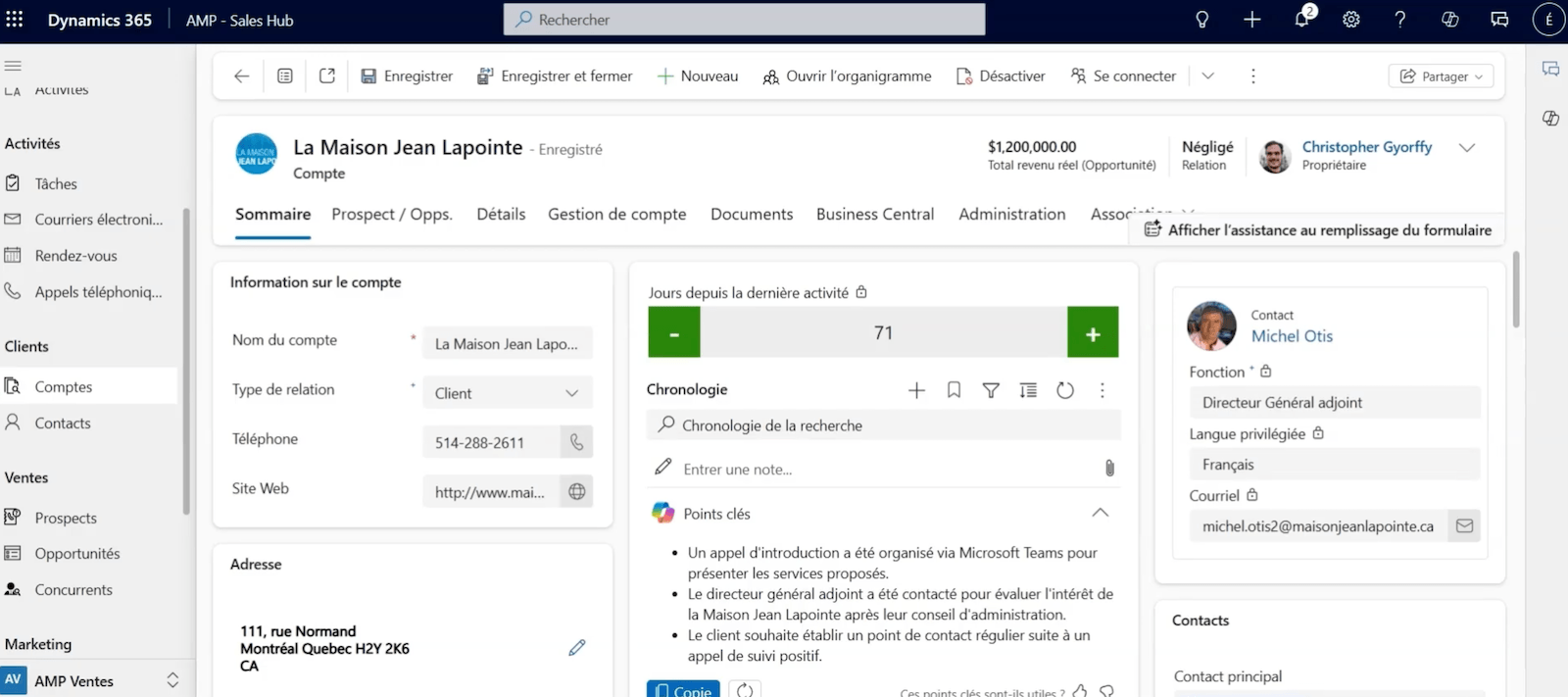
#1 The fine-tuned management of complex B2B accounts
Multi-site, multi-subsidiary, multi-buyer: an industrial customer is never a single “entity”, but a hierarchy of accounts that may include a parent company, several subsidiaries in different countries, several plants per subsidiary, several departments per plant.
Your CRM must enable you to model this hierarchy and consolidate data (overall sales, interaction history, total installed base) at each level.
#2 CPQ (Configure Price Quote) for configurable products
If your products are configurable (options, variants, dimensions, materials), you need a CPQ engine integrated or connected to your CRM.
CPQ :
- Apply configuration rules: compatibilities, incompatibilities, dependencies…
- Calculates prices according to pricing rules (volume, customer, currency, conditions).
- Generates technical and commercial quotations.
- Sends order to ERP.
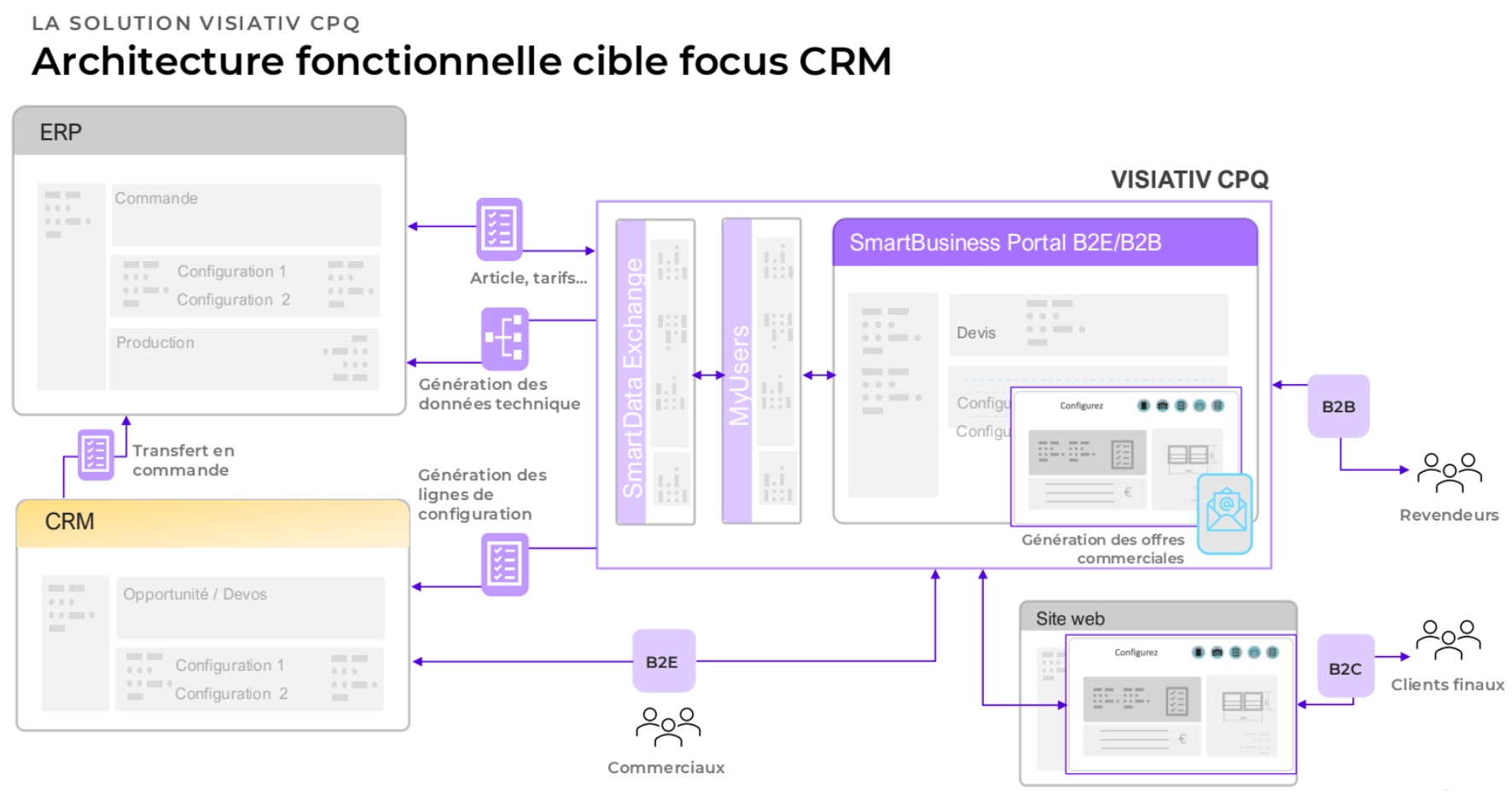
Without CPQ, your sales staff will spend an inordinate amount of time reworking quotations in Excel, with configuration errors and miscalculated margins. To find out more, consult our complete CPQ guide and our comparison of the best CPQ software.
#3 Integrated field service
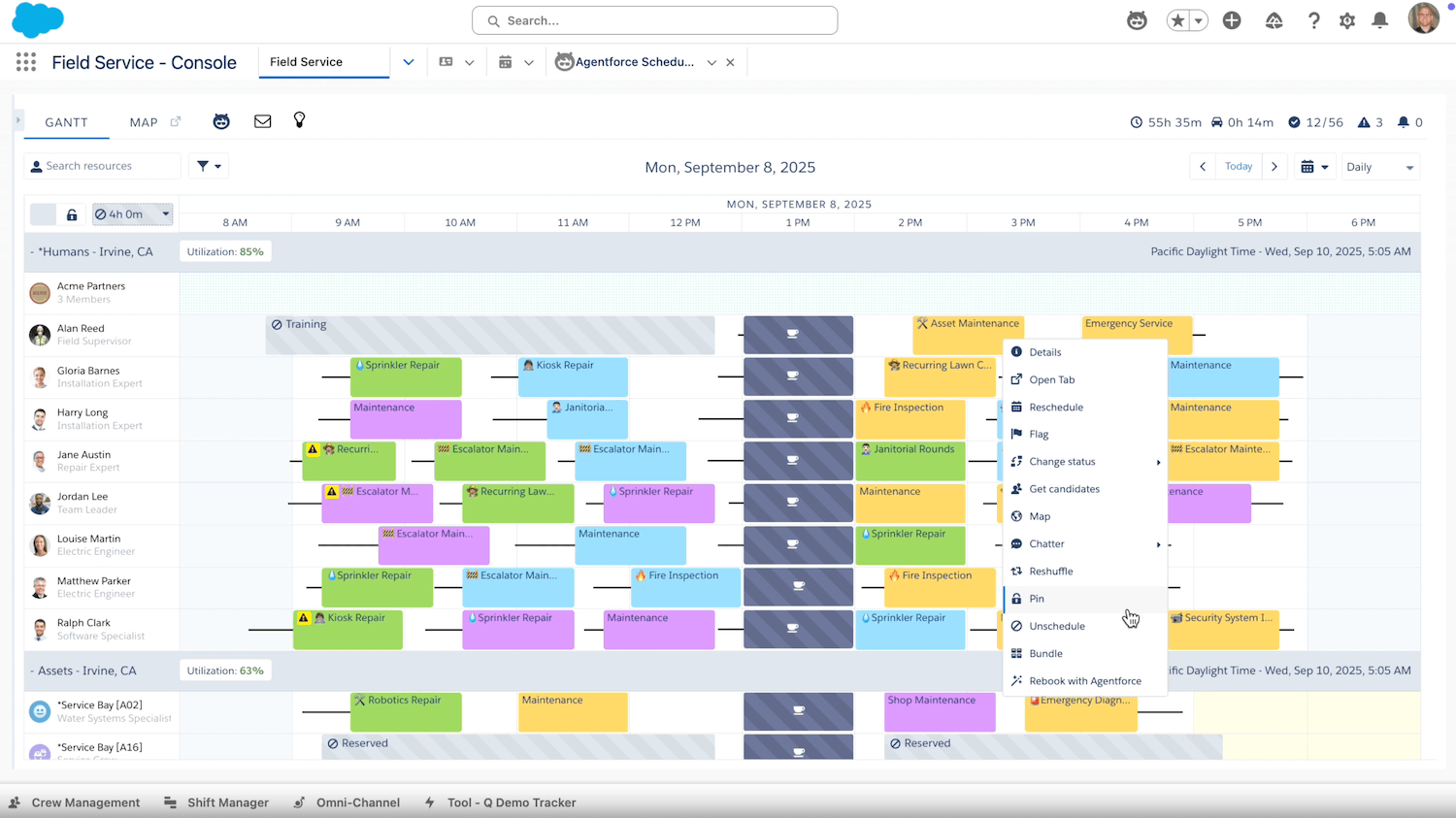
If you have technicians on site (for installation, maintenance, repairs, upgrades), you need a Field Service module, which manages :
- Service schedule.
- Route optimization.
- The mobile app for field technicians.
- Entering intervention reports.
- Automatic invoicing of after-sales service.
It’s a module that’s rarely native to generalist CRMs (HubSpot or Sellsy don’t do it), but natively present at Microsoft (Dynamics 365 Field Service) and Salesforce (Service Cloud + Field Service Management).
Identifying precisely which industrial functionalities are critical to you (installed base, Field Service, CPQ, ERP integration) is the key step before choosing a CRM. Masao offers this type of framing, with in-depth expertise in complex industrial issues.
#4 The weighted forecast for production planning (S&OP)
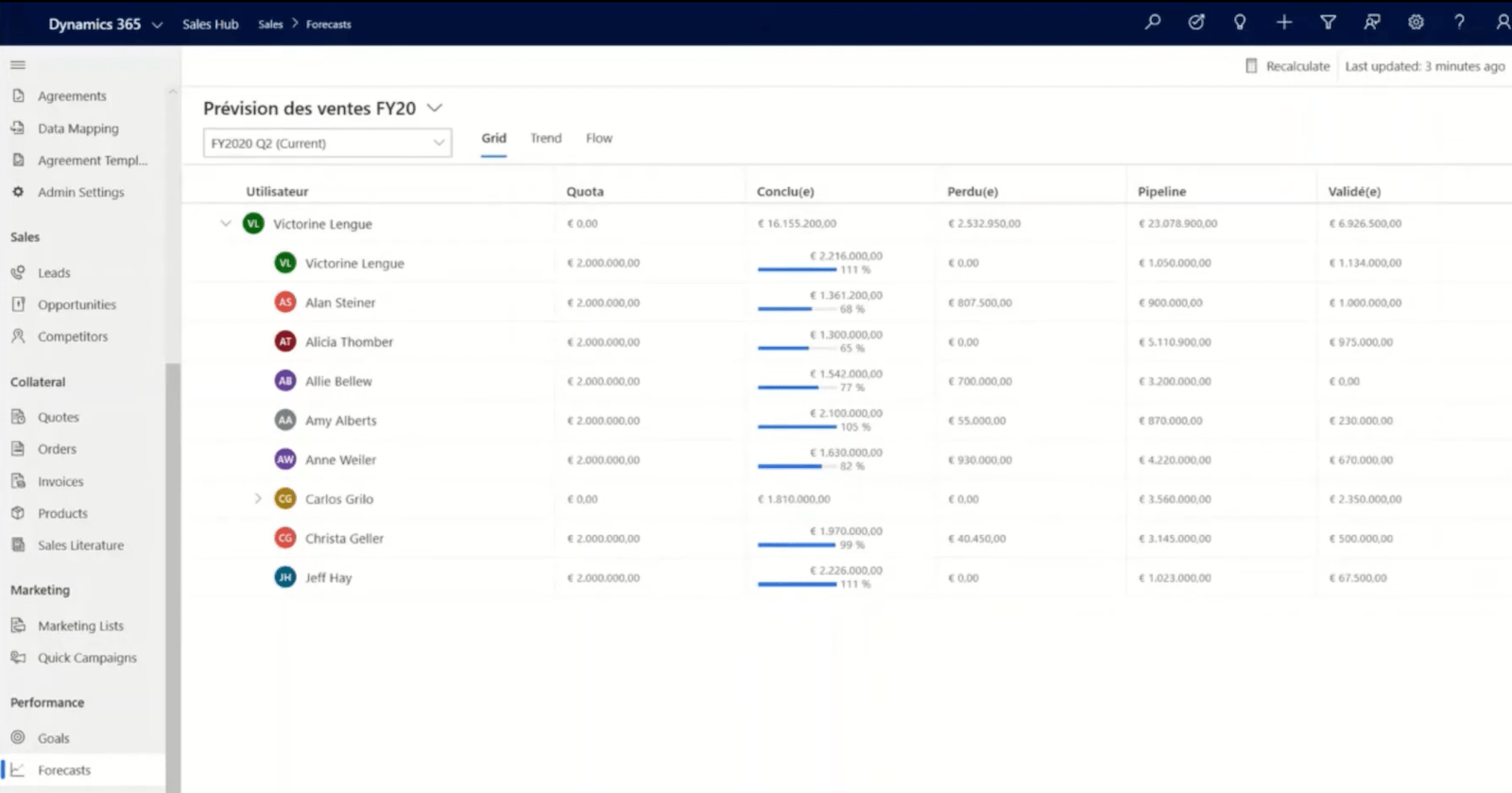
In industry, sales forecasts feed directly into production planning (the famous S&OP, Sales & Operations Planning).
A good industrial CRM must deliver a reliable, probability-weighted forecast, with a 3, 6 and 12-month view. This forecast is not just a gadget for sales management; it’s what enables them to launch orders for raw materials and reserve production capacity.
Poor quality forecasts pay for themselves in costly out-of-stocks and overstocks.
#5 On-board technical documentation
Your industrial sales representatives don’t sell from catalogs, they sell technical solutions, and as such need instant access to up-to-date data sheets, drawings, ISO certifications, test reports, user manuals…
An industrial CRM must either embed this documentation (native document management), or integrate seamlessly with an EDM or PLM system. A simple “PDF storage space” is not enough: you need version management, access rights, and efficient search.
6. Native distributor and indirect channel management
This has already been mentioned above. Partner portal, selective data sharing, deal registration tracking, performance measurement by distributor, commission management: this is a fully-fledged set of functions that must be natively supported by the CRM, not added as a parallel Excel file.
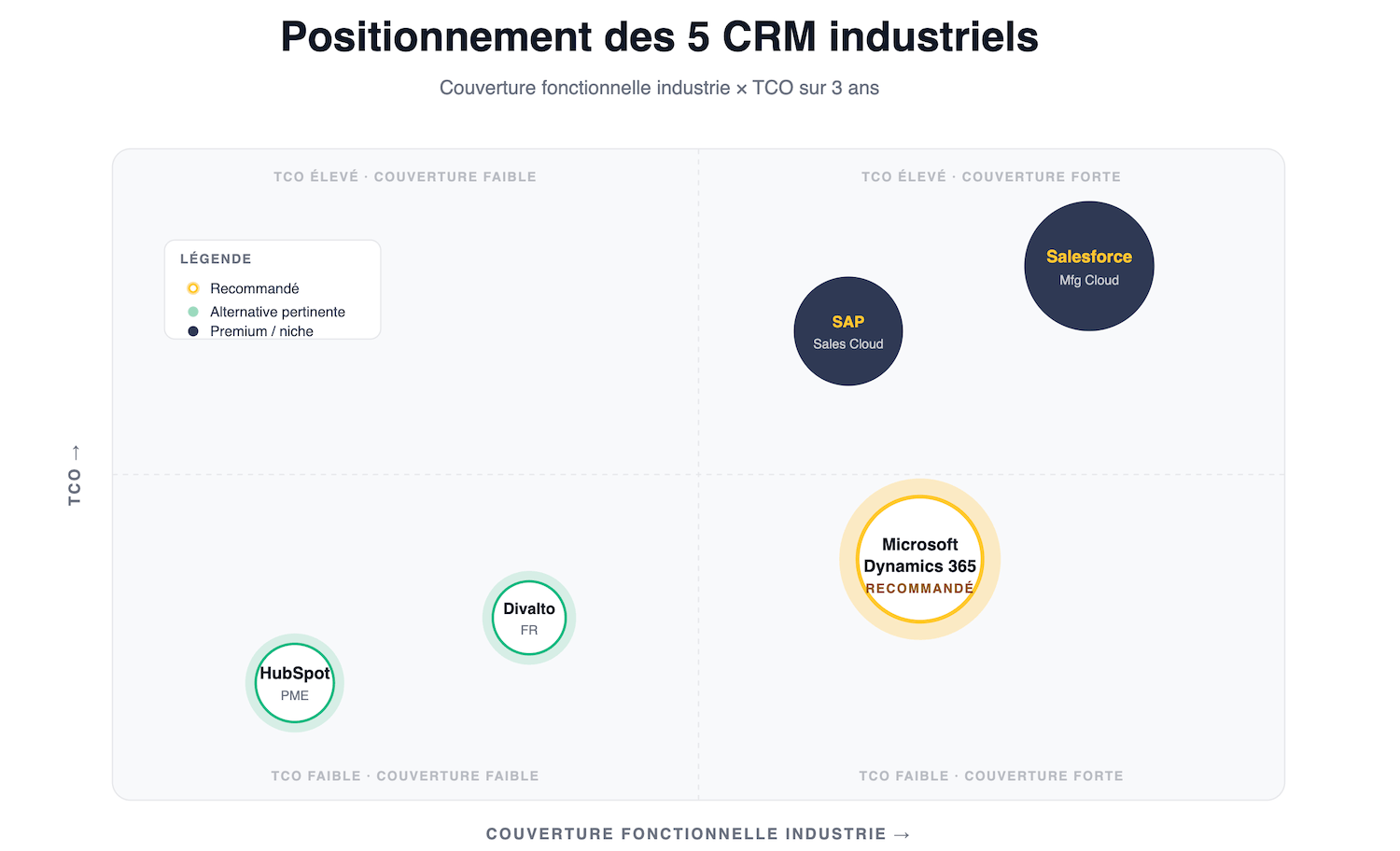
Our Top 5 CRMs for industry: Summary table
| Rank | CRM | Ideal for | Admission fees | Force majeure | Main weakness |
|---|---|---|---|---|---|
| #1 | Microsoft Dynamics 365 | SMEs, ETIs and large industrial groups looking for a scalable solution integrated into the Microsoft ecosystem | 56.30 / user / month (Sales Pro) | Multi-module coverage (Sales + Field Service + Customer Insights), native Copilot AI, native ERP integration | Complexity of licensing, choice of critical integrator |
| #2 | Salesforce (Sales Cloud + Manufacturing Cloud) | ETIs and large international industrial groups with substantial budgets | 275 € / user / month | Dedicated Manufacturing Cloud, rich AppExchange, world leader in the segment | High TCO, complexity of implementation |
| #3 | SAP Sales Cloud | Manufacturers already equipped with S/4HANA | On request | Native alignment with S/4HANA and SAP Variant Configuration | Not relevant outside SAP environment |
| #4 | Divalto | French industrial SMEs and ETIs with integrated CRM + ERP needs | On request | French publisher, CRM + ERP suite, local integrator network | Less powerful in AI, smaller partner ecosystem |
| #5 | HubSpot | Industrial SMEs that prioritize rapid commercial adoption | from €20/user/month (Sales Hub Starter) | Exceptional user experience, strong marketing-sales alignment | No native Field Service, no industrial CPQ, limited installed base module |
#1 Microsoft Dynamics 365: the most complete CRM for the industry
Microsoft Dynamics 365 is our number-one recommendation for industrial companies. It’s not an easy position to hold when Salesforce remains the world leader in CRM market share, but in the industrial segment specifically (and particularly for French SMEs and ETIs), Dynamics ticks more boxes than any other CRM on the market.
Why Dynamics is the industry leader
Five structuring reasons:
- Native multi-module coverage. Dynamics 365 is not a monolithic CRM, it’s a suite of building blocks (Sales, Customer Service, Customer Insights, Field Service, Contact Center) that can be combined according to your needs. For a manufacturer, this modularity is invaluable: you take Sales for the sales force, Field Service for field service, Customer Insights for B2B marketing, and you only pay for what you use.
- Dynamics 365 Field Service is probably the most mature field service management module on the market.. Intelligent scheduling, tour optimization, mobile application for technicians with offline mode, spare parts management, integration with IoT for predictive maintenance: this is a real industry module, not a CRM sub-part.
- Native ERP integration. Dynamics 365 dialogs natively with Business Central (for SMEs) and with Dynamics 365 Finance & Operations (for ETIs and large groups). This integration covers item, customer, order, invoice and inventory flows, and is maintained by Microsoft itself, not by a third-party connector. For manufacturers using SAP or other ERP systems, standard connectors are also available.
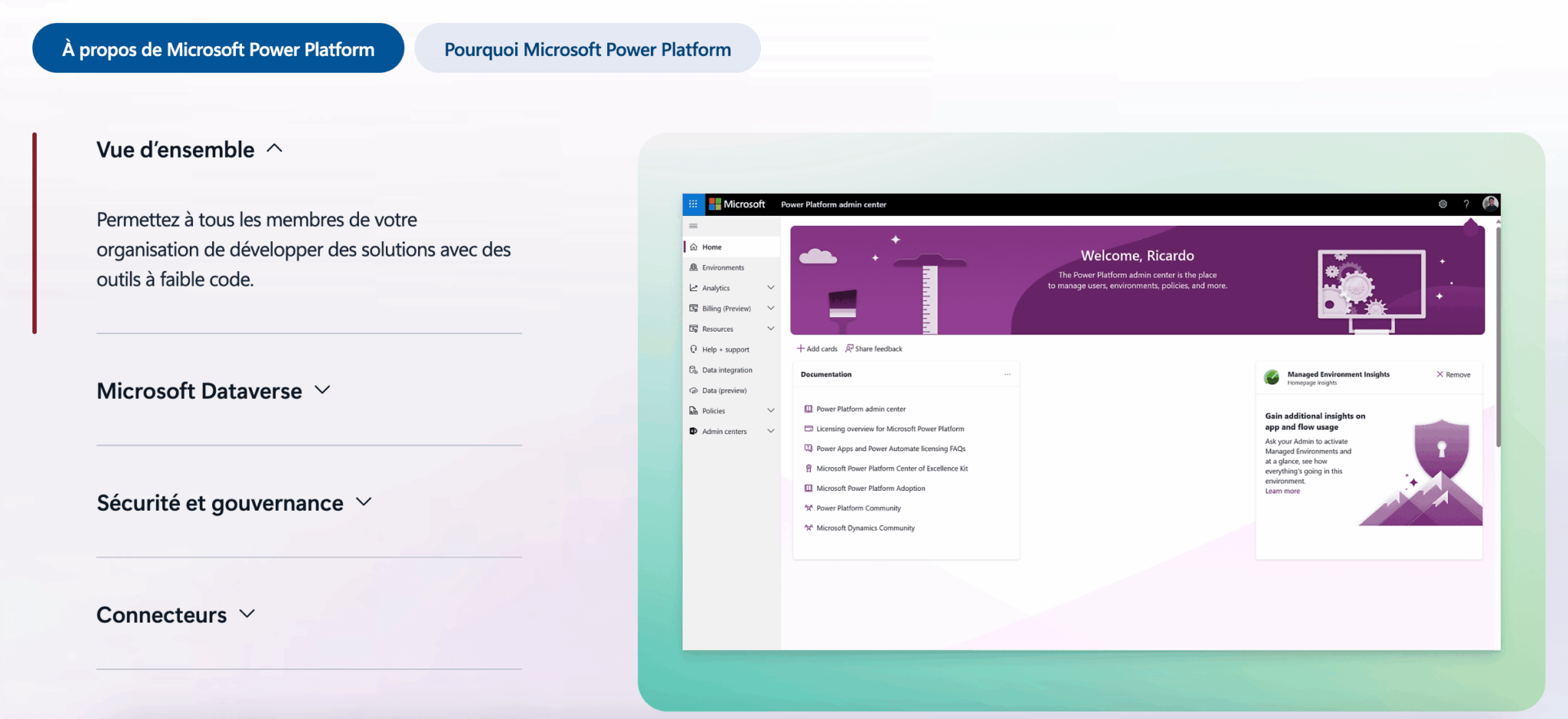
- Power Platform. Microsoft Power Apps, Power Automate and Power BI enable you to model just about any atypical industrial process (approval, quality validation, prototype management, certification follow-up) without heavy specific development. This no-code/low-code capability is a game changer for manufacturers with proprietary processes.
- Copilot has been natively integrated into Sales and Customer Service since 2024. Opportunity summaries, email drafts, sales support, account insights: generative AI saves every salesperson several hours a week. Microsoft is investing heavily in this area, and the 2026 roadmap includes autonomous Copilot agents for lead qualification and account follow-up.
- Multi-module coverage (Sales + Service + Field Service + Marketing) probably the widest on the market
- The benchmark for industrial field service
- Native integration with Business Central and F&O
- Power Platform for modeling specific industrial processes
- Integrated AI Copilot at no extra license cost
- Optimizable licenses via the base/attach model (savings of 30-40% possible)
- Ecosystem of specialized French integrators
- Complex licensing (base/attachment, Team Members, authorized combinations)
- Interface sometimes perceived as less modern than Salesforce or HubSpot
- A good integrator is a must
- Limited native CPQ capabilities, use a partner (Conga, Salesforce CPQ connected, or custom)
Price guide
Dynamics 365 Sales is available in three editions:
- Sales Professional at €56.30 ex VAT per user per month.
- Sales Enterprise at €91 excl.
- Sales Premium at €130 excl.
Add-on modules (Customer Service, Customer Insights, Field Service) are invoiced separately, with the possibility of optimization via the base/attachment model. For a complete analysis of the total cost of a Dynamics project, see our article on the real cost of Microsoft Dynamics 365 CRM.
For whom it’s the best choice
Dynamics 365 is the solution of choice for small and medium-sized businesses and industrial firms that want a CRM that is scalable (capable of supporting growth over 5 to 10 years), integrated with their existing Microsoft ecosystem (Outlook, Teams, SharePoint, Power BI) and deep enough to cover sales, field service and B2B marketing. This is particularly relevant if you have an installed base to manage, or if your technicians regularly intervene on your customers’ premises.
To find out more, read our full review of Microsoft Dynamics 365 CRM.
With Dynamics 365, the success of your project depends as much on the choice of CRM as on the choice of integrator to deploy it. We recommend Masao for Dynamics CRM projects: pure player Customer Engagement, member of the Inner Circle Microsoft Business Applications since 2017 (10 consecutive years, which is exceptional on the French market) and the largest French-speaking team of Dynamics 365 experts. To find out more, read our article on how to choose your Microsoft Dynamics 365 integrator.
Masao has accompanied over 300 successful Dynamics 365 CRM projects, and offers a no-obligation initial scoping for industrial companies considering Dynamics.
#2 Salesforce with Manufacturing Cloud
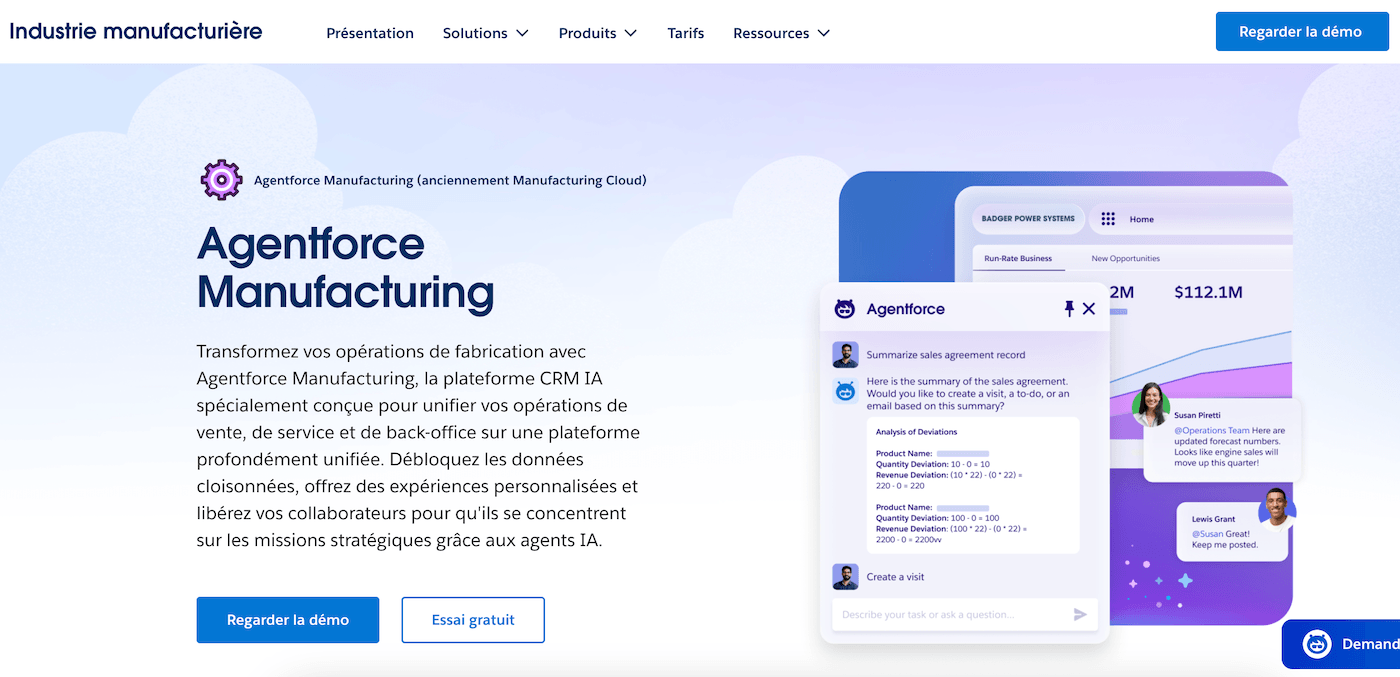
Salesforce remains the world leader in CRM, and since 2020 has been offering an industry verticalization with Salesforce Manufacturing Cloud. This industry-specific version adds several modules specifically designed for manufacturers to the classic Sales Cloud functionalities: strategic account management (Account-Based Forecasting), long-term contracts with volume AND value management, visibility on past orders and future forecasts, and collaboration with partners and distributors.
Why Salesforce comes second
Salesforce Manufacturing Cloud is probably the world’s most “industrial” CRM in terms of dedicated functionalities. Sales Agreement management (commercial contracts with negotiated volumes and prices), the ability to reconcile sales forecasts and ERP orders, integration with SAP or Oracle via tried-and-tested connectors: all these features make Salesforce a very solid solution for large ETIs and international industrial groups.
Salesforce is also supported by the AppExchange, the richest marketplace on the market, with hundreds of industry-specific apps (CPQ, Field Service, installed base management, PLM connectors, etc.). This is a real advantage when your needs are very specific to your sub-sector.
So why second and not first? Two reasons:
- First, the TCO: Salesforce is significantly more expensive than Dynamics for equivalent functional coverage.
- Secondly, the complexity of implementation: a Salesforce Manufacturing Cloud project is cumbersome, requires highly experienced consultants and typically takes 12 to 24 months. For a medium-sized SME or ETI, Dynamics offers better value for money.
- Manufacturing Cloud, dedicated to industry, very comprehensive
- Native management of long-term Sales Agreements
- Rich AppExchange with numerous industry apps
- Proven SAP and Oracle integrations
- Excellence in sales performance management
- Present in 95% of Fortune 500 companies
- High TCO, especially on Manufacturing Cloud
- Long implementation project (12-24 months)
- Rich but sometimes complex interface for new users
- Dependence on a specialized integrator
Price guide
Salesforce Manufacturing Cloud is packaged directly with Sales Cloud or Service Cloud, with no separate module billing. Five editions are available, starting at €275 ex-VAT per user per month for the Enterprise edition (sales or customer service), €475 ex-VAT for the Unlimited edition (sales + service combined) and up to €650 ex-VAT for the Agentforce 1 editions, which add Einstein, Data Cloud and agentic AI.
All prices are based on annual invoicing. For a detailed analysis, see our article on the real cost of Salesforce.
For whom it’s the best choice
Salesforce is the right choice for large international industrial groups, SMEs with multi-country deployments, and organizations with the means to invest in a leading CRM. It’s also often the right choice when you already have a Salesforce stack in other parts of the organization (marketing, customer service). To find out more, read our full Salesforce review.
#3 SAP Sales Cloud
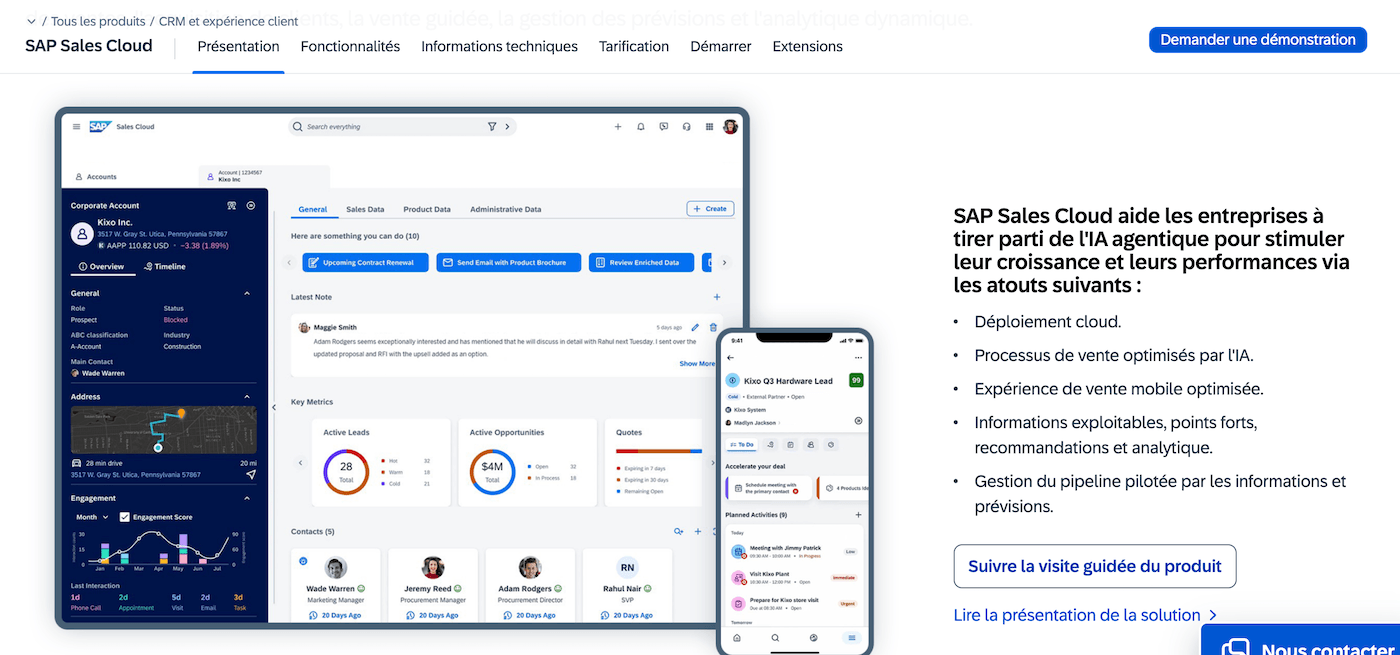
SAP Sales Cloud (formerly Hybris Cloud for Customer, then C/4HANA) is SAP’s cloud CRM. It integrates natively with S/4HANA, SAP’s flagship ERP platform. For manufacturers already equipped with SAP, this is often the most logical choice.
Why SAP comes third
SAP’s positioning is clear: if you’re a manufacturer already using an S/4HANA environment, with strong requirements for product configuration via SAP Variant Configuration, fine-tuned management of contracts and pricing conditions, and demanding traceability, then SAP Sales Cloud makes sense.
Integration between CRM and ERP is native, item and customer data are aligned without intermediate connectors, and data governance is centralized.
Outside this specific environment, SAP Sales Cloud becomes difficult to recommend. The product lacks the maturity of Dynamics and Salesforce on modern topics (generative AI, user experience, app marketplace), and the ergonomics require more extensive change management support.
- Native integration with S/4HANA and SAP Variant Configuration
- Fine-tuned management of offers, contracts and pricing conditions
- Centralized data governance in the SAP environment
- Strong position in industries with high traceability requirements (pharmaceuticals, agri-food, aeronautics)
- Limited relevance outside the S/4HANA environment
- Ergonomics and user experience lag behind leaders
- Perceived lag in generative AI
- Less rich app ecosystem than Salesforce or Dynamics
Price guide
SAP Sales Cloud is typically positioned in the same price range as Salesforce Sales Cloud Enterprise, at around €130 to €200 per user per month, depending on the module. Pricing is based on estimates, rarely communicated publicly, and is highly dependent on contractual negotiations and the rest of the SAP stack.
For whom it’s the best choice
SAP Sales Cloud is the logical choice for large companies and industrial groups already equipped with S/4HANA, particularly in sectors with high traceability requirements (pharmaceuticals, agri-food, aeronautics, automotive). If this is not your situation, Dynamics or Salesforce will almost always be a better choice.
#4 Divalto: the French CRM + ERP alternative
Divalto is a French management software publisher based in Schiltigheim (Alsace), offering a suite combining CRM and ERP. The company is particularly well positioned in the French industrial fabric, especially among SMEs and ETIs with 50 to 1,000 employees.
Why Divalto deserves its place in the Top 5
Divalto is not Dynamics or Salesforce. It’s not a global leader, there’s no AppExchange ecosystem, and the AI roadmap is less ambitious. But for a French manufacturer who wants an integrated CRM + ERP solution, with a close-knit vendor, a French-speaking support team and a real understanding of the French market, Divalto is a serious option that is wrong to ignore in mainstream comparisons.
Divalto’s strength lies in its consistency. CRM and ERP dialogue natively (since it’s the same publisher), invoicing complies with French standards (including 2026 electronic invoicing), RGPD compliance and French hosting are native, and the Divalto integrator network is exclusively French-speaking. For a Franco-French manufacturer with moderate functional complexity, this is a pragmatic option.
- French publisher, French hosting, native RGPD compliance
- CRM and ERP natively integrated in the same suite
- Network of French-speaking integrators
- Good understanding of the specificities of the French market
- Positioning SMEs and industrial firms
- Functional delay in generative AI
- Much smaller partner ecosystem than Microsoft or Salesforce
- Challenges for international deployments
- No Field Service as advanced as Dynamics
Price guide
Divalto does not publish its catalog prices. For a typical industrial SME project (CRM + ERP), expect to pay between €50 and €90 per user per month, all-inclusive, depending on modules and volume.
For whom it’s the best choice
Divalto is relevant for Franco-French industrial SMEs and ETIs looking for an integrated CRM + ERP solution, who value data sovereignty and proximity to a French vendor, and who don’t have very advanced functional needs in terms of AI or internationalization. For organizations planning to expand internationally, or wishing to invest heavily in commercial AI, Dynamics or Salesforce remain more suitable.
#5 HubSpot: for industrial SMEs that prioritize adoption
HubSpot is a generalist CRM, not an industrial CRM. Yet it deserves its place in this Top 5 for one simple reason: it’s probably the best CRM on the market in terms of user experience and sales adoption, and for an industrial SME with a relatively short sales cycle (3-6 months) and moderate functional complexity, that counts for a lot.
Why HubSpot is right for the industry
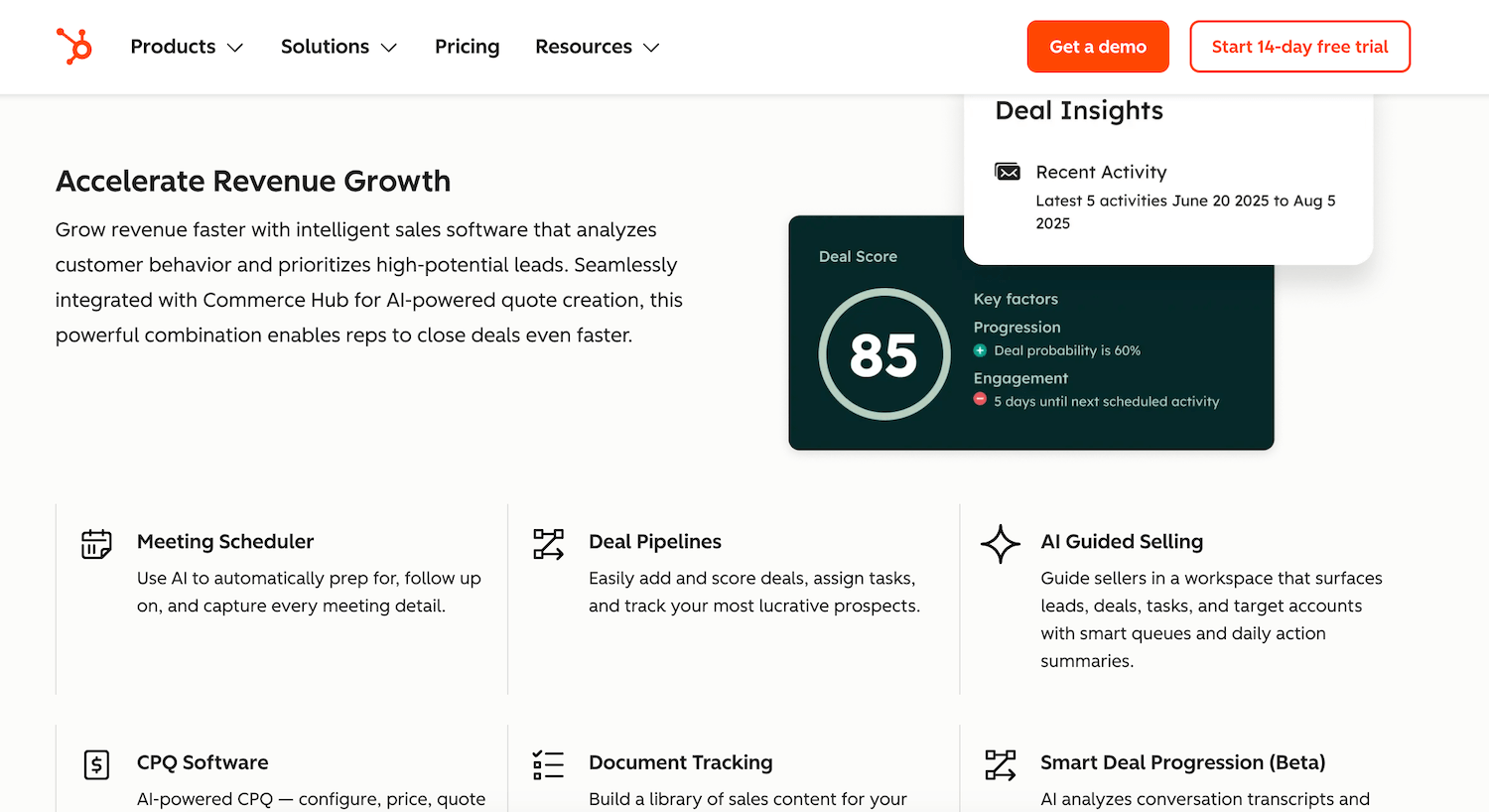
HubSpot’s selling point is adoption. Sales reps are really using it, from the very first weeks, with no need for extensive training. The interface is intuitive, the workflows are easy to build, and the marketing-sales alignment is the strongest on the market. For an industrial SME just starting out on its sales digitalization journey, and fearful (and rightly so) of a CRM project that ends up on the shelf, HubSpot is often the right choice to start with.
HubSpot also offers increasing functional depth: Sales Hub for sales force, Marketing Hub for B2B nurturing, Service Hub for customer support, Operations Hub for integrations. Third-party extensions (such as the Manufacturing Hub developed by integrator Nile) add industry-specific capabilities: installed base tracking, serial number management, installed base.
But let’s be honest about the limitations: HubSpot has no native Field Service comparable to Dynamics, no industrial CPQ as powerful as Salesforce CPQ, and installed base management necessarily involves custom objects or third-party apps. For a manufacturer with field technicians, an installed base to manage, or highly configurable products, HubSpot will quickly reach its limits.
- Market-leading user experience, exceptional commercial adoption
- Strong marketing-sales alignment (Sales Hub + Marketing Hub)
- Accessible entrance fees (free map, then €20 per user)
- Flexible data model, custom objects available
- Extensive ecosystem of integrations (1500+ apps)
- No native industrial Field Service
- Limited CPQ, requires third-party apps
- Management of installed base via custom objects (not native)
- Cost rises quickly with the addition of premium hubs
- Shallower ERP integration than Dynamics or Salesforce
Price guide
Sales Hub Starter starts at €20 per user per month, Sales Hub Professional at €100, Sales Hub Enterprise at €150. For a complete “industry” configuration (Sales + Marketing + Service), expect to pay between €150 and €300 per user per month, depending on the edition.
For whom it’s the best choice
HubSpot is relevant for industrial SMEs with short to medium sales cycles, moderate functional complexity, and a strong focus on rapid commercial adoption. It’s also an excellent choice when your sales strategy includes a strong B2B marketing dimension (inbound, nurturing, technical content).
Find out more: full HubSpot CRM review and HubSpot vs. Salesforce comparison.
How to choose between leaders: the decision grid
Five CRMs, five positions. Here’s how to decide according to your profile.
Case #1: You have fewer than 50 sales reps and a short to medium sales cycle (3-6 months).
Dynamics 365 Sales Professional (€56 / user) or HubSpot Sales Hub Professional (€100) are the two options to consider. HubSpot wins on adoption and simplicity, Dynamics wins on future scalability if you plan to grow or add Field Service.
Case #2: You have a long sales cycle, an installed base and field service.
Dynamics 365 (Sales Enterprise + Field Service) or Salesforce Manufacturing Cloud. Dynamics will be more affordable in terms of TCO, while Salesforce will be more comprehensive in terms of pure manufacturing functionalities. Arbitration based on budget and existing technological ecosystem.
Case #3: You already have S/4HANA
SAP Sales Cloud is the logical choice for stack consistency. Dynamics or Salesforce remain technically feasible, but require additional connectors and generate significant integration costs.
Case #4: You are a French industrial SME with CRM + ERP needs
Divalto is the most reliable French integrated option, with an accessible publisher and a network of local integrators. Dynamics + Business Central is the equivalent Microsoft alternative, with greater power and a more scalable international trajectory.
Case #5: You are an international industrial ETI with a substantial budget
The match is between Dynamics 365 and Salesforce. Dynamics if you’re already a Microsoft store (Teams, Outlook, Azure, Power BI) and value value for money. Salesforce if you want the world leader with the richest AppExchange ecosystem and the budget to match.
For SMBs looking for alternatives to Salesforce specifically, see our article on Salesforce alternatives for SMBs.
Masao’s teams can help you decide objectively between Dynamics 365 and other solutions on the market for your specific context. Their exclusive Dynamics expertise also enables them to tell you honestly when it’s not the right choice.
Choosing the right integrator is just as important as choosing the right Industrial CRM.
This is the subject that most CRM comparisons overlook, and yet it’s a critical one. With an industrial CRM, the choice of CRM is only half the battle. The other half is choosing the integrator who will deploy it, configure it, integrate it with your ERP, train your teams and provide long-term maintenance.
In the industry in particular, the integrator’s importance is multiplied for several reasons:
- Firstly, because ERP, PLM, MES and IoT integrations are more complex than in other sectors, and require consultants with a real industrial culture.
- Secondly, because process modeling (approval, quality validation, prototype management, certification follow-up) needs to be carried out by someone who speaks the language of plant managers, not just that of sales managers.
- Finally, because change management in industry, with sales and technical staff who have often never used a modern CRM, requires specific support.
To find out more about choosing the right integrator, see our article on choosing your Microsoft Dynamics 365 integrator and our comparison of the best Microsoft Dynamics integrators in France.
If you’re looking to Microsoft Dynamics 365 for your industrial CRM project, Masao is the integrator we recommend. Pure CRM player, Inner Circle Microsoft for 10 consecutive years, largest French-speaking team of Dynamics 365 experts, exceptional project completion rate. An initial no-obligation discussion enables us to validate our suitability for your project.
Frequently asked questions about CRM for industry
What’s the difference between CRM and ERP for industry?
A CRM manages customer relations and commercial processes upstream of the order: prospecting, opportunities, quotations, contracts, monitoring of installed base, after-sales service. An ERP manages internal operations downstream: production, inventory, purchasing, accounting, invoicing. In industry, the two tools complement each other and must interact closely.
Do you need a CRM or CPQ for configurable products?
Both, in fact. The CPQ manages the product’s technical and pricing configuration, while the CRM manages the customer relationship and the entire sales cycle. On the market leaders (Dynamics, Salesforce), CPQ is either natively integrated, or available via an add-on module or certified partner. With HubSpot, you’ll need to use a third-party app.
How much does an industrial CRM cost?
This depends enormously on the size of the organization and the scope of the project. For an industrial SME (10-30 users) with a Dynamics project, expect to pay €25,000 to €55,000 ex-VAT per year in licenses, and €30,000 to €60,000 ex-VAT for initial implementation. For a multi-module ETI (50+ users), budgets can quickly run into the hundreds of thousands of euros over 3 years.
How long does a CRM project in the industry last?
For an industrial SME project with a controlled scope (Sales only, one or two standard integrations), 4 to 6 months. For a multi-module ETI project with full ERP integration, 12 to 18 months. For a large multi-country group project with Manufacturing Cloud or equivalent, 18 to 24 months or more. The “MVP” packages offered by some integrators enable you to get started in 2-3 months on a voluntarily reduced scope.
Is a cloud or on-premise CRM right for industry?
In 95% of cases, the cloud is the right choice today. The benefits are too great (automatic updates, mobile access, scalability, vendor-operated security) to justify on-premise. The rare cases where on-premise is an option are sectors with extreme regulatory constraints (defense, nuclear, certain pharmaceutical segments) or organizations with very strict IT policies. In these cases, solutions like Creatio offer an on-premise mode, but Dynamics, Salesforce and SAP are natively cloud-first.
My sales reps refuse to use CRM. What can I do?
This is the number one problem with industrial CRM projects, far ahead of the choice of tool. The causes are almost always the same: tool imposed without consultation, interface ill-suited to field practices, rushed training, no perceived value by salespeople themselves, persistent CRM + Excel double entry. The solutions lie in an overhaul of the scoping process (involving sales reps right from the choice of tool), a drastic simplification of the interface (fewer mandatory fields, more automatically calculated fields), training spread over time with business super-users and, above all, visible quick wins from the very first months (concrete time savings, automations that lighten day-to-day tasks).
Which CRM is right for a VSE or small industrial SME?
For structures with fewer than 10 salespeople and a simple sales cycle, HubSpot Starter or Dynamics 365 Sales Professional are probably the most affordable options. See also our article on the best CRMs for SMEs.
If your choice is Microsoft Dynamics 365, Masao is probably one of the best possible partners on the French market: pure player CRM, Inner Circle Microsoft for 10 years, largest French-speaking team of D365 experts. They offer a no-obligation initial scoping to calibrate your project and identify possible optimizations.