



- A LinkedIn post has between 1 and 3 hours to get as many reactions as possible and be shown to new users.
- Comments weigh more than likes, as long as they are substantial: repeated « top! » comments count for less.
- Since March 13, 2026, LinkedIn bans pods, manual and automated alike, and comments posted by a third-party tool.
- An artificially boosted post sees its reach limited, a pod group can be removed and an account restricted.
- For early engagement: comment in your industry, reply quickly to the comments you receive and post from a personal profile.
The race for engagement on LinkedIn gave rise to LinkedIn pods: groups whose members like and comment on each other’s posts as soon as they go live. Manual, through informal groups on Facebook, WhatsApp or Slack, or automated through Chrome extensions, they were used for a long time to inflate the reach of posts.
Since March 13, 2026, LinkedIn has banned them in black and white. How pods worked, why they worked, what LinkedIn changed and what an account that keeps using them risks, then how to get engagement in the first hours without them: we cover it all in this article.
Why LinkedIn pods worked
A word on the LinkedIn algorithm
The process of assessing the value of your posts starts as soon as one is published. At that point, your post appears in the feed of a small part of your network.
The number of people your post is shown to depends initially on how your post is optimized (based on the number of hashtags it contains and on whether or not it includes an external link, for example). LinkedIn also takes into account the number of views on your previous posts and the number of people who follow you.
If this sample of followers reacts quickly and in large numbers to your post, it has a much better chance of being suggested to other users in your network, and in the networks of the followers who reacted to your post.
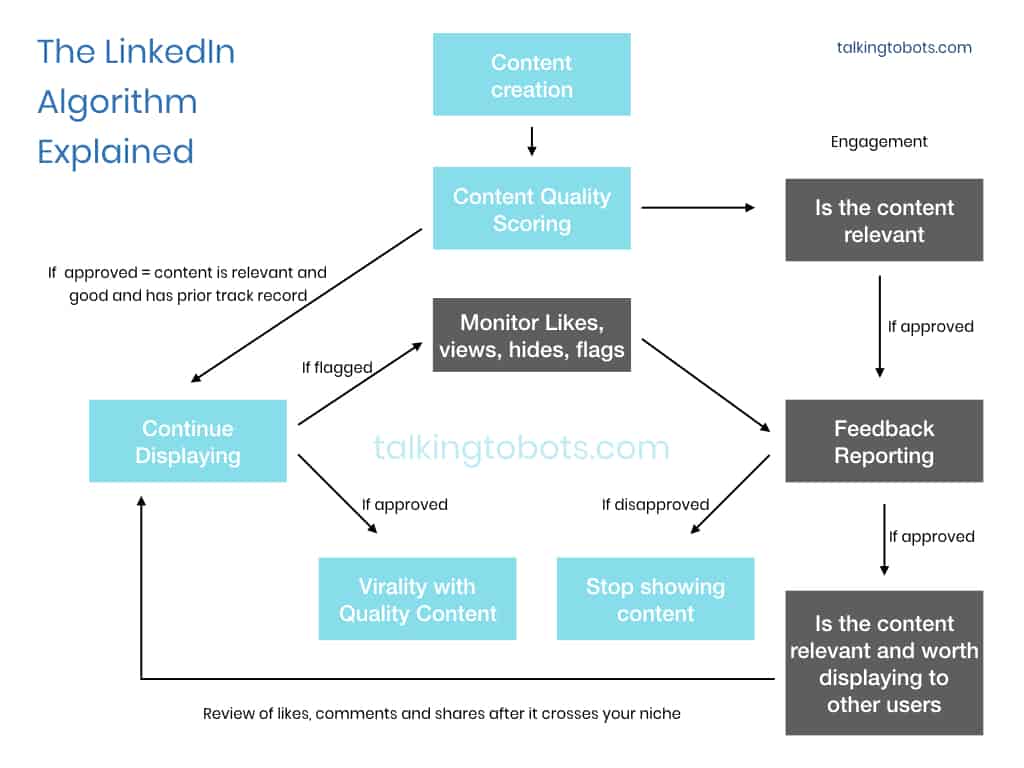
Source: talkingtobots.com
Likes are not the most effective reactions here. The more comments your post generates, the more you will catch the attention of the LinkedIn algorithm. The more feedback your post receives as your audience grows, the more LinkedIn will keep showing it to new people.
Above all, to make your post a success, make sure its content meets your audience’s expectations. Your followers absolutely need to find useful information in it to react to it.
To increase the reach of your posts on LinkedIn, choose the right time to publish. You have between 1 and 3 hours to get as many reactions as possible to your post and for it to be shown to new users.
This is the window pods played on: mutual-aid groups that guaranteed strong reactivity as soon as the post was published.
LinkedIn pod: definition & how it works
LinkedIn pods started with a few communities of people gathering on Facebook, WhatsApp and LinkedIn to pool their efforts and make their posts look valuable to the LinkedIn algorithm by exchanging likes and comments on each member’s posts.
It was not just about dropping simple comments on every post from the other members. Comments had to be rich enough to be considered valid by the LinkedIn algorithm (post a pile of short phrases like “top!” or “great post!” all over the place, and your comments will carry less weight with the automated systems that run the LinkedIn algorithm).
Your comments on posts related to your industry can also bring you new followers, which is why their content cannot be neglected all the time.
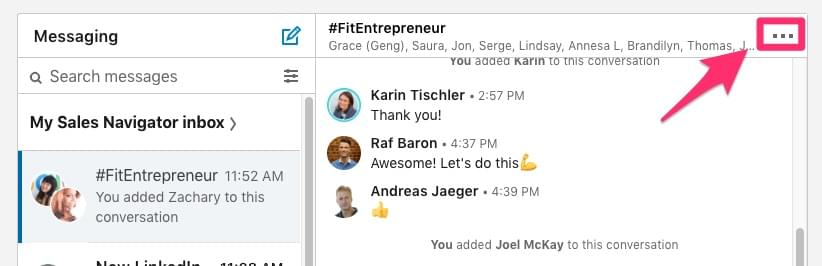
Source: joshsteimle.com
When groups went beyond 50 active members, the gain in engagement rate was paid for in time: liking and commenting on fifty or so posts every day takes hours.
To save that time, automation tools appeared alongside the manual groups. The two worked differently, and both now fall under LinkedIn’s ban: we compare them in the next section.
Read alsoTop 10 best LinkedIn agencies
Manual vs automated pods
Manual pods
Manual LinkedIn pods were organized on WhatsApp, Facebook or Slack around shared interests or industries. These groups of people committed to commenting on and liking posts every day in exchange for feedback on their own posts. These exchanges increased the visibility of posts on LinkedIn.
With this “human” solution, the comments received added value to the post. In return, you had to return those comments to the other members to stay part of the community, which is time-consuming.
Pros
- Comments are genuinely personalized and relevant to your business
- The engagement looked more credible to the LinkedIn algorithms than that of automated pods
Cons
- Commenting on more than 50 posts a day is especially time-consuming
- Given the time the daily comments take, joining many communities is impossible
- The number of comments is generally insufficient and stays far below the number of likes
- Since March 2026, LinkedIn bans the coordinated exchange of likes and comments, whether it goes through a tool or a simple group
Automated pods
To fix the drawbacks of manual pods, automation tools were designed.
They generally came as Chrome extensions and broadly reproduced how manual pods worked.
The difference: you were the one choosing the comments you wanted to receive. Then the other members’ accounts automatically liked and commented on each of your posts.
Pros
- Real time savings
- Ability to join a larger number of pods, whatever your number of followers
- Tenfold more reactions to your posts
Cons
- The comments you leave on other members’ posts may be low quality, sometimes meaningless
- You need to spend quite a lot of time writing the comments you want to receive if you want them to be relevant
- Little or no control over the audience reached (little transparency about pod members)
- When the same LinkedIn profiles systematically react to your posts, the LinkedIn algorithms notice and lower the credibility given to their engagement
- Since March 2026, comments posted by an extension, a script or a third-party tool are banned, on top of the pod itself
What LinkedIn changed in March 2026
On March 13, 2026, LinkedIn published its rules on authentic content and conversations (official announcement). Pods are named in it, and the position leaves no room for doubt.
What LinkedIn bans
LinkedIn defines a pod as a coordinated group of people who like, comment on and share posts. For the platform, it is inauthentic activity that erodes trust, and it is not allowed.
Automated comments are targeted separately: these are comments posted through a browser extension, a script or a third-party tool, with no human action. They are banned too. That is exactly how the automated pods described above worked.
The rule does not depend on the tool. A manual pod organized on WhatsApp or in a LinkedIn group is still a coordinated group: it falls under the same ban.
What an account risks
LinkedIn details the measures it applies:
- posts that look artificially boosted are flagged and their reach in the feed is limited
- detected automated comments no longer appear among the “Most relevant” comments
- LinkedIn groups showing signs of pod behavior are removed
- flagged members are contacted and warned of possible account restrictions, and of removal from LinkedIn programs such as Top Voices
- LinkedIn can also restrict a member’s ability to use the platform
So the pod now has the opposite effect of the one intended: the limited reach hits precisely the post you wanted to push.
Salesdorado’s tipIf you are part of a pod, leave it, and uninstall the extensions that comment on your behalf. A few dozen extra likes are not worth a restricted account.
Getting engagement without a pod: best practices
Focus on quality
Come up with appealing posts and comments that people are tempted to respond to. Your content should be clear, easy to interpret and make people want to start a discussion, or answer a question you ask.
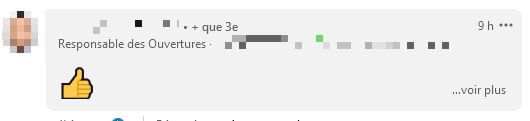
When you leave comments, never leave “boilerplate” comments like “excellent article” or any other platitude. Favor comments that enrich the debate or bring additional information.
Here are a few examples of comments to avoid:

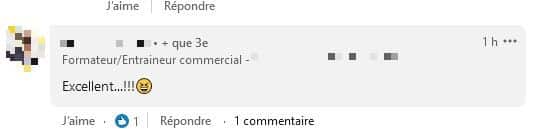
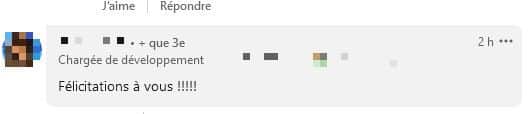
Truly engage with your network
Comment on posts in your industry before expecting comments on yours. A well-argued comment under a post by a customer, a peer or a prospect makes you visible to their audience, and can bring you new followers.
Reply to every comment you receive on your posts, especially in the first hours: a discussion that builds up under a post carries more weight than a string of likes.
Letting your colleagues or close network know a post is live remains a normal thing to do, as long as you leave them free to react or not. As soon as a group organizes itself to systematically like and comment on each other’s posts, you are back in LinkedIn’s definition of a pod.
Publish at the right time
Engagement on LinkedIn posts plays out within 1 to 3 hours of publication. Publish when your audience is online, and stay available in the following hour to reply to comments.
Use personal profiles
On LinkedIn, it is strongly recommended to use personal accounts rather than company accounts. It is a social network designed to connect people, not companies. That is why LinkedIn gives less visibility to posts coming from companies, in favor of posts made by people.
So above all: never use company pages to publish your LinkedIn posts!
The questions we get over and over.
What is a LinkedIn pod?
A coordinated group whose members exchange likes and comments on each other's posts, to make those posts look valuable to the LinkedIn algorithm. The first pods were communities gathered on Facebook, WhatsApp and LinkedIn.
Are LinkedIn pods allowed?
No. Since March 13, 2026, LinkedIn states that pods are not allowed, and neither are comments posted by an extension, a script or a third-party tool.
What does an account that uses a pod risk?
LinkedIn limits the reach of posts that look artificially boosted, removes automated comments from the most relevant comments, removes groups that operate as pods and can restrict the account, or remove it from programs such as Top Voices.
How do you get engagement without a pod?
By leaving well-argued comments on posts in your industry, replying quickly to the comments you receive in the first hours and publishing from a personal profile.
Should you publish from a company page?
No. LinkedIn gives less visibility to posts from companies than to posts from people: use a personal profile.



What the community says.