



- Clienteling comes from the advisors of 19th-century European luxury houses, who kept notebooks on each customer’s tastes and purchase history.
- Where CRM sends messages to segments, clienteling builds individualized interactions.
- The approach relies on the 80/20 rule: prioritize the customers who generate most of the revenue.
- Mobile apps for advisors, AI-powered CRM and industry tools: technology has taken the method beyond the luxury sector alone.
- Personal data protection, thinner margins outside luxury and team resistance are its main limits.
In a changing retail world, one approach has revolutionized business relationships: clienteling. This marketing method turns every interaction into a privileged moment, creating unprecedented mutual value between brands and consumers. The results speak for themselves:
- Conversion rates 36 times higher than traditional methods
- Average basket up 136% compared with conventional sales
- Customer retention doubled thanks to the individualized approach
Let’s look at how this method, born in luxury, is redefining the art of selling today and establishing itself as the future of retail.
Origin and definition of clienteling
Clienteling is first and foremost a story that comes from the luxury world and has spread to other industries, largely thanks to new technologies.
How the concept began in the luxury sector
Clienteling has its roots in the European luxury houses of the 19th century. Advisors maintained privileged relationships with their wealthy clientele, keeping handwritten notebooks detailing the tastes, birthdays, measurements and purchase history of every VIP visitor. This handcrafted approach already set them far apart from conventional transactional selling. The CRM++ of its day, in short!
The tradition carried on in the Parisian department stores and prestige boutiques, where the art of selling meant building a lasting relationship of trust. The advisor became a personal guide, able to anticipate needs and suggest exactly what suited the client. This commercial intimacy generated a certain loyalty and justified the premium prices charged. Technology has since made this approach, once reserved for prestige sectors, accessible to everyone, opening new perspectives for all retailers.
Clienteling vs. traditional CRM
Unlike CRM, which stores static information in segmented databases, clienteling creates a living, evolving relationship. Traditional CRM compiles contact details, transaction histories and a few demographic data points, but stays within a segmented mass-market logic.
A clienteling strategy goes much further. It takes into account emotions, situational context, life projects and personal aspirations. Where CRM sends generic newsletters to predefined segments, this approach generates individualized interactions based on a detailed understanding of each profile.
This fundamental difference changes the very nature of the commercial exchange. Every interaction becomes an exceptional moment that creates mutual value and strengthens attachment to the brand and to the salesperson.
The strategic goals of clienteling
Beyond the technical side, what makes clienteling interesting is the concrete business ambitions and measurable results it delivers for the companies that adopt it.
Stronger loyalty and engagement
Clienteling turns occasional buyers into genuine brand ambassadors. By treating each person as a unique individual with their own specifics, teams build lasting customer engagement that goes beyond the simple commercial transaction. The approach relies on the 80/20 rule: identify and prioritize the 20% of consumers who generate 80% of revenue. These high-value customers get tailor-made treatment that strengthens their attachment and their propensity to recommend the brand.
According to Customer Experience MagazineSome luxury retailers give precise figures for this strategy:
- +35% on the repeat purchase rate
- retention doubled
- a 40% revenue increase for companies that excel at this approach
The virtuous circle this creates generates particularly valuable positive word of mouth, as these ambassadors become less sensitive to competing offers and more inclined to explore the whole product range.
Exceptional sales performance
The financial results of clienteling far exceed what traditional marketing delivers. By offering exactly what matches the tastes and needs they have identified, teams create an optimized buying journey with conversion rates of 5-15% (versus 2-5% for mass marketing). Several factors explain this performance: more relevant recommendations, the trust built with the advisor, and less friction in the decision-making process. The customer saves a considerable amount of time, while the company maximizes the value of every interaction.
The average basket rises by 136% thanks to cross-selling and upselling techniques built naturally into the sales conversation. This consultative approach also generates 39% more add-on sales than conventional methods.
Clienteling tools and technologies: made to measure
The numbers are telling, yes. But how do you actually put this method in place with modern software and a structured approach?
Specialized mobile apps
Endear dominates the US market with its all-in-one solution that turns every smartphone into a powerful sales assistant. The platform gives advisors instant access to detailed profiles, lets them send personalized messages with visual recommendations, and tracks performance in real time. In Europe, Luce (developed by Kering) equips the Gucci, Saint Laurent and Bottega Veneta boutiques. This in-house app increased the average basket by 15 to 20% by giving access to the complete history (items viewed online, favorites, sizes, future projects the customer has mentioned). Advisors can create personalized lookbooks and reserve exclusive pieces.
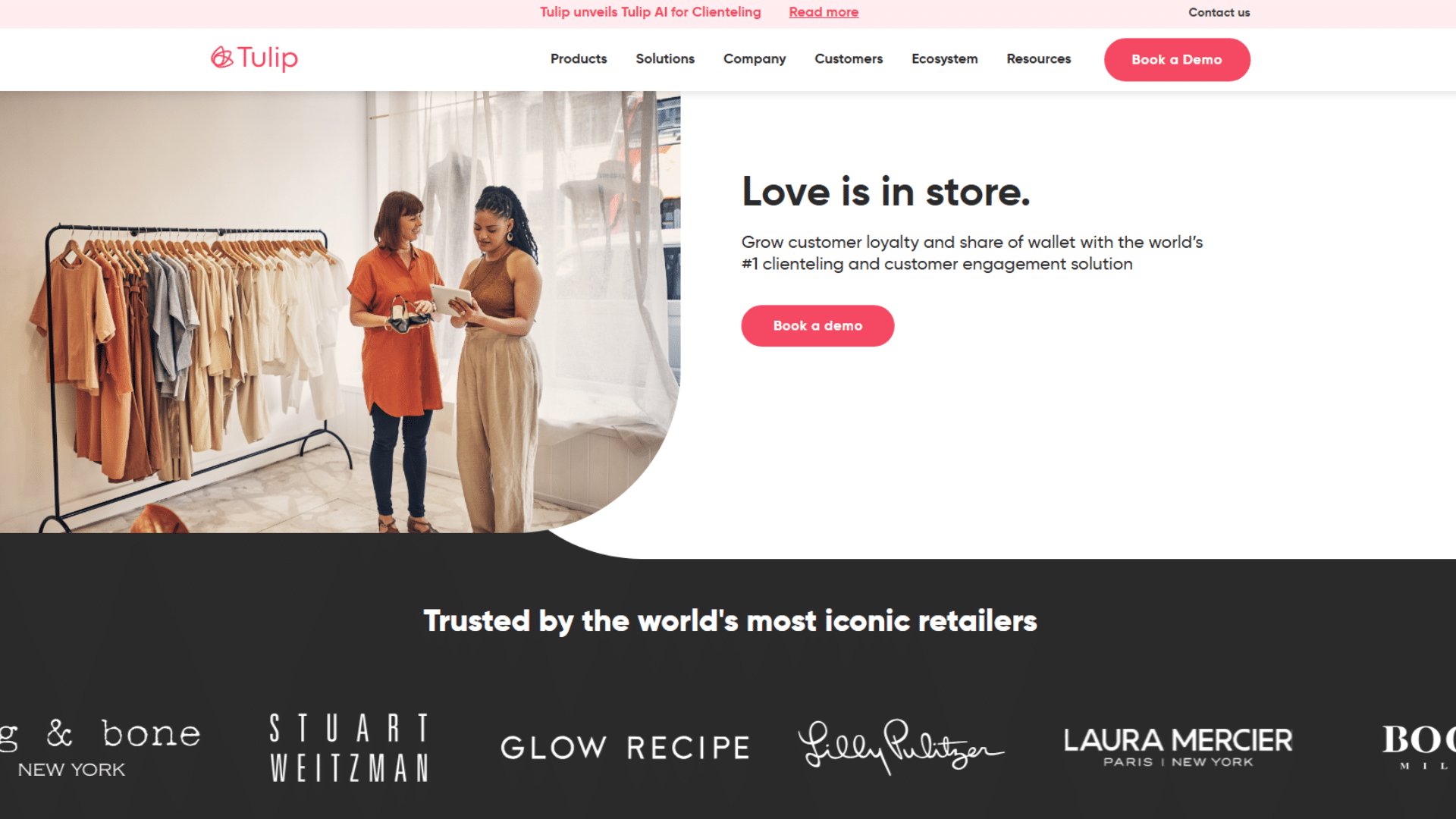
Tulip stands out for its native integration with Shopify and the main e-commerce platforms. The interface shows abandoned carts, wishlists and even recently viewed products at a glance, turning every visit into an expert consultation.
These solutions sync stock, prices and promotions in real time, and offer advanced features for booking appointments, sending recommendations by SMS/WhatsApp and creating personalized Instagram stories.
CRM platforms and artificial intelligence
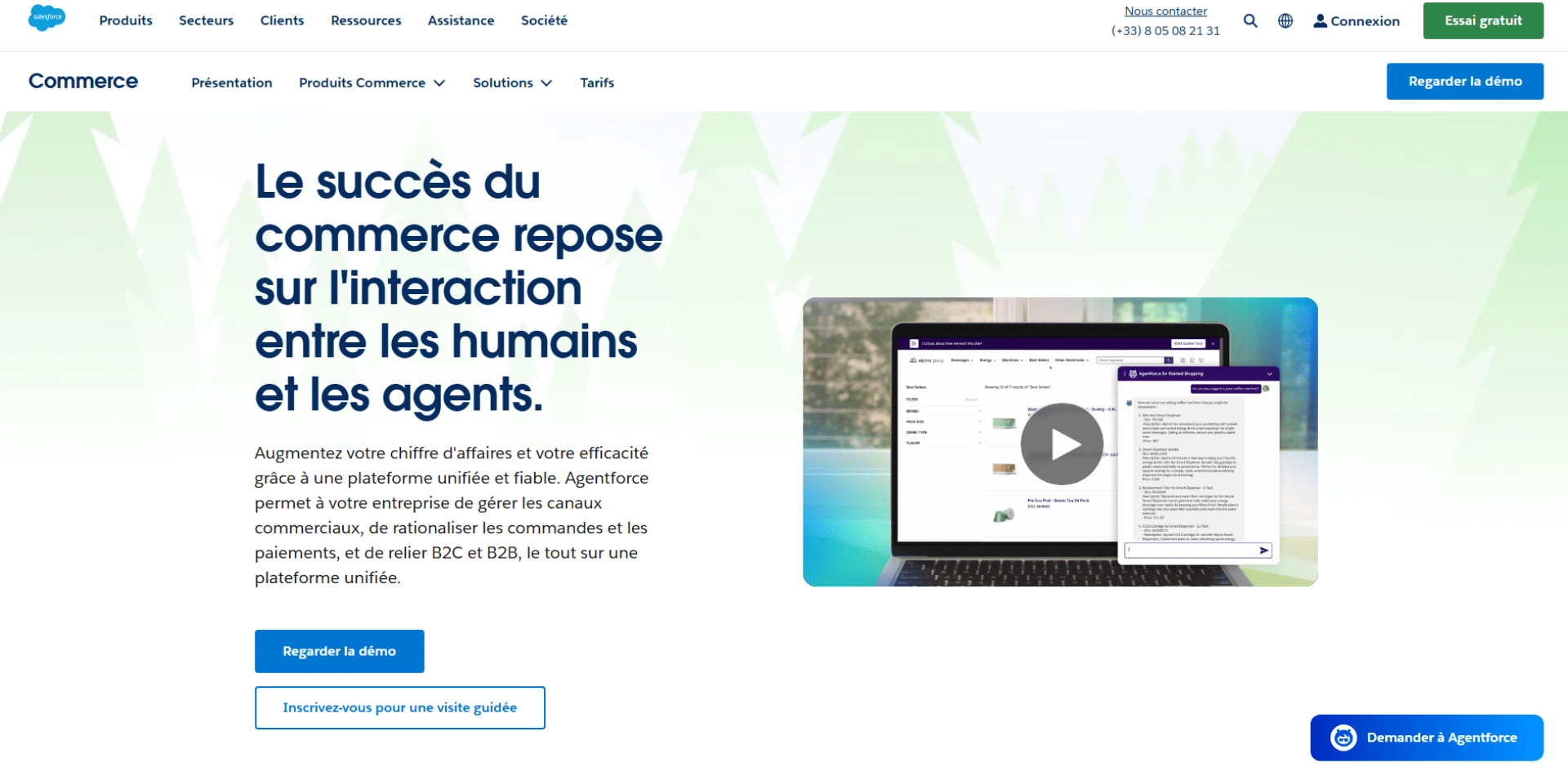
Salesforce Commerce Cloud now includes native clienteling features with Einstein AI to predict purchasing behavior. The solution analyzes millions of interactions to identify subtle patterns and generate personalized recommendations. Dynamic Yield (acquired by Mastercard) excels at real-time personalization, cross-referencing behavioral data, weather, local events and trends to optimize every recommendation. Its algorithms even detect signs of disengagement before they materialize.
Yotpo, for its part, specializes in omnichannel orchestration, unifying web browsing, online purchases, store visits, social media exchanges and email contacts. Its 360° view ensures perfect consistency across every channel.
Industry-specific solutions
In beauty, ModiFace (L’Oréal) is revolutionizing virtual try-on with augmented reality, letting advisors offer ultra-realistic simulations before purchase. Sephora has built its own ecosystem with Color IQ to match shades and Beauty Board to create personalized looks. In jewelry, Gemvision enables 3D design of custom pieces directly with the customer, while Valigara handles real-time inventory and custom configurations. The automotive sector uses Salesforce Automotive Cloud to track the entire journey: test drives, configurations, financing, delivery and after-sales. CDK Global integrates all dealership systems into a unified view.
These industry solutions build in business-specific requirements: size and color management in fashion, prescription tracking in optics, service scheduling in automotive, creating vertical expertise you can’t do without.
Real-world use cases in the luxury industry
Here are two concrete examples of how clienteling has been integrated and a strategy rolled out.
Burberry and its Customer Insight Hub
The brand developed its “Customer Insight Hub”, which analyzes customer behavior to automatically route requests to the right advisors. Burberry uses machine learning to predict customer preferences and create personalized recommendations (IT budget of $76.9 million in 2023). Its initiatives include bringing multimedia content into customer conversations and training teams on “what makes a good connection”, so that advisors are “prepared to respond effectively” to requests, according to Burberry.
AG Jeans with Tulip
The premium denim brand implemented Tulip Clienteling in 2022, replacing paper notebooks with digital 360° customer profiles. The results followed: customer outreach volume multiplied by 5, a conversion rate “almost four times higher” than the old system, and an average basket up “nearly 20%”, again according to the teams. AG Jeans uses three integrated solutions: Clienteling for personalization, LiveConnect for real-time access to stylists via video/chat, and Endless Aisle for access to the full e-commerce inventory from stores.
Advantages and limits of the practice
Like any strategic approach, clienteling brings considerable benefits, but also operational constraints you need to anticipate to roll it out successfully.
Mutual benefits and competitive differentiation
For the brand, this approach creates strong differentiation in a saturated competitive environment. It significantly improves sales performance, builds a base of ambassador customers less sensitive to competitors, and justifies premium prices through perceived added value. The brand becomes a trusted partner rather than a mere supplier, generating positive word of mouth that is particularly valuable in the digital economy. This reputation for relationship excellence naturally attracts new qualified customers who want to have the same experience.
For the buyer, the benefits are tangible: considerable time saved thanks to relevant recommendations, discovery of items perfectly suited to expressed and latent needs, expert guidance, and above all that precious feeling of being recognized and valued as an individual.
Operational constraints and adapting to each sector
In-depth relationship management requires collecting and processing sensitive personal information, which creates significant data protection responsibilities. Organizations must invest in security, train their teams, and guarantee full transparency on how the information collected is used. Outside the luxury sector, thinner margins make it harder to invest in sophisticated tools and in-depth team training. Adapting the approach calls for a gradual rollout: rigorously identifying the premium buyers who justify personalized treatment, partially automating repetitive processes, and using tools suited to specific budget constraints.
Resistance to change among traditional sales teams can also slow adoption. Some advisors may be reluctant to share their “client notebooks” or to adopt new digital tools, which requires significant support from management.
The future and emerging trends
What technological and societal changes will shape this approach in the coming years? It is hard to know for sure, but some directions are clearly taking shape.
- Predictive algorithms are becoming able to anticipate needs with remarkable accuracy, analyzing weak signals invisible to the human eye: micro-expressions during fittings, time spent on certain visuals, correlations between weather and color preferences. This augmented intelligence multiplies human capabilities without replacing them.
- Conversational AI will soon enable natural interactions 24/7, preparing in-store appointments and keeping the relationship going at all times. Virtual assistants will learn each advisor’s communication style to ensure seamless continuity.
- Augmented reality will transform virtual try-on, enabling remote styling consultations with unprecedented precision. These technologies will create new hybrid formats between digital and physical.
That said, an ethical approach also looks like a lever to strengthen. Informed consent, algorithmic transparency, and even users having full control over their personal data are becoming major competitive advantages with privacy-conscious consumers.
Younger generations are looking for authenticity, sustainability and alignment with their personal values. Tomorrow’s approach will have to reconcile sales performance, respect for the environment and positive social impact, building CSR dimensions into the business relationship.
The questions we get over and over.
What is clienteling?
A sales approach born in luxury houses, where the advisor maintains a privileged relationship with each customer based on their tastes, purchase history and projects, in order to offer them exactly what suits them.
What is the difference between clienteling and traditional CRM?
Traditional CRM stores contact details and transaction histories and stays within a segmented mass-market logic. Clienteling takes into account emotions, context, life projects and personal aspirations to generate individualized interactions.
Which tools can you use for clienteling?
Mobile apps for advisors such as Endear, Luce (Kering) or Tulip, AI-powered CRM platforms such as Salesforce Commerce Cloud, Dynamic Yield or Yotpo, and industry solutions such as ModiFace in beauty or Salesforce Automotive Cloud in automotive.
What results did AG Jeans get with Tulip?
According to Tulip, the brand multiplied its customer outreach volume by 5, achieved a conversion rate almost four times higher than the old system and increased its average basket by nearly 20%.
What are the limits of clienteling?
Collecting sensitive personal information brings data protection obligations. Outside luxury, thinner margins make it harder to invest in tools and training, and some advisors resist sharing their client notebooks or adopting digital tools.



What the community says.