Close is a CRM designed for outbound sales, with native integration of phone, SMS, and email, and a power dialer that makes it a true sales productivity tool for small teams that spend most of their time on the phone.
Since June 2026, the publisher has added Chloe, a voice-based AI agent that calls, qualifies leads, and schedules appointments on your behalf.
On the other hand, the tool is still very much geared toward the U.S. market: there is no French version, and Chloe is currently available only in the United States and Canada, in English only.
Under what conditions is Close the right choice among the B2B CRM software solutions on the market? How does it stack up for a French team without its flagship feature? And how much does it really cost once pay-as-you-go calling is added to the listed price? We’ve analyzed the tool in depth; here’s our full review.
Sommaire
Our Review of Close: A Summary
| Perimeter | Score | Our opinion |
|---|---|---|
| Overall rating | 4,1 | Close is a CRM for outbound sales, with natively integrated phone, email, and SMS capabilities. While highly effective for small sales teams handling a high volume of calls, it loses much of its appeal outside of this niche, and its suitability for the French market remains limited. |
| Ease of use | 4,6 | That’s the number one selling point. The interface is clean and the app is fast, which clearly encourages adoption. The only downside: everything is in English. |
| Outbound Features | 4,5 | All outbound calling features are built-in, including the power dialer, predictive dialer, real-time call coaching, multichannel sequences, and call recordings. Few CRMs offer this level of depth for outbound calling. |
| Chloe and AI | 3,6 | The most integrated voice AI agent on the market, with truly impressive beta results. However, availability is limited to the United States and Canada, in English only. For a French reader, this is more of a roadmap than an actual feature, unfortunately. We’ll have to be patient a little longer. |
| Quality-price ratio | 3,3 | The advertised price of $9 is misleading. The real cost of getting started with an outbound team is the Growth plan at $99 per user, plus pay-as-you-go calling and AI credits. Expect the actual cost to be double the advertised price. |
| Suitability for the French market | 2,8 | That’s Close’s biggest drawback. The interface and support are in English only, prices are listed in dollars, text messages can’t be sent to French numbers, and Chloe isn’t available in Europe. However, Close is particularly useful for French teams that are prospecting internationally in English. |
Close offers a 14-day free trial, including $5 in call credits, so you can test the service under real-world conditions. The provider also offers a 30-day money-back guarantee.
Close, the self-proclaimed anti-Salesforce
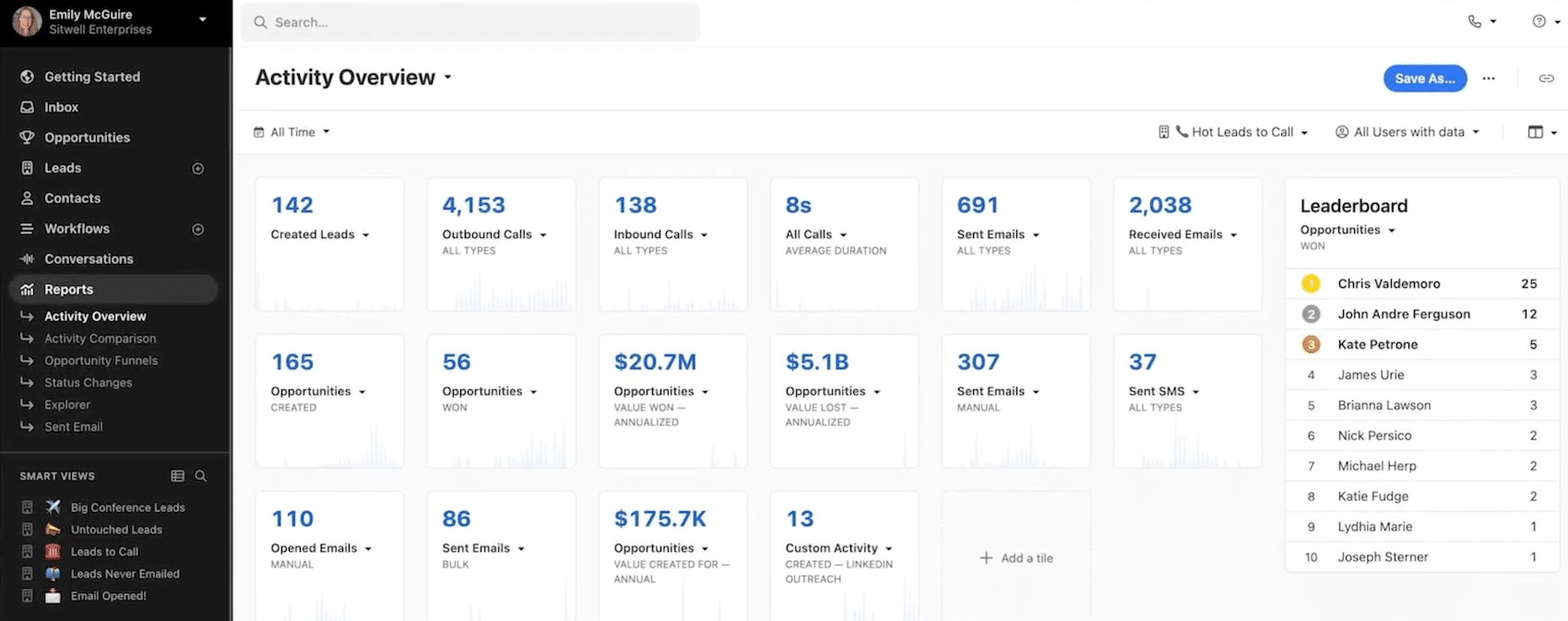
Close is a unique case in the CRM landscape. The company was founded in 2013 by Steli Efti, a leading figure in sales content in the United States, and has never raised funding. It is profitable, 100% remote, and has about 100 employees serving more than 11,500 client teams. With no pressure from investors, there’s no need to rush into new features: in thirteen years, the product has never strayed from its original vision.
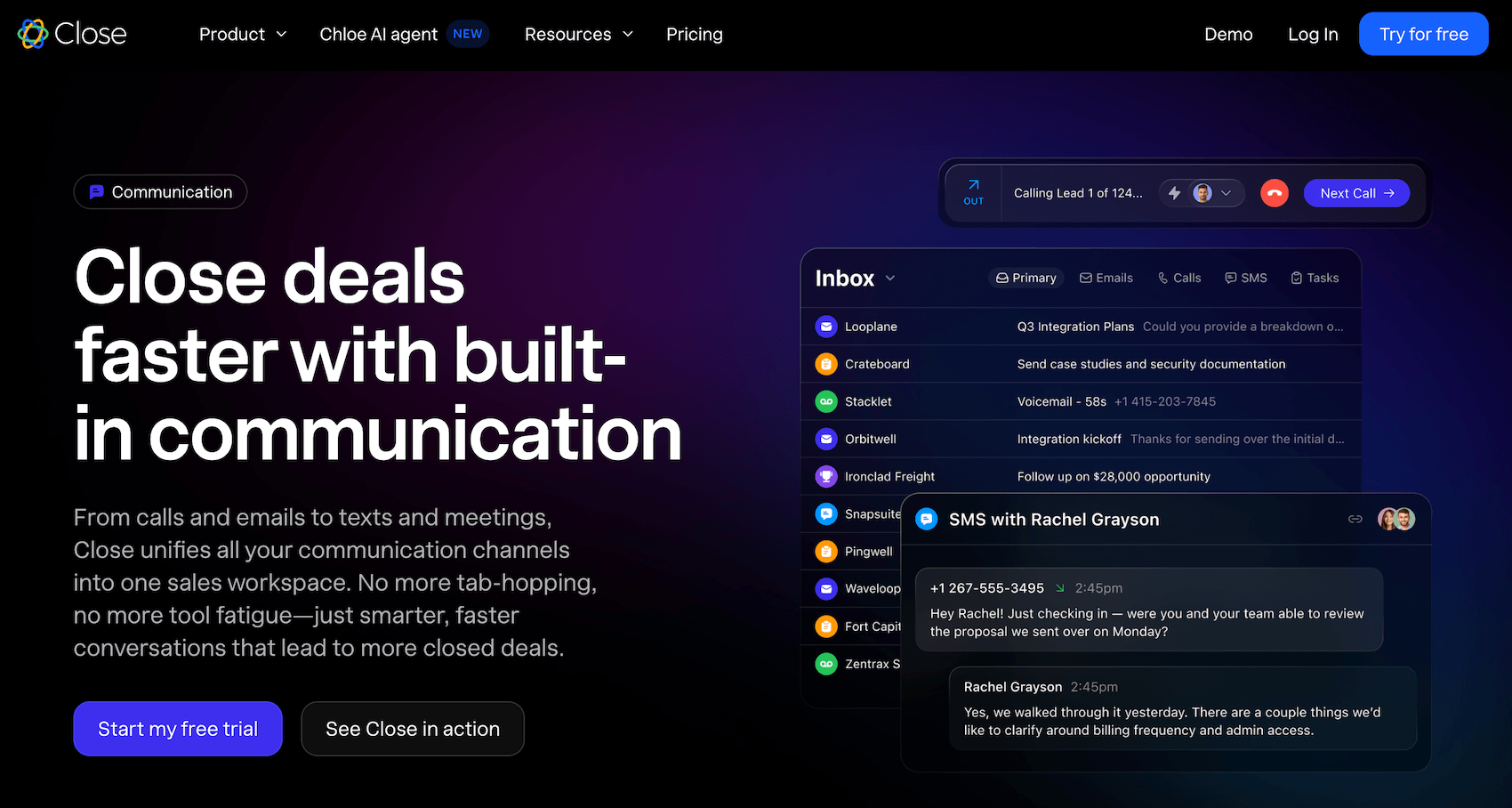
This thesis can be summed up in one sentence: most CRMs are data-logging systems; Close aims to be an action-oriented system. In practical terms, the tool isn’t designed to neatly store your data for use in reports. It’s designed to facilitate more calls and spark more conversations, with as little friction as possible between the sales rep and their prospect.
The publisher takes honesty so far as to publish an article on its own blog listing the reasons not to buy Close. We really appreciated this approach, which we haven’t seen anywhere else. The post explains that Close isn’t aimed at large organizations, teams looking for an all-in-one platform with marketing and billing features, or those seeking a free CRM. Its target audience is teams of 3 to 15 salespeople who spend their days on the phone and want to be up and running the very same day. This clear positioning is evident throughout the product.
Chloe: What Close’s AI Agent Really Does
Chloe is the big new release of 2026, and it’s worth taking a closer look at, even if it remains out of reach for French companies for now.
The concept: an AI agent natively integrated into the CRM that manages your pipeline just like a junior SDR would. Its most impressive feature is its voice capabilities. When a lead enters Close, Chloe can call them within minutes, conduct a structured discovery process based on your qualification criteria, address common objections, and then schedule an appointment directly in the appropriate sales rep’s calendar.
If no one answers, she leaves a voicemail message and moves on to the next person. Everything is transcribed, summarized, and logged in the file before the call even ends.
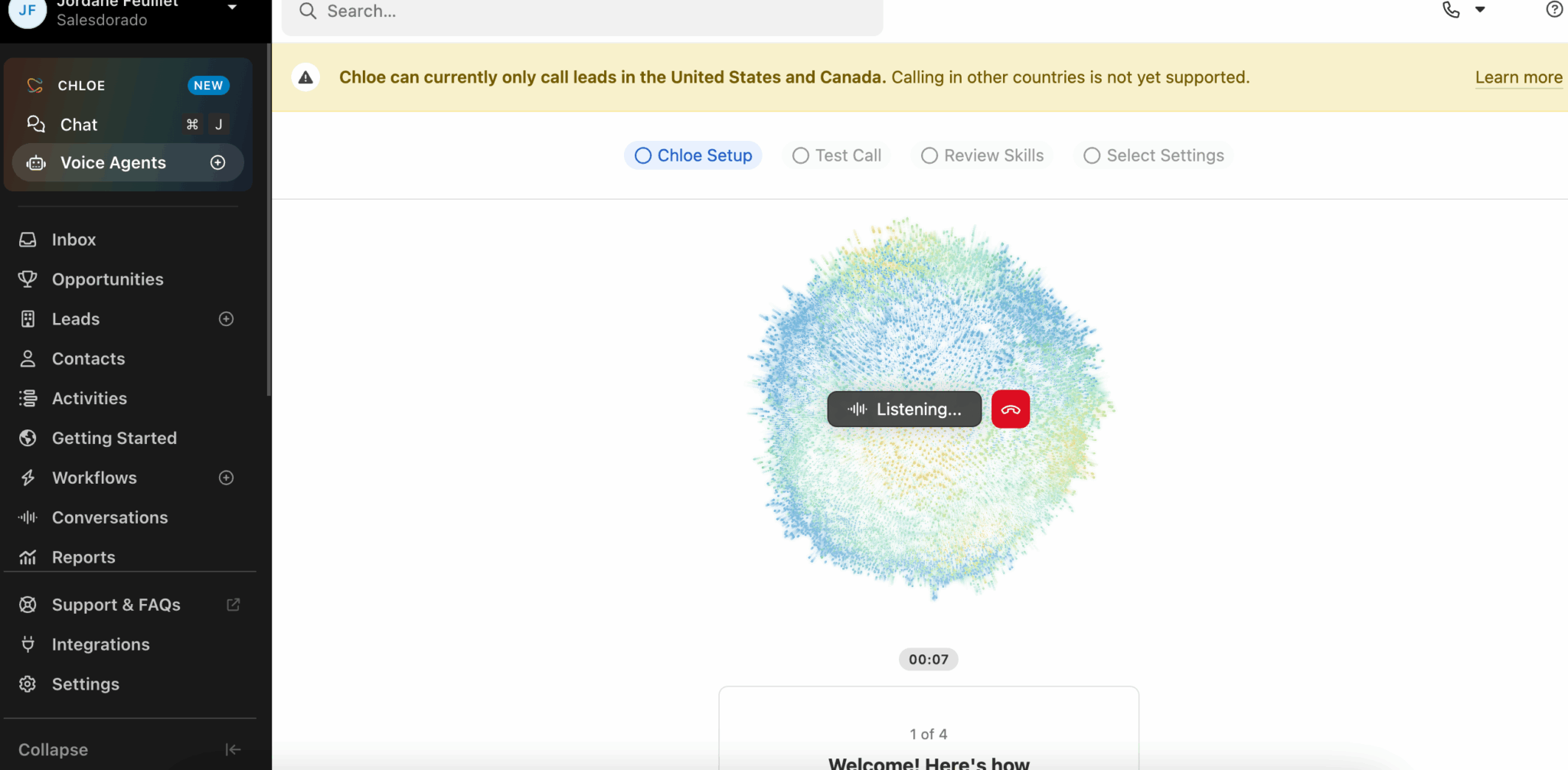
But the voice agent is just the tip of the iceberg. Chloe also enriches the records based on conversations, writes meeting minutes via Notetaker, suggests the next step for each deal, and answers questions in natural language, such as “Which deals haven’t moved in the last 30 days?” The entire system operates using an AI credit system included in every plan, with credits consumed as they’re used.
: Chloe is only available to customers based in the United States and Canada, and only in English. Multilingual support is listed on the roadmap, but no date has been set. If Chloe is your main reason for watching Close from France, wait for the European launch before signing up.
There are dozens of AI voice agents out there. What really sets Chloe apart is its native integration: it makes calls with the lead’s entire history in mind, and every action is logged directly in the CRM without the need to maintain a connector. This is exactly the direction the market is heading, as we explained in our guide to AI-powered CRMs for SMBs. Keep a very close eye on this once it launches in Europe.
The features that have made Close famous
Chloe aside, Close remains, above all, an excellent tool for commercial production. Four key elements are the foundation of its reputation.
#1 Native Telephony
This is the core feature—the one that built the product. While most CRMs rely on integration with third-party calling software, Close includes its own calling features with all the associated functionality: one-click calls from the contact record, automatic logging, call recordings, pre-recorded voicemail messages sent with a single click, and more.
There are two automatic dialing modes available:
- The power dialer automatically places calls from a list without the sales representative having to touch the keyboard.
- The predictive dialer, available only on the Scale plan, dials multiple numbers simultaneously and connects the sales representative only when a person answers.
Designed for managers, the live coaching features (discreet listening, whispering, and intervention) allow new sales representatives to be trained using real calls.
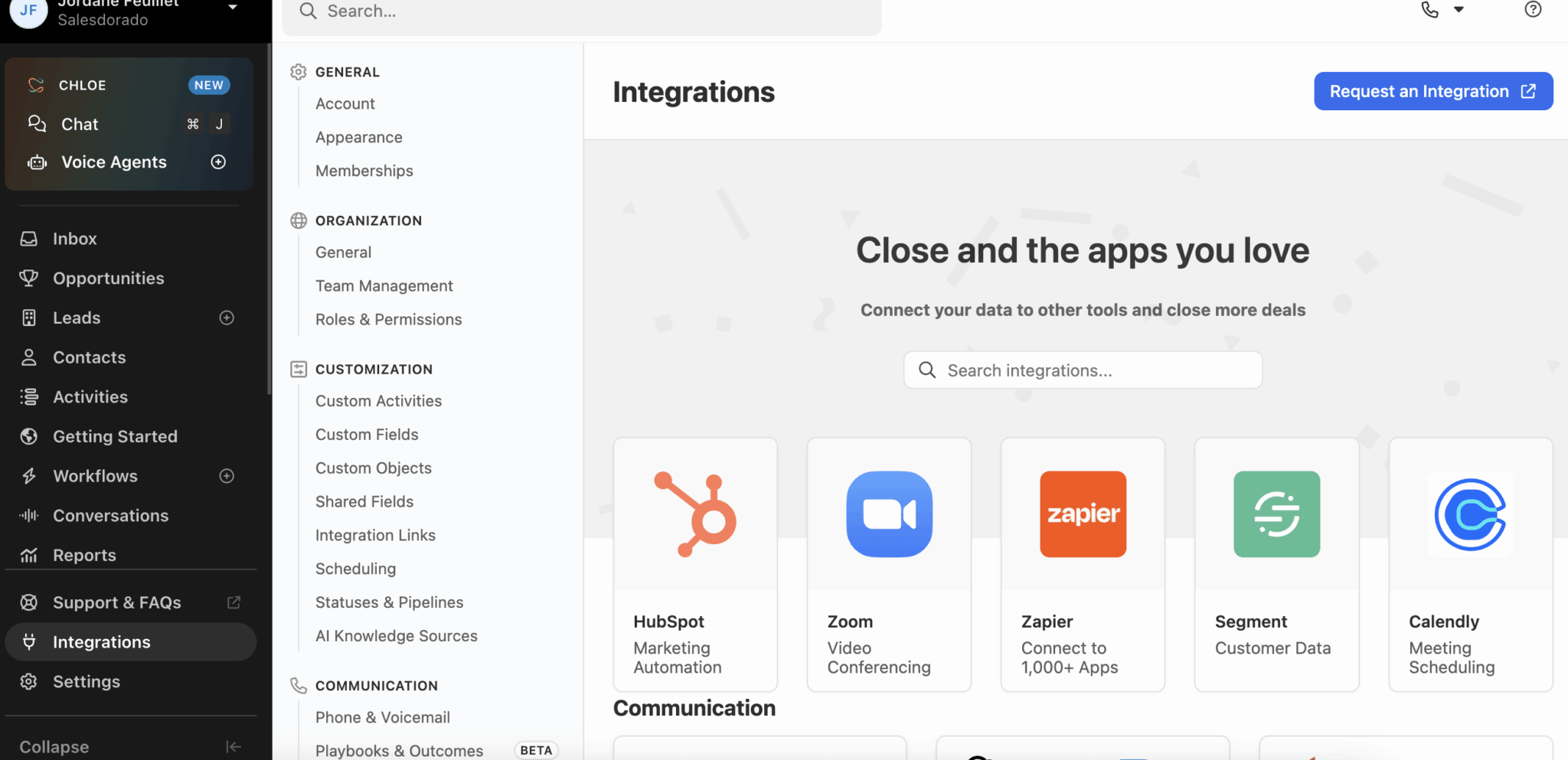
One thing to keep in mind: the phone service runs on the Twilio infrastructure and is billed on a pay-as-you-go basis, in addition to the subscription fee. You cannot connect your existing VoIP provider. That’s the price of full integration…
#2 The Unified Inbox and Smart Views
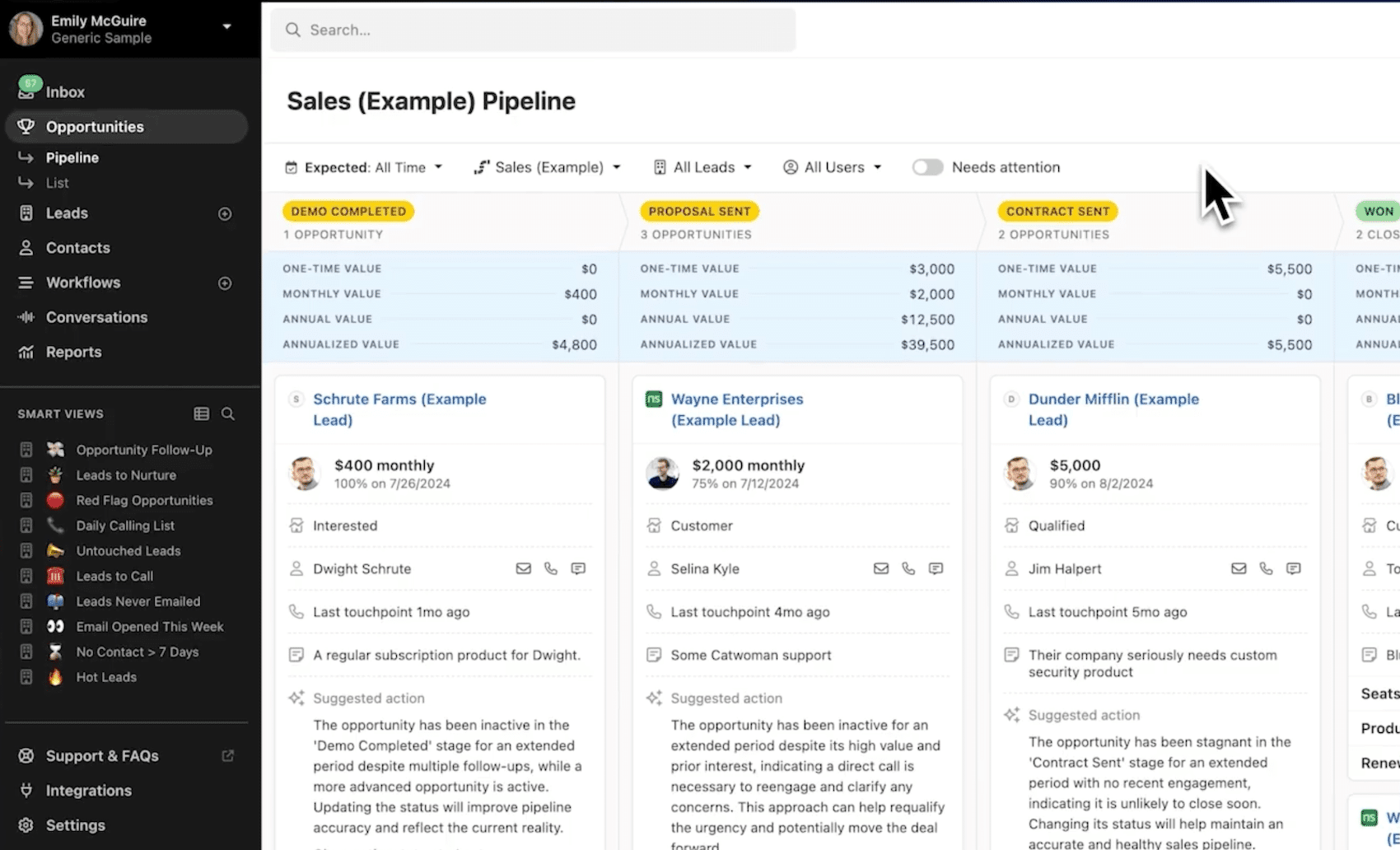
The inbox centralizes everything that requires action: received emails, missed calls, overdue tasks, and follow-up reminders. Sales reps open Close in the morning and go through their list without having to switch between five different tools.
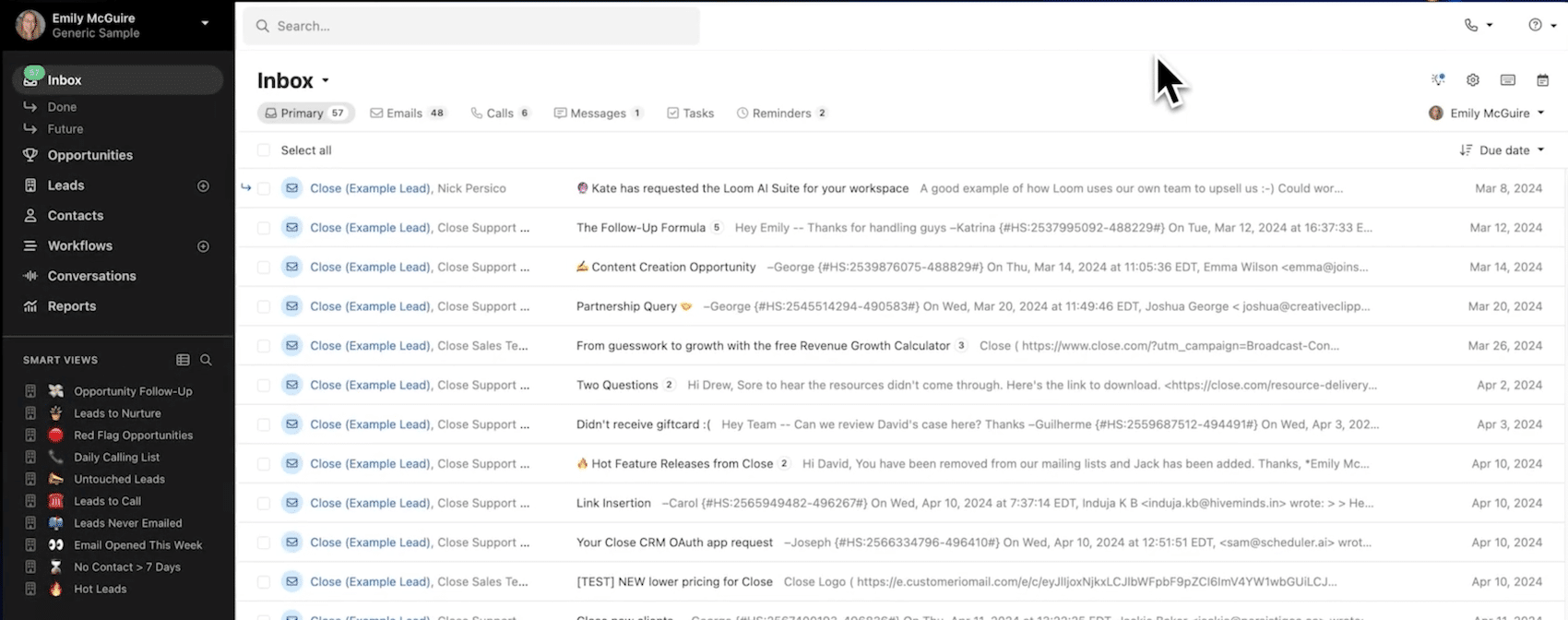
Smart Views round out the system. These are dynamic lists based on any criteria: leads who opened an email but didn’t reply, deals with no activity in the last 30 days, and contracts due for renewal this quarter.
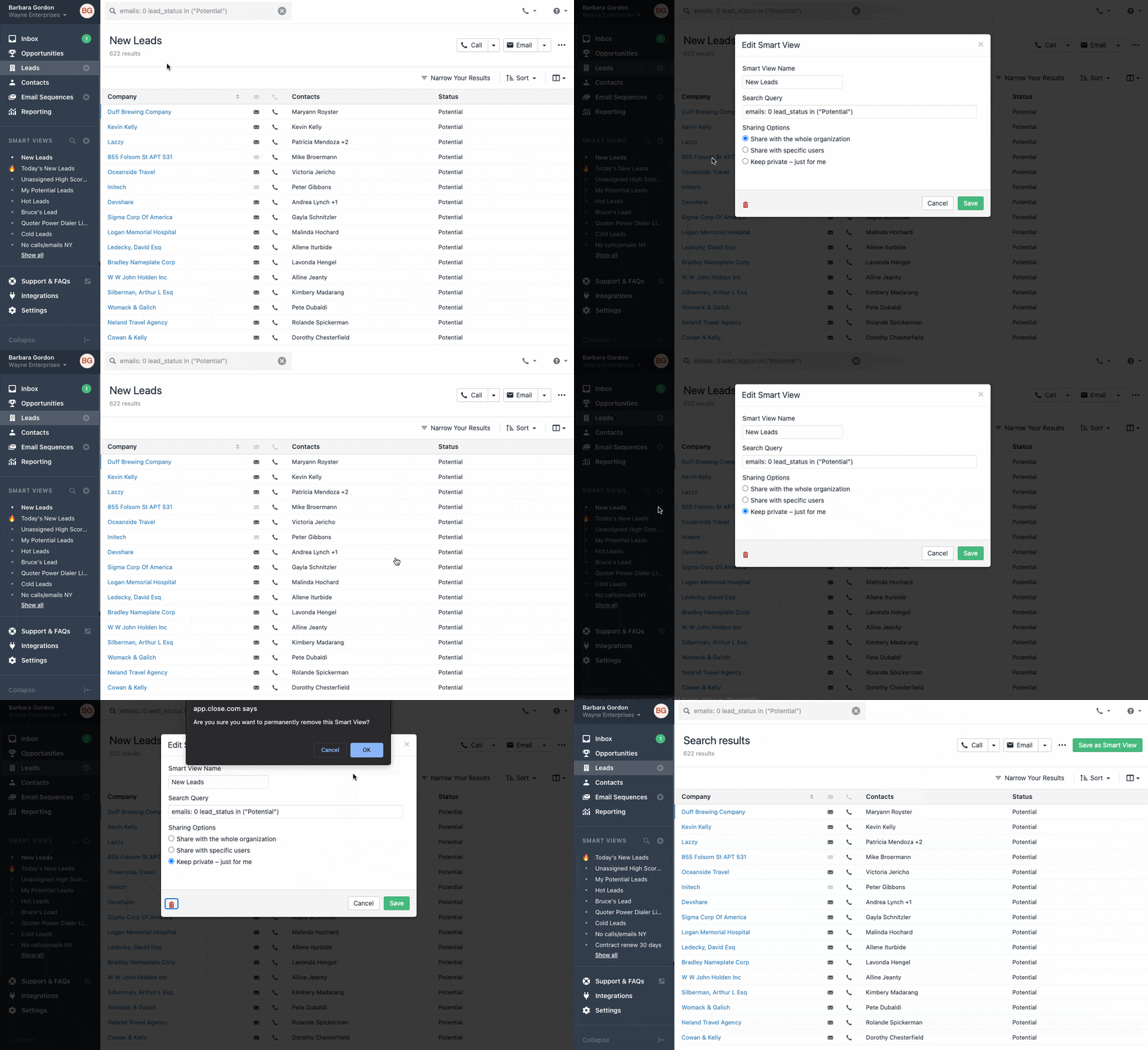
They update in real time and are shared with the team, making them a valuable tool for managing the sales pipeline. The search function is remarkably powerful. The only caveat: when conversation volumes are very high, the inbox’s prioritization feature reaches its limits, and some teams end up organizing themselves around Smart Views rather than the inbox itself.
Multichannel Workflows
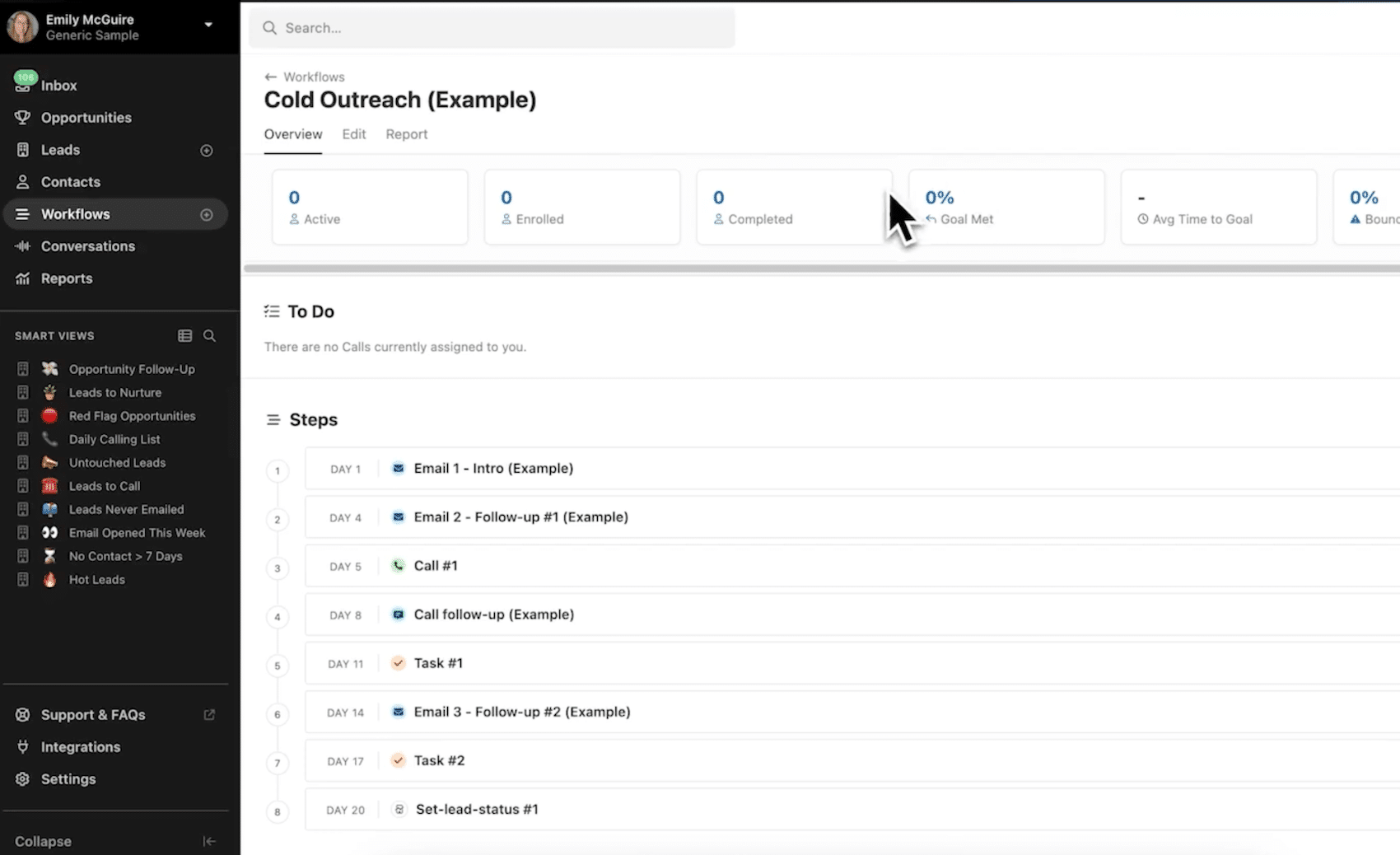
Workflows are Close’s multichannel lead nurturing sequences: a series of steps combining automated emails, text messages, call tasks, and timeframes, triggered when a lead meets certain criteria. They’re easy to set up and effective, whether you’re assigning a new lead automatically or streamlining follow-ups.
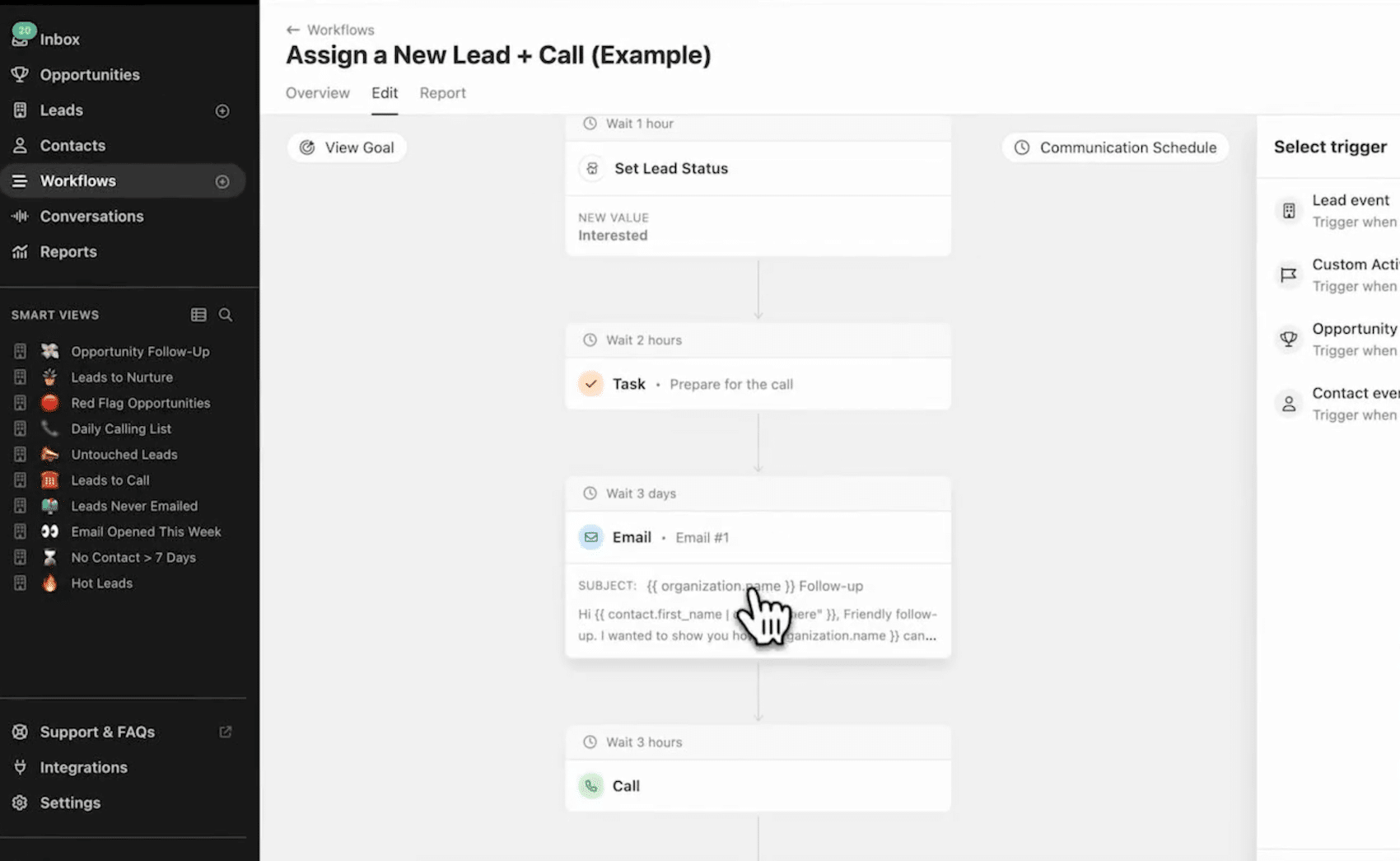
However, it is important to be aware of its limitations:
- Workflows are available only on the Growth and Scale plans.
- The platform remains focused on contact sequences: for more advanced back-office automation, the available triggers are more limited than what the search function allows, and many teams continue to use Zapier or Make as a supplement.
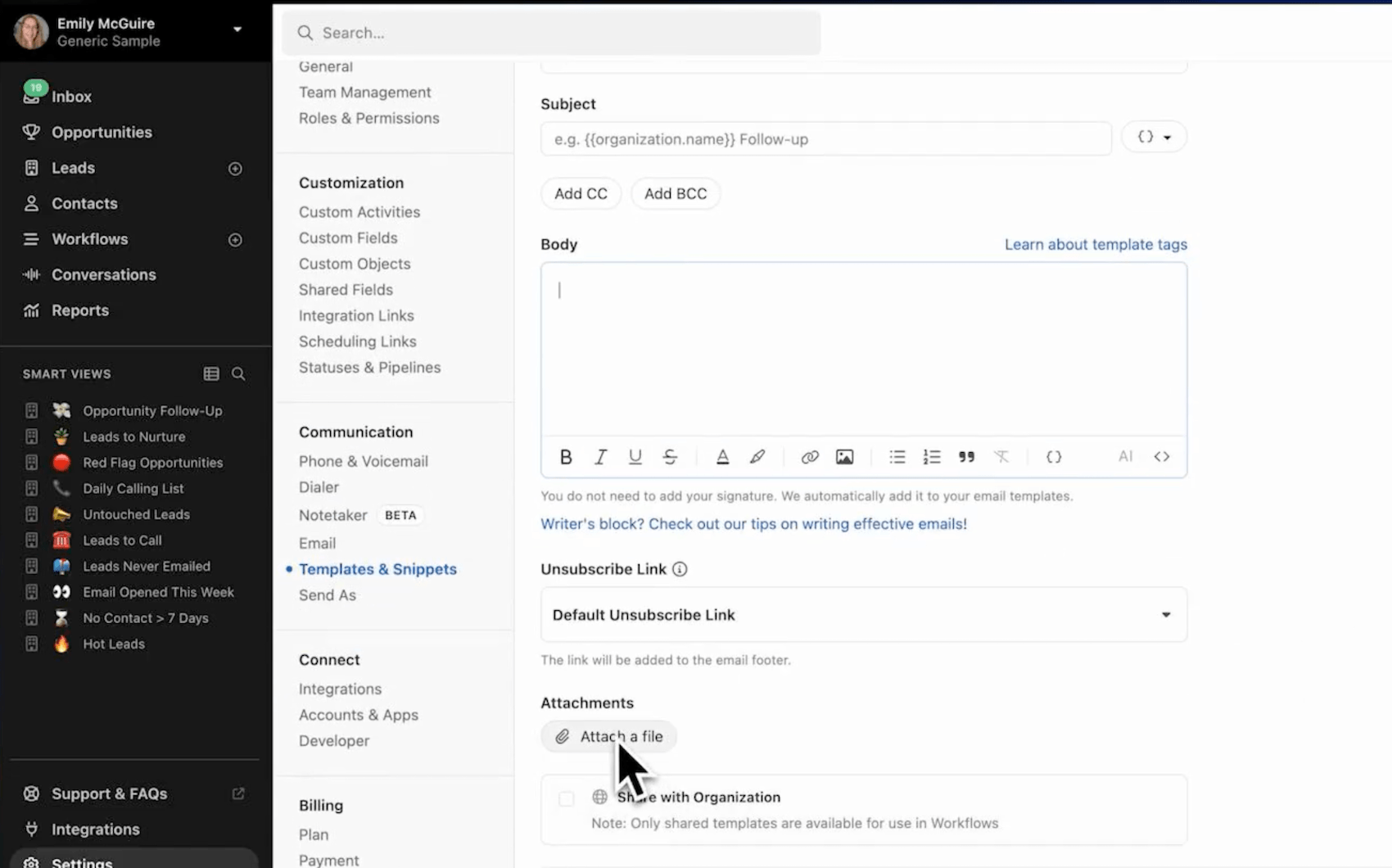
- It’s not possible to compose an email directly within a workflow; you must first create a template and then insert it, which quickly clutters up the template library.
A Surprising Data Model
Close organizes everything around the “Lead,” which in this context refers to the target company. Contacts, opportunities, calls, and emails are all managed within this single record. As a result, Close does not feature the traditional separation found in sales CRMs between accounts (organizations) and contacts.
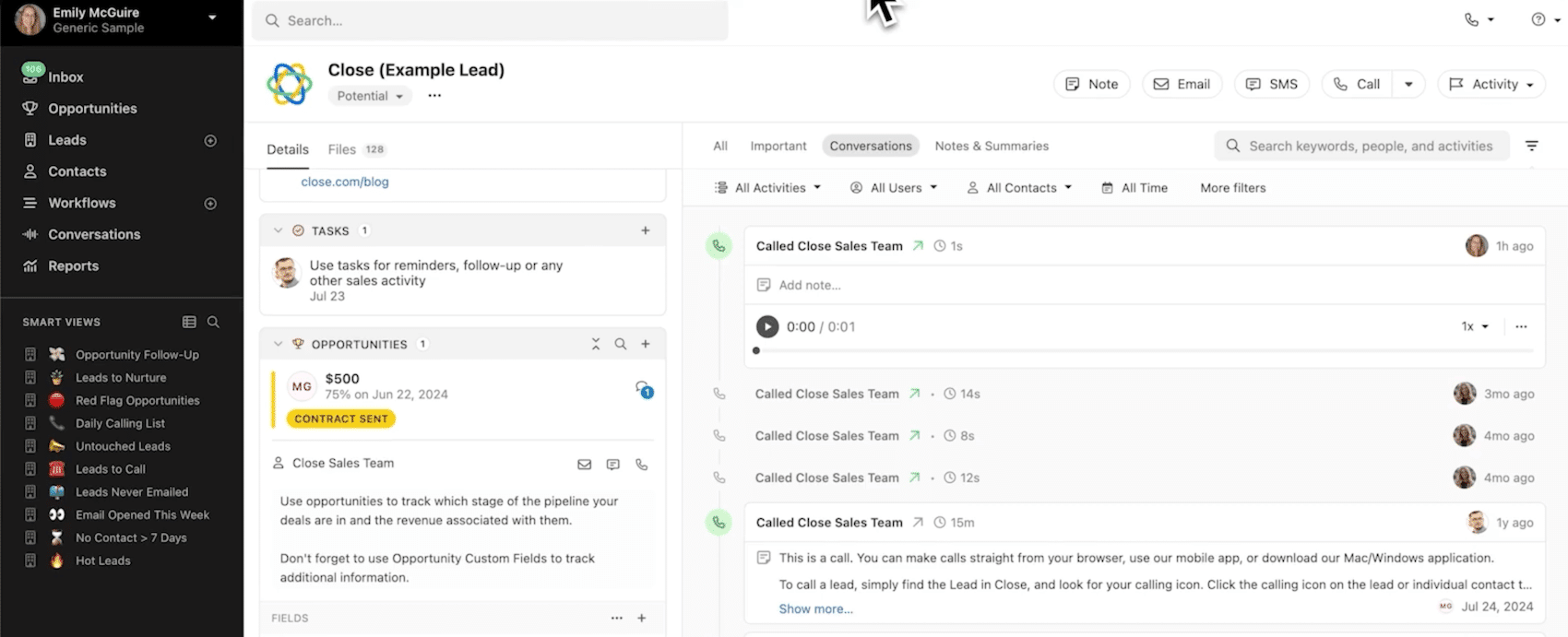
This design choice makes perfect sense for transactional sales: an account’s entire history can be viewed on a single screen, in chronological order.
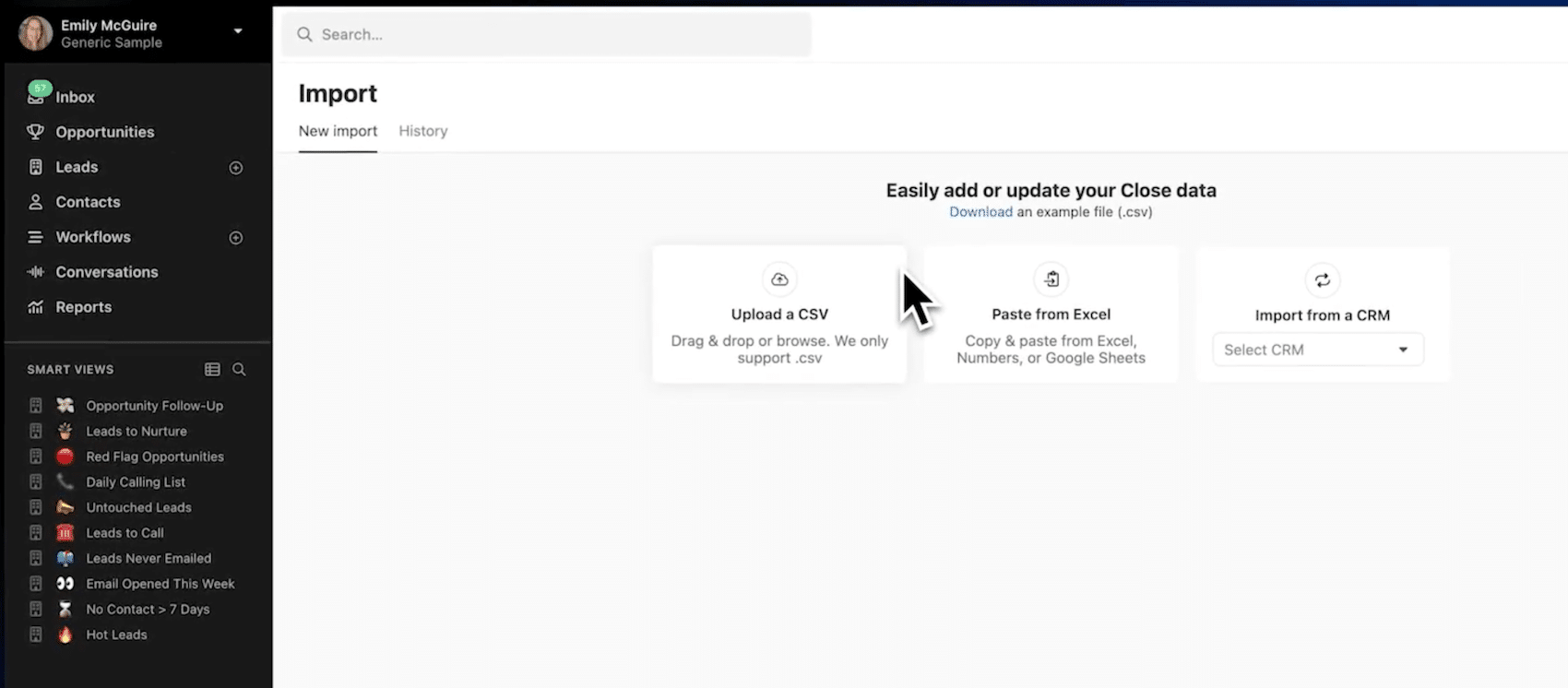
This can be confusing for teams coming from a traditional CRM, and—let’s be honest—it complicates complex sales cycles involving multiple contacts and subsidiaries. If you’re considering migrating your CRM software to Close, you’ll need to allow for a significant adjustment period in this regard, even though the vendor offers a free migration tool from the leading CRMs on the market.
Going further
Close Pricing: How Much Does This CRM Cost?
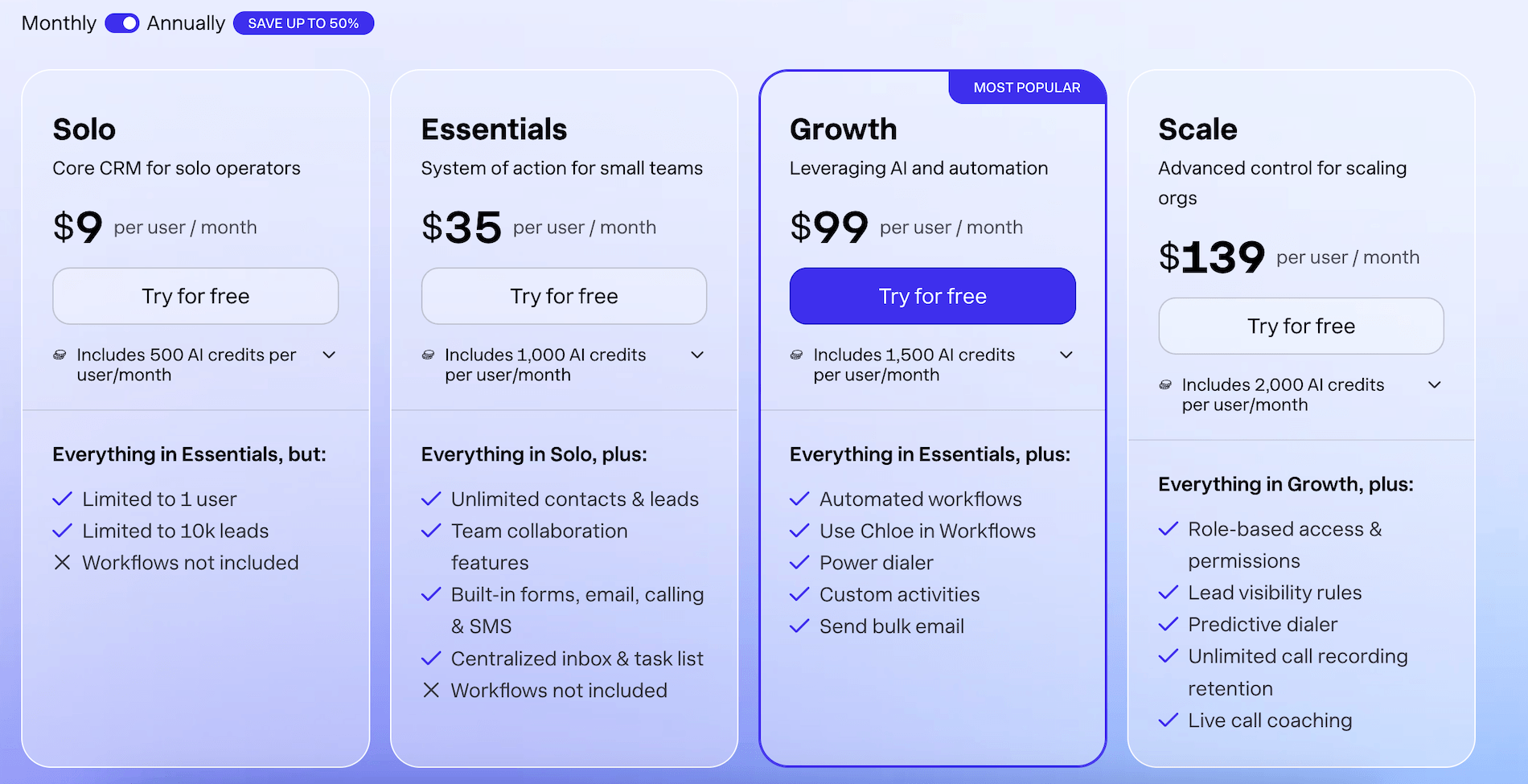
Close offers four plans, billed per user per month. The prices below are for annual billing, which is significantly more cost-effective than monthly billing:
| Map | Annual price | Monthly price | What You Need to Know |
|---|---|---|---|
| Solo | $9/month | $19/month | Limited to 1 user and 10,000 leads, with no workflows. Think of this as an extended trial rather than a full-fledged plan… |
| Essentials | $35 per user per month | $49 per user per month | Unlimited leads, inbox, calls, text messages, and forms. But no workflows or power dialer, which rules it out for serious outbound prospecting. |
| Growth | $99/user/month | $109/user/month | Workflows, power dialer, bulk emails, and custom activities. This is the real gateway for a sales team. |
| Scale | $139/user/month | $149/user/month | Predictive dialer, live call coaching, advanced permissions, unlimited recording retention, and custom fields. |
The first takeaway from this table: the structure of the plans naturally steers users toward the Growth plan. The Solo plan is a loss leader, and the Essentials plan deprives users of the two features that justify choosing Close over a cheaper competitor. If your team does outbound sales, assume that your benchmark price is $99 per user per month.
The second lesson, which is less obvious: the subscription doesn’t cover everything. Phone calls are billed on a pay-as-you-go basis according to Twilio’s rates, rounded up to the next minute. Phone lines start at $1 per month, but premium numbers with call routing and an automated greeting menu cost $19 per line. Call Assistant, which transcribes and summarizes calls, is an add-on that costs $50 per month plus $0.02 per minute. It’s also worth noting that AI features consume credits, for which each plan includes a monthly quota that can be expanded for an additional fee.
Let’s do the math for a team of 5 outbound sales reps on the Growth plan: a $495 subscription fee, plus line charges, call usage, and a few add-ons. In practice, the monthly bill tends to be between $700 and $800, or $140 to $160 per sales rep. This is consistent with what we typically see for this type of tool, but it’s a far cry from the eye-catching $9 listed on the pricing page! To put these amounts into perspective, our guide on the real cost of CRM software details all the hidden costs associated with this type of project.
The real question isn’t whether Close is expensive, but whether the integration is worth the price. A Pipedrive + Aircall setup offers 80% of the features for significantly less, at the cost of having to maintain the integration and dealing with data split between two tools. Close only makes economic sense if your team makes enough calls for the built-in dialer to save time every day. Otherwise, the two-tool setup is the better option.
What we like (and don’t like)
- Getting started: Import a CSV file, and the team is making its first calls within the day. The app is fast, the interface is easy to use, and the learning curve is very short for a tool of this complexity.
- Truly native telephony: dialing, call recording, live coaching, and text messaging—all without any third-party integration. That’s the heart of the product, and it really shows.
- Smart Views: powerful dynamic lists that turn your CRM into a prioritization tool. One of the best implementations on the market.
- Chloe: the most deeply integrated voice AI agent we’ve seen in a CRM, with beta results that back up its promise.
- Assisted Migration: Close offers a free migration tool for the leading CRMs.
- The actual cost: between the virtually mandatory Growth plan, pay-as-you-go phone service, and AI credits, the final bill can easily double the advertised price.
- No French version: the interface, documentation, and support are available in English only.
- SMS is unavailable in France: Sending SMS messages is supported only to about a dozen countries, and France is not among them. An entire feature of the product is lost.
- Chloe is not available: limited to U.S. and Canadian customers, in English. There is no date set for the multilingual roadmap.
- Limited reporting and customization: no cohort analysis or advanced forecasting; custom charts are available only on the Scale plan; and there are no marketing or billing features.
Using Close from France: What to Check Before Signing
Let’s start with what works. Close provides local numbers in over 200 countries, including France: your prospects will see a French number displayed. Call billing follows Twilio’s rates by destination, which are reasonable for domestic calls within France.
In terms of compliance, the provider is SOC 2 Type 2 certified and documents its GDPR compliance, but the data is hosted in the United States, with no option for European hosting. Depending on your industry, this issue should be reviewed by your DPO.
Three limitations are particularly significant:
- First, the complete lack of a French version: if some members of your team aren’t comfortable with English, adoption will suffer, and support won’t be able to respond to you in French.
- Next, the inability to send SMS messages to French numbers, which eliminates one of the product’s three channels and renders some of the workflows inoperable.
- And finally, Chloe, whom we’ve already mentioned.
For a 100% French sales team, the situation is unfavorable. You’re paying in dollars for a product whose SMS and AI agent features you don’t use, and whose language is hindering adoption. On the other hand, for a French scale-up targeting international markets in English, with SDRs making call after call to the United States, the United Kingdom, or Northern Europe, Close becomes a very relevant choice, and the future launch of Chloe is a reasonable bet on the future.
Our verdict: Who is Close designed for?
Close is right for you if:
- You lead a team of 3 to 15 sales representatives for whom the phone is the primary channel.
- You’ll be conducting international sales outreach in English, working with short sales cycles.
- You want a single tool for calls, emails, and the sales pipeline—without having to manage integrations.
- Speed of implementation matters: you want to be up and running this week, not this quarter.
- Do you want to get an early start on commercial AI agents, in anticipation of Chloe’s European launch?
Skip it if :
- Your lead generation relies primarily on email or social selling: less expensive tools work just as well.
- Your team and your customers are exclusively French-speaking, and marketing text messages are one of your communication channels.
- Are you looking for a platform with integrated marketing automation, quoting, or invoicing?
- You need advanced reporting or extensive customization of the data model.
- You are a large organization with complex validation processes, which the software vendor itself acknowledges it does not target.
Final rating: 4.1/5. Close is an excellent software solution in a specific niche: high-volume outbound sales calls in English for lean teams. Its native calling capabilities, Smart Views, and speed of execution make it a true sales productivity tool, and Chloe could turn it into one of the most compelling CRMs on the market once it launches in Europe. However, the actual cost—which is significantly higher than the listed price—and the lack of adaptation to the French market are factors you’ll need to factor into your decision. The best approach is to take advantage of the free trial to assess, over two weeks of real calls, whether the productivity gains justify the cost.
Close is an excellent choice for outbound teams that sell in English and want their phone system integrated directly into their CRM. Try it free for 14 days, keeping a close eye on your call usage to estimate your actual cost.