The other places where your customers rate you
App marketplaces
WordPress, Shopify, HubSpot, Salesforce AppExchange, the Chrome Web Store, and so on. All these platforms have generally built ranking algorithms that rely above all on customer reviews (number, date, as recent as possible, and average rating).
It is a very effective lever for driving traffic on highly qualified intent, whether for software or for agencies. And some do not sort reviews by language: Shopify ranks all reviews regardless of language, as does the WordPress plugin directory.
All the Google results on your brand
Ranking on a competitor’s brand name is increasingly fashionable. Google Ads is generally used, but some vendors go as far as ranking organically for the query “reviews + competitor name”.
In Mailchimp’s case, the first results were all positive, but you very quickly came across a Trustpilot profile that was apparently not maintained at all and served as a venting ground for dissatisfied customers. When you are Mailchimp, you can probably afford that, and even then.
For everyone else, specialized blogs that publish a review of your solution can rank above these review platforms. The approach is generally well-meaning, aiming to show a product’s advantages rather than focusing only on any drawbacks. Even so, most bloggers (especially those who easily reach the first page) care about their editorial independence and will not write anything excessively promotional or downright false.
How to use customer reviews in B2B
Optimize your Google Ads CTR and generate more leads
+17% CTR. That is the impact of customer reviews on CTR, compared with ads that have no rating. But of course, to benefit from it, you need an average of at least 3.5 stars…
You want to avoid losing that precious 17% without raising your marginal acquisition cost on the channel: that is probably the best argument for connecting your review platform to Google Ads. But beware, bad ratings lead to bad CTR. And Google’s purpose is to sell clicks. So a bad rating can reduce the positive effect generated by having customer reviews on your ad.
So keep a close eye on how your ratings evolve. It is a key performance indicator, easy to ignore, but it has a direct impact on your lead generation.
Control your market positioning and convert better
Managing your customer reviews means owning the story told about you. Your potential customers will always check your ratings first. So the goal is to make sure they see what you want them to see. Digital marketing is a matter of repetition: a good CRO strategy means making sure your potential customers hear and read the same thing about you every time. HubSpot even has a theory for this phenomenon: they call it the surround sound effect.
Buy a presence to create momentum
According to Capterra, companies with reviews get on average 22% more traffic and 79% more prospects than those without. Put simply, you have to get as many reviews as possible so as not to hurt conversion rates. And for that, paid platforms scale better.
Why use customer reviews in B2B
There are sectors where the importance of customer reviews is a matter of consensus, like e-commerce or mobile apps. But when it comes to B2B services and SaaS, people tend to think it is negligible… And yet:
- A McKinsey study shows that customers increasingly prefer self-service in their customer journey. You could call it the “consumerization of the B2B decision process”. And the Covid-19 pandemic only accelerated it.
- G2 surveyed its users to find out whether a reliable review of a product or service could influence their purchase. The answer is unequivocal: 92% said yes.
Put simply, B2B companies are paying more and more attention to how their services are perceived on review platforms. And the process is already underway.
What makes a good customer review platform in B2B
1. Google certification
Choose a Google partner platform for seller ratings. It may seem obvious, but many companies don’t do it. Rather than having 7 different platforms, stick to one that is recognized by Google. To display stars under a text ad, Google sets its conditions:
- A sufficient number of unique reviews in the country where the ad is shown: most merchants get a rating after at least 100 eligible reviews.
- Reviews collected over the last 24 months.
- An overall average rating of at least 3.5 stars.
Reviews from a country only count toward the rating for that country. This split can complicate things, as many platforms sort reviews by language. In short, the idea is to send reviews to the chosen platform only from countries where you are sure to collect enough.
2. Traffic potential
One point to consider when choosing review platforms is their potential risk for your company. Keep a close eye on what is being said about you and your services. Basically, the question is: if you search Google for “your company + reviews”, which platforms appear first?
If a large review platform “squats” that keyword and appears first, make sure your rating and your latest reviews are all positive. Because whatever the potential upside of optimizing this or that platform, if your profile is “tarnished” by a negative first result, it is a pure and simple cost. So check carefully what is being said about you:
- At first, focus only on the top 3 results.
- Once you have a better handle on your online reputation at the top of the page, broaden out to the whole first page of results.
- No need to go as far as the second page, nobody reads it.
Track this methodically and regularly. If you have an SEO agency, ask them, they often have tools to monitor this automatically.
3. Quantity and quality of customer reviews
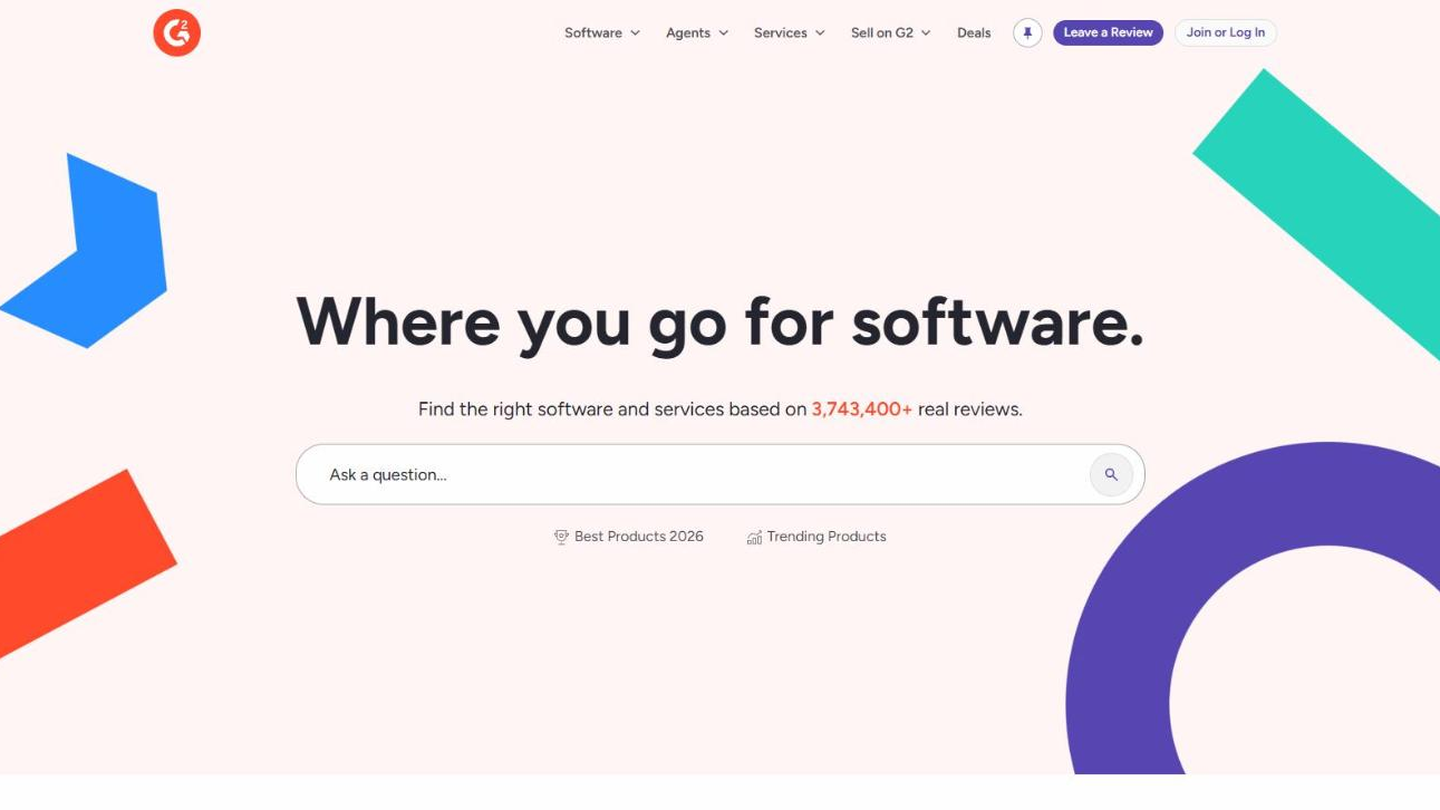
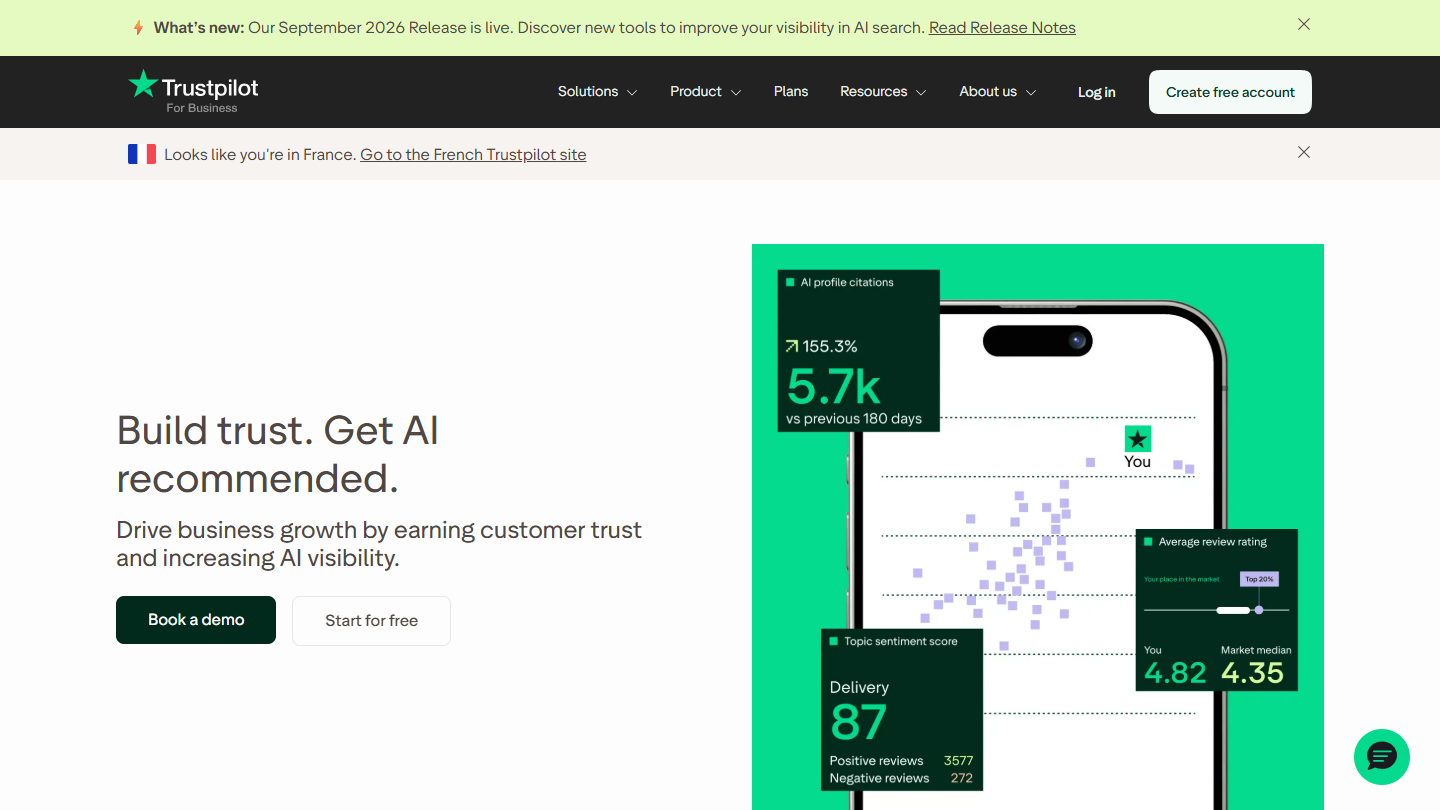
Leaving a positive review on Trustpilot literally takes 2 minutes. So you can ask customers who are not very engaged to leave you one there. On Capterra or G2, it takes much longer. If you don’t have an account yet, you have to create one, with email validation, phone number, and so on. If you send all your customers to these more demanding platforms, your conversion rates will be very poor.
Nothing new here: segmentation is fundamental. If you send all your satisfied but less engaged customers to Capterra, you end up with few reviews on that platform. And you miss out on many positive reviews on more accessible platforms like Shopify, WordPress or certified review platforms. It is the classic cost/impact trade-off.
In the end, for each G2 review you get, you could have several on Trustpilot. And the number of reviews matters a lot to customers: it is social proof that will be very useful to you. The ideal is to look for balance. Choose one platform where it is easy to leave a review quickly, and one more selective platform for more developed reviews.












What the community says.