


These days, every CRM vendor splashes “AI” across its homepage. HubSpot has Breeze, Salesforce has Agentforce, Zoho has Zia, Pipedrive has its AI sales assistant, Bitrix24 has CoPilot… When you run an SMB of 10 to 50 people and you are looking for a CRM, it has become impossible to tell what really changes your day-to-day from what is just a marketing pitch.
And that is exactly the problem. Almost all the comparisons on the subject present AI features designed for companies with 500 salespeople and millions of rows in their database. Let’s be blunt: predictive scoring on 200 contacts does not work. AI-augmented sales forecasting with 3 salespeople makes no sense. Sentiment analysis on 12 tickets a month is a gimmick.
What matters to an SMB is far more down-to-earth: does the AI save me 30 minutes a day on tasks I already do? Writing a follow-up email, summarizing a call, filling in a CRM record, prioritizing my morning follow-ups. The rest is noise. And one question comes back for every tool: is the AI included in the subscription, or billed on top?
Depending on what you need:
- An all-in-one tool (CRM, chat, video, projects) that transcribes calls from the first paid plan: Bitrix24
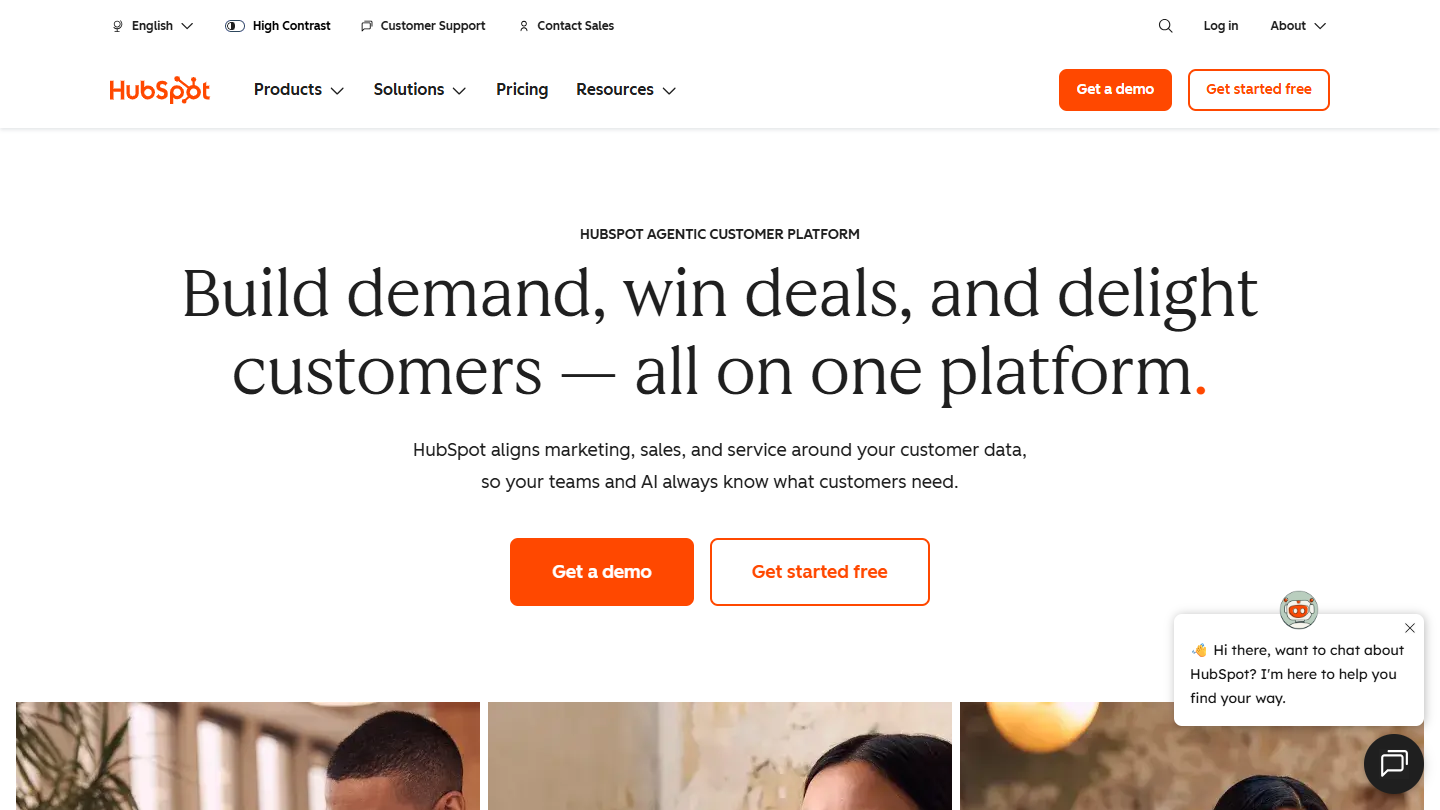
- A CRM that connects marketing, sales and customer service, with AI agents: HubSpot
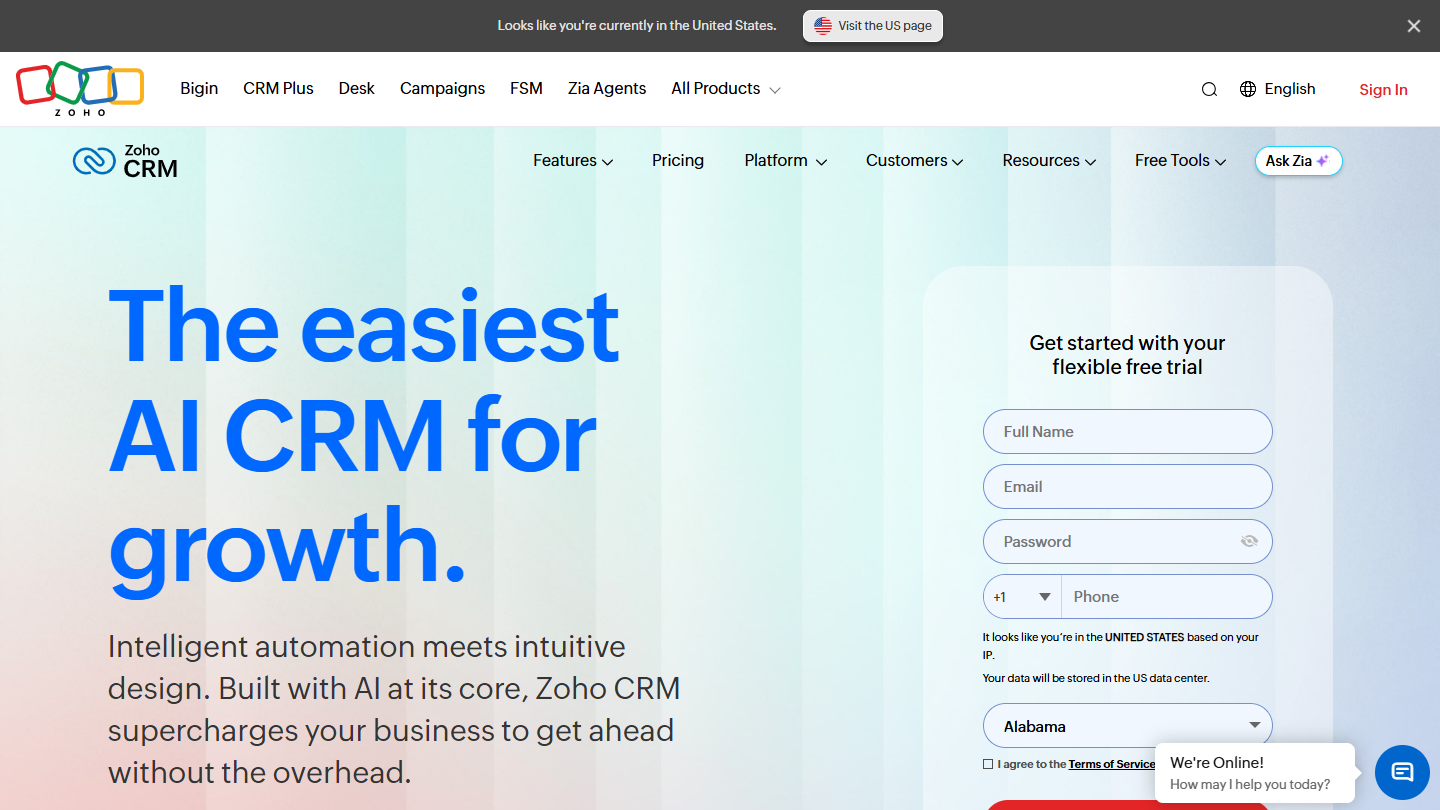
- AI hosted by the vendor itself, with no third-party provider: Zoho CRM
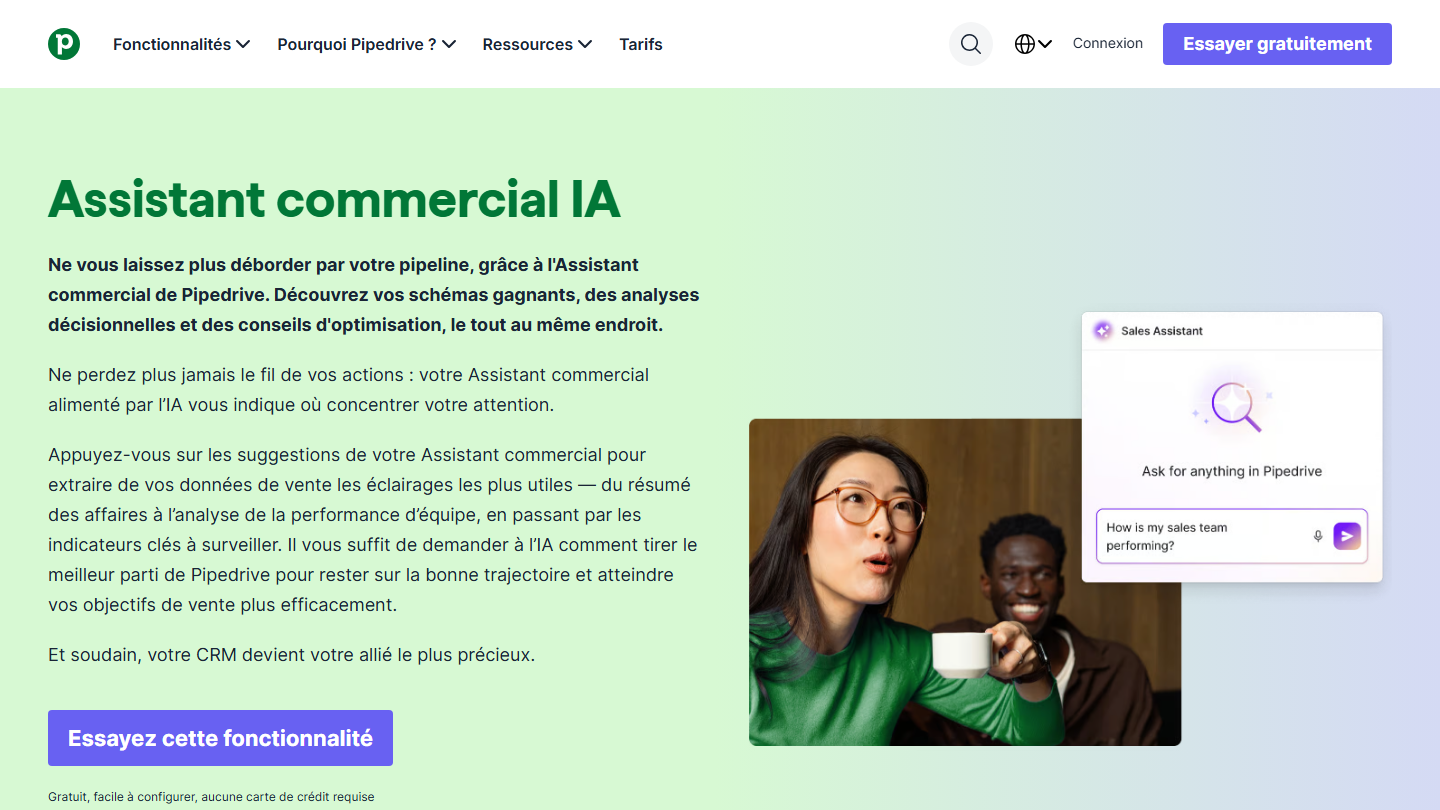
- A simple pipeline, with meeting summaries and transcription from the Lite plan: Pipedrive
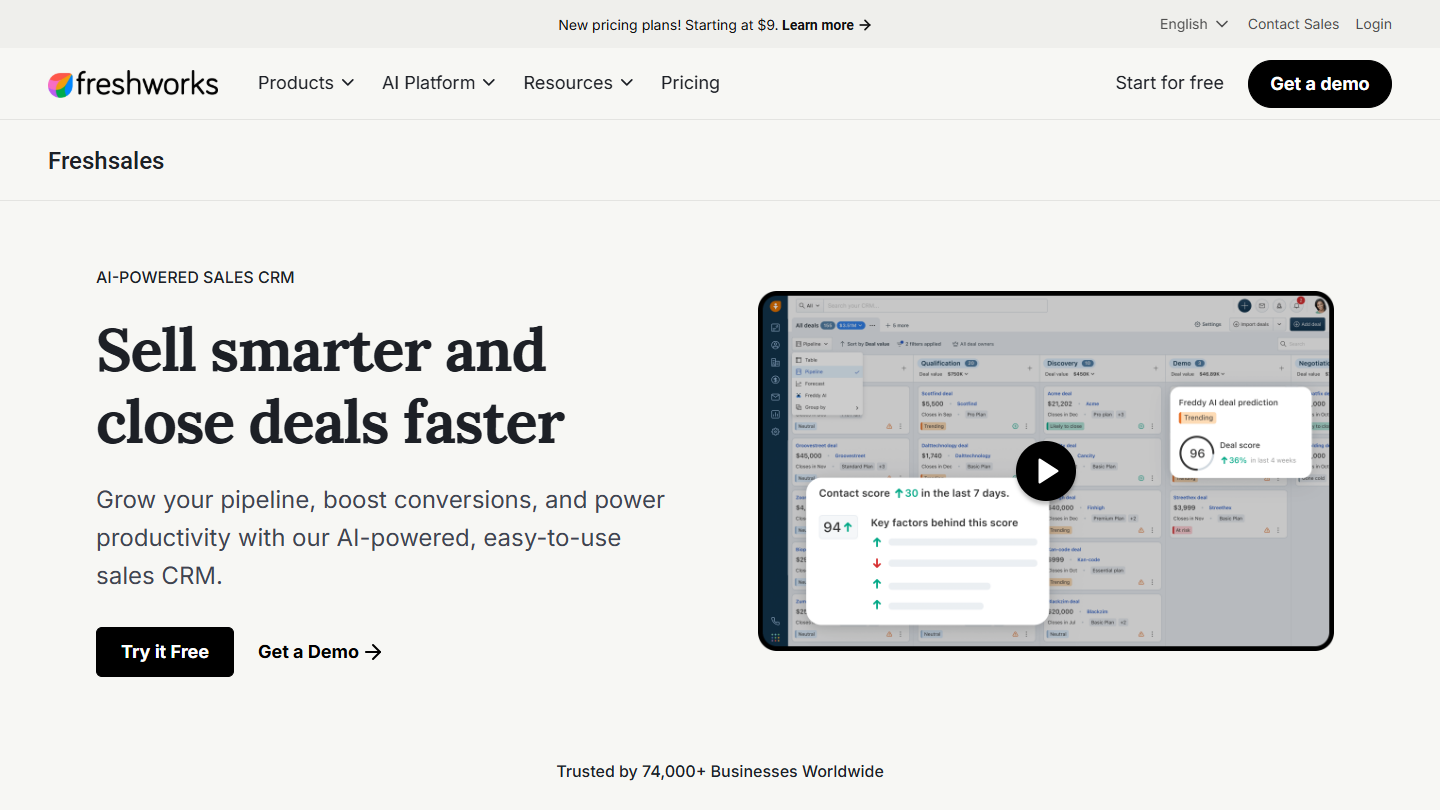
- A CRM that is cheap to start with, with contact scoring on the Pro plan: Freshsales
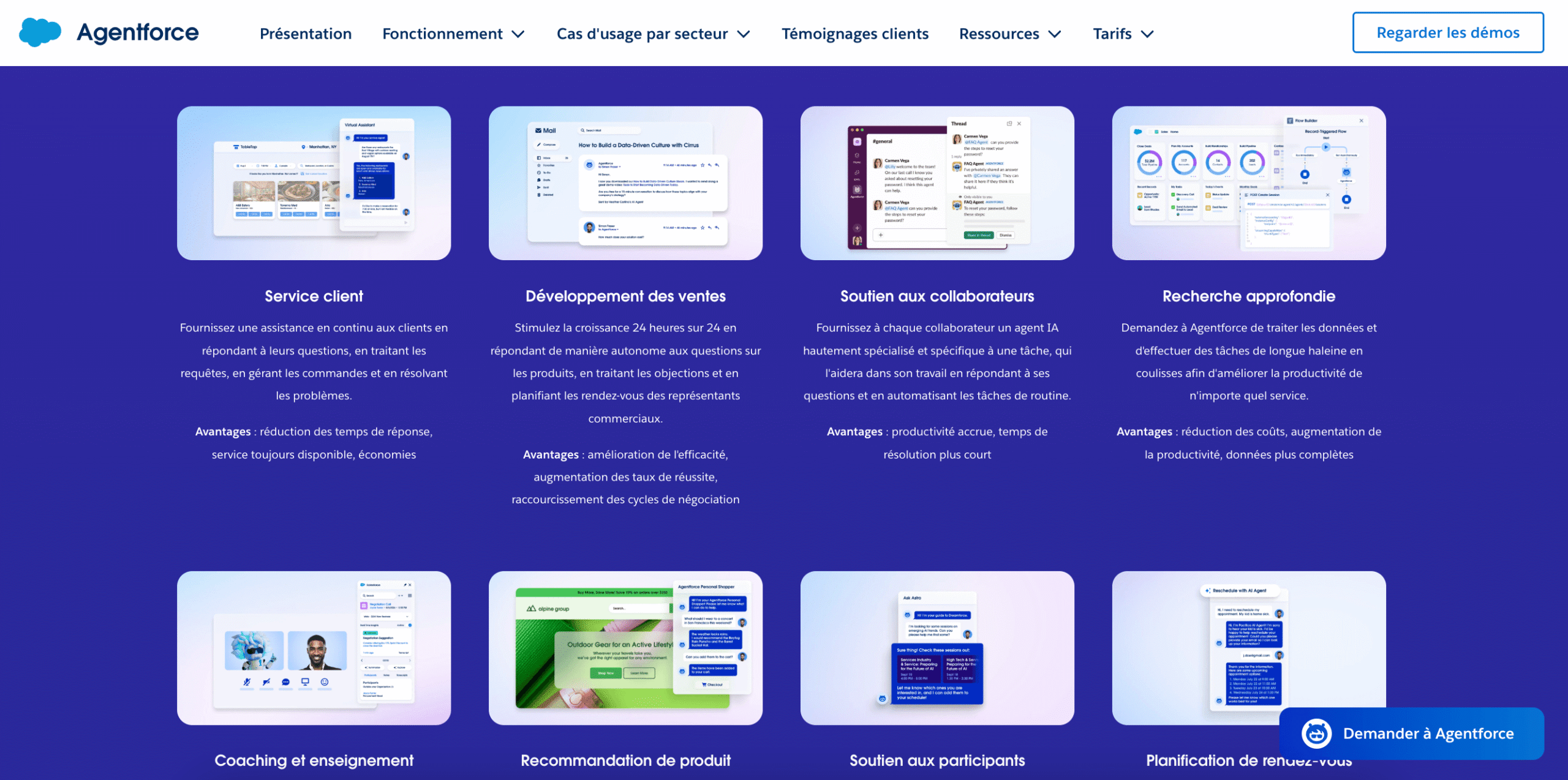
- Complex sales processes and the budget for an integrator: Salesforce
Before comparing the tools, we need to set the frame. There are dozens of possible AI use cases in a CRM, but for an SMB with 3 to 20 salespeople and a few thousand contacts, they are not all worth the same. Here are the ones that concretely change the day-to-day and the ones that are more about marketing.
1. Assisted writing
This is the most immediate and most universal time saver. The AI writes a first draft of a follow-up email (for example), personalized from the context of the deal (history of exchanges, stage in the pipeline, information about the contact). The salesperson only has to reread and adjust.
In practice, instead of spending 10 minutes writing a follow-up email after a call, the AI offers you a draft in 15 seconds. Multiply that by 10 emails a day and you easily recover 1.5 hours of pure selling time. Unlike predictive scoring, it works from day one, even with very little data.
All the CRMs in this selection offer assisted writing, but not always on the same plan. At Pipedrive, AI email creation starts with the Premium plan. HubSpot Breeze and Bitrix24 CoPilot make the best use of CRM context to personalize drafts.
2. Call summaries and transcription
This is the use case that solves the eternal problem of every SMB: the CRM is empty because nobody has the time (or the desire) to fill it in after each call.
The principle is simple: the AI transcribes the call, extracts a structured summary (points discussed, commitments made, next steps) and prepares the update of the deal’s fields in the CRM. Contact name, amount mentioned, objections identified: all that remains is to validate.
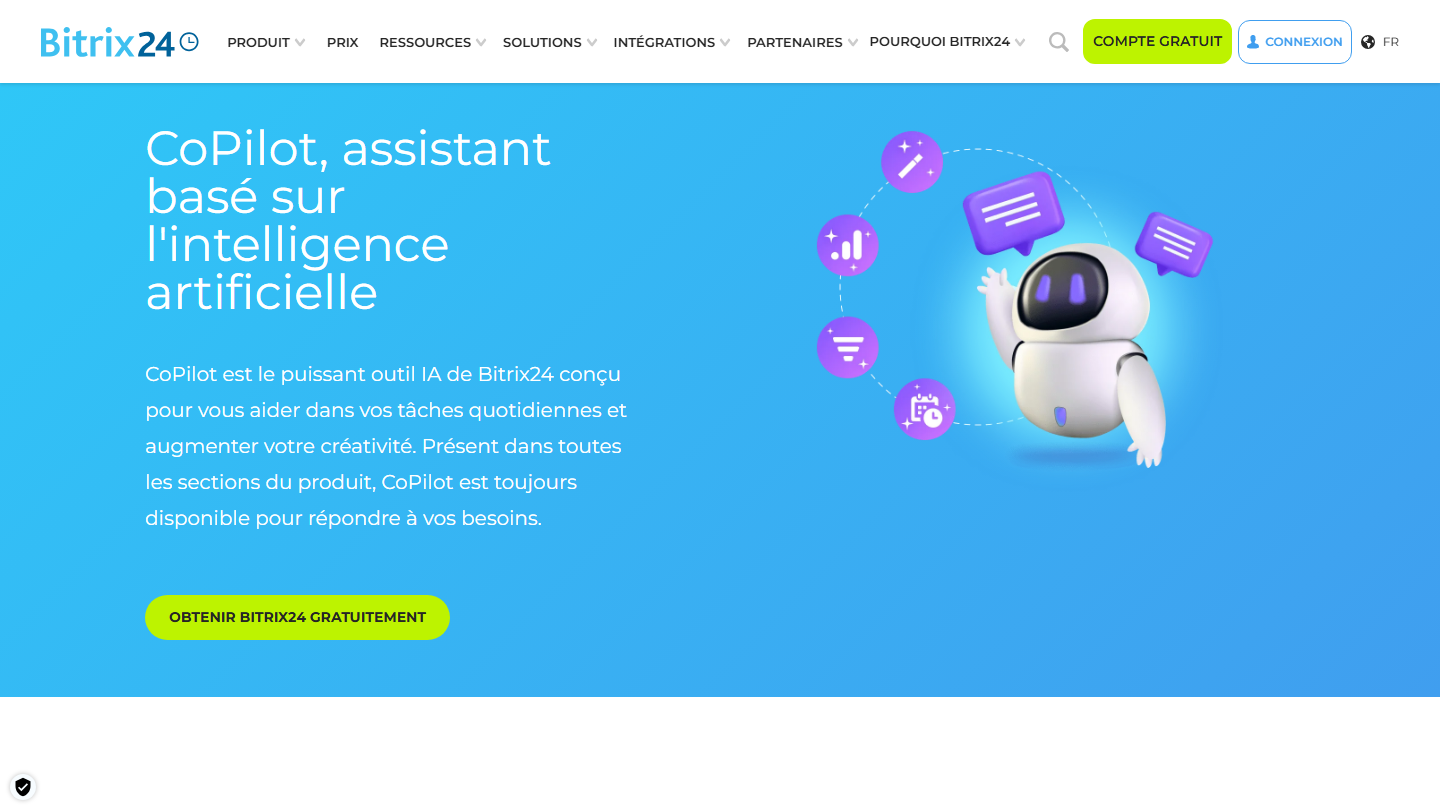
Bitrix24 is particularly strong here: CoPilot transcribes calls, generates a summary and fills in the deal’s fields from the Basic plan. Pipedrive does the same with Nova, on all its plans. HubSpot records and transcribes meetings from Starter, but its most advanced agents require the Pro or Enterprise plans.
3. Lead scoring and prioritization
AI lead scoring is attractive on paper: the algorithm analyzes your historical data to predict which leads are most likely to convert.
But let’s be honest: for predictive scoring to be reliable, you need volume. Below 5,000 contacts and a few hundred closed deals, the predictions are too approximate to be useful.
For a growing SMB, scoring based on simple rules (industry + size + engagement level) often does as well as a machine learning algorithm. AI scoring becomes relevant beyond a certain threshold, and at that point Zoho Zia and HubSpot are the most mature.
4. Intelligent workflow automation
Beyond classic automations (“if no reply after 5 days, send a reminder”), AI is starting to suggest and create workflows automatically, by analyzing your team’s recurring patterns.
For example, Zoho Zia detects that your salespeople systematically set the “priority” field to “urgent” when the closing date approaches and suggests creating an automatic rule to do it. It is less spectacular than predictive scoring, but much more useful day to day for an SMB with no dedicated sales ops.
5. Conversation analysis and sales coaching
The AI analyzes calls to identify what sets your best salespeople apart: talk time, questions asked, objection handling, adherence to the sales script. It is a good coaching tool, provided your team is large enough for the comparison to mean something.
For an SMB with 5 salespeople or more, it is a real performance lever. Below that, it is a nice-to-have.
Our take: for an SMB, the two AI use cases to prioritize are assisted writing and call summaries with CRM updates. That is where the ROI is immediate, regardless of data volume. Predictive scoring and conversation analysis will come later, when your database has reached critical size.







What the community says.