


- Sales ethics help the team handle difficult conversations and make good decisions without asking managers for advice.
- The rep who sells at full price, then at half price, hits his targets, until the day two customers find out that one pays twice what the other does.
- When prospecting, only send messages that at least have the potential to create value for the person on the other end.
- Document your processes in a sales action plan as early as possible.
- Pick a sales methodology quickly and build it into new hires’ training.
Good sales ethics are good for your performance and for your whole sales strategy. In this article, we explain why and how to set up a value system for yourself and your sales team. What are sales ethics? Why do they matter? How do you build a sales organization in line with your ethics?
1. What are sales ethics: definition
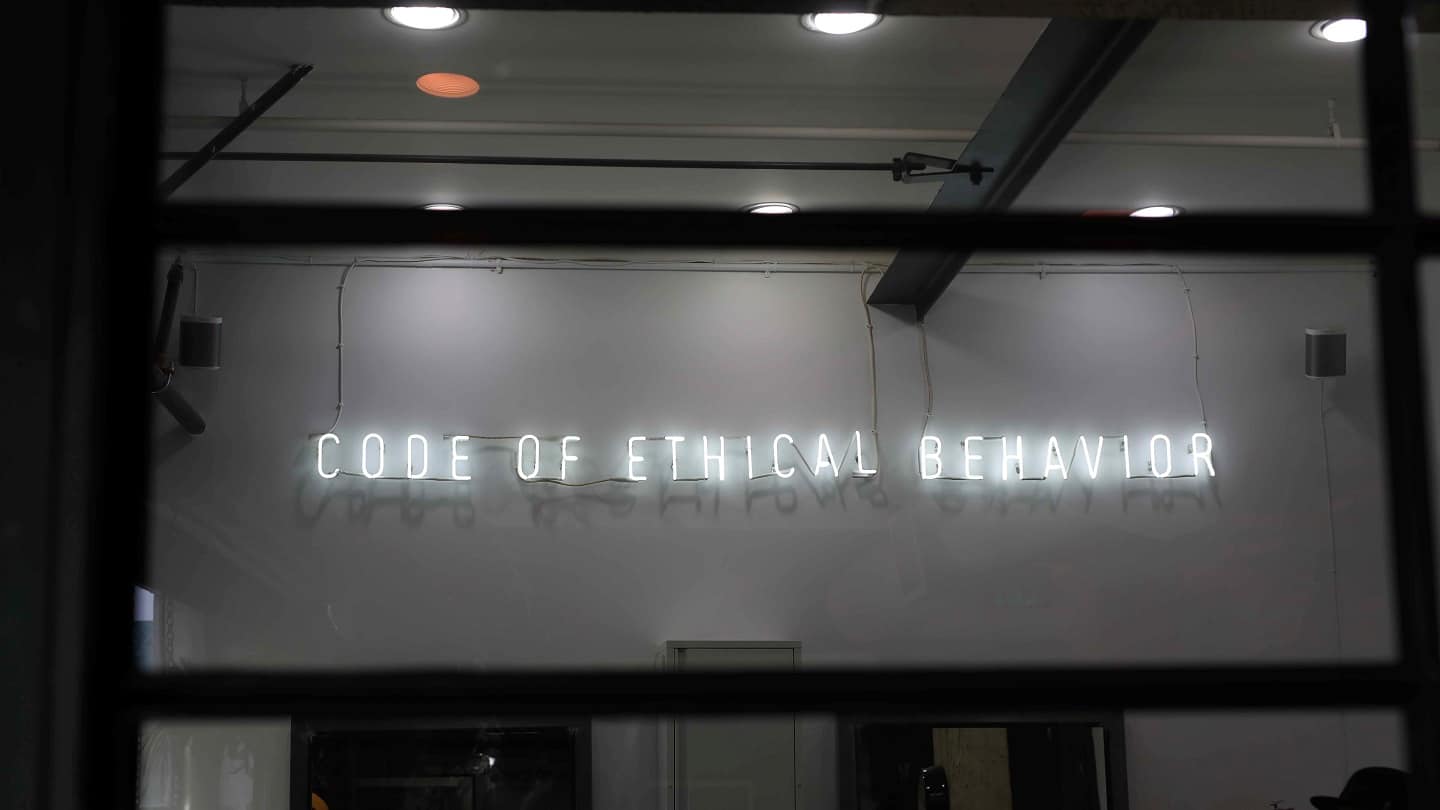
DefinitionSales ethics are a code of conduct or a standard that you and your sales team commit to following in all your sales operations.
They help your team members handle difficult conversations and make good decisions without having to ask their managers for advice. While working on this topic, we asked our peers whether they had a precise definition of sales ethics, and we realized that for many people it is not a very familiar concept. It is easy to focus on your sales results, such as hitting targets and quotas. But how you get there matters just as much. So why do sales ethics matter for your company?
2. Why do sales ethics matter?
Here is a true story. A sales rep sells at full price from the 1st to the 15th of the month, then at half price for the rest of the month. His behavior goes under the company’s radar, and management is happy because he always hits his targets. Imagine the surprise (not a pleasant one) when two of the company’s customers ended up chatting over lunch, only to find out that one of them was paying twice what the other paid for exactly the same thing.

Stories like this one are enough to show what is at stake with sales ethics. Research clearly shows that companies with a high level of ethics report higher customer satisfaction, increased retention and more positive reviews. I hope you are now convinced that sales ethics matter. Unfortunately, agreeing that the topic matters does not mean your teams will follow your ethics on their own. It does at least help you understand what it takes to build an ethical sales culture within a company. You have to start by building a clear value system, one your sales reps genuinely buy into.
3. How to develop your value system
Start with your own values
Before your first interview, you looked at the company’s website and saw that they were looking to hire someone with 3 very specific values – it most likely looked something like this:
- Positive
- Hard-working and customer-focused
- Humble
Armed with this knowledge, you were able to highlight these values and land the job. But these 3 values will probably stay with you and become real pillars of your moral sales code. Bringing real added value, putting people first and understanding their problems: that is what should drive you to go into sales. Developing your personal idea of sales ethics will be fundamental to your career, whatever company you work for or whatever you sell. That said, sales reps all over the world will tell you that it is easier to keep your ethics when you believe in the product you sell.
Focus on creating value for your prospects
Isn’t it more pleasant to center your behavior on human relationships? Maybe, as a salesperson, you don’t like being pushy. You probably want to feel that your work goes hand in hand with integrity. This shows up in particular in the emails you send – even prospecting emails. It is always better to research the person you are emailing. Personalize the message as much as possible. It is one of the best practices for your prospecting emails.

There is nothing wrong with prospecting in itself: it is a process people use to reach out to others and start conversations with them. However, you need to make sure you send messages that at least have the potential to create value for the person on the other end.
Bad feedback can really make you lose confidence in the process you use to sell. But although it is always disappointing, it should encourage you to think about how you want to grow as a sales professional. You will probably have to fail several times before you find a sales process that both motivates your teams & works.
Believe in what you sell
It is hard to sell highly technical solutions to business buyers if you don’t believe in the product you work with. And when you do believe in it, it is much easier to learn the product inside out and to communicate the value it creates to the potential buyers you talk to.
Train yourself
It may sound odd, but this is probably the most important of the 3 elements for building your personal sales ethics. You can learn on the fly, get help from mentors or from more experienced reps. But taking courses and training constantly will help you better understand who you want to be as a sales professional, and so develop your personal brand.
If your company has a training budget, use it! And if it doesn’t, ask for one, or simply ask to be trained. And if you are in a position where leading a sales team is your responsibility, providing a training budget is one of the things you can do to invest in developing your team’s ethics.
4. Building an ethical sales organization

Document your processes in a sales action plan
The classic situation looks like this:
- A company hires a first group of sales reps.
- After a few months, things fall into place, and the most successful reps shape the sales processes.
- Revenue starts coming in. Then the company shifts up a gear, hires 10 more reps and tells them “Do what this guy did. Good luck!”
But this lack of structure often leads to unethical behavior, even behavior that runs against the company’s values. That is why we recommend that sales managers build their sales action plan as early as possible. Take stock of the first processes (especially if they work well) and repeat them to optimize them.
Define a methodology, and stick to it
The sooner you choose a methodology, the sooner you can build it into your organizational culture. There are several methodologies and every sales professional has a favorite. This is not about debating or comparing them – as long as most methodologies include elements meant to meet the need for strong sales ethics.
Whatever your methodology, make sure you build it into your training. That does not replace the need to also make training, especially for new hires, a key part of your onboarding process. It is an integral part of best practices for onboarding new sales reps.
It is hard to find and hire people who not only have the skills and personal traits you are looking for, but who also know the specific methodology you use. Building it into your onboarding program is a good way to ensure cultural alignment across your whole team.
The questions we get over and over.
What are sales ethics?
They are a code of conduct or a standard that you and your sales team commit to following in all your sales operations. They help team members handle difficult conversations and make good decisions without having to ask their managers for advice.
Why do sales ethics matter?
Unethical behavior can go under the radar as long as targets are hit, until customers notice. Companies with a high level of ethics report higher customer satisfaction, increased retention and more positive reviews.
How do you develop your personal sales ethics?
By starting from your own values, focusing on the value you create for your prospects, believing in the product you sell and training continuously, with a training budget if your company has one.
How do you build an ethical sales organization?
By documenting processes in a sales action plan as early as possible, then quickly choosing a sales methodology and building it into new hires' training and onboarding.



What the community says.