



- Automating data entry, follow-ups and email sequences frees up time for the customer relationship.
- Each channel has its own codes: more direct on the phone, more relational on social networks, more structured in a presentation.
- Conversion rate per stage, deal velocity, average sales cycle, average contract value: knowing how to read these metrics lets you manage your pipeline.
- In complex sales, the Challenger Sale, SPIN Selling and MEDDIC structure the approach and the qualification.
- Soft skills are developed through coaching, feedback and role-playing.
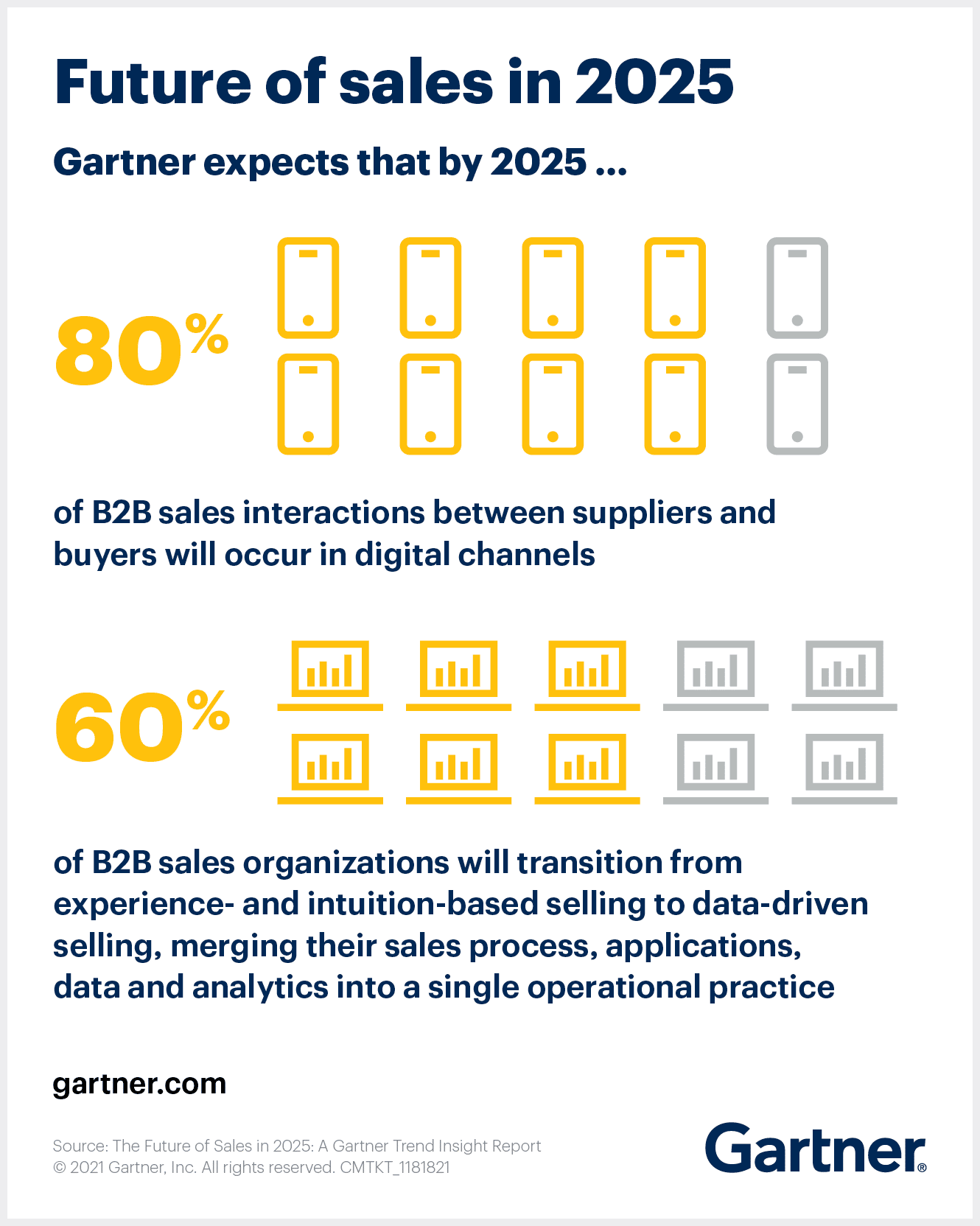
B2B sales teams are changing fast under the pressure of digitalization and artificial intelligence. According to Gartner, 80% of B2B sales interactions will be digital by 2025, fundamentally changing the skills needed to succeed.
The numbers confirm this shift: 83% of sales teams using AI have grown their revenue, compared with 66% of those not using it yet (Salesforce, 2024). At the same time, B2B buyers now use 10.2 different channels in their buying journey, twice as many as eight years ago (McKinsey B2B Pulse, 2024).
In this context, five skills stand out as decisive for sales teams that want to keep performing in 2025.
1. Master SalesTech tools and automation
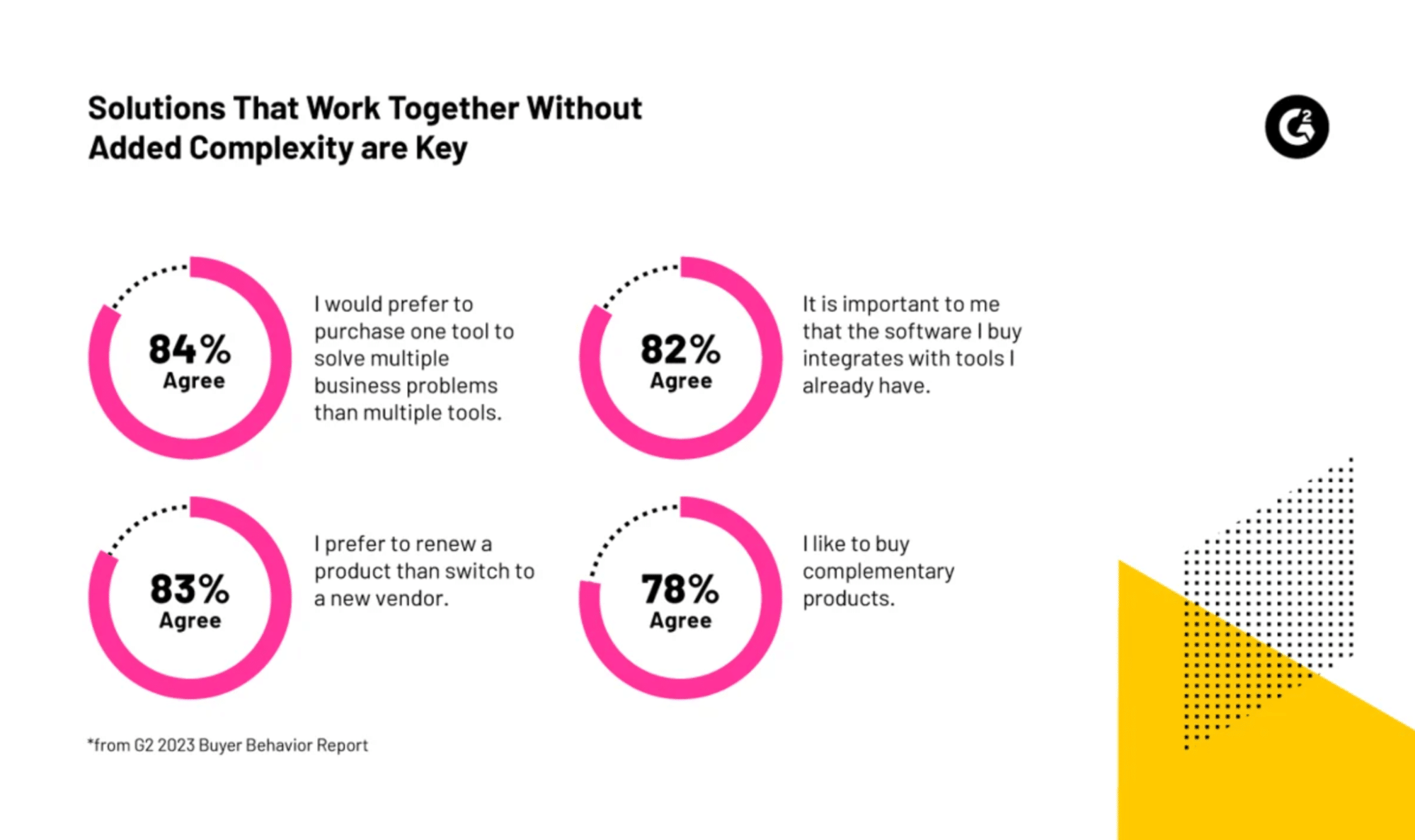
The boom in modern CRMs, Sales Engagement tools and automation is transforming the daily work of sales reps. Tools like HubSpot, Lemlist, Apollo or Outreach automate time-consuming tasks so reps can focus on high-value activities. Today’s sales rep has to master their digital stack to stay competitive.
Effective CRM use can increase sales by up to 29%, sales productivity by 34% and forecast accuracy by 42%, according to a Nutshell study. Yet reps still spend on average 70% of their time on something other than active selling (Salesforce State of Sales).
The main stakes are automated tracking of interactions, smart follow-ups based on prospect behavior and automated nurturing of cold leads. Automating repetitive tasks such as data entry, automated prospecting or email sequences puts that time back into the customer relationship.
A concrete case: an SDR who uses their automation stack well (CRM + email sequences + automatic data enrichment) can save up to 20% of the time spent on administrative tasks, which lets them make more prospecting calls and significantly increase the number of opportunities they generate.
74% of sales reps expect AI to transform their job in 2025 (HubSpot, 2024). 83% of sales teams that have integrated AI saw their revenue grow over the past year, compared with only 66% of teams without AI.
2. Know how to sell remotely and across channels
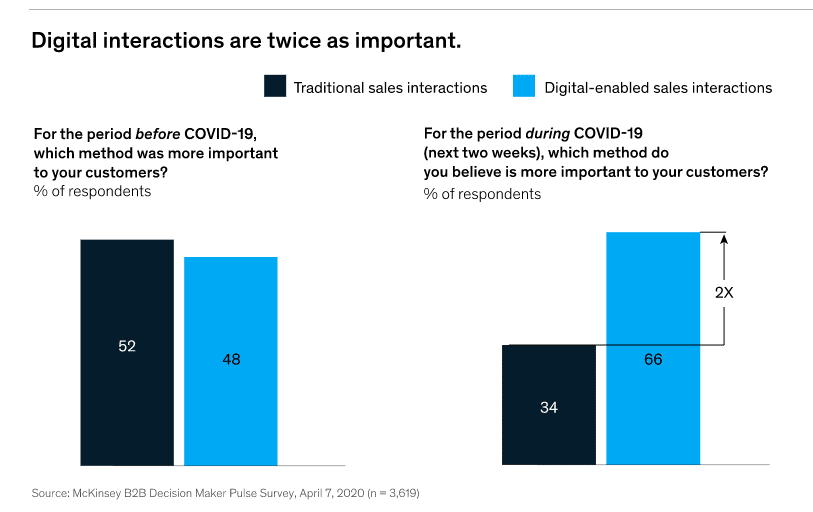
Hybrid selling has become the norm, combining video calls, phone, LinkedIn, WhatsApp and in-person meetings. Today’s sales rep has to master the specific codes of each channel to tailor their approach to the context and to their prospects’ preferences.
90% of B2B sales organizations consider their hybrid/remote model as effective as or more effective than before the pandemic (McKinsey, 2021).
On the other side, customers are multiplying touchpoints: a B2B decision maker uses on average 10 channels to interact with suppliers, twice as many as five years ago.
Key skills include a professional presence on video calls, soft follow-ups through social selling on LinkedIn, and consistent multi-touch follow-up across all channels. You have to adapt your pitch to the medium: more direct on the phone, more relational on social networks, more structured in a presentation.
The effectiveness of multichannel selling shows in the results. Companies that excel at omnichannel record EBIT growth of 13.5%, compared with only 1.8% for less digitalized competitors. 71% of B2B buyers are even willing to spend more than $50,000 through a fully remote sales model.
3. Work with a data-driven approach
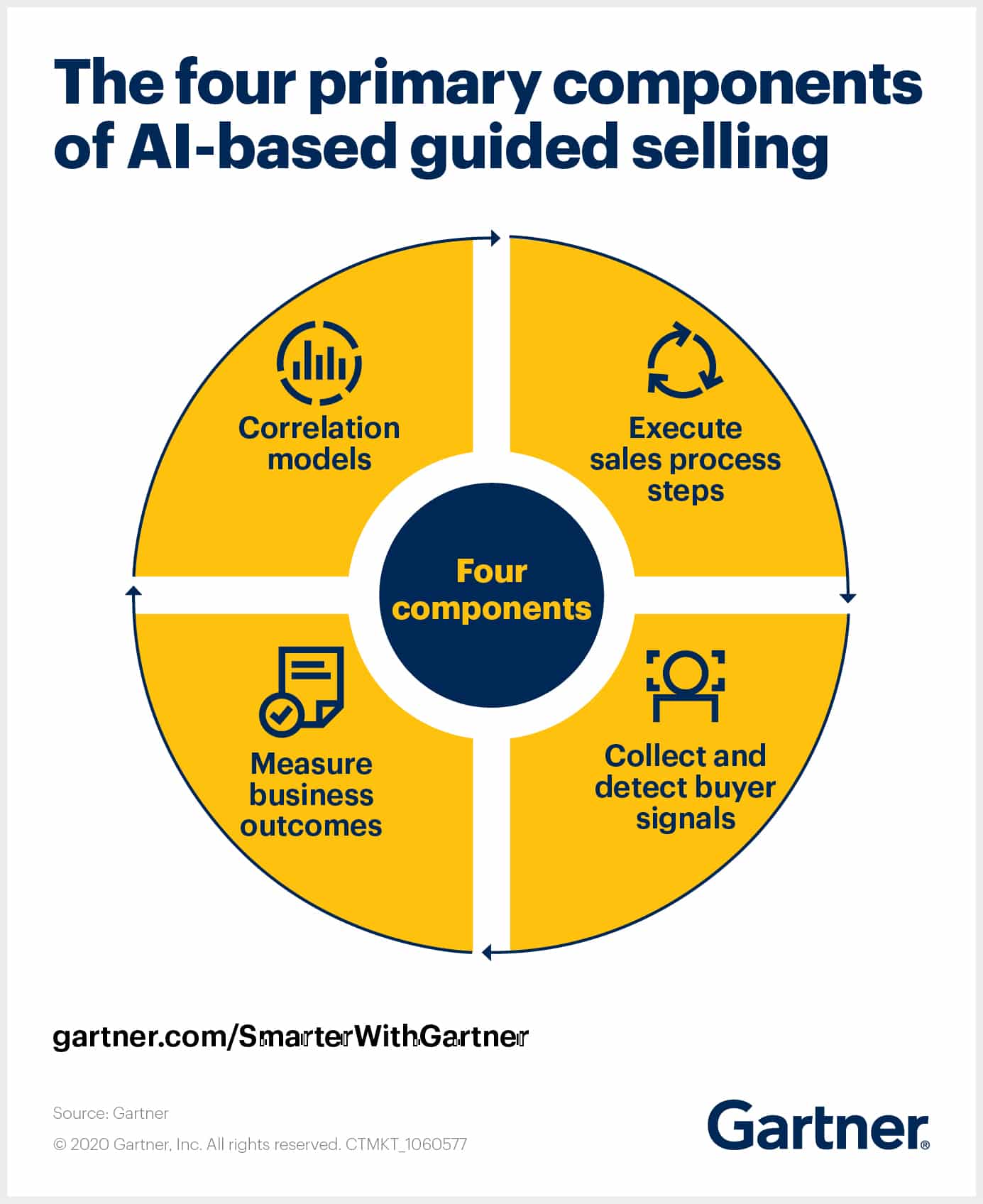
The must-track sales KPIs include the conversion rate at each funnel stage, deal velocity, average sales cycle and average contract value. Knowing how to read your metrics to manage your pipeline is becoming a critical skill for any sales rep today.
Data-driven performance management relies on sales ops tools, real-time dashboards and Business Intelligence solutions built into the CRM. These tools help you spot bottlenecks quickly and adjust your strategy accordingly.
A study of 591 sales reps shows that customer understanding backed by data analysis is considered the most essential skill for sales success, cited by 88% of respondents (LinkedIn State of Sales).
Top performers combine sales instinct with analytical management. They spend a lot of time updating and using their CRM to focus their efforts on the deals the data identifies as most likely to close. This approach lets them prioritize opportunities intelligently according to their real potential.
The concrete benefits include more accurate sales forecasts, better allocation of effort to the most promising accounts and early detection of deals at risk of slipping. B2B leaders who combine advanced sales technologies with customized analytics are twice as likely to see their market share grow by more than 10% a year.
A concrete example: setting up a data-driven sales ops team in an industrial company led to a 30% gain in sales productivity and 5% of market share in four years. However, only 35% of sales reps say they fully trust the accuracy of the data they have (Salesforce), which shows how much data quality matters.
4. Develop advanced sales techniques
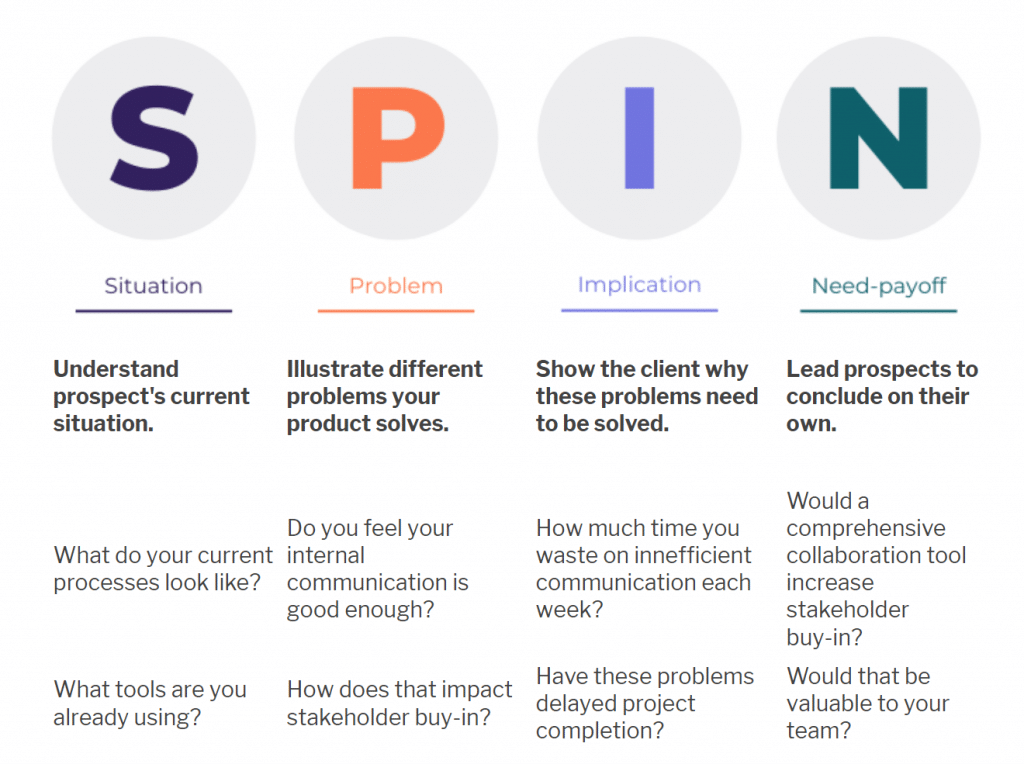
A product pitch is no longer enough in a competitive environment. Make way for complex methods such as the Challenger Sale, SPIN Selling or MEDDIC, which structure the sales approach and significantly increase conversion rates.
Structured methodologies deliver measurable results. Companies that follow a formal sales process are 33% more likely to be among the top performers in their industry (Sales Management Association). Adopting qualification frameworks like MEDDIC translates into win rate increases of up to 37%.
As soon as you are in complex sales, these structured sales methods help you navigate that complexity by rigorously qualifying each stage.
A Pipedrive study reveals that 54% of the best reps in complex sales mainly adopt the Challenger profile.
This profile consists of teaching the customer something new about their business, tailoring the message to their specific needs, then taking control of the sales conversation. Conversely, only 7% of top performers rely first on building relationships (Relationship Builder), which turns out to be the least effective profile in complex sales.
Key takeawayThe Challenger Sale is based on a typology of sellers identified by the firm CEB (now Gartner) after analyzing thousands of sales reps. This study defined 5 seller profiles:
- The Challenger (who teaches and challenges)
- The Relationship Builder (who relies on the relationship)
- The Hard Worker (who works hard)
- The Lone Wolf (who works alone)
- The Problem Solver (who solves problems).
The SPIN Selling method, developed by Neil Rackham in the 1980s, is emblematic of what is called consultative selling, which is becoming a standard in B2B sales.
The MEDDIC method is also increasingly used to qualify buyers, and in particular the members of a buying committee.
These techniques are part of sales training programs that combine theory, practice and personalized coaching. 82% of the highest-performing sales teams attribute part of their success to adopting a common methodology, which shows the importance of structured and continuous learning.
5. Cultivate soft skills that set you apart
Active listening, adaptability, emotional intelligence and perseverance are becoming major success factors at a time when products and data are becoming more uniform. These soft skills are harder to train than technical skills, but they also make more of a difference in the long run.
Only 43% of B2B buyers say they generally trust sales reps, but 87% trust their usual rep with whom they have built a relationship (LinkedIn). This gap shows that trust is earned through exemplary soft skills: honesty, listening and reliability.
84% of business customers expect a sales rep to act as a trusted advisor who truly understands their challenges (Salesforce). Unfortunately, 59% feel that most sellers do not take the time to understand them properly, hence the crucial importance of active listening and genuine curiosity.
A growth mindset and continuous learning prove particularly critical in the face of adversity. 67% of sales reps do not expect to hit their annual quota, and 84% missed it the previous year. In this demanding context, only those who show resilience, learn from their failures and keep a growth mindset manage to progress over time.
Developing these skills takes concrete methods: individual coaching, regular feedback and role-playing. Active listening is trained through simulated customer discovery meetings where the seller learns to ask open questions and rephrase to show empathy.
A French survey ranks listening as the number 1 soft skill, considered decisive by 66% of respondents, followed by adaptability (54%) and emotional intelligence. These qualities help you better grasp the customer’s unspoken needs and personalize your approach to the context and the personality of the person you are talking to.
Case studies show that in complex negotiations, sellers with high emotional intelligence manage to defuse tension and create a collaborative climate, leading to more satisfying and lasting agreements. The growth mindset, popularized by Carol Dweck, can be seen in the best sales reps, who constantly look to improve through coaching and continuous training.
Faced with these rapid changes, many companies choose to professionalize their sales teams by relying on specialized partners. One example is Uptoo, which offers tailor-made training combining concrete methods, personalized coaching and hands-on practice.
Building a solid upskilling plan secures lasting growth for the company and for each sales rep. Prioritizing SalesTech tools, the art of remote selling, smart use of data, advanced sales techniques and soft skills that set you apart gives your team every means to perform in an ultra-competitive market. Investing in these skills means investing directly in your profitability.
Now it’s your move!
The questions we get over and over.
What are the key skills of a B2B sales rep?
Mastering SalesTech tools and automation, knowing how to sell remotely and across channels, working with a data-driven approach, developing advanced sales techniques and cultivating soft skills that set you apart.
Which KPIs should a sales rep know how to read?
The conversion rate at each funnel stage, deal velocity, average sales cycle and average contract value.
Which structured sales methods should you use in complex sales?
The Challenger Sale, SPIN Selling and MEDDIC. SPIN Selling, developed by Neil Rackham in the 1980s, is emblematic of consultative selling; MEDDIC is used to qualify buyers, in particular the members of a buying committee.
What is the Challenger profile?
One of the 5 seller profiles identified by the firm CEB (now Gartner): the rep teaches the customer something new about their business, tailors the message to their specific needs, then takes control of the sales conversation.
How do you develop sales reps' soft skills?
Through individual coaching, regular feedback and role-playing. Active listening is trained through simulated discovery meetings where the seller learns to ask open questions and rephrase.



What the community says.