



- Upselling sells a higher version of the product, cross-selling sells complementary products. In B2B, the line is thin.
- The anchoring bias highlights an expensive offer to make the others look affordable.
- The reverse trial gives access to the paid features during the trial, then switches back to freemium.
- Demonstrating the ROI of an upgrade requires being precise, well argued and giving examples.
- Build upselling and cross-selling into your salespeople’s commissions and train them on the products involved.
Upselling and cross-selling are often confused. They are both techniques for increasing sales to existing customers, but they use slightly different approaches to get there.
Upselling means selling an upgraded version of the product or service, while cross-selling means selling complementary products. In practice, the line is pretty thin, especially in B2B. Still, cross-selling techniques are generally well known and well mastered (bundling, add-ons, etc.), but upselling (vente incitative, as the French call it) is generally less well mastered.
In this article, we give you all its secrets: techniques, methods, tools and best practices to maximize the monetary value of all your deals.
Upselling: definition

Upselling is a sales strategy that consists of encouraging customers to buy a product from a higher tier than the one they were planning to buy.
It rests on a very simple principle: it costs you a lot more to acquire new customers than to keep the ones you already have, and therefore to sell them a more expensive product.
Upselling should not be confused with cross-selling, though, which consists of selling products that complement the base product a customer bought: for example, headphones to go with a computer, etc.
Upsell vs cross-sell
So these are two sales techniques that focus first and foremost on a company’s existing customers rather than the ones it could acquire, but upselling steers your customer toward a higher-end product in your offering, while cross-selling consists of getting them to buy products on top of the base product.
| Definition | Example | |
|---|---|---|
| Upsell | An upsell is a strategy (especially in B2B SaaS) that aims to convince your customer to buy a more feature-rich version of your product. | Your customer has signed up for a basic plan of your customer success software. They have realized the value of the tool and are happy with the product. You can now start a conversation about upgrading the plan, from the basic plan to the enterprise plan. That is an upsell. |
| Cross-sell | Cross-selling is a strategy aimed at encouraging your customer to buy something on top of the main product. | If the customer has subscribed to your marketing tool, you can suggest they also subscribe to your CRM! |
10 examples of unbeatable upselling techniques
| Definition | Example | |
|---|---|---|
| Use the anchoring bias | Showcase one of your most expensive offers | Pipedrive: the Premium plan at 59 euros is labeled « most popular » – while the Lite offer starts at 14 euros. |
| Segment your price grids | Price categories by type of customer. | Brevo (formerly Sendinblue): a personal plan for freelancers, another for small businesses/SMEs, etc. |
| Training and adoption support | Selling services on top of the product or software layer being sold | Software training, custom integrations into your tech ecosystem, personalized consulting to ease onboarding, … |
| Personalize the sales relationship | A single, dedicated account manager for the purchase of a given service. | « We can also ask our expert on the YZX market to handle your account, but you need to add a budget of XX€” |
| Handle the migration from another tool | Free migration to ease onboarding. | ActiveCampaign offers migration from another marketing automation tool from a certain plan upward |
| Develop a reverse trial | Free trial of the paid features. | Sites like Linkedin or Canva. |
| Demonstrate the ROI of the upgrade | Calculating the ROI increase. | Sites offer you a guide or a tool to calculate your ROI since you started using the tool. |
| Use FOMO | Announcing a future price increase. | “If you choose the XYZ offer, we’re giving new customers 20% off right now” |
| Create bundles and add-ons | Bundled offers and paid options | When pricing pages look incomprehensible because there are so many tools available! |
| Offer priority access to certain features | Early access for the biggest customers. | You often find it in custom plans, the most expensive ones. |
1. Use the anchoring bias
It’s one of the most classic principles in upselling: you create an anchor on one of your highest prices. The cheapest offers will look even cheaper, and the most expensive offers will look cheaper too. It’s the very classic “Most Popular” you see on every pricing page, for example.
By putting “Most popular” on Premium at €59 rather than on Lite at €14 (billed annually), Pipedrive makes its intentions clear. You can still opt for Lite, it will even seem very affordable to you.
2. Segment your price grids
The idea is to be able to match each price range with an ICP, and a pseudo ICP.
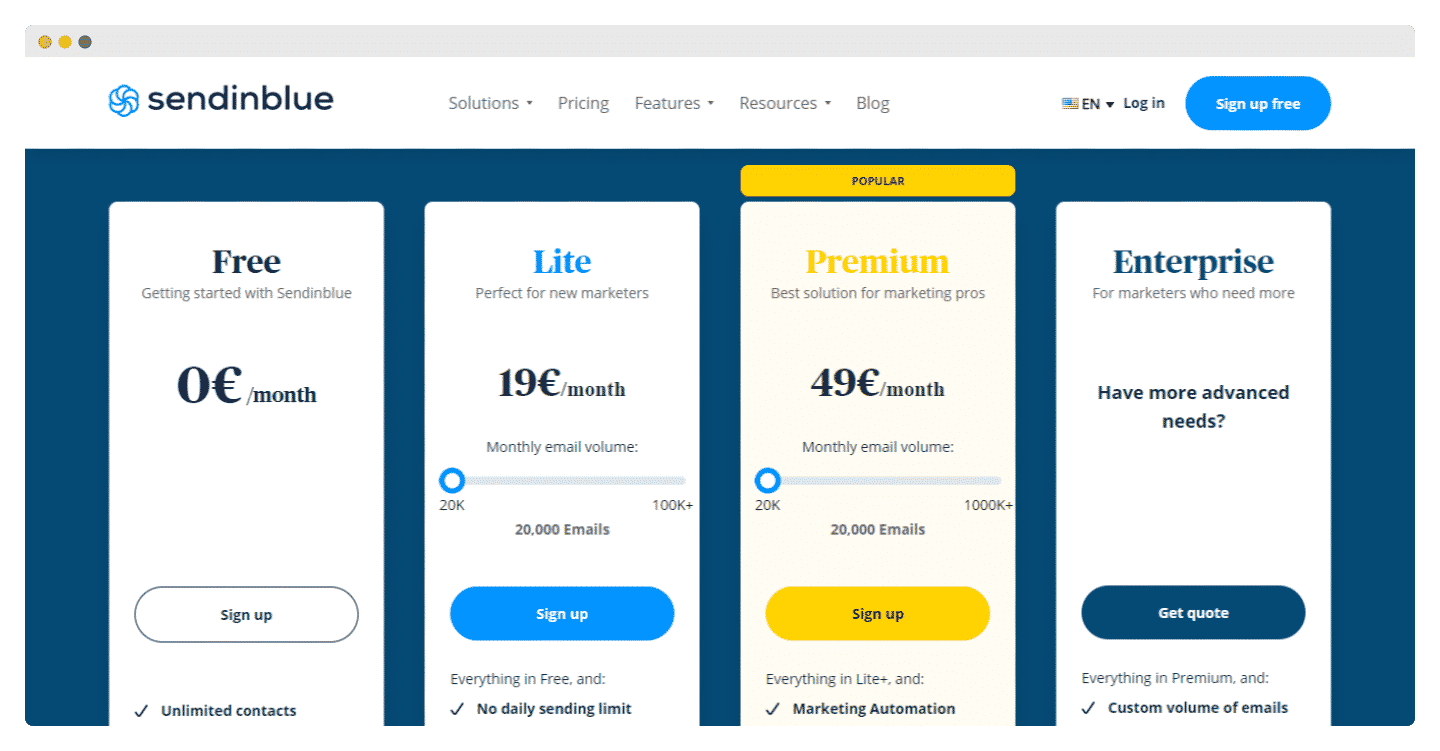
For example, the “Personal” plan will be convincing for freelancers but a dealbreaker for established companies.
In this case, a fairly classic technique in SaaS: adding the solution’s logo in a visible way, for example the Brevo (formerly Sendinblue) logo on emails sent with the free plan. It lets you generate leads among the most curious (at scale, it’s a strong lever), and it’s a good upselling tool.
You can play a lot on pride here: we have an offer that starts at €19, but it’s really designed for small freelancers. Surely you’re not going to display our solution’s logo on your campaigns.
3. Training and adoption support
If you sell to the user, you need to highlight simplicity, ease of use and the “built-in best practice”. For example, the customer won’t be able to send an email and forget the attachment, because the software will remind them.
If you sell to a decision-maker who isn’t a user, it’s rather the handling of training and adoption that you’ll need to highlight. The ability to work with operational teams “without making waves”.
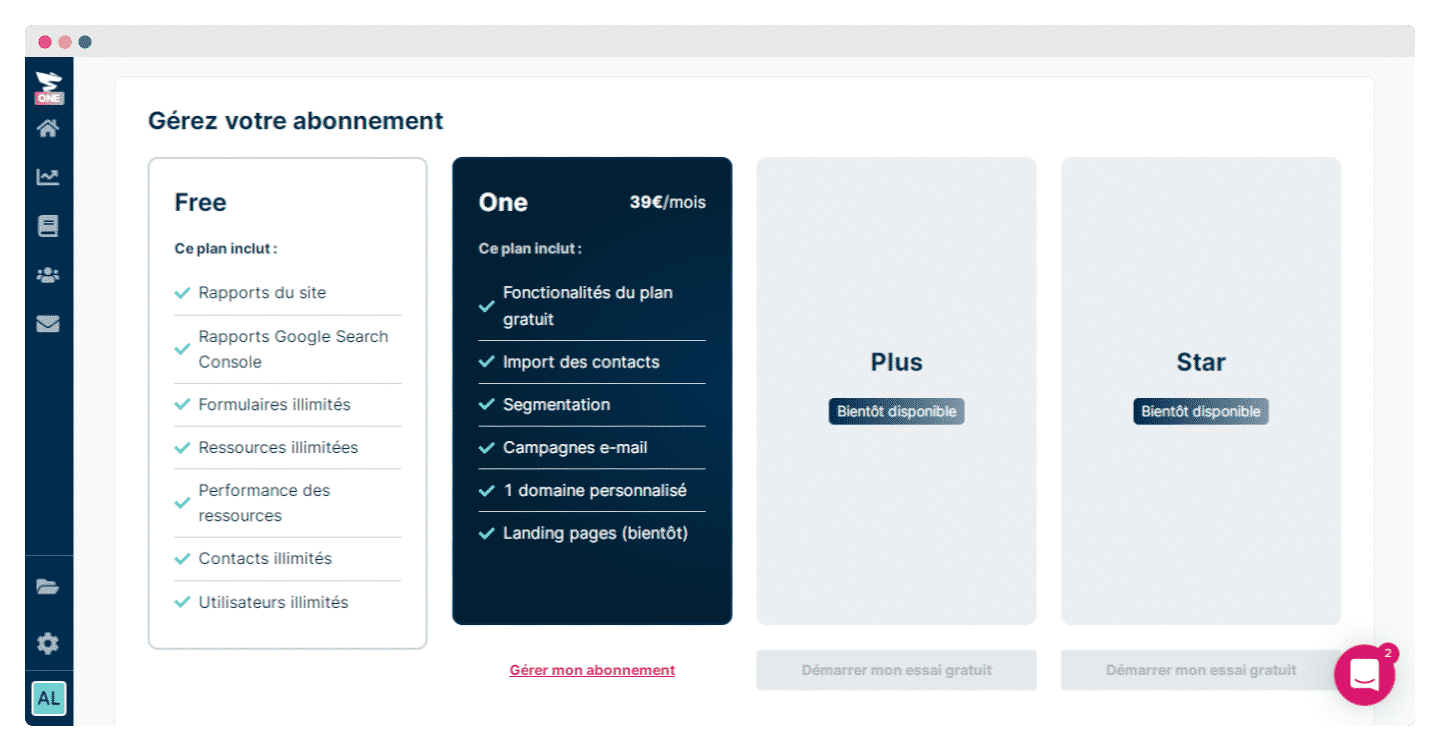
We told you here about our review of Plezi One. When we tested it, the tool wasn’t very complete yet, but customer reviews praised the effectiveness of the onboarding and the ease of use of the free version so much that Plezi had a real opportunity to move its users onto the paid plan. The support and training offered to users served exactly that upselling. Plezi One has since been discontinued, but the mechanism still holds.
4. Personalize the sales relationship
Here you can play on availability, for example by saying that the Account Manager only handles accounts on plan X or higher, and by highlighting the support of a single point of contact. Ideally, you should have introduced the AM in question for it to have an effect.
For example, you can read on the site in question: “You’ll be in touch with an Account Manager called XYZ, who is a reference in the YZX market. Or we can also ask our expert on the YZX market to handle your account, but you need to add a budget of XX€”.
5. Handle the migration from another tool
The challenge is to be reassuring about the rollout. Highlighting the CRM migration, by explaining that you’re used to it, that you take care of it and that it’s built into your onboarding processes, clearly goes in that direction.
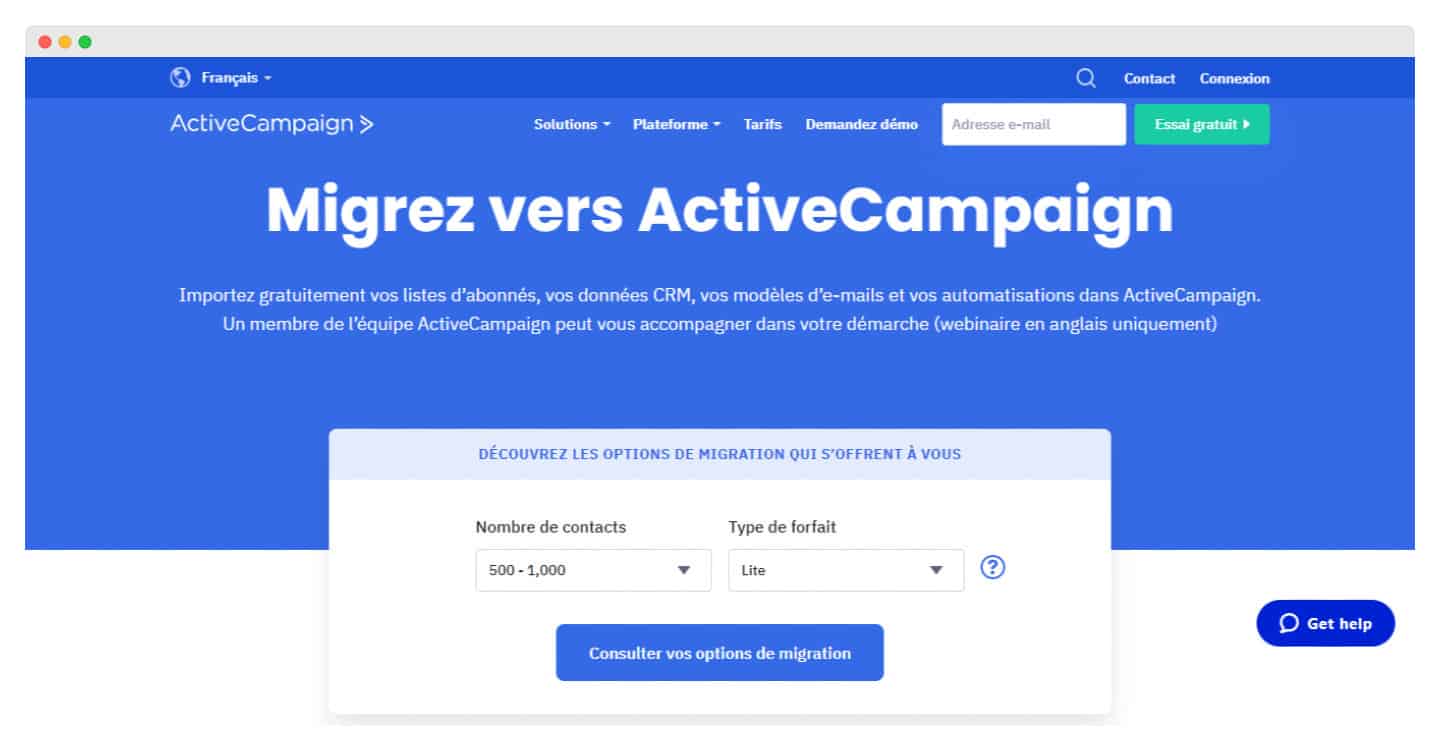
ActiveCampaign, for example, offers a service to migrate your data into its software, free on eligible plans within a limit of 10 objects (contact lists, forms, templates), to make getting started even easier.
6. The reverse trial
Marketing experts often tear each other apart over trial VS freemium. We like the alternative path of the reverse trial. As a reminder,
- The trial: the customer tries the product and buys it at the end if they’re satisfied; otherwise, they lose access. It’s fantastic for converting consumers, but it doesn’t drive product usage, since it limits it to paying users.
- Freemium: the customer starts for free with an upgrade option. It’s great for reducing acquisition friction, making the most of your traffic. But it’s always hard to promote paid offers through a free product, which leads to a lower free-to-paid conversion rate.
So the reverse trial offers customers a trial with access to the paid features at acquisition, then switches them back to freemium usage at the end of the trial. Examples include tools like Canva or Linkedin.
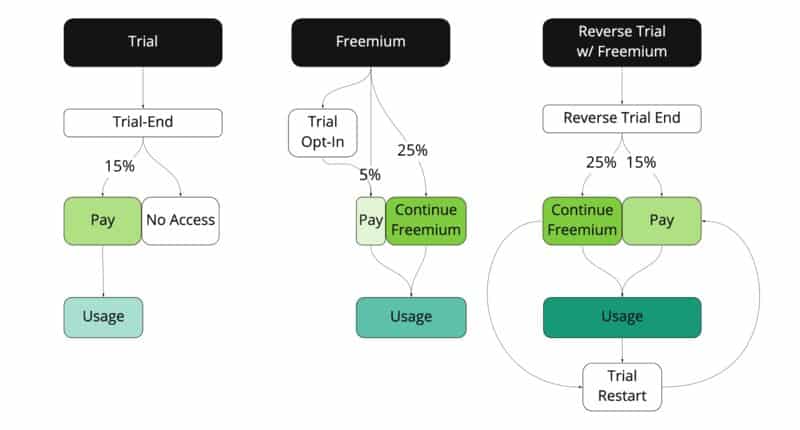
It works really well to drive conversion: the customer can build their first habit with the paid features. And they win in terms of usage, since they’re allowed to keep using the product in its free state if the paid offer isn’t relevant for them. Extra bonus: you can restart the trial for free users to keep driving conversion.
Watch outThe reverse trial isn’t for everyone! If your product has a high cost of trial or of occasional use, this option may not be suitable.
7. Demonstrate the ROI of the upgrade
If you move to this plan, the ROI will be better because of this and that. Beware of woolly pitches here: you need to be precise, well argued and give examples, otherwise you destroy any semblance of trust.
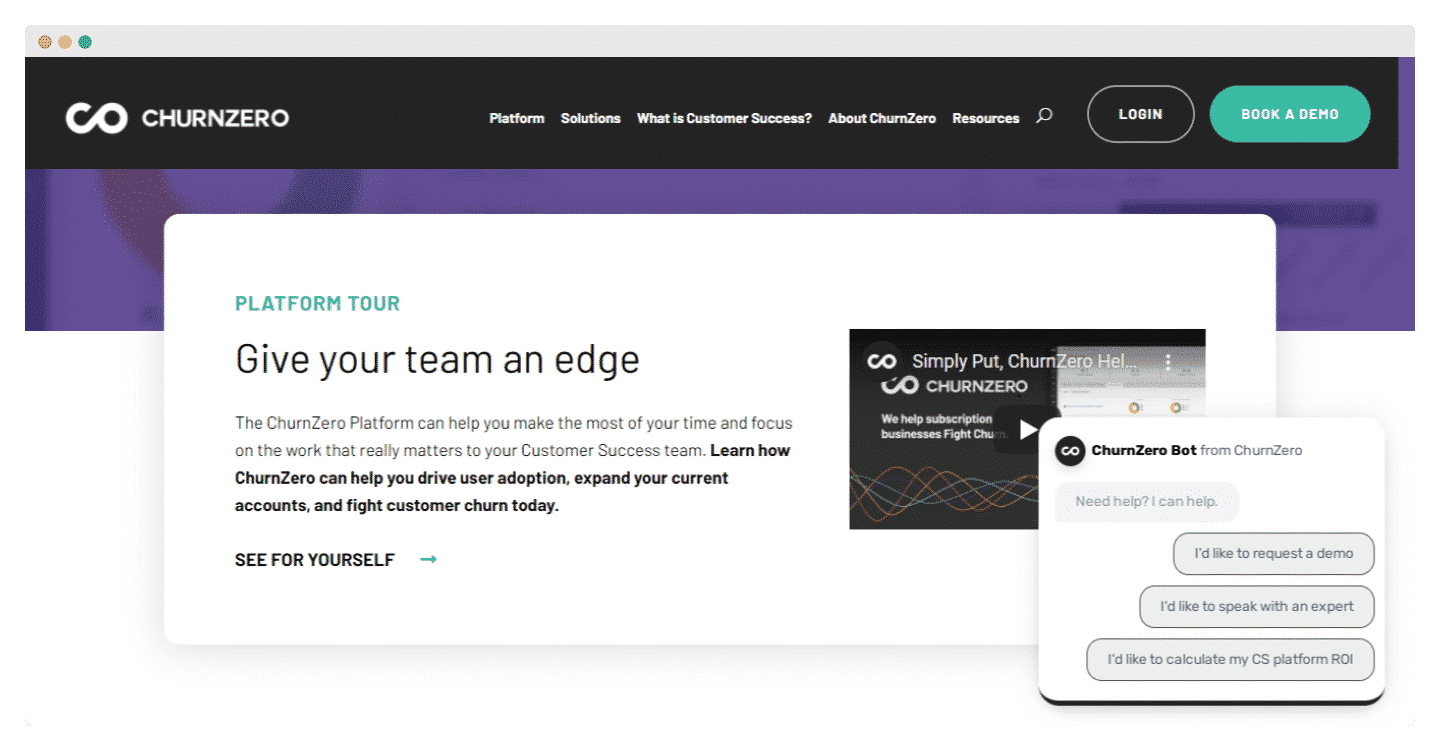
A very good example: Churnzero, a CSM tool, offers its customers, in its chatbot, to calculate the ROI of a Customer Success platform, to encourage them to calculate the benefits of using their platform and then upgrade their version.
8. Use the Fear Of Missing Out (FOMO)
You can play on the fear of missing out by explaining that a price increase is likely (or planned for a given date, which is more convincing) and that you should therefore take advantage of an offer that is usually more expensive! It’s also the very classic end-of-month or end-of-quarter discount.
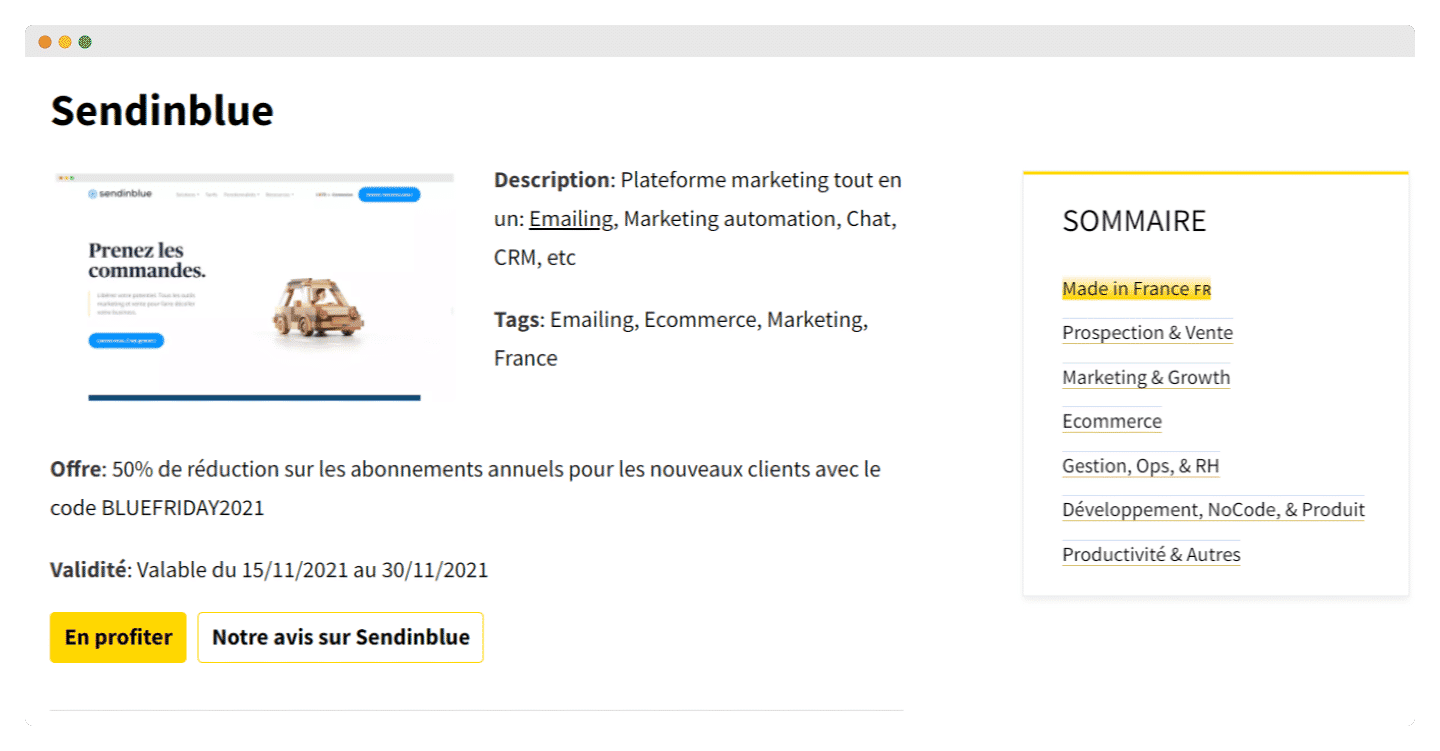
“If you choose the XYZ offer, we’re giving new customers 20% off right now” is generally what you can read on sites that use these practices. It’s the very principle of Black Friday, which, by the way, we let you take advantage of on Salesdorado.
9. Bundling and add-ons
Another well-known cross-selling technique is bundling and add-ons. Let us explain a little:
- Bundling: the idea is to group products, services and features together and say that the whole costs less than the sum of its parts. Product bundles can be a complement: for example, a mobile operator offering a free Netflix and Amazon Prime subscription with the purchase of a certain plan. You also find it quite a lot in software sales.
- Add-ons: here, it’s the opposite: you sell an extra product/service/feature by separating it from the bundle. It’s the equivalent of options when you buy a car. It lets you keep a low entry price, but a much higher average selling price.
These two strategies are in reality cross-selling strategies in the strict sense of the term, but in B2B you can quite easily turn them into an upselling strategy by keeping monolithic pricing, with tiers that give access to a set of services, products or features.
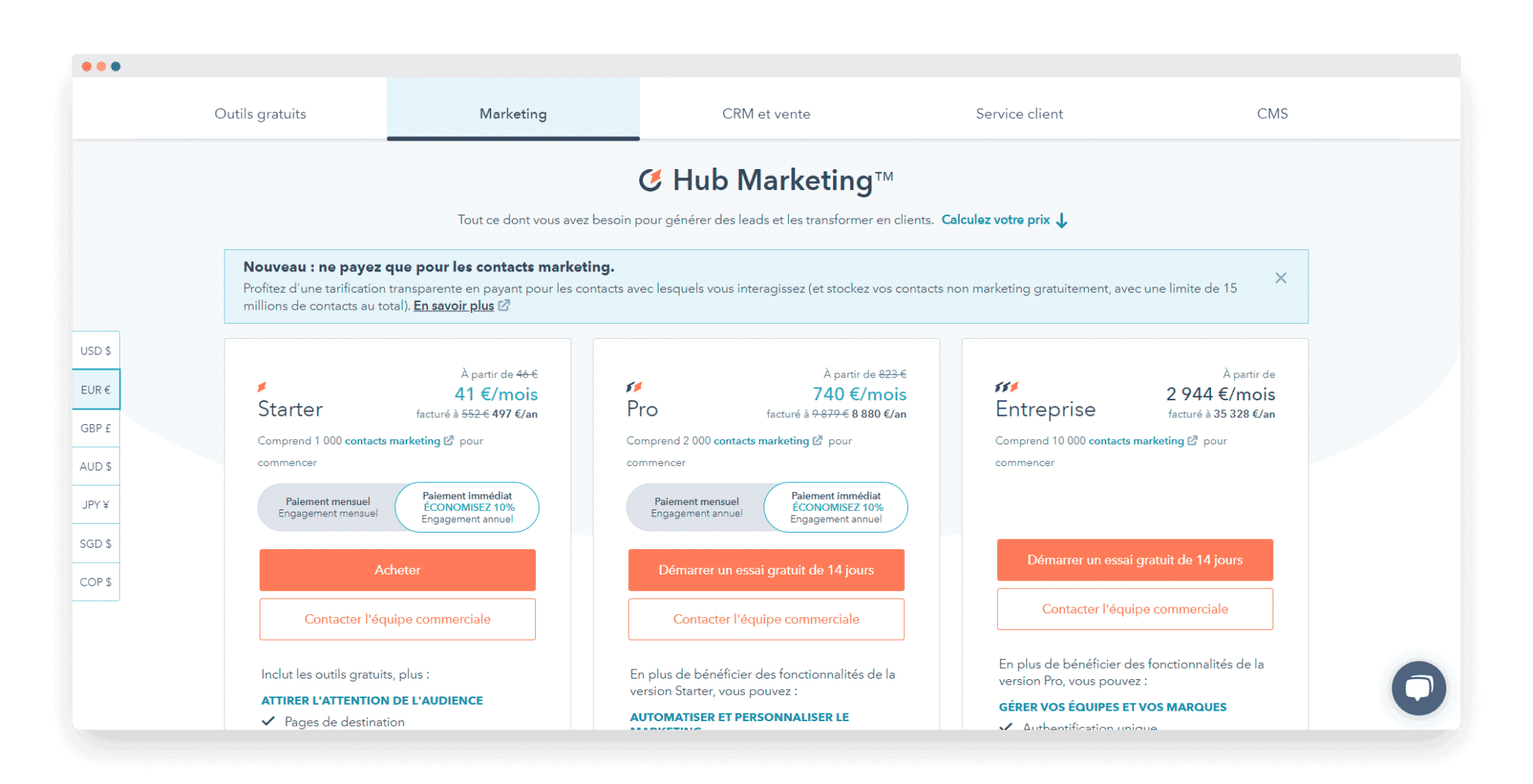
At Hubspot, for example, you’re offered different suites: starting from the free tools, you can pay for Marketing Hub, for the CRM, customer service and the CMS. It’s a good example to show you how to go from free tools to upselling and cross-selling (if you pay for a more complete version of Hubspot with access to other features on top).
10. Offer priority access to certain features
This is an upselling technique that consists of giving priority access to new features or updates. It’s very common for SaaS companies that sell to agencies, which are generally very focused on what’s new.
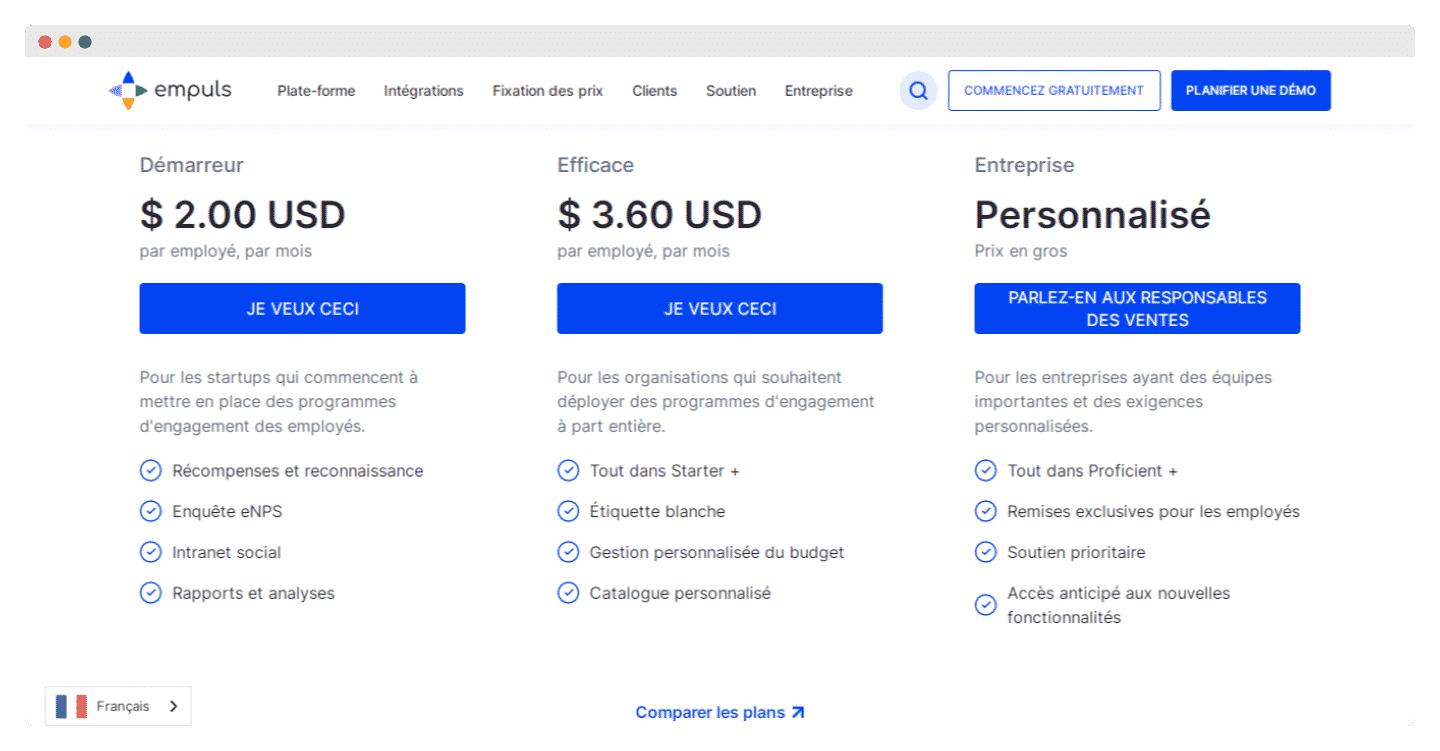
If we take the example of Empuls, a workforce management platform, the Enterprise plan is customized and gives priority access to new features.
5 tools for B2B upselling

There are several types of tools for upselling in B2B: while they are first and foremost customer relationship management software, CRMs offer many features that can help you upsell. In the same vein, you can always use the traditional help desk software, which lets the support team better understand customer needs.
Finally, customer feedback software lets you collect data from customers on NPS (Net Promoter Score), CSAT (customer satisfaction) and other customer success measures, as well as more general comments on satisfaction, functionality and product direction – indispensable for building segments to work on for upselling.
Among the features these tools have in common, you’ll find the following:
- Account management: it’s similar to the features found in account-based marketing software and in many other sales tools. It includes history, feedback and engagement tools.
- Success metrics tracking: the software tracks customer-specific KPIs and churn probability, on top of general indicators such as NPS, CSAT and the customer effort score (CES).
- Opportunity management: Part of the customer success teams’ responsibilities is to identify appropriate upselling opportunities. Customer success management software highlights the areas of the customer’s business that could benefit from additional products or advice.
- Service management: The software includes service management features that let you create cases and work orders to solve the problems the customer may run into.
Intercom
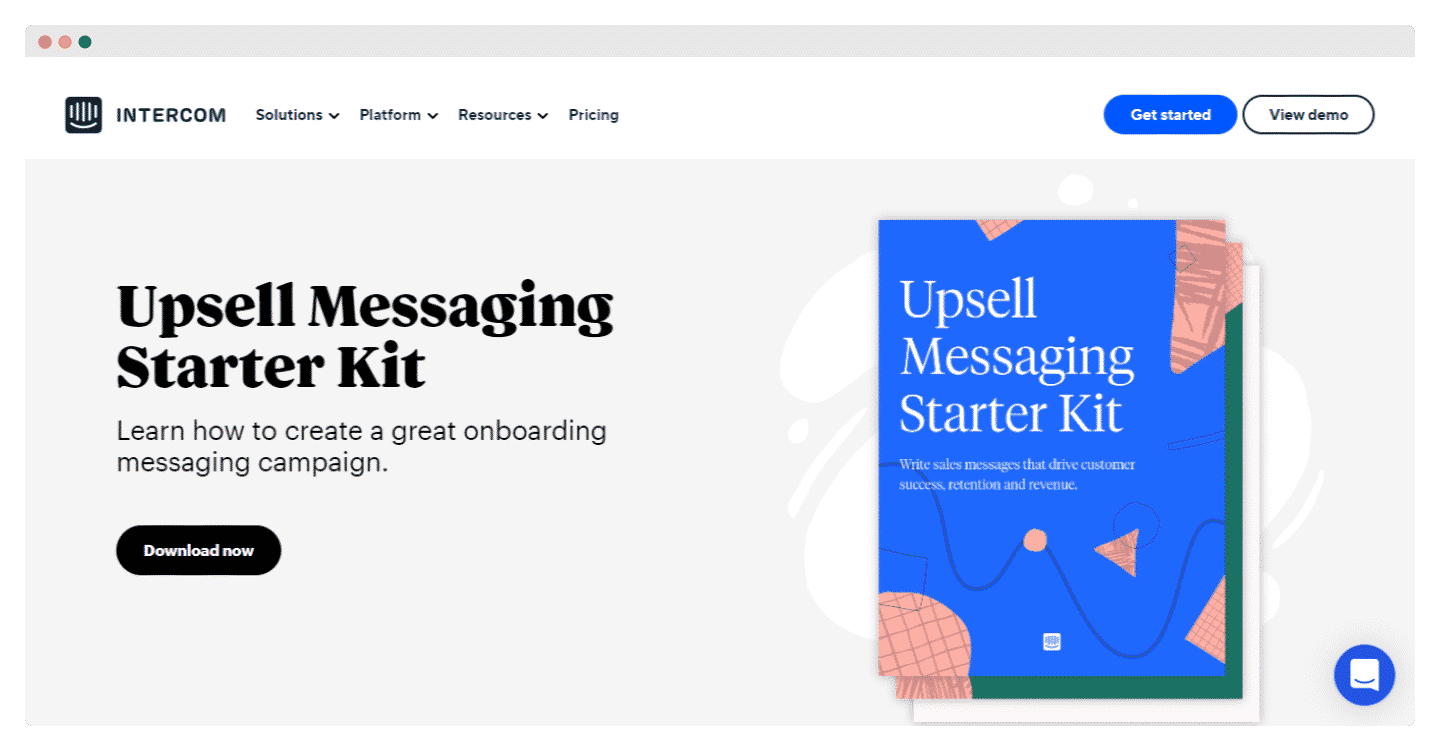
Intercom is a marketing automation tool we really like, especially for its conversational marketing side. In terms of sales organization, it gives you the ability to automatically qualify leads using chatbots, but also to put your prospects into multichannel message sequences (chatbots and email).
For upselling, it’s a godsend: Intercom even offers a free downloadable guide to help you build upselling campaigns with its software.
Discover IntercomDiscover all of Intercom’s features!
Planhat
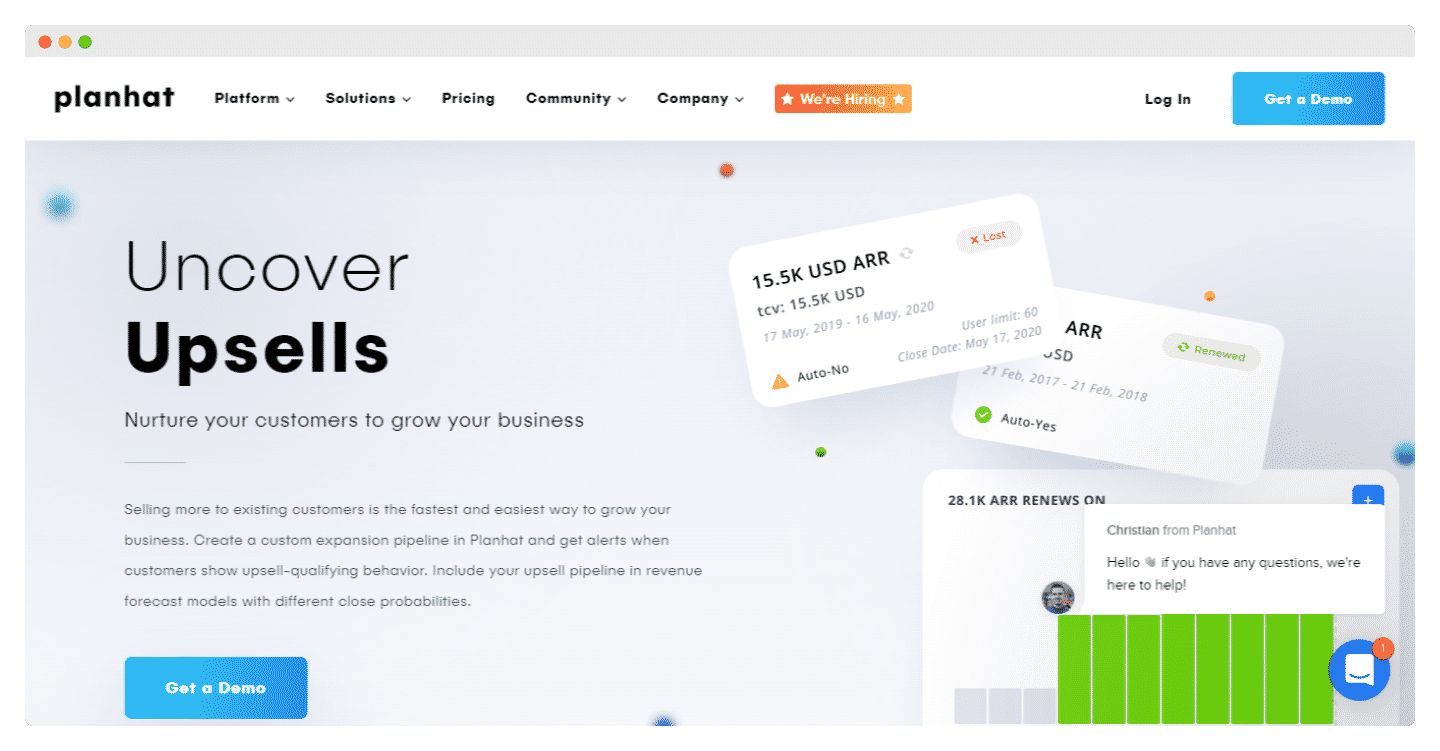
Planhat was born from the ambition to modernize the classic CRM, with a focus on customer success: it helps you reduce churn, automate your tasks, but above all optimize the value and lifetime of your customers.
When it comes to upselling, Planhat lets you identify additional sales in usage trends, to understand and monitor how their engagement evolves. The tool also lets you uncover upselling opportunities: you can see when customers reach the limits of their subscription thanks to product usage data, offer them new features, and also discover patterns in your customer base to find recurring revenue.
Discover PlanhatPlanhat offers you a free demo!
Gainsight
Gainsight is another CSM platform that collects all your customer data and analyzes it with AI to help you boost your performance.
In concrete terms, this obviously translates into upselling and cross-selling practices: the software helps you proactively identify opportunities in your customer accounts and trigger CTAs to fuel the conversation. Gainsight also lets you accurately forecast upcoming renewals and make your customers aware of new improvements through targeted in-product engagements.
Discover GainsightYou can book a free demo with Gainsight.
ChurnZero
ChurnZero is CSM software that offers holistic customer relationship management through a better view of the customer lifecycle.
Among ChurnZero’s features related to upselling, the tool lets you analyze your customers’ usage data, but also send targeted in-app messages that alert them to new complementary products likely to interest them: this lets you engage customers at the optimal moment, that is, when they are using your product.
ChurnZero notably offers WalkThroughs to convert trial users: this means taking customers directly to your products inside the application.
Discover ChurnzeroDiscover all of ChurnZero’s features!
Profitwell
ProfitWell is a churn management solution designed to help companies improve conversion rates and automate everything related to churn reduction. From the data collected, ProfitWell automatically adapts churn recovery messages to each customer, and sends them recommendations to retry credit/debit cards based on churn risk.
While ProfitWell isn’t directly a CSM solution, it still lets you set up upselling practices, because it gives you a huge amount of customer data that then helps you identify upselling and cross-selling opportunities.
Discover ProfitWellProfitWell offers you a free version.
How to upsell: 3 best practices
1. Segment (SONCAS)
The SONCAS method dates from 1993 and stands for Sécurité, Orgueil, Nouveauté, Confort, Argent, Sympathie (security, pride, novelty, comfort, money, likeability). The idea is that these 6 levers make it possible to understand a prospect’s or customer’s need in order to trigger a purchase, taking into account their behavioral specifics. Today people sometimes talk about SONCAS(E), adding an E for “Environnement” or “Écologie” (environment, ecology).
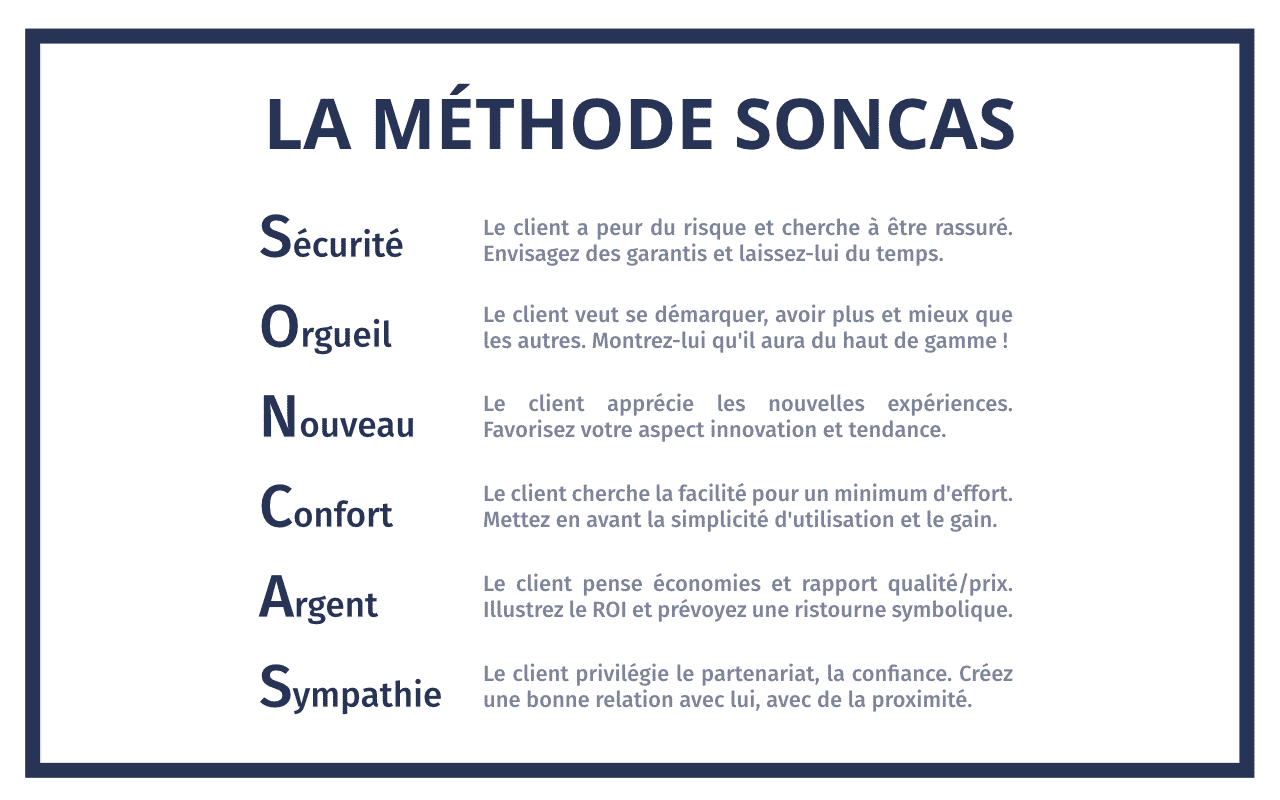
Source: Uptoo
Making the link with upselling is pretty simple: once you’ve properly segmented your customers with the SONCAS method, and so understood the specific needs of each segment, you’re able to offer them suitable products and convert them more easily.
For example, for SaaS software, you’ll have a starter plan for freelancers, then for SMEs, etc.
2. Place upselling opportunities at the right moment
Your product design should encourage your customers to keep discovering new features: the point is to keep barriers to entry low and make the product simple enough for users to take an interest in it quickly.
At the same time, you don’t want your product to be so basic that users get bored. Design a product that has more to offer than it first seems, so that they keep discovering new functions over time and are therefore willing to listen to potential upgrade options.
And finally, the ultimate tip is of course to manage your timing: you need to offer customers the upsell at the moment you know they need it most: take the example of Zoom, which offers its videoconferencing services for free for a limited period, then, once that period is over, offers the paid subscription.
You can also offer upsells when customers are using your product successfully or when you’re about to launch a new, improved integration.
3. Help your teams make the most of upselling
The idea is to make it worthwhile for your sales team: since compensation is a major factor in your salespeople’s motivation, you really need to build upselling and cross-selling into the commissions they can earn.
At the same time, make sure your sales team is well trained on the products involved in upselling. Rehearse the presentation techniques needed to show how a complementary or higher-quality item benefits the customer, to increase the chances they say “yes”.
The questions we get over and over.
What is the difference between upselling and cross-selling?
Upselling steers the customer toward a higher-end product in your offering, for example from the basic plan to the enterprise plan. Cross-selling gets them to buy products on top of the base product, for example a CRM on top of a marketing tool.
What is the anchoring bias in upselling?
It’s the practice of highlighting one of your most expensive offers, often with the “Most Popular” label on the pricing page. The cheaper offers then look even more affordable.
What is a reverse trial?
The customer starts with a trial with access to the paid features, then switches back to freemium at the end of the trial. They get used to the paid features without losing access to the product. Canva and LinkedIn use it.
What tools should you use for B2B upselling?
CRMs, help desk and customer feedback software, and customer success platforms such as Intercom, Planhat, Gainsight, ChurnZero or ProfitWell.
How do you upsell successfully?
By segmenting your customers, for example with the SONCAS method, by offering the upsell when the customer needs it most, and by building upselling into your salespeople’s commissions.


What the community says.