



- The Dominant wants to get straight to the point and stay in charge of the sales process.
- The Influencer is the easiest to convert, but also to lose: make sure you secure their commitment to buy.
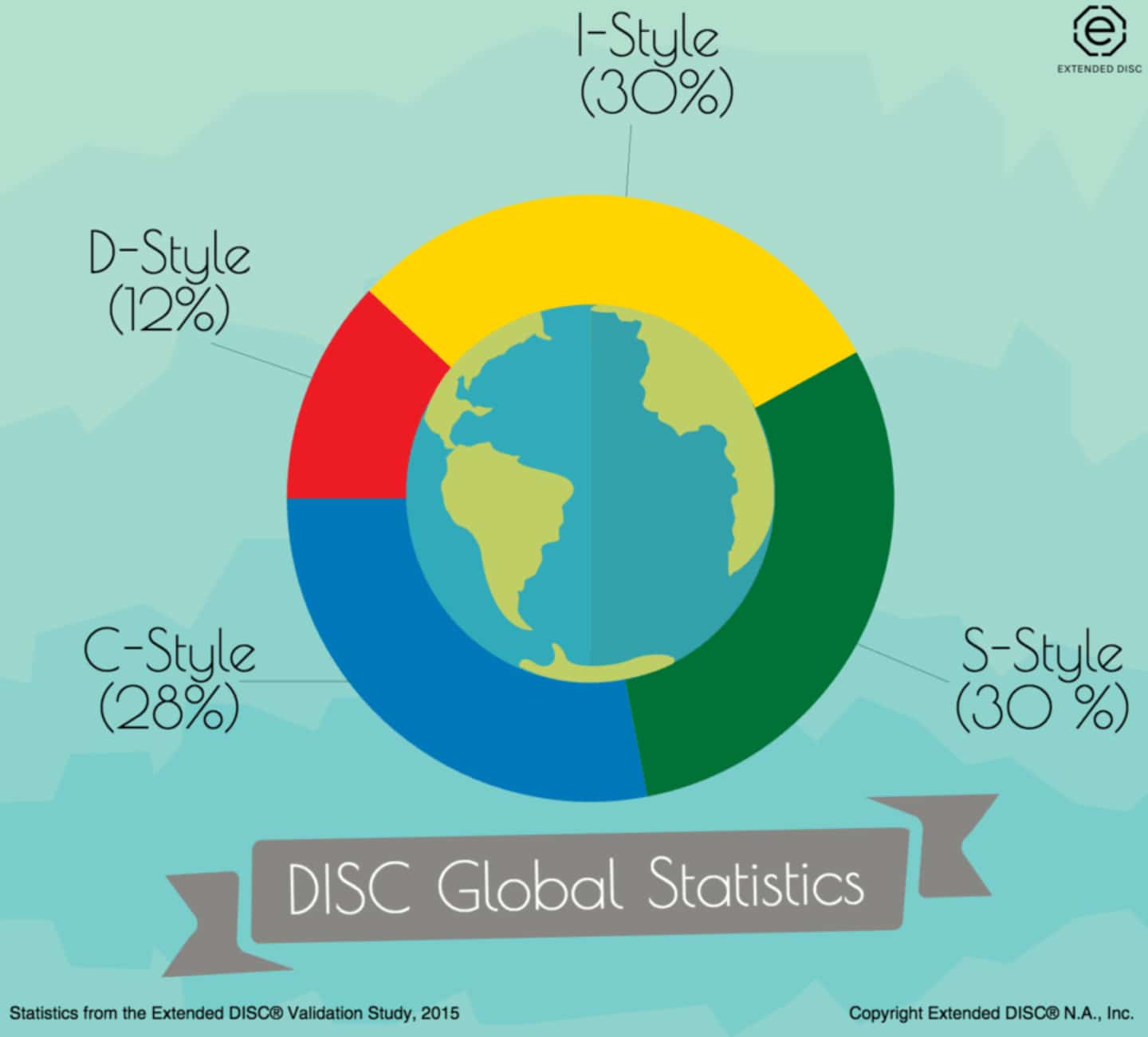
- The Steady, the most common profile, hates pressure and wants to buy from someone patient.
- The Conscientious, the hardest to convert, expects facts, precise figures and tangible proof.
- Start by spotting whether the person is more extroverted or more reserved.
The DISC method is a psychological assessment tool used to determine an individual’s psychological type. The acronym covers the four personality traits identified: Dominance, Influence, Steadiness and Conscientiousness.
It is a kind of framework for reading and understanding human behavior. This method was widely used as a recruitment tool in the 1990s and 2000s.
Applied to sales, this method can be very useful for identifying your prospects’ psychological profile and then adapting your behavior accordingly. In this article, we cover everything you need to know about this method, when and how to apply it.
Find the right providerNeed to outsource your prospecting? Find the provider that matches your real needs.
Find a provider
What is the DISC method?
The DISC method was developed by the American psychologist William Moulton Marston. It is built around four factors: dominance (D), influence (I), steadiness (S) and conscientiousness (C).
A DISC assessment helps an individual understand how to adapt their behavior to a particular situation, for example by giving them advice or tools to communicate more effectively. That is the whole point of this method compared with similar tests such as Myers-Briggs or the Color Code.
The Myers-Briggs test, for example, is a great tool for understanding yourself, but it does not give very specific information and does not tell you how you will react in a given situation.
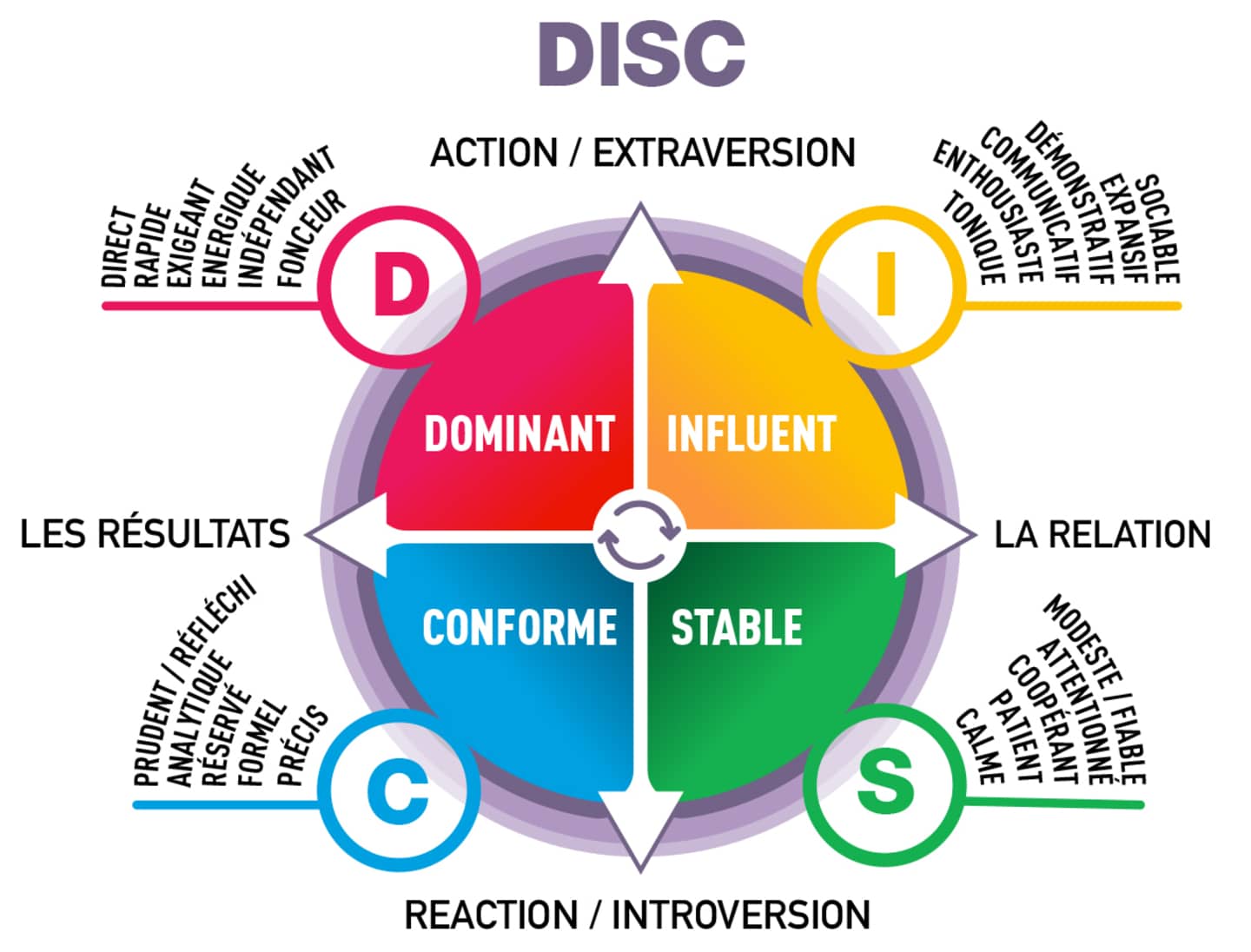
Based on these four factors, the DISC method distinguishes four profile types:
- The Dominant: direct, demanding, a competitor at heart and able to make decisions very quickly.
- The Influencer: eager to shine in front of everyone, an eternal optimist, able to influence and rally crowds.
- The Steady: calm, discreet and loyal, and a very good listener.
- The Conscientious: intent on reaching perfection, logical, thoughtful and able to spot and solve a problem quickly.
Understanding your prospect’s motivations with the DISC method
The Dominant
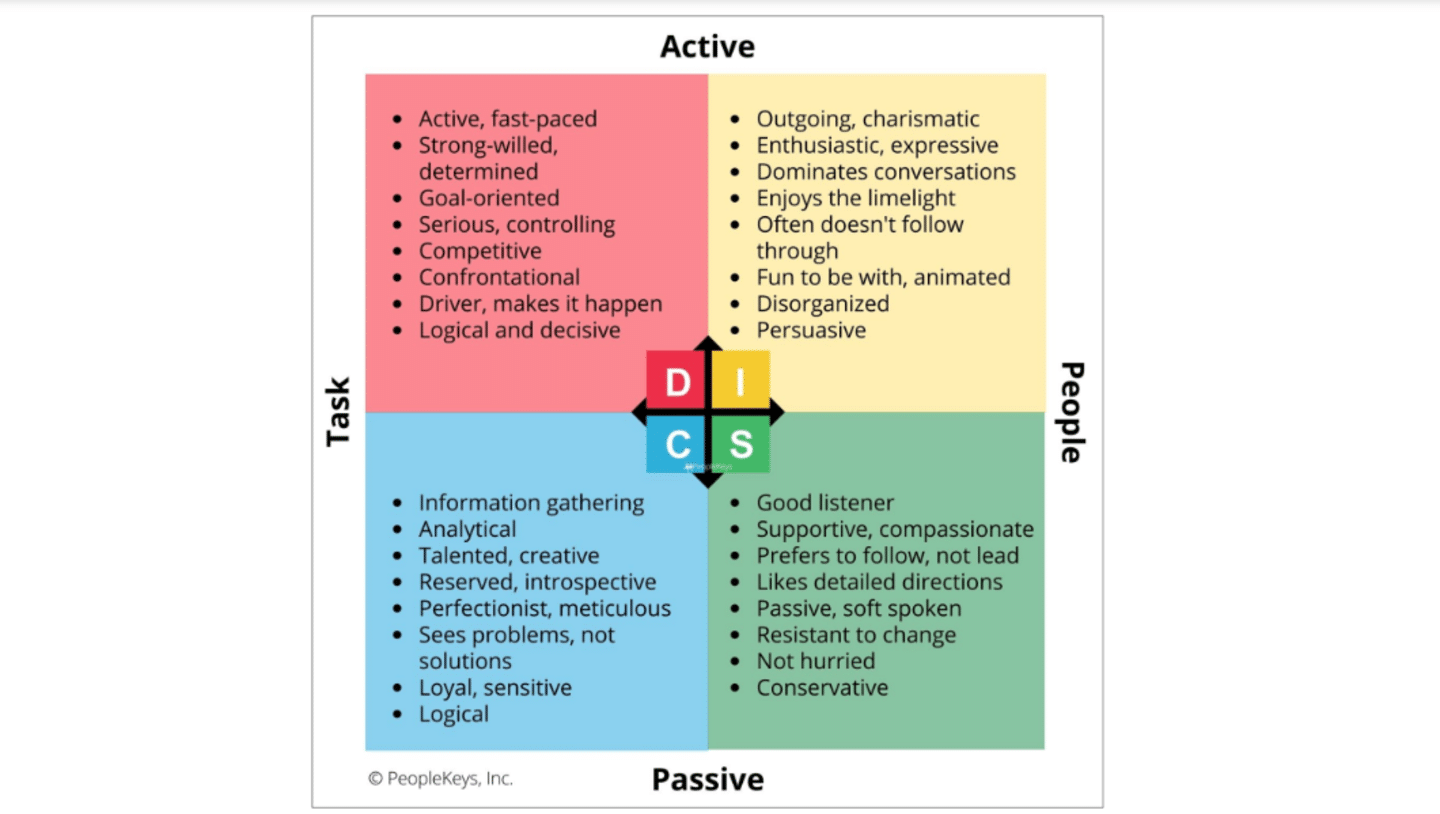
The Dominant prospect likes to lead and to talk. This type of prospect or customer can sometimes be confrontational, because they are not afraid to say what they think and are determined to get a good deal whenever they buy.
The Dominant prospect sees themselves as powerful, energetic, innovative, goal-oriented and resolute. But others may see them as stubborn, arrogant, aggressive, controlling and insensitive.
A dominant person tends to communicate as efficiently as possible, using short sentences and giving instructions. When you talk with them, skip the small talk: what you say will come across as lightweight, pointless and a waste of time.
In a sales situation, a D-profile prospect tends to be very irritated by indecision and inefficiency. These profiles want to be in control and like to feel they are running the sales process. They tend to test you, so rise to the challenge, earn their respect and close the deal!
The Influencer
The Influencer prospect is warm, friendly, talkative and very keen to build a close relationship, even a friendship, with their salesperson. These profiles are interested in novelty and originality, they are curious and above all they want to buy from people they like.
This is the easiest type of prospect to convert into a customer, but also very easy to lose if they feel you are no longer up to the job or you make what they consider unforgivable mistakes. For example, interrupting them while they are telling a story, or giving advice on how to run their business.
An Influencer tends to be very self-confident and sees themselves as generous, inspiring and open. This type of profile can also be seen as self-centered, superficial or even a little lightweight.
Type I people love to talk. They are very expressive, using lots of gestures and facial expressions to get their story across. They love brainstorming but are more hesitant when it comes to making important decisions quickly. This type of profile will appreciate you giving them time to read what you have produced, for example.
When a type I prospect makes a buying decision, they take into account the impact of that decision on their status with others, and how they will be viewed. They do not care much about detail and are generally fairly optimistic, but also fairly volatile. They may well express a firm intention to buy and then back out at the last minute. So make absolutely sure you secure their commitment to buy, or you risk losing the sale!
The Steady
This is the most common type of prospect. They are easy to identify because they hate confrontation and pressure and want to buy from someone who is patient and understands them! A type S prospect makes considered choices, takes their time and may tend to involve family members or friends.
A Steady person generally sees themselves as loyal, attentive, calm and encouraging. Others may also see them as stubborn, or resistant to change.
A type S person generally speaks softly. They are usually reserved and may come across as fairly formal. The first interactions with these personalities are very important: do not come across as too rigid. These personalities like to build a climate of trust, have serious conversations and establish a degree of closeness. When you communicate with type S personalities, use friendly language and try to be warm.
A type S prospect makes a buying decision based on the impact it will have on the people around them. They are keen to make the right decision that suits everyone, and want to discuss the details before making a purchase. So make sure you support them, show patience and become an ally for them in the buying process!
The Conscientious
The Conscientious is the hardest prospect to convert into a customer. This personality type likes data, facts and evidence. This type of prospect generally hates a salesperson getting too personal with them, because they see the business transaction above all else.
This type of prospect can be very demanding, and will expect you to know your products and be able to answer every question they have. And be careful if you commit yourself on certain points: they will ask you for tangible proof!
A type C person sees themselves as someone who wants to be informed, as a diplomatic, thoughtful and well-informed person. Others may also see them as pedantic, indecisive, reserved or even foolish!
C personalities are very objective and can sometimes seem curt and distant. They are fans of long, in-depth analysis and love detail. This type of person is guided above all by logic and reason.
When buying, C profiles are very concerned about making the right decision. They do not want to buy the wrong product or service, for fear of regretting their decision and being identified by others as the person who made the one mistake not to make. This type of prospect wants as much information as possible so they have everything they need to make the most informed decision possible. With this type of prospect, you will need to be patient and come prepared with facts and information if you want to close the deal!
Applying the DISC method in B2B sales
The DISC method is particularly well suited to sales because it is simple and lets you make fast, accurate decisions. It is very valuable for helping you adapt your communication to your prospects or customers, choose the right way to make your case, or know which tone of voice will be most appropriate, for example.
Read alsoGlossary of sales techniques
The steps to identify your prospect’s type
There are five main steps to identify which profile type your prospect corresponds to.
- The first step is to identify the person’s style: whether they are more extroverted or more reserved. If you cannot identify it quickly, do not hesitate to ask questions that will help you understand their buying style.
- Once you have identified their buying style and what they really appreciate, build a relationship with them and ask questions, and identify their benefits. Do not hesitate to get a DISC certification: it is inexpensive, fairly quick and very effective!
- Listen actively to your prospect and only bring up your product once you are sure what the customer really needs. It will save them time, and you too!
- Ask questions suited to your prospect’s personality type.
- Always deliver as much as, or even more than, what was promised.
Winning the sale by personality type
Once you have identified your prospect’s personality type, you have everything you need to win the sale. I recommend going through three phases: first discovery, then negotiation and finally closing.
For a type D profile:
- Discovery phase: you need to figure them out very quickly. Keep in mind that this type of prospect does not want to waste time and wants to get straight to the point!
- Negotiation phase: Show them they are in charge of the sales process and that they are leading the negotiation.
- Closing phase: Prove to them that they have won, and be there when they reach out if you want to turn them into a long-term customer.
For a type I profile:
- Discovery phase: this prospect will be rather friendly, which will let you build a relationship of trust with them, not just a buyer-seller relationship. Show them you are interested in them!
- Negotiation phase: During this phase, you need to listen out for any problems they may have. Do not hesitate to create common ground to establish an initial basis of trust.
- Closing phase: Show your prospect that you treat them differently because you like them, and make them feel you are lucky to have them as a customer!
For a type S profile:
- Discovery phase: this type of prospect will listen to what you propose and will tend to trust you.
- Negotiation phase: avoid rushing this type of customer, be attentive to their sensitivity and show them that your product will make their life easier.
- Closing phase: this is the time to emphasize how easy your product is to implement.
For a type C profile:
- Discovery phase: this type of prospect is likely to ask you about the impact on them and their colleagues if they actually buy the product. They will want concrete proof backed by figures. If you claim the product or service you are trying to sell them will save them time, prove it!
- Negotiation phase: During this phase, you need to be well informed, analytical and make your case with precise figures. You can use the opportunity to make comparisons with your competitors – provided you also have accurate data to provide!
- Closing phase: Do the groundwork for them and try to show them the expected results in the context of their company.
Go furtherFeel free to browse our articles on sales prospecting and our tips for finding qualified prospects and scoring your leads!
The questions we get over and over.
What is the DISC method?
A psychological assessment tool developed by the American psychologist William Moulton Marston. It is built around four factors: dominance (D), influence (I), steadiness (S) and conscientiousness (C).
What are the four DISC profiles?
The Dominant, direct, demanding and able to decide very quickly; the Influencer, optimistic and able to rally people; the Steady, calm, discreet, loyal and a good listener; the Conscientious, logical, thoughtful and intent on reaching perfection.
What is the difference between DISC and Myers-Briggs?
The Myers-Briggs test helps you understand yourself, but does not say how you will react in a given situation. A DISC assessment shows how to adapt your behavior to a particular situation, for example to communicate more effectively.
How do you identify a prospect’s DISC profile?
First by spotting whether they are more extroverted or reserved, then by building a relationship and asking questions, listening actively and adapting your questions to their personality type.
How do you sell to a Conscientious prospect?
With facts and information. They expect you to know your products, make your case with precise figures and show them the expected results in the context of their company.



What the community says.