The tool in detail
Cluely after real-world use: feature scope, integrations, pricing and concrete limits.
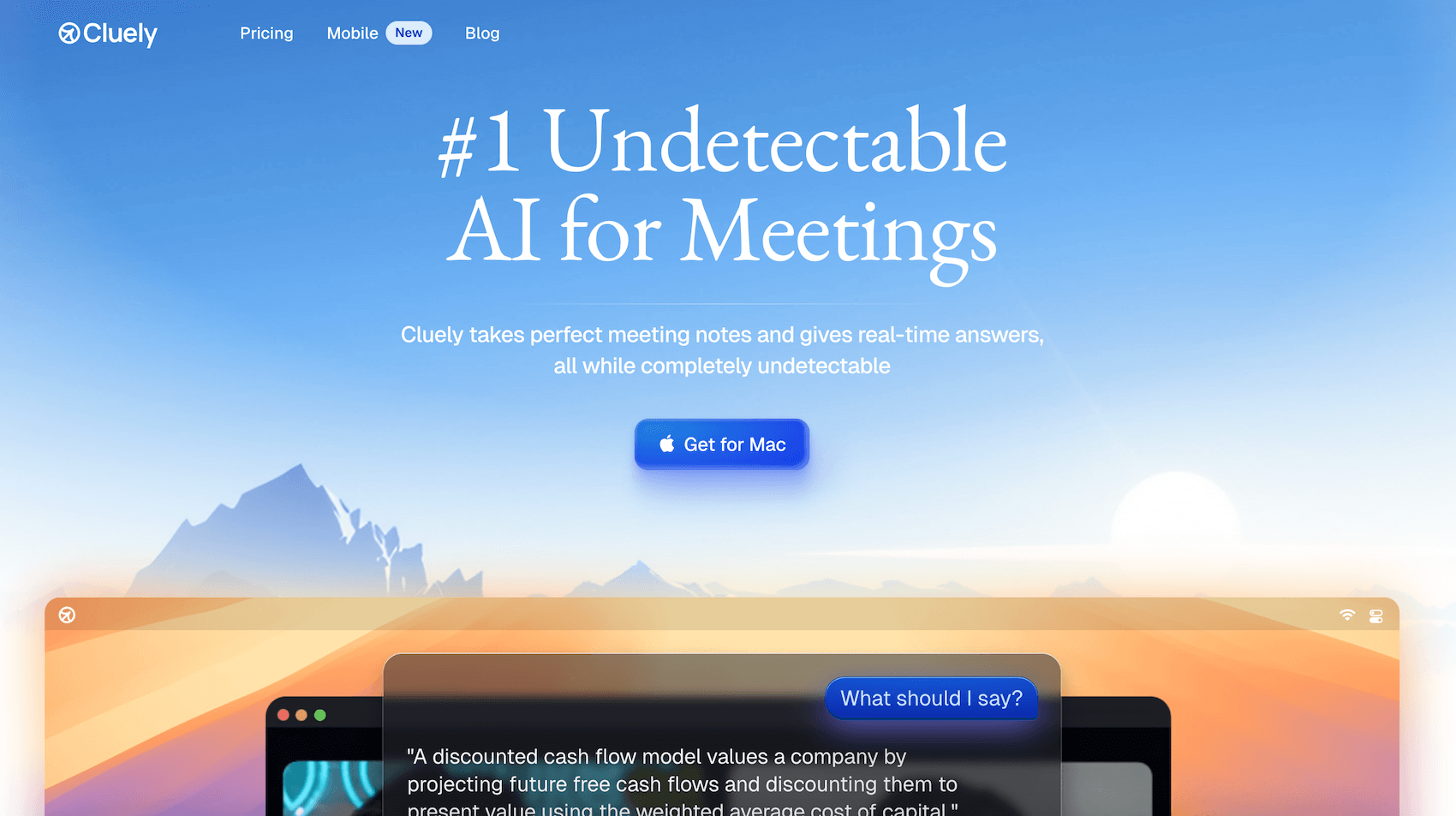
Cluely is an app that feeds you answers in real time during your job interviews, your meetings or your exams. An invisible overlay that reads your screen, listens to the conversation and displays suggestions only you can see, even when you share your screen.
The slogan it owned at launch: « Cheat on Everything ».
The tool, built on AI, has raised 20 million dollars, 15 of them from Andreessen Horowitz, at a valuation estimated at 120 million. The founders, two 21-year-old students suspended from Columbia for using their own cheating tool, became tech celebrities thanks to a carefully orchestrated strategy of viral provocation.
But behind the buzz, what is Cluely really worth? And above all: is it worth the risk?
The story behind Cluely: cheating as a business model
Before Cluely, there was Interview Coder. A Chrome extension developed by Roy Lee and Neel Shanmugam, computer science students at Columbia. The idea: the tool captures the coding problem shown on screen during a technical interview, sends it to an LLM and discreetly displays the solution.
The two students used their own tool to land offers at Amazon and Meta. They even published a video of the Amazon interview they passed thanks to AI. Amazon withdrew the offer. Columbia suspended them.
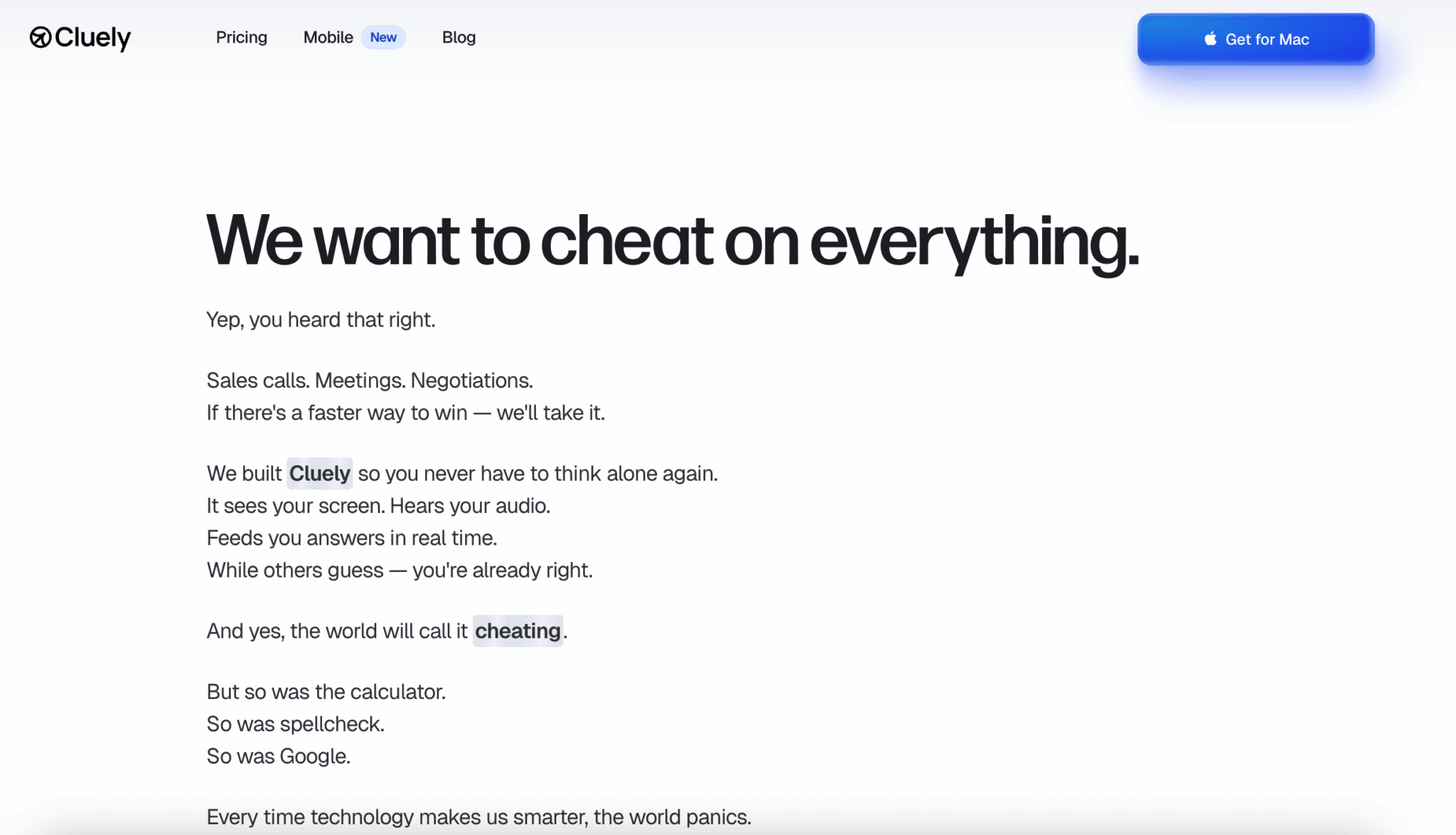
Most people would have kept a low profile. Roy Lee did the opposite. He rebranded the tool as Cluely, published a manifesto titled « We Want to Cheat on Everything » and released a viral video in which he uses Cluely on a date to lie about his age and fake knowledge of art. The video got 10 million views.
His openly stated strategy: « ragebait ». The more outraged people get, the more they share, the more Cluely gains in notoriety. Lee spelled it out: « Virality protected me from further punishment. »
Salesdorado’s takeYou can admire the marketing nerve. But building a business on openly embraced cheating is cynical. And when the founders boast about having « hacked » Amazon’s interview process, you start wondering what they are prepared to do with their users’ data.
What Cluely does (on paper)
An invisible overlay during your calls
Cluely displays a window layered over your screen that only you can see, even when you share your screen on Zoom or Google Meet. The tool uses graphics injection techniques to stay invisible to screen sharing software.
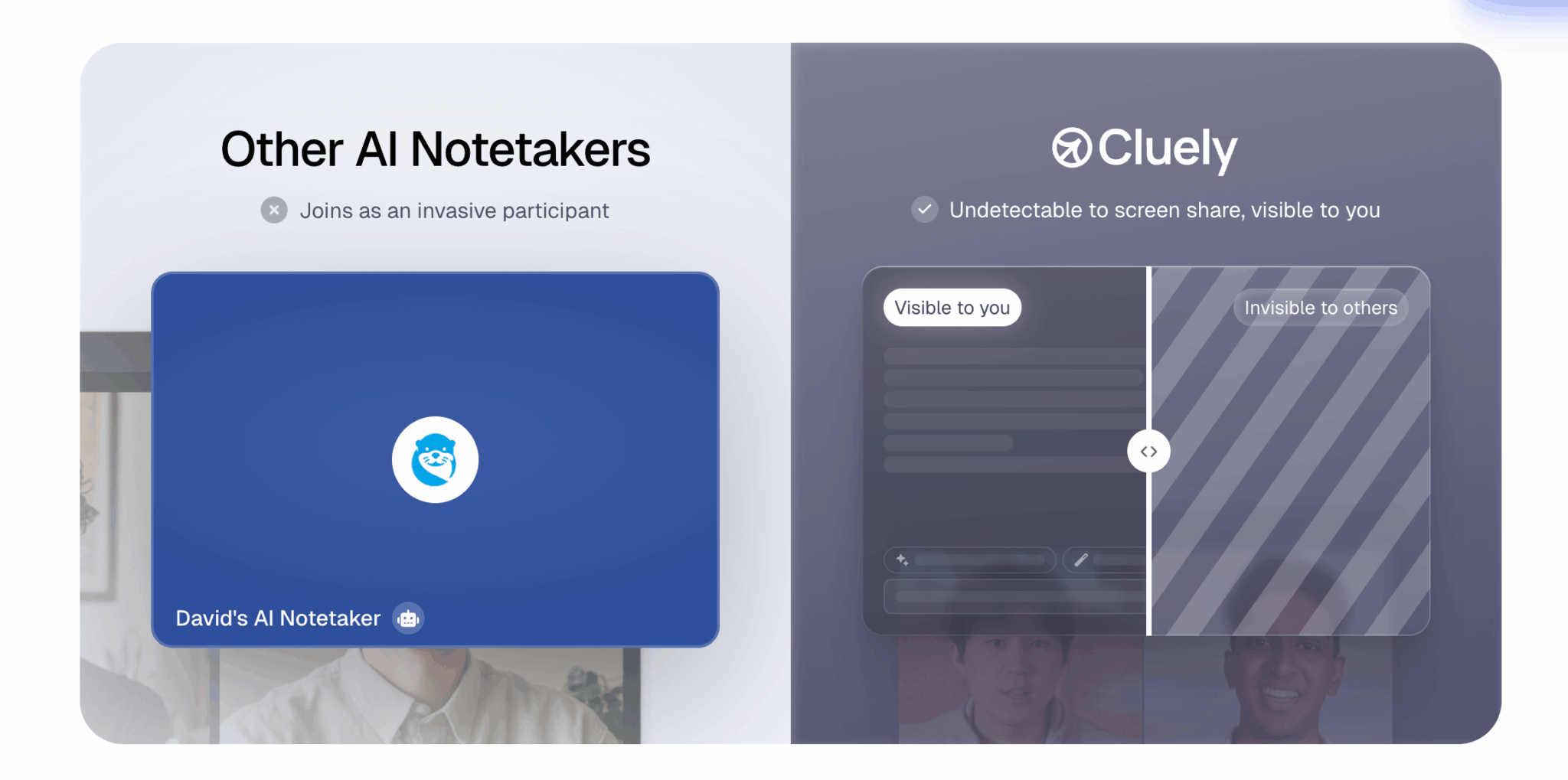
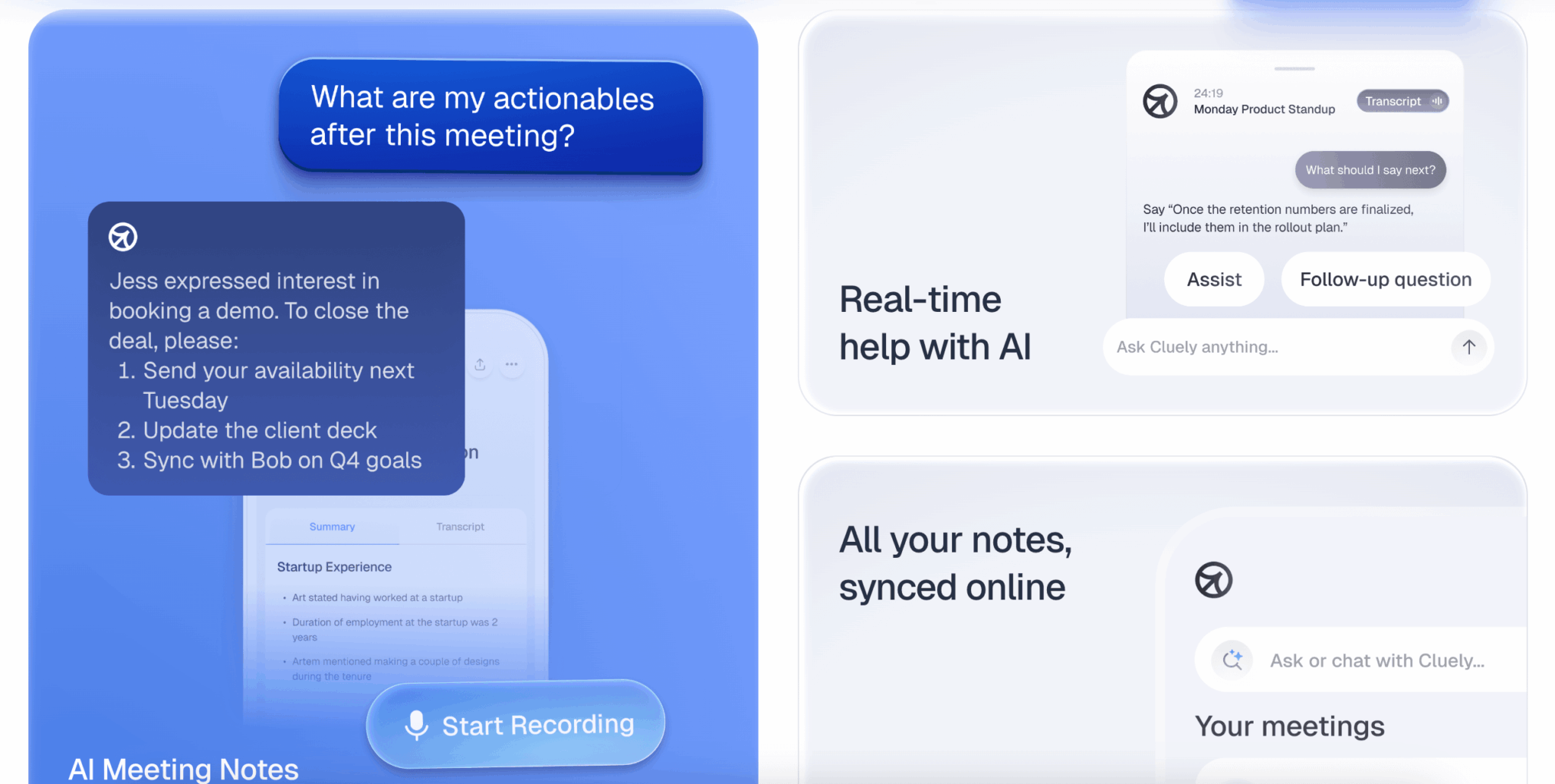
The app listens to the conversation (speech recognition), reads what is displayed on screen (OCR) and generates suggested answers in real time through LLMs (GPT-4, Claude).
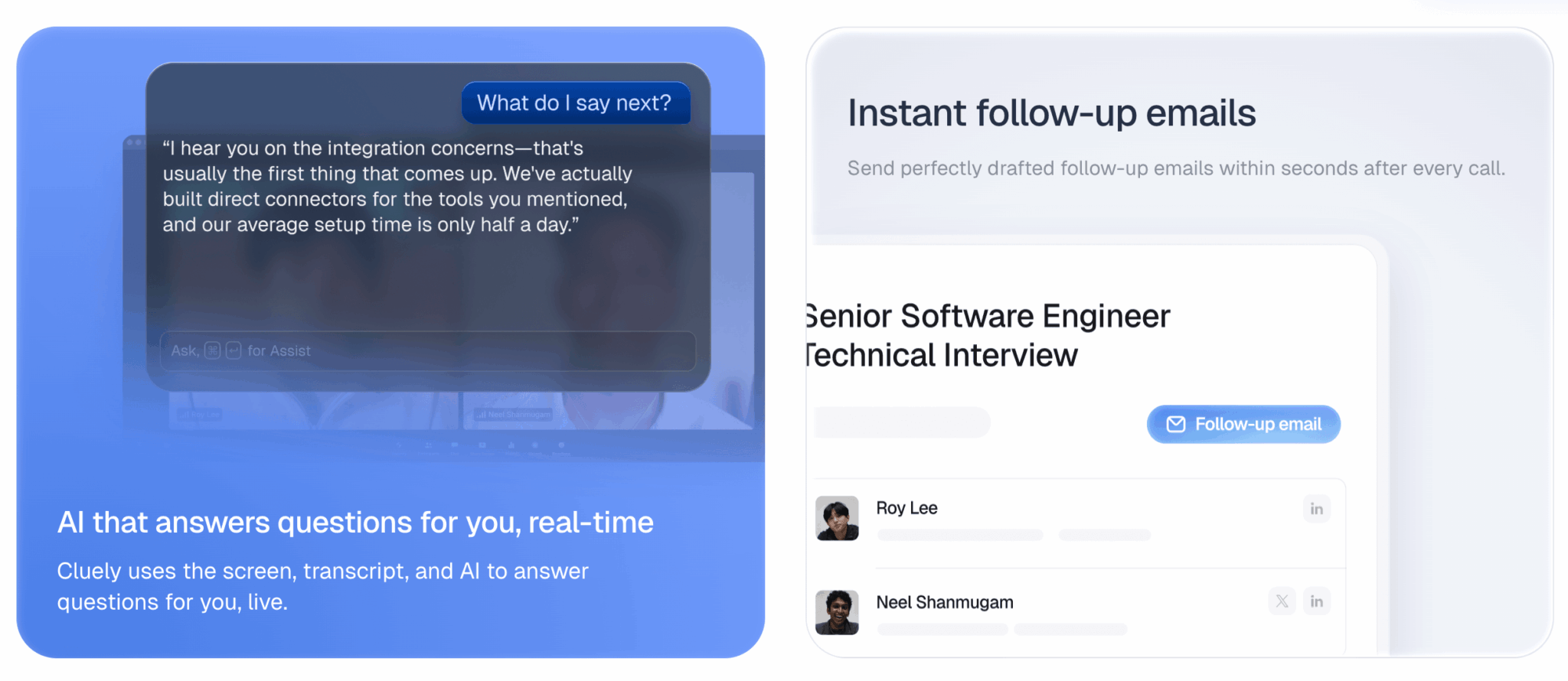
Custom « playbooks »
You can upload your documents (PDFs, guides, sales scripts) to build a knowledge base. The AI refers to it to generate contextual answers… in theory.
A mobile app
An iOS app lets you use Cluely in person: the phone sitting on the table listens to the conversation and displays suggestions. Advertised use cases: medical appointments, business lunches, dates.
What doesn’t work (in practice)
Latency that kills the experience
User tests report a latency of 5 to 10 seconds between the question and the suggested answer. In a natural conversation, 8 seconds of silence after a question is an eternity. You look lost, not competent.
Frequent hallucinations
The AI invents work experience that isn’t on your resume. It distorts your skills. In a sales or customer support context, that’s a disaster: you can’t build trust with answers that are factually wrong.
Easy for humans to spot
Recruiters easily spot candidates using Cluely: shifting eyes, a delay before answering, the flat tone of someone reading. The tool may be invisible to the software, but the user isn’t.
A counterproductive cognitive overload
Conversing naturally, listening to the other person, secretly reading an AI suggestion, processing it and then speaking naturally is cognitively exhausting. Users end up coming across as robotic and disconnected. The opposite of the goal.
The risks you are taking
Legal risks: illegal in Europe
To work, Cluely records everything your microphone picks up and everything displayed on your screen. Without the consent of the other participants.
In Europe (GDPR), recording someone’s voice without explicit consent is illegal. Even in the United States, in « two-party consent » states such as California, using Cluely to transcribe an interview without the recruiter’s knowledge could expose you to wiretapping lawsuits.
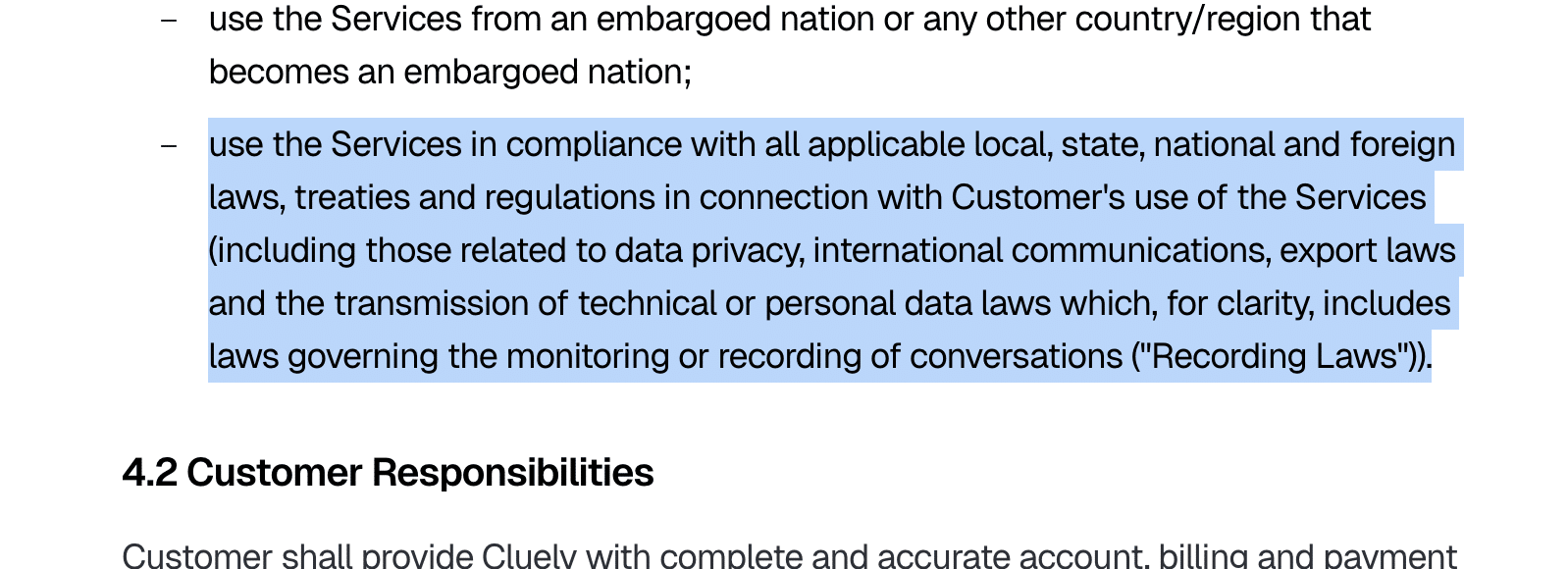
Cluely’s terms of service are clear: you are the one responsible for informing participants that you are using the tool. Except the tool is sold as « undetectable ». The contradiction is awkward.
Security risks: the 2025 flaw
In 2025, security researcher Jack Cable took Cluely’s desktop app apart. By his account, it was an Electron app running without the sandbox, with a flaw that let any website opened from Cluely capture the user’s screen continuously, after a single click. The system prompts were sitting in plaintext in the code.
Cluely’s response? In July 2025, a DMCA takedown request against Cable’s X post publishing those prompts, on the grounds that it contained proprietary source code. The CEO first denied it, before an employee admitted filing it. For a startup that promises discretion, going after the researcher rather than the flaw says a lot.
Your data goes through third-party LLMs (OpenAI, Anthropic). Cluely offers no public guarantee on how that data is retained or used.
Reputational risks: if you get caught
If you use Cluely to cheat in an interview and you get caught (or your data leaks), the consequences can be severe: offer withdrawn, dismissal, professional reputation destroyed.
In an industry where everyone knows everyone, that’s a major risk.
Cluely pricing
| Plan | Price | What’s included |
|---|---|---|
| Starter | Free | Limited AI responses, limited note-taking, custom instructions and file uploads, access to meeting history |
| Pro | $20/month | Everything in Starter + unlimited AI responses, unlimited note-taking, access to the latest AI models, priority support |
| Pro + Undetectability | $150/month | Everything in Pro + « Completely hidden to meeting screen sharing software » (total invisibility during screen sharing) |
The pricing grid is crystal clear about what you are buying: the $150/month plan explicitly sells undetectability as a premium feature. It is the core of the product.
The legitimate alternatives
If you want help in meetings without Cluely’s ethical and legal risks, transparent alternatives exist:
- Otter.ai: automatic meeting transcription and note-taking, with the consent of all participants. The tool integrates with Zoom, Google Meet, Microsoft Teams.
- tl;dv: meeting recording and summaries with consent. It lets you coach sales reps after their calls, not make them cheat during them.
- Native Google and Microsoft assistants: the transcription and summary features built into Google Meet and Microsoft Teams are transparent and legal.