Top 11 CRM Software for Startups

Top 11 CRM software for startups. Suites that grow with the startup: Salesforce (free suite, Suite Starter €25/user/month, Suite Pro €100), HubSpot (free for 2 users, Starter €20/license/month, Pro €90; startup program up to 90% off the first year), Freshsales (Growth €9/user/month billed annually, 21-day trial), Zoho CRM (free for 3 users, Standard €14 billed annually; Zoho for Startups up to €4,000 in credits), Karlia (French, all-in-one, Pro from €29 excl. tax).

Maxime Ben Bouaziz
Maxime Ben Bouaziz
CEO Salesdorado, IA & Sales Tech
March 8, 2023, updated November 10, 2026, 2 min read
See all tools

A startup does not choose its CRM the way an established SMB does. It starts with two or three founders and a spreadsheet, hires its first sales reps after a funding round, then sees its contacts, pipelines and users multiply within months. The right CRM costs little at the start and holds up afterwards.

Some of the tools in this top go further than classic CRMs in automation and marketing: they suit fast-growing startups that handle a lot of data. Others are more limited, but keep their place through ease of use, value for money and integrations.

Depending on what you need:

  • Start without paying, as a team of two or three: HubSpot, Zoho CRM or Attio
  • A deep discount reserved for funded startups: HubSpot or Attio
  • Structure the first sales team around a pipeline: Pipedrive
  • Prospect by phone, email and SMS from the same tool: Close
  • A CRM that fills itself from your inbox and calendar: Salesflare
  • A team entirely on Google Workspace: Copper
  • Quotes, invoices and support in the same French software: Karlia
  • A large sales team planned in the short term: Salesforce

How do you choose the right CRM as a startup?

For a CRM to suit you, its features must be able to evolve along with your startup’s needs. It has to be solid enough to keep up with rapid growth and let you increase your number of contacts, sales pipelines or users. In short, data that gets more and more complex and volumes that keep growing.

Make sure you choose software that is easy to learn and use. Startups hire a lot and move very fast: poor usability costs a great deal in training. And the main value of a CRM is centralizing customer information. If your teams do not fill in customer records, or do not know how to access them, the software generates far less value.

Another important criterion: a good CRM must integrate easily with other software. That is what lets you centralize all customer data in one place. Leading CRMs, such as Salesforce, offer integrations with many specialized applications.

The fourth criterion concerns features. Most startups change very quickly, so sales organization and tracking tools must be flexible enough. Also check that the automation is solid, so you do not lose time if your startup is in hypergrowth.

Finally, and not to be overlooked, the vendor’s customer service must be good enough to support a growing startup that manages a lot of sales and customer data at once, without always having the technical resources to solve problems on its own.

One last point specific to startups: the price at the start matters less than the price two years on. HubSpot, Attio and Zoho have programs reserved for young companies, but they involve an application, often through a partner fund or incubator, and the discount shrinks over time.

The eleven CRMs in this top break down as follows: suites that also cover marketing, support or invoicing, sales CRMs for the first sales team, and flexible, contact-centered CRMs for founding teams.


SalesdoradoSimulate your CRM choice
Free tool, 2 minutes
Simulate your CRM choice

Answer 10 targeted questions and find the tools that actually fit your situation.

15
tools analyzed
10
targeted questions
€0
no sign-up
Methodology published by the Salesdorado editorial team

The 11 tools, side by side

# Logos tool Score Price Best for
01 Salesforce 4.5/5 ★ €25 Startups preparing a large sales organization, with a dedicated administrator Visit site
02 Pipedrive 4.5/5 ★ €14 Startups structuring their first sales pipeline with a few sales reps Visit site
03 HubSpot 4.5/5 ★ €20 Funded startups that want a free CRM, then a discount on Pro plans Visit site
04 Close 4.1/5 ★ $9 Startups whose sales reps make a lot of prospecting calls and emails Visit site
05 Copper 4.0/5 ★ $23 Startups that work entirely on Google Workspace Visit site
06 Salesflare 4.0/5 ★ €29 Founders and small B2B teams that want an up-to-date CRM without manual entry Visit site
07 Freshsales 4.5/5 ★ €9 Startups that want a complete, low-cost sales CRM for their first sales reps Visit site
08 Zoho CRM 4.2/5 ★ €14 Startups that want a free CRM for 3, then a complete tool at a moderate price Visit site
09 folk 4.0/5 ★ €22 Small teams managing customers, partners and investors in one tool Visit site
10 Karlia 4.2/5 ★ €29 French startups that want CRM, quotes, invoices and support in one piece of software Visit site
11 Attio 4.0/5 ★ €31 Funded startups that want a flexible CRM, from the first deals through growth Visit site
01

Salesforce

4.5/5 From €25

Best for: Startups preparing a large sales organization, with a dedicated administrator

+ Strengths
  • A very large number of integrations and add-on applications
  • Advanced automation and customization from Suite Pro
  • Suite Starter at €25 combining sales, customer service and email marketing
  • Free suite to get started
− Downsides
  • Not very intuitive: an administrator or consultant quickly becomes necessary
  • The price climbs fast: €100 for Suite Pro, €195 for Core, plus modules
★ Salesforce in brief

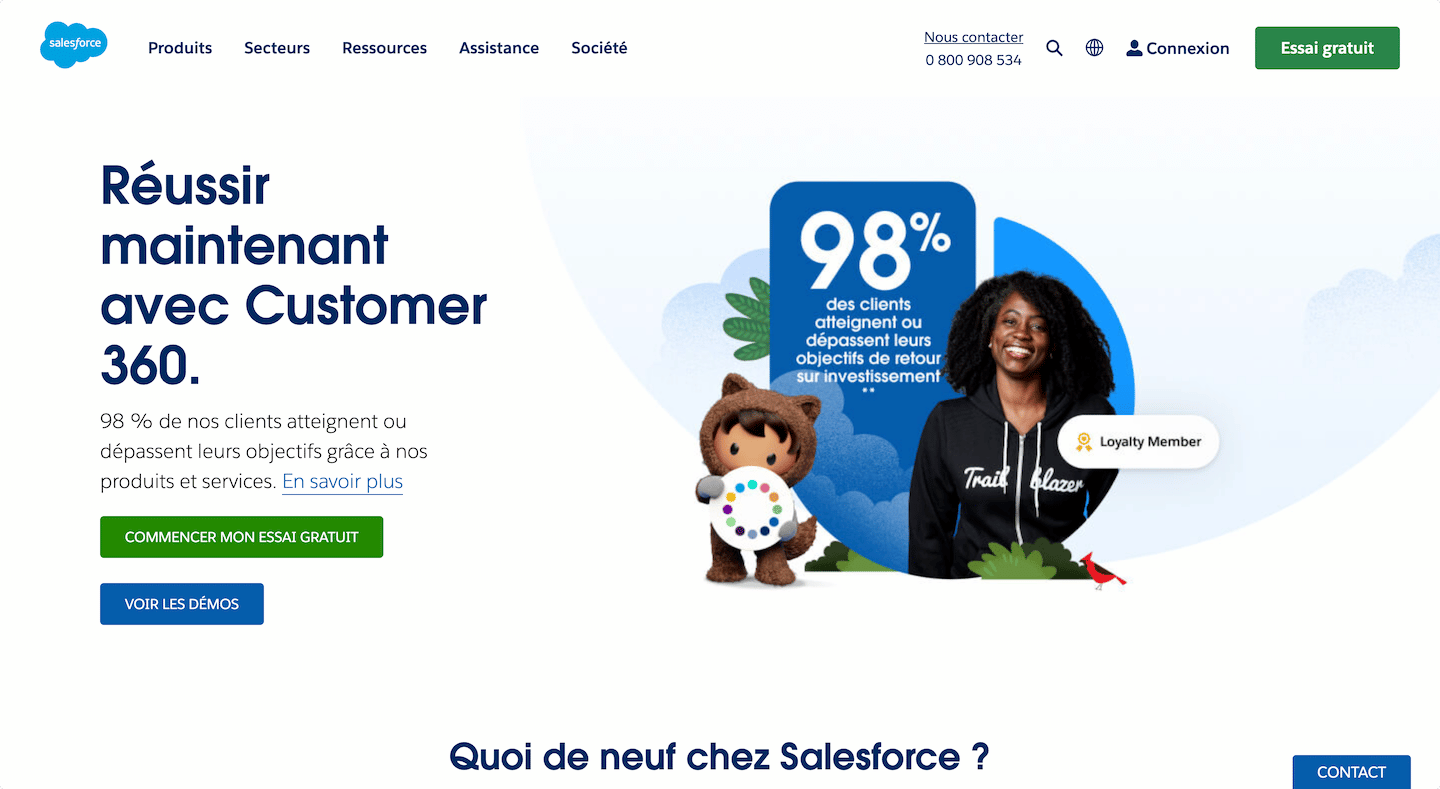
Former Salesforce France home page: “Succeed now with Customer 360”

Salesforce is the most widely used CRM among companies selling B2B, and the one many startups migrate to once their sales team is structured. It offers many integration options and add-on modules to get even more value from the platform.

Its automation tools simplify the sales process: sales flows, lead routing, AI-powered sync of emails, events and contacts. Suite Starter already brings together lead, account and opportunity management and email marketing; Suite Pro adds quotes, sales forecasts and more customization.

The downside is well known: Salesforce is not very intuitive. To configure and maintain it, you will need a dedicated team member or a consultant, and that is expensive. For a five-person startup, it is often too early. For one that has just raised funds and plans twenty sales reps within the year, going straight to Salesforce avoids a migration later.

Salesforce offers a free suite and a free trial of its paid suites. Suite Starter costs €25 per user per month, billed monthly or annually. Suite Pro goes to €100 billed annually, and Sales Cloud editions range from €195 (Core) to €550 (Max). Its pricing pages show no startup rate.

02

Pipedrive

4.5/5 From €14

Best for: Startups structuring their first sales pipeline with a few sales reps

+ Strengths
  • Very visual interface of the entire sales funnel
  • Shallow learning curve, fast implementation
  • Automatic reminders and follow-up alerts
  • More than 500 integrations, including Zapier, Zoom and lemlist
− Downsides
  • No free plan
  • Designed for selling: those looking for a multi-purpose tool will be disappointed
★ Pipedrive in brief

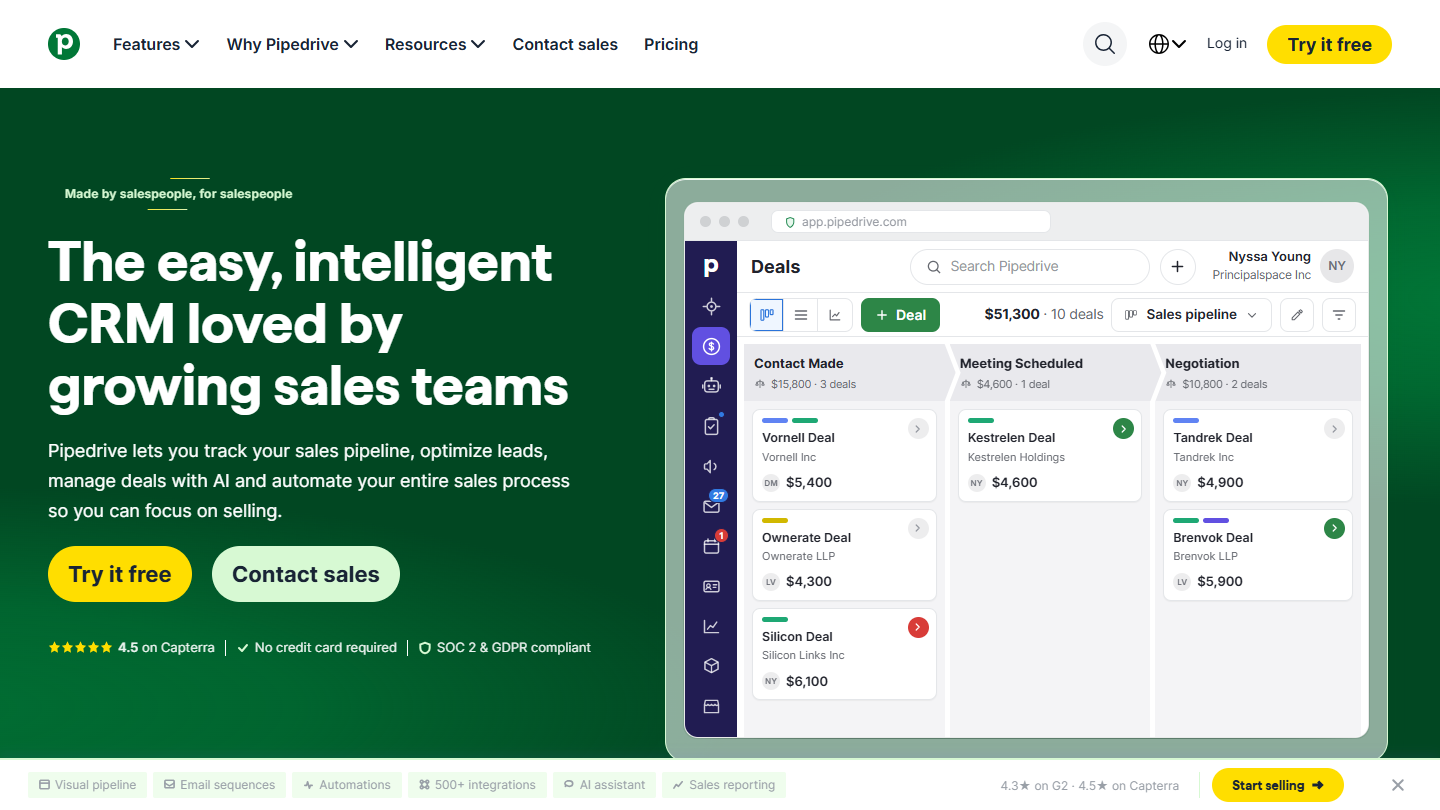
Pipedrive website: “The easy, intelligent CRM loved by growing sales teams”

Pipedrive is the deal-centered CRM par excellence. Its very visual, intuitive interface lets each sales rep see their entire sales funnel, stage by stage.

The shallow learning curve speeds up implementation, a real advantage when the team is hiring fast. Reminders, notifications and follow-up alerts keep your head where it needs to be, and the built-in AI generates reports, prepares meetings and suggests CRM updates after a call.

Pipedrive is made for selling. For a startup that first wants a clear pipeline and sales reps who use it, it is one of the best choices. Those looking for a multi-purpose tool (marketing, support) will be disappointed. Email and customer follow-up automation comes with the Growth plan.

Pipedrive has no free plan, but a 14-day trial with no credit card. The Lite plan costs €14 per seat per month billed annually, Growth €39, Premium €59 and Ultimate €79. Implementation is included above €400 of subscription per year.

03

HubSpot

4.5/5 From €20

Best for: Funded startups that want a free CRM, then a discount on Pro plans

+ Strengths
  • Free CRM for 2 users, with no time limit
  • Simple interface, quick to learn
  • Startup program: up to 90% off the first year
  • More than 1,500 connected applications, including Stripe, Zapier and Segment
− Downsides
  • Free and Starter quickly become limiting: growth goes through Pro, at €90 per license
  • The startup discount drops each year, then ends
★ HubSpot in brief

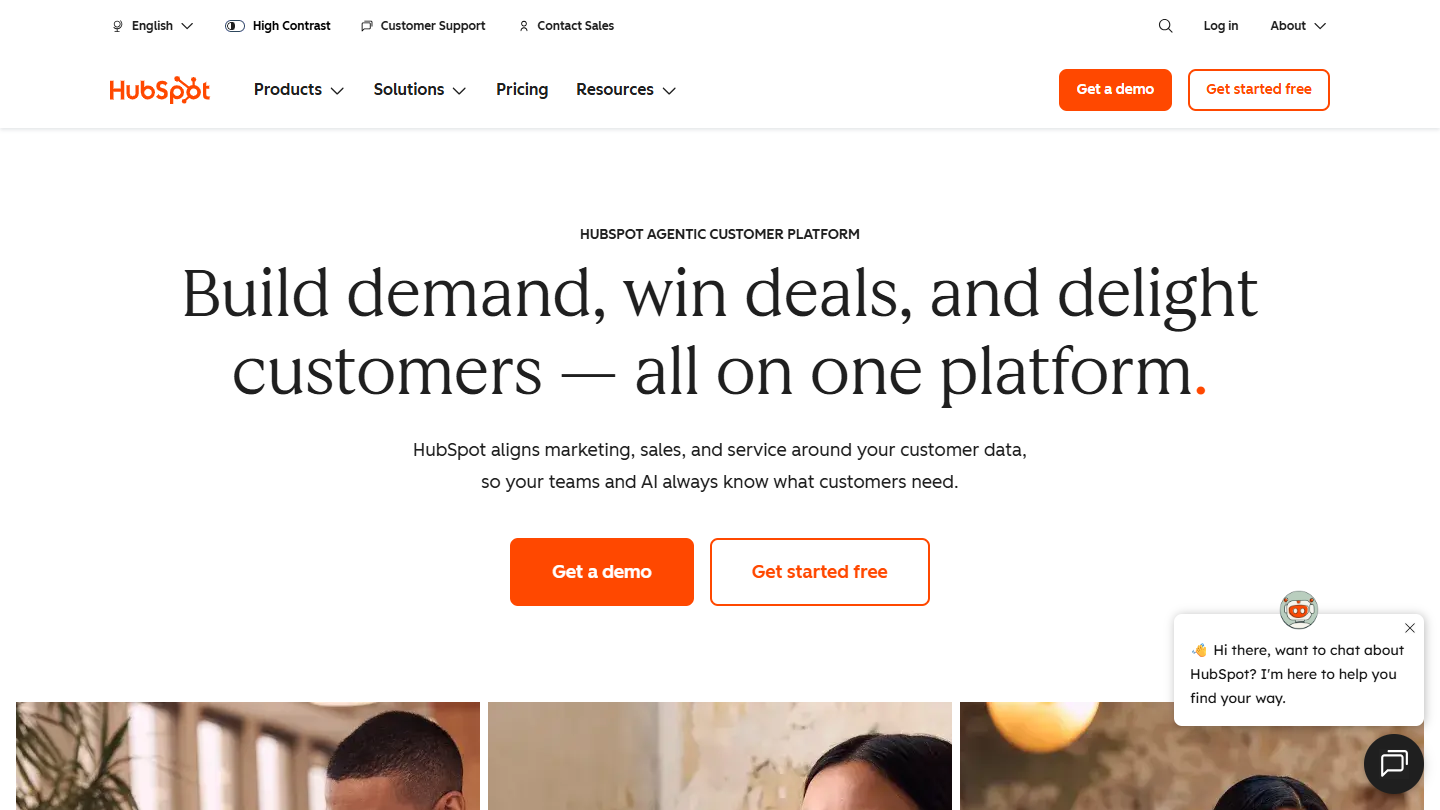
HubSpot website: “Build demand, win deals, and delight customers, all on one platform”

HubSpot is the best-known free CRM, and its product page explicitly addresses “startups and small businesses”. Its interface is very easy to use, and it connects to Google Workspace, Microsoft 365 and more than 1,500 applications.

HubSpot gives sales managers and executives an overview: lead assignment and tracking, sales process tracking, history of interactions with each customer across all channels. Paid plans add reporting, artificial intelligence and advanced automation.

The free plan lets you start at no cost, but it remains limited. Most startups will have to move to a paid plan as they grow, and the features that matter for a growing sales team (sequences, forecasts, automations) are in Pro. That is where the HubSpot for Startups program comes in, which only applies to a new Pro or Enterprise subscription.

The free tools cover 2 users. Starter costs €20 per license per month, Pro €90 and Enterprise €175. A pre-seed, seed or Series A startup backed by a HubSpot partner fund or incubator can get up to 90% off the first year, then 50% the second and 25% the third. Startups supported by another partner organization get up to 30%, then 15%.

04

Close

4.1/5 From $9

Best for: Startups whose sales reps make a lot of prospecting calls and emails

+ Strengths
  • Built-in calls, SMS, emails and sequences, with no app to add
  • Power dialer, AI transcription and call summaries
  • Solo plan at $9 per month for a founder selling alone
  • 14-day trial and 30-day refund
− Downsides
  • No free plan
  • Workflows reserved for Growth, at $99 per user
  • Website in English, priced in dollars
★ Close in brief

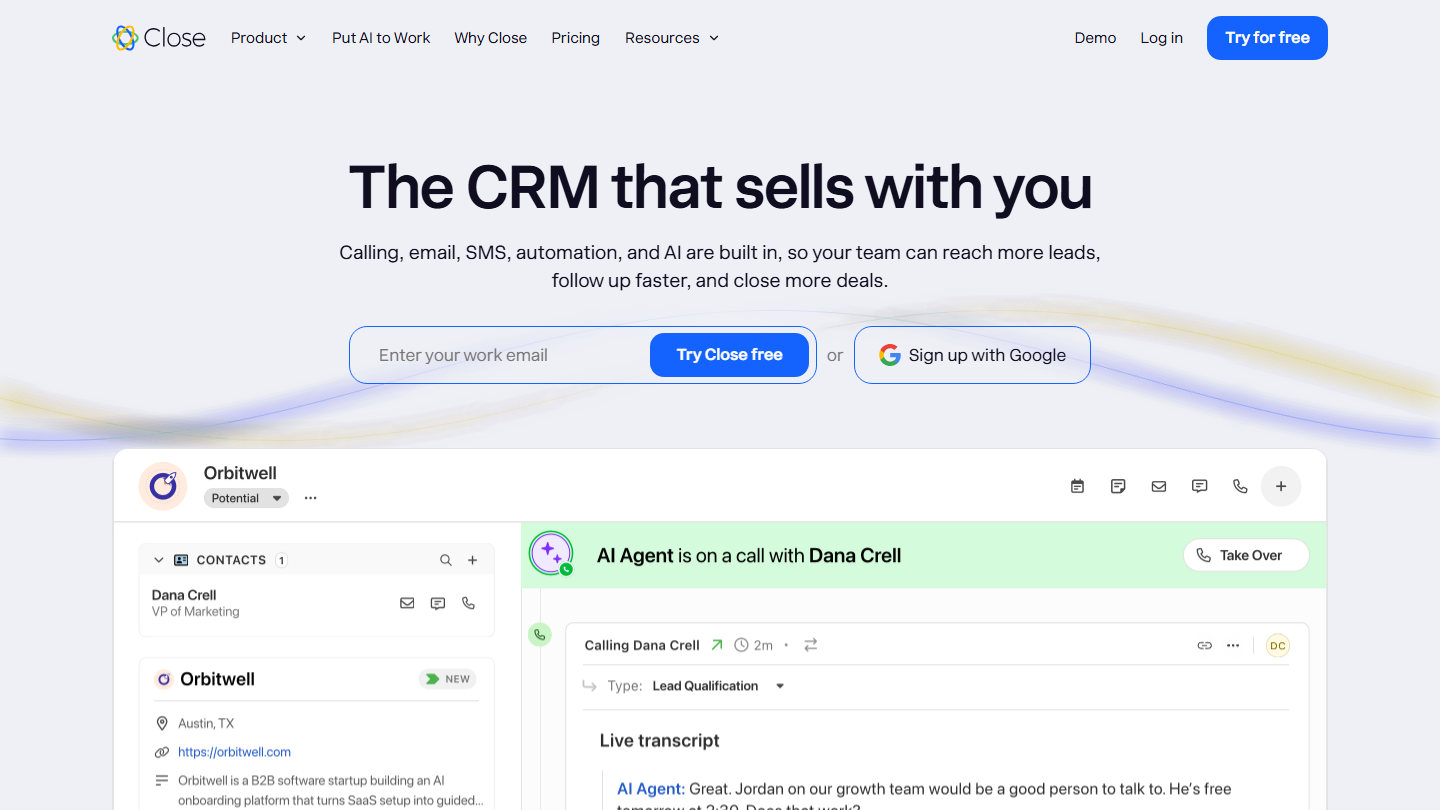
Close home page: “The CRM that sells with you”, with a call transcribed live

Close presents itself as the CRM for startups and agile sales teams. It brings together in one place the pipeline, calls (with recording), SMS, emails and sequences, reports and an AI assistant that transcribes and summarizes each call.

The vendor stresses onboarding: a few minutes to configure the tool, a few hours to bring the team on board. Custom activities, fields and objects let you adapt Close to the way you sell, and integrations cover Zoom, email and calendar.

Close’s price follows team size and automation needs. A founder prospecting alone can start on Solo, limited to 1 user and 10,000 leads. A small team moves to Essentials. Workflows, the power dialer and bulk email require Growth, which makes it one of the most expensive CRMs in this top for a team that automates its prospecting.

Close has no free plan, but a 14-day trial with no credit card and a 30-day refund. Solo costs $9 per month billed annually ($19 billed monthly), Essentials $35 per user ($49), Growth $99 ($109) and Scale $139 billed annually.

05

Copper

4.0/5 From $23

Best for: Startups that work entirely on Google Workspace

+ Strengths
  • Native integration with Gmail, Google Calendar and Drive
  • Data imported from Gmail, without retyping
  • Project management and contact enrichment from Basic
− Downsides
  • Only 2,500 contacts on Basic
  • Priced in dollars, and some learning curve
★ Copper in brief

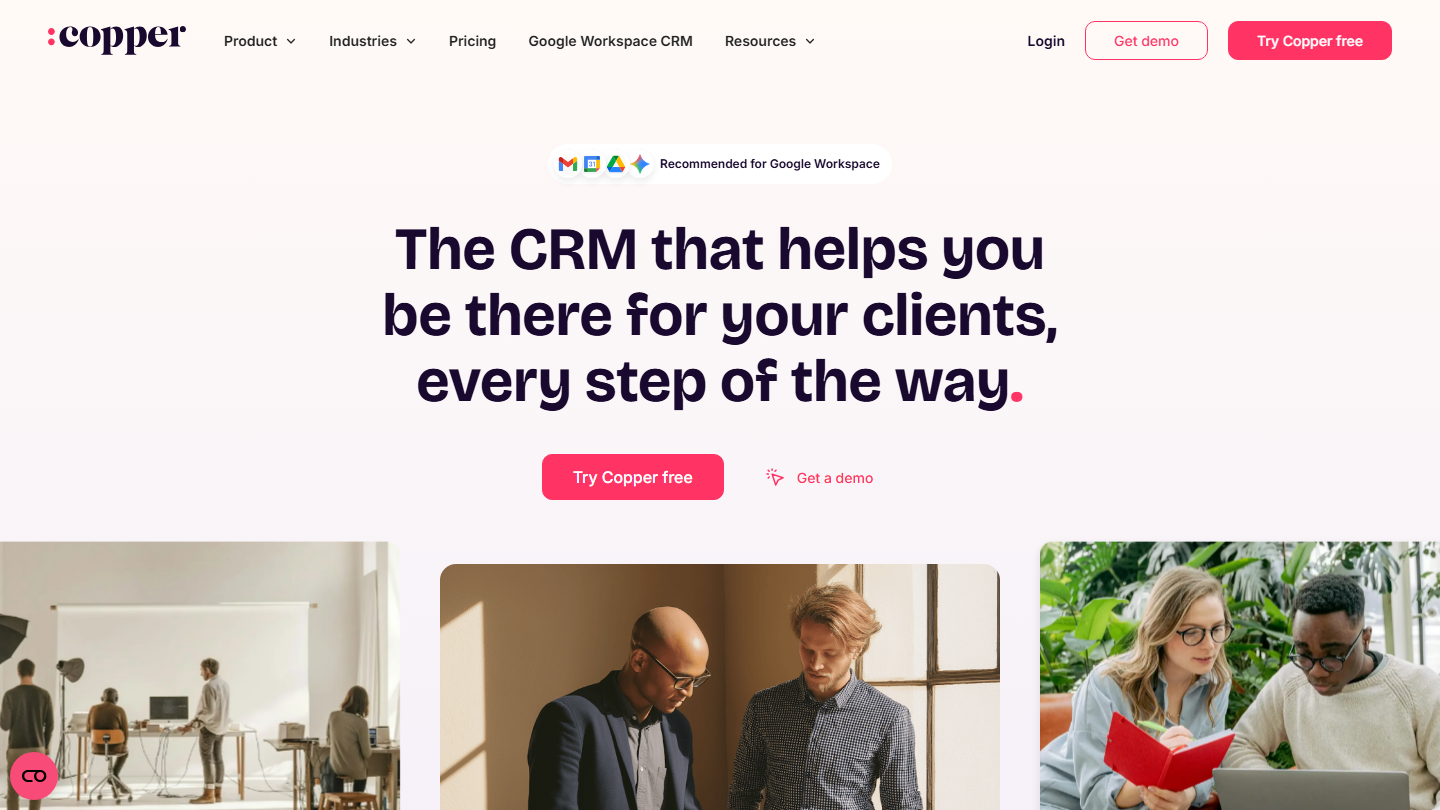
Copper home page: “The CRM that helps you be there for your clients, every step of the way”, recommended for Google Workspace

Copper is the CRM recommended for Google Workspace. It provides an attractive sales pipeline that makes it easier to track and manage leads throughout the qualification process.

Its native integration with Google Workspace makes importing data seamless from Gmail and the other Google tools you (probably) use every day. From the Basic plan, it adds task automation, project management and contact enrichment.

For a startup that lives in Gmail, Copper avoids opening one more piece of software. There is some learning curve, and the Basic plan caps at 2,500 contacts: a team that prospects heavily will quickly move to Professional, which goes up to 15,000 contacts and adds workflows, bulk email and reports.

Copper offers a free trial with no credit card. Basic costs $23 per seat per month billed annually ($29 billed monthly), Professional $59 ($69) and Business $99 ($134), excluding tax.

06

Salesflare

4.0/5 From €29

Best for: Founders and small B2B teams that want an up-to-date CRM without manual entry

+ Strengths
  • Records created and updated automatically from email and calendar
  • Tracking of emails, links and website visits
  • LinkedIn and email sidebar, mobile app
  • 30-day trial, free onboarding support
− Downsides
  • Fewer customization options than the full CRM suites
  • Some features take longer to learn than expected
★ Salesflare in brief

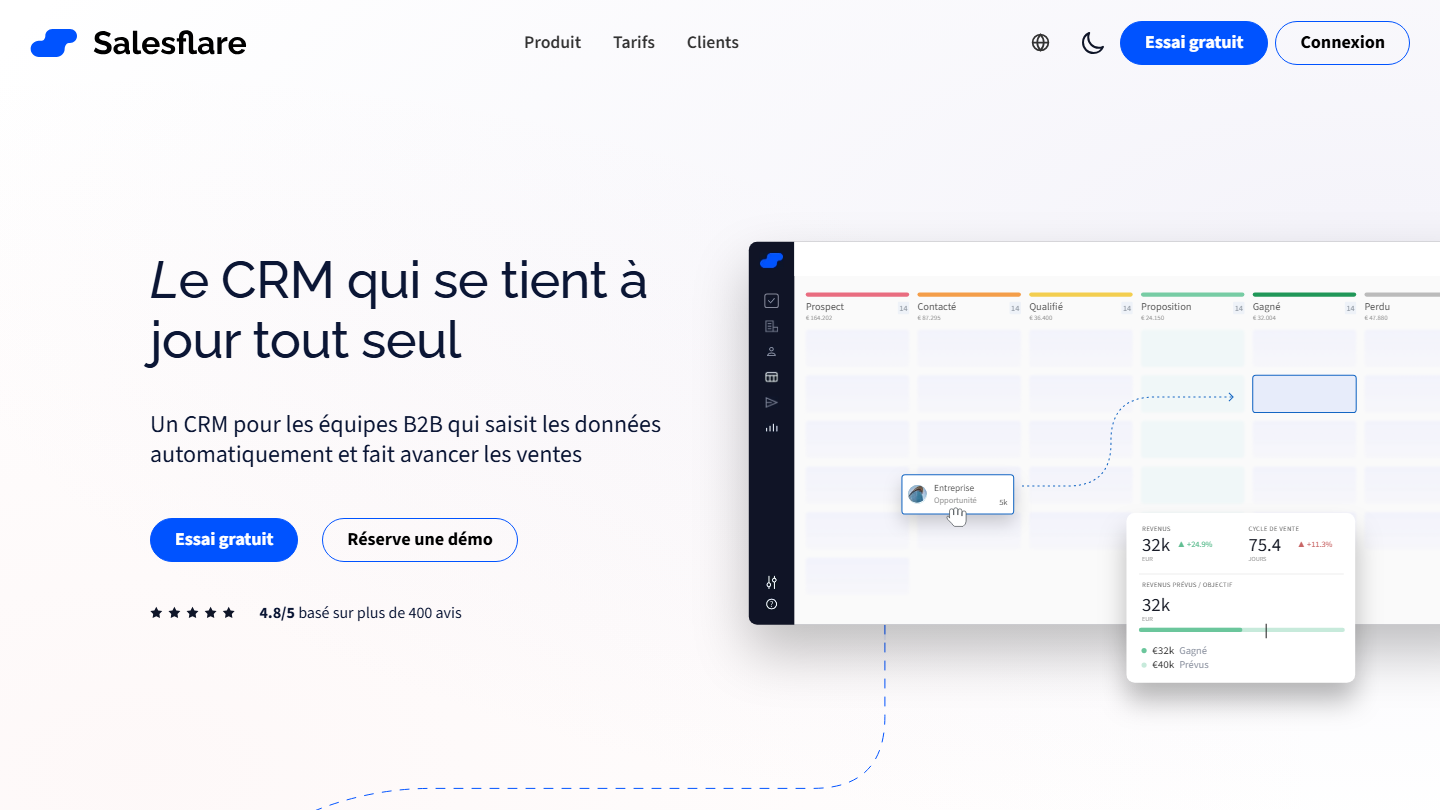
Salesflare home page: “The CRM that keeps itself up to date”, with a pipeline by stages

Salesflare is a CRM for B2B teams that enters data for them. The tool connects to your current communication channels, then uses data from your inbox, calendar and phone to update records.

It automatically creates records for the people you contact, from email signatures and publicly available information. This considerably reduces data entry. It also tracks email opens, clicks and visits to your website, and adds a sidebar in LinkedIn and in your inbox.

For a startup whose founders sell themselves, it is a good way to have an up-to-date CRM without spending your evenings on it. Some users feel, however, that certain features take longer to learn than expected, and the tool offers fewer customization options than a suite. Workflows made up of several emails come with the Pro plan.

Salesflare offers a 30-day trial with no credit card, and onboarding support is free. Growth costs €29 per user per month billed annually (€39 billed monthly), Pro €49 (€64) and Enterprise €99 (€124), with a minimum of 5 users. Contacts, pipelines and emails sent are unlimited.

07

Freshsales

4.5/5 From €9

Best for: Startups that want a complete, low-cost sales CRM for their first sales reps

+ Strengths
  • Growth at €9 per user, one of the lowest entry prices in this top
  • Automatic collection of prospect information from emails
  • Chat, email and phone built in from Growth
  • Contact scoring and sales sequences on Pro
− Downsides
  • No free plan listed anymore, only a 21-day trial
  • Marked learning curve once you use the advanced features
★ Freshsales in brief

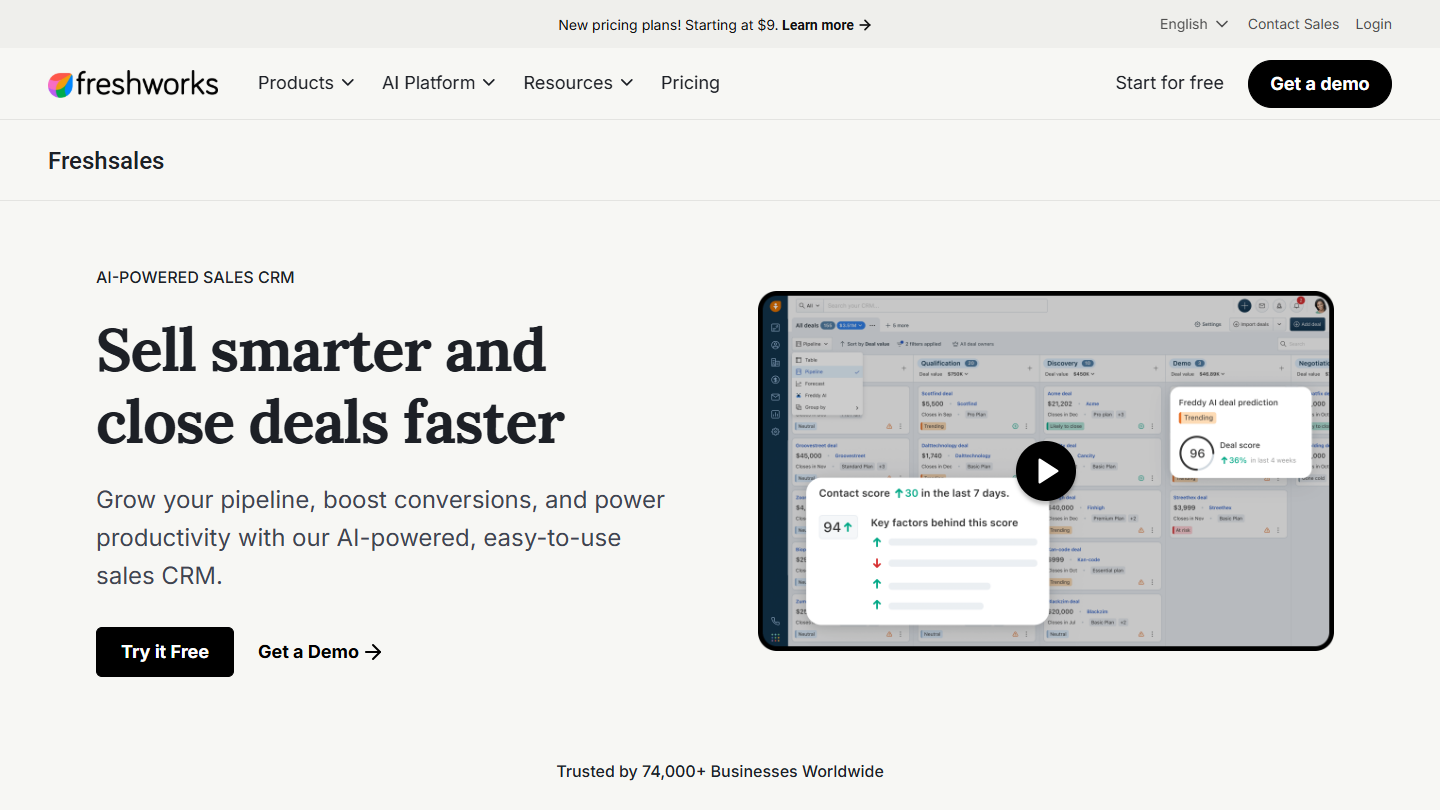
Freshsales website: “Sell smarter and close deals faster”

Freshsales is Freshworks’ sales CRM. It has the basic CRM features, easy to use: contact management, kanban pipeline view, contact lifecycle stages, email templates, custom fields.

Customer data is a strong point. Users can automatically collect information on prospects from emails and add it to their records, which saves data entry time. Chat, email and phone are built in, and the Pro plan adds contact scoring, sales sequences and territory management.

For a startup, Freshsales is a good entry point when the first sales reps arrive: the Growth plan costs less than most competitors, and the tool scales up without a migration. Once you get to the more complex features, however, expect a real learning curve. The Freddy AI agent is sold separately, in session packs.

Freshsales offers a 21-day trial. The Growth plan costs €9 per user per month billed annually, Pro €39 and Enterprise €59. The free plan for up to 10 users mentioned in the previous version of this top no longer appears on the pricing page.

08

Zoho CRM

4.2/5 From €14

Best for: Startups that want a free CRM for 3, then a complete tool at a moderate price

+ Strengths
  • Free edition for 3 users, with no time limit
  • Standard at €14 with workflows, cadences and sales forecasts
  • Easy contact import from a spreadsheet
  • Zoho for Startups: up to €4,000 in credits through a partner incubator
− Downsides
  • Some features are paid modules, which adds to the bill
  • Startup program reserved for Zoho partner incubators
★ Zoho CRM in brief

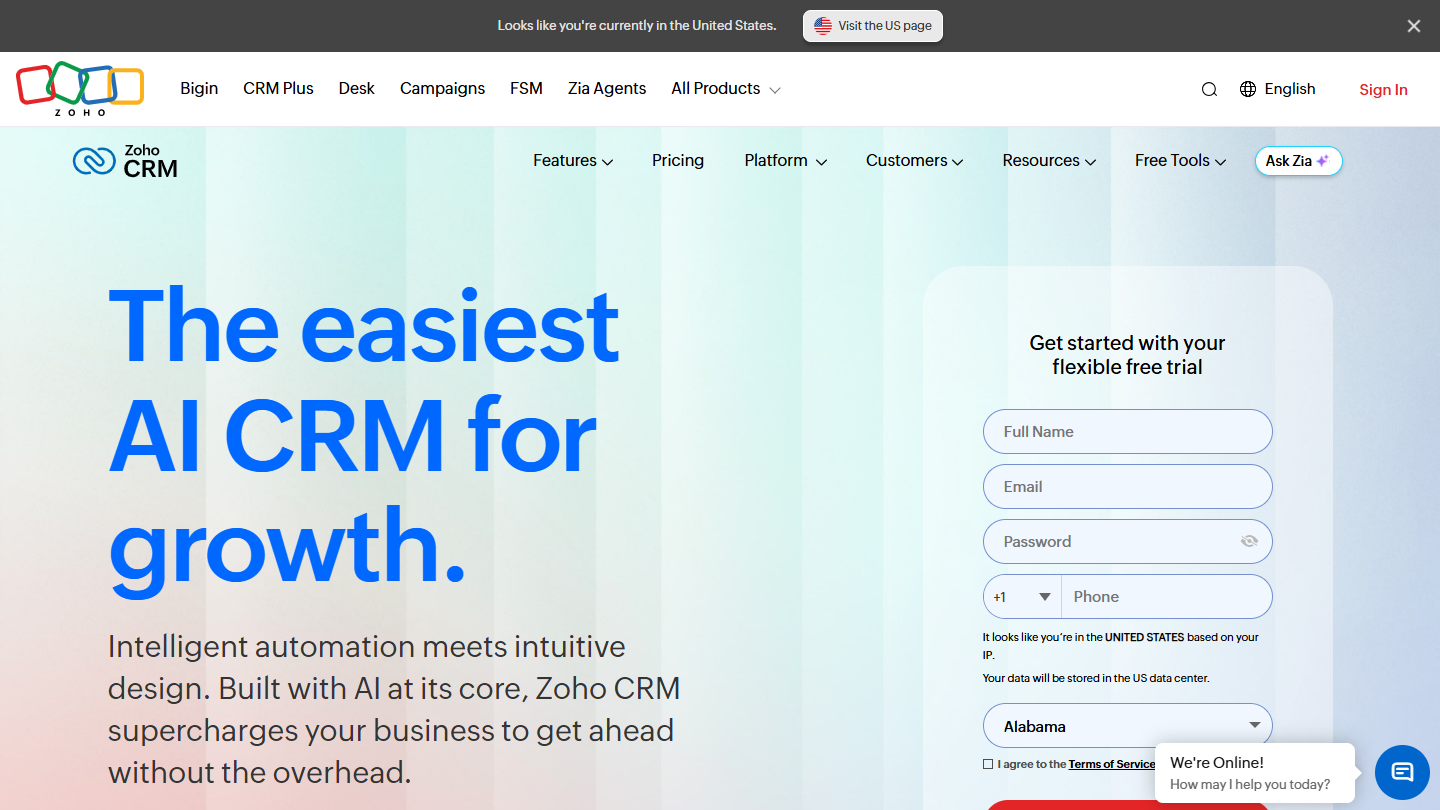
Zoho CRM website: “The easiest AI CRM for growth.”

Zoho CRM is easy to use: a startup can begin working with it quickly. The tool has an import feature for easily moving information from a spreadsheet to the CRM.

From the Standard plan, you get workflows and lead assignment rules, follow-up cadences, reports and dashboards and sales forecasting. Professional adds CPQ, email intelligence and process automation; Enterprise, the AI sales assistant and customer portals.

Zoho CRM is part of a catalog of more than 55 Zoho applications, useful for a startup that wants to equip all its teams with the same vendor. The Zoho for Startups program gives up to €4,000 in credits to spend on these applications: €2,500 on approval, €1,500 more if you host your email with Zoho. It is reserved for new customers backed by a partner incubator. Watch out for features sold as add-on modules, which can make Zoho CRM quite expensive.

The free edition covers 3 users, with no time limit. The Standard plan costs €14 per user per month billed annually (€20 billed monthly), Professional €23 (€35), Enterprise €40 and Ultimate €52.

09

folk

4.0/5 From €22

Best for: Small teams managing customers, partners and investors in one tool

+ Strengths
  • Flexible, very easy-to-use software
  • Email, calendar and WhatsApp sync
  • LinkedIn extension and contact enrichment included
  • Pipeline and email campaigns from Standard
− Downsides
  • No free version anymore, only a 14-day trial
  • Dashboards and sequences reserved for Premium
★ folk in brief

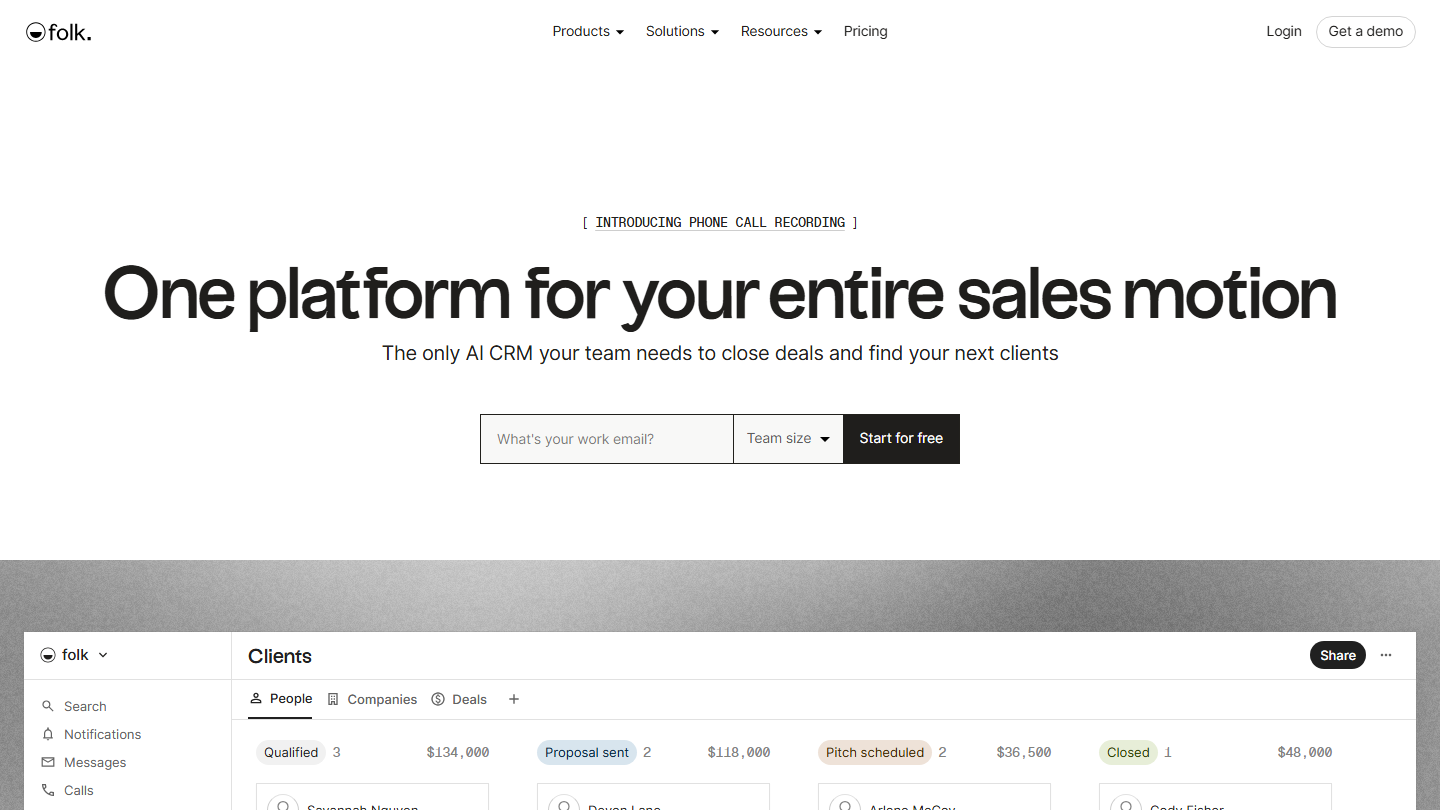
folk home page: “One platform for your entire sales motion”, with a customer pipeline

folk is a contact-centered, flexible and customizable CRM. It lets you bring all of a company’s contacts into the database, not only customers or prospects.

It syncs email, calendar and WhatsApp, adds a contact from LinkedIn in one click through its extension, enriches records and offers AI-filled fields. The Standard plan already includes pipeline management and email campaigns.

Its home page now presents it as a platform for the entire sales cycle. For a startup whose founders juggle sales, fundraising and partnerships, it remains a good compromise between a shared address book and a sales CRM. Dashboards, custom objects and email sequences require the Premium plan.

folk no longer offers a free version, but a 14-day trial. Standard costs €22 per member per month billed annually (€27 billed monthly), Premium €43 (€54), and Enterprise starts at $80.

10

Karlia

4.2/5 From €29

Best for: French startups that want CRM, quotes, invoices and support in one piece of software

+ Strengths
  • All-in-one: CRM, quotes, invoicing, ticketing, projects, HR and cash flow
  • Hosted in France, support in French
  • Compliant with e-invoicing
  • Free trial with no credit card
− Downsides
  • Integrations still light: you have to centralize everything in Karlia or go through the API
  • Less suited to an international team than an established American vendor
★ Karlia in brief

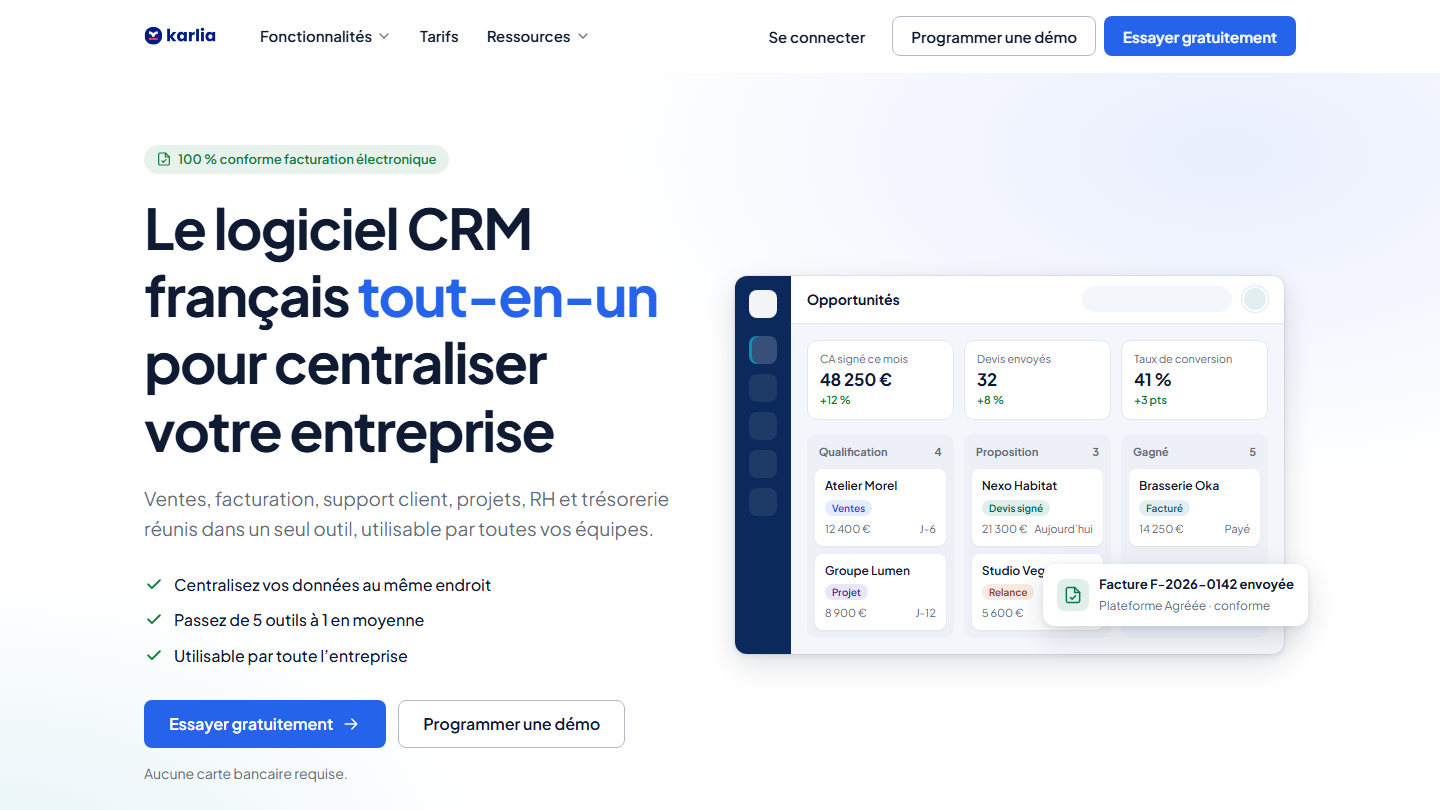
Karlia home page: “The all-in-one French CRM software to centralize your business”, with an opportunity board

Karlia is an all-in-one French CRM. It brings together prospecting, sales, quotes and invoicing, ticket-based customer support, project and time management, and some marketing features such as email campaigns. Higher plans add human resources and a cash flow forecasting module.

All of Karlia is in France: customer support, sales teams, data hosting. The vendor advertises a tool that is 100% compliant with e-invoicing, a concrete argument for a young French company that does not want to stack a CRM and invoicing software.

On the integration side, it is still a bit light. You either have to put everything with them or cobble together integrations yourself through the API. If you want to expand internationally, open other offices or hire non-French speakers, Karlia will be less suitable than an established American vendor.

Karlia offers a free trial with no credit card. The Pro plan starts at €29 excl. tax per user per month. Entreprise (pipeline automations, shared mailboxes, custom reports) starts at €49 excl. tax, and Privilège (cash flow forecasting) at €69 excl. tax.

11

Attio

4.0/5 From €31

Best for: Funded startups that want a flexible CRM, from the first deals through growth

+ Strengths
  • Free plan for up to 3 seats
  • Automatic contact sync and enrichment
  • Customizable objects, lists and views without an integrator
  • Startup program: 80% off Pro the first year
− Downsides
  • Website in English
  • Call analysis, sequences and advanced reports reserved for Pro, at €74 per user
★ Attio in brief

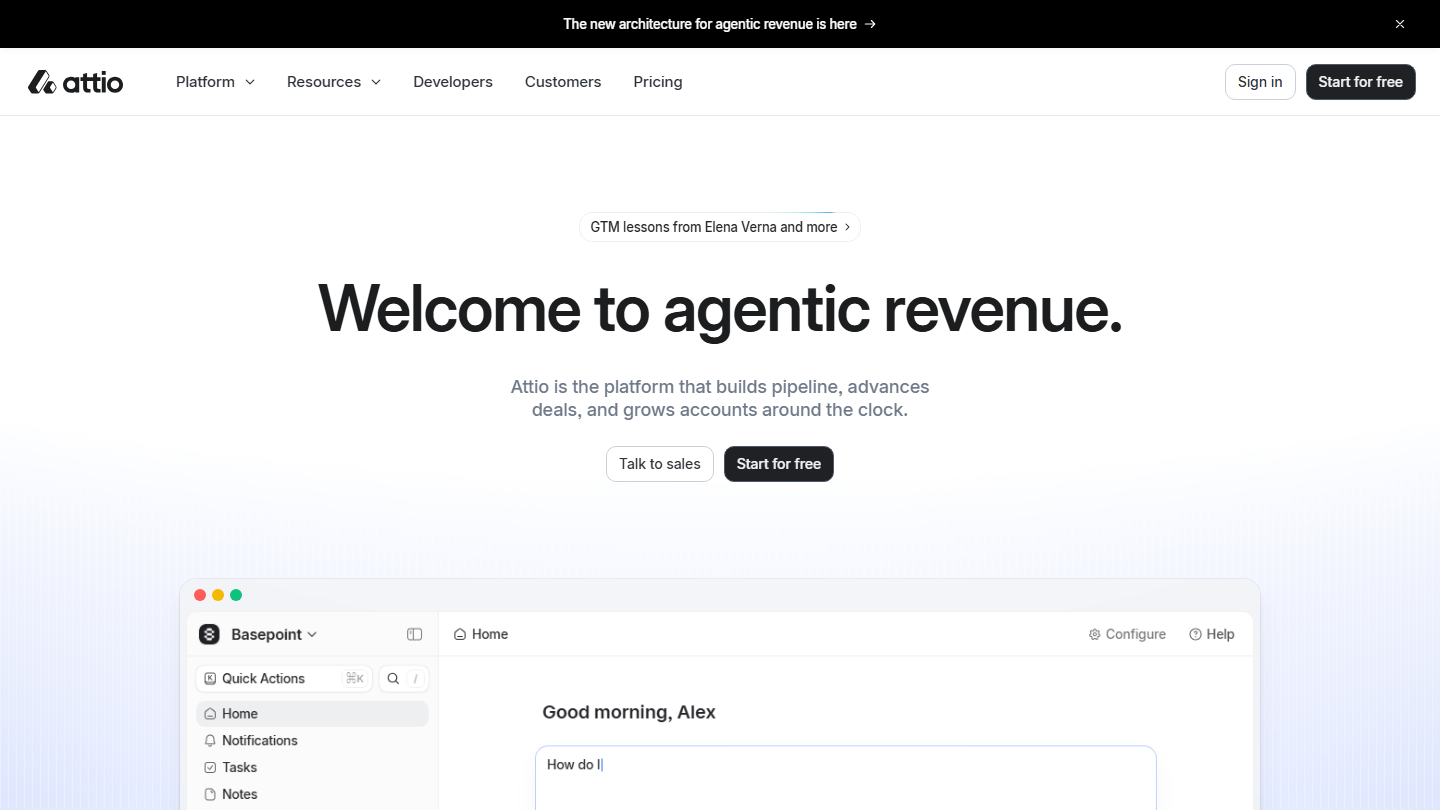
Attio home page: “Welcome to agentic revenue”, with the application workspace

Attio is a recent CRM that openly targets startups: its pricing page opens with “From zero to IPO”. It now presents itself as a platform that builds pipeline, moves deals forward and grows accounts, with AI agents.

Attio syncs your contacts in real time from email and calendar, and enriches them automatically. Objects, lists, fields and views can be configured without an integrator: a team can track its customers there, but also its investors or partners, in the same tool.

For a startup, Attio is adopted in stages: free for three, Plus as the team grows (up to 10 seats), then Pro for call analysis, sequences, permissions and advanced reports. The Attio for Startups program grants 80% off the annual Pro plan the first year and 30% the second, with onboarding support, to venture-backed startups.

The Free plan is free for up to 3 seats. Plus costs €31 per user per month billed annually (€39 billed monthly), Pro €74 (€93), and Enterprise is quote-based.

How we chose these 11 CRMs for startups

The selection draws on the CRMs in the previous version of this top, reviewed one by one on their vendor's website, with a criterion specific to startups: the price at the start, and what it becomes as the team grows.

  1. 01
    Scope

    Sales CRMs usable by two founders as well as by several dozen sales reps, and sold in France.

  2. 02
    Criteria

    Ability to keep up with growth (contacts, pipelines, users), ease of use, integrations, automation and quality of support for a team without technical resources.

  3. 03
    Verification

    Each tool was reviewed on its vendor's website. Keap, sold from $299 per month with mandatory implementation services, leaves the list in favor of Attio.

  4. 04
    Pricing

    The price shown is the normal price displayed by the vendor, excluding promotions, on annual billing when that is the default display. The startup programs of HubSpot, Attio and Zoho are described separately: they depend on an application.

  5. 05
    Ratings

    Nine tools use the rating from their Salesdorado review. Salesflare and Karlia, which have not yet been reviewed, keep the rating they have in our other CRM rankings.

The questions we get over and over.

Which CRM should you choose when launching a startup?

At the start, a free plan is often enough: HubSpot (2 users), Zoho CRM (3 users) or Attio (3 seats). The decisive criterion lies elsewhere: a tool the team actually fills in, and that can keep up with the growing number of contacts, pipelines and users without a migration.

Are there discounts reserved for startups?

Yes. HubSpot grants up to 90% off Pro and Enterprise the first year to pre-seed, seed or Series A startups backed by a partner, then 50% and 25%. Attio gives 80% off Pro the first year, then 30%, to venture-backed startups. Zoho offers up to €4,000 in credits through a partner incubator.

How much does a CRM cost for a team of 5 sales reps?

On annual billing, expect about €45 per month with Freshsales Growth, €70 with Zoho CRM Standard or Pipedrive Lite, €100 with HubSpot Starter and €125 with Salesforce's Suite Starter. Automation pushes the bill up: €195 per month for Pipedrive Growth, €450 for HubSpot Pro, excluding startup discounts.

Should you take Salesforce from the start?

Rarely. Salesforce needs an administrator or consultant to be configured and maintained. It makes sense if the startup plans a large sales team and complex processes in the short term. Otherwise, a simpler CRM such as Pipedrive or HubSpot lets you sell right away, even if it means migrating later.

Is it easy to change CRM as you grow?

Yes, but it takes time: exporting contacts and deals, bringing over history, new integrations, training the team. Salesflare offers free onboarding support and handles data migration on Enterprise; Pipedrive includes implementation above €400 of subscription per year. Choosing a tool with higher tiers from the start limits this risk.

★ The conversation, 0 comments

What the community says.

Basic Markdown, moderated within 24 h
Loading…

    In the same category