



Klaviyo has just updated its “What’s New” page with a series of features that clearly outline the platform’s ambition: to become the go-to B2C CRM for e-commerce brands. Agentic AI, mobile omnichannel, personalization pushed to the extreme… The picture is dense. Here is what to keep in mind to decide whether now is the right time to dig into it.
- Composer, the new flagship product, generates complete campaigns (audience, copy, email, SMS, flows) from a simple prompt, drawing on 14 years of data from 193,000 customer brands.
- Instagram auto-replies turn comments directly into email, SMS or WhatsApp subscribers without going through a website form.
- RCS (Rich Communication Services) arrives in Klaviyo, with rich mobile messages: product carousels, suggested replies, visuals.
- AI-powered personalized send time calculates the best engagement moment for each subscriber, channel by channel, with no manual intervention.
- Multiple email addresses on a single profile (up to five addresses) reduce duplicates and preserve engagement history.
- The Customer Hub opens up to WooCommerce, after being limited to Shopify until now.
- The AI Customer Agent gains retail skills and extends to email and WhatsApp, with customizable brand controls.
Composer: the big bet on generative AI
This is clearly the most heavily promoted new feature. Composer presents itself as an end-to-end campaign creation tool: you describe what you want to create, and the platform generates the audience, the copy, the email template, the SMS messages and the automated flows. All of it while staying aligned with the brand identity and the customer data already in Klaviyo.
What sets Composer apart from a simple AI text generator is the promise of native integration with the 14 years of behavioral data Klaviyo has accumulated across 193,000 brands. The idea: a prompt that generates not a draft to rework, but a campaign ready to send. The feature is still on a waitlist, which suggests a gradual rollout ahead. For marketing teams that still spend a lot of time manually assembling segments, content and send settings, this is a potentially significant productivity gain. The question that will remain to be tested: the real level of personalization compared with what a well-oiled manual workflow can deliver.
Acquisition through Instagram, an alternative to traditional forms
The social media auto-reply feature addresses a concrete problem: brands build audiences on Instagram but struggle to convert them into CRM contacts. With this mechanism, a follower who comments on a post can automatically receive a reply and sign up for the brand’s emails or SMS directly from the app.
This is a serious diversification of acquisition channels. Website forms and paid campaigns remain the pillars, but they have their limits: rising acquisition costs, sometimes saturated audiences. Connecting organic Instagram engagement to a CRM list without extra friction is a shortcut worth a look, especially for brands with an active social community.
RCS and product recommendations: SMS moves up a level
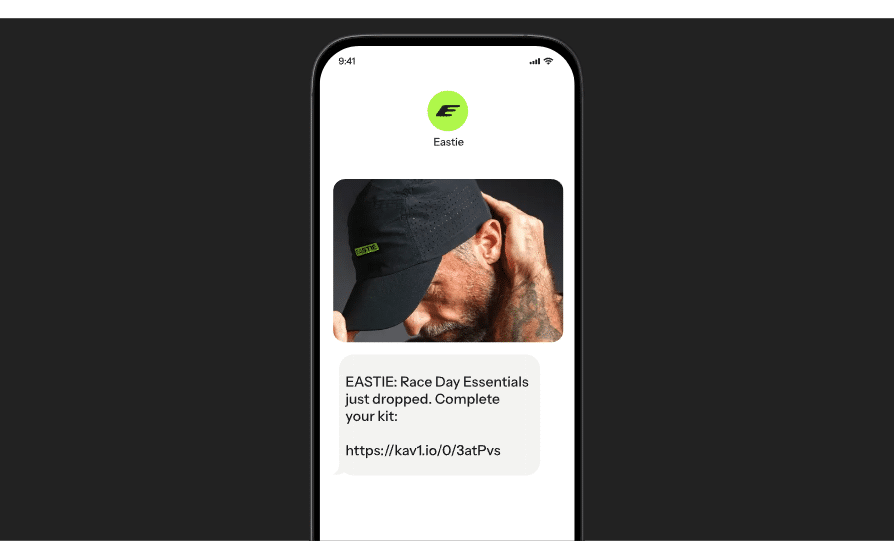
RCS (Rich Communication Services) changes the nature of text messages by adding product carousels, images, action buttons and suggested replies. The difference with a classic SMS is immediate: you go from a plain-text message to an experience close to a rich push notification, right inside the phone’s native messaging app. Klaviyo specifies that RCS plugs into existing SMS flows, which means migrating doesn’t require rebuilding automations from scratch. For brands already using SMS as a conversion channel, this is a natural evolution that can improve click-through rates on product campaigns.
Following the same mobile logic, AI-driven product recommendations (the “Next Best Product” feature) now extend to SMS, RCS and WhatsApp. Each subscriber receives a personalized recommendation based on their purchase history, with a direct link to buy. The personalization we know from email is coming to text channels.
Send time and audience optimization: AI takes over the timing
Personalized send time relies on a simple principle: each subscriber has their own opening and clicking habits. Rather than choosing a single time for the whole list, Klaviyo’s AI calculates the best moment for each profile and delivers the message accordingly, within a window set by the marketer. This feature has existed for a while at some players such as Braze or Iterable, but its native integration into Klaviyo, taking multichannel behavior into account (email, SMS, WhatsApp), is a notable development. The expected gain: better engagement performance with no extra configuration effort.
Audience optimization goes in the same direction. In one click, the AI identifies the profiles in a list likely to unsubscribe and automatically excludes them from the send. It protects deliverability and list quality over the long term, with post-send reporting to measure the impact. For teams managing large contact databases, it is a passive cleaning tool that can make a real difference on engagement metrics.
Data Platform: putting an end to duplicate profiles
The problem is familiar to every e-commerce CRM team: the same customer uses several email addresses (personal, work, recovery address), which creates multiple profiles, higher costs and a fragmented history. Klaviyo announces support for up to five email addresses per profile, while keeping the consent, statuses and engagement history specific to each address.
The platform then automatically selects the most appropriate primary address for future sends. This identity unification work happens in the background, with no manual deduplication. For brands with an older customer base and scattered data, this kind of feature has a direct impact on targeting accuracy and on billing costs (which are tied to the number of active profiles at Klaviyo).
Customer Hub and personalized banners: customer service in the loop
The Customer Hub, which gives shoppers a self-service space to manage orders, returns, subscriptions and loyalty program directly on the website, is leaving its Shopify-only scope. WooCommerce is the next supported ecosystem, which opens the feature to a very large number of e-commerce merchants.
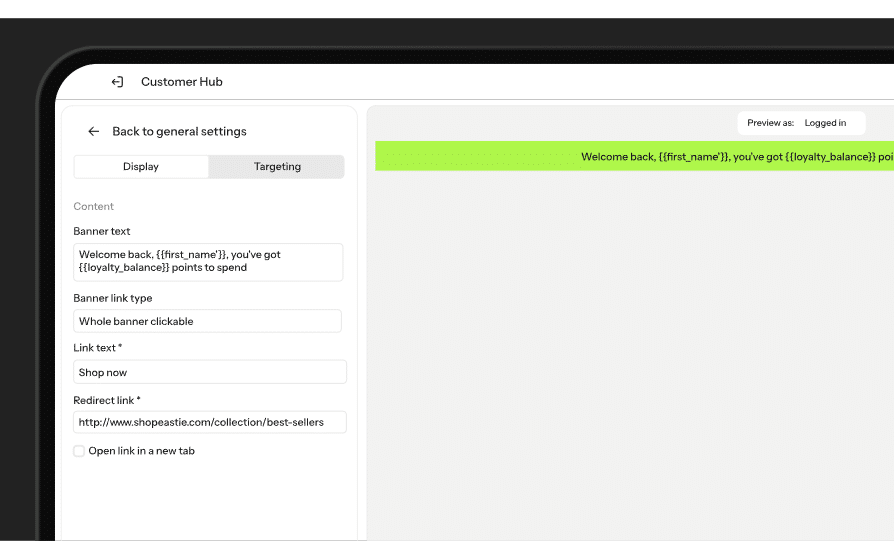
Also worth noting is the personalized banners feature, still marked “coming soon”: dynamic banners at the top of the website, targeted by segment, that display different messages depending on the visitor’s profile (VIP customer, first-time buyer, loyalty member…). All of it with no code or third-party tool, built into the Customer Hub. It is an on-site personalization building block that complements the work done on email and SMS.
Customer Agent: the customer service AI covers more channels
Klaviyo’s AI Customer Agent expands its capabilities with new retail-specific skills (such as checking loyalty points in real time), support for email and WhatsApp in addition to web chat, and more granular brand controls: tone, conversational style, rules for handing off to a human agent. This last point is especially relevant for customer service teams that hesitate to delegate to an AI agent for fear of losing consistency in the customer relationship. Being able to define precisely when the agent hands off the conversation (level of dissatisfaction, type of issue, complexity threshold) and in which register it replies is what makes the difference between a chatbot and a real automated support tool.
Multilingual support is announced for later in the year, which means French-speaking merchants will have to wait a little longer before they can deploy the Customer Agent on their French-language websites.
What it says about Klaviyo’s direction
Looking at all these announcements together, Klaviyo’s message is fairly clear: the platform wants to step out of the “email marketing tool” box and establish itself as the central system for B2C customer relationships. AI is no longer one feature among others, it is built into every layer of the product, from send timing to duplicate management to content creation. For brands already using Klaviyo, these developments are reasons to dig into the new features rather than look elsewhere. For those still evaluating the platform, the convergence of marketing automation, customer service and first-party data in a single tool significantly changes the equation compared with a stack assembled from several solutions.
The real question remains pricing. Klaviyo bills based on the active contact base, and some of the new features (advanced CDP, Customer Agent, Customer Hub) are reserved for higher plans. Rich functionality comes at a cost, and it will be worth running the numbers against the volume of contacts and the channels actually used.


What the community says.