



- Answer inbound calls quickly: after 8 hours, the prospect may well have already chosen a competitor.
- Recommended slots for outbound prospecting: 8-9 a.m. and 4-6 p.m., on Tuesday and Thursday afternoons. Monday is the worst day.
- Adapt your timing to the industry: salespeople and tradespeople are more available in the evening.
- Set up one or two cold call sessions per week, at fixed times, and schedule your email follow-ups between two sessions.
- Rotate call times for the same contact, and send unreachable prospects to lead nurturing.
Cold calling is a proven method, but it can turn tedious and disappointing if we ignore a few rules about timing! Yet if you concentrate your calls in a given time slot, you can hope to double your response rates, and therefore your conversion rates.
To get effective results, we are going to highlight the best times to call your prospects. Follow the guide.
Find the right providerNeed to outsource your prospecting? Find the provider that matches your actual needs.
Find a provider
1. Inbound sales calls
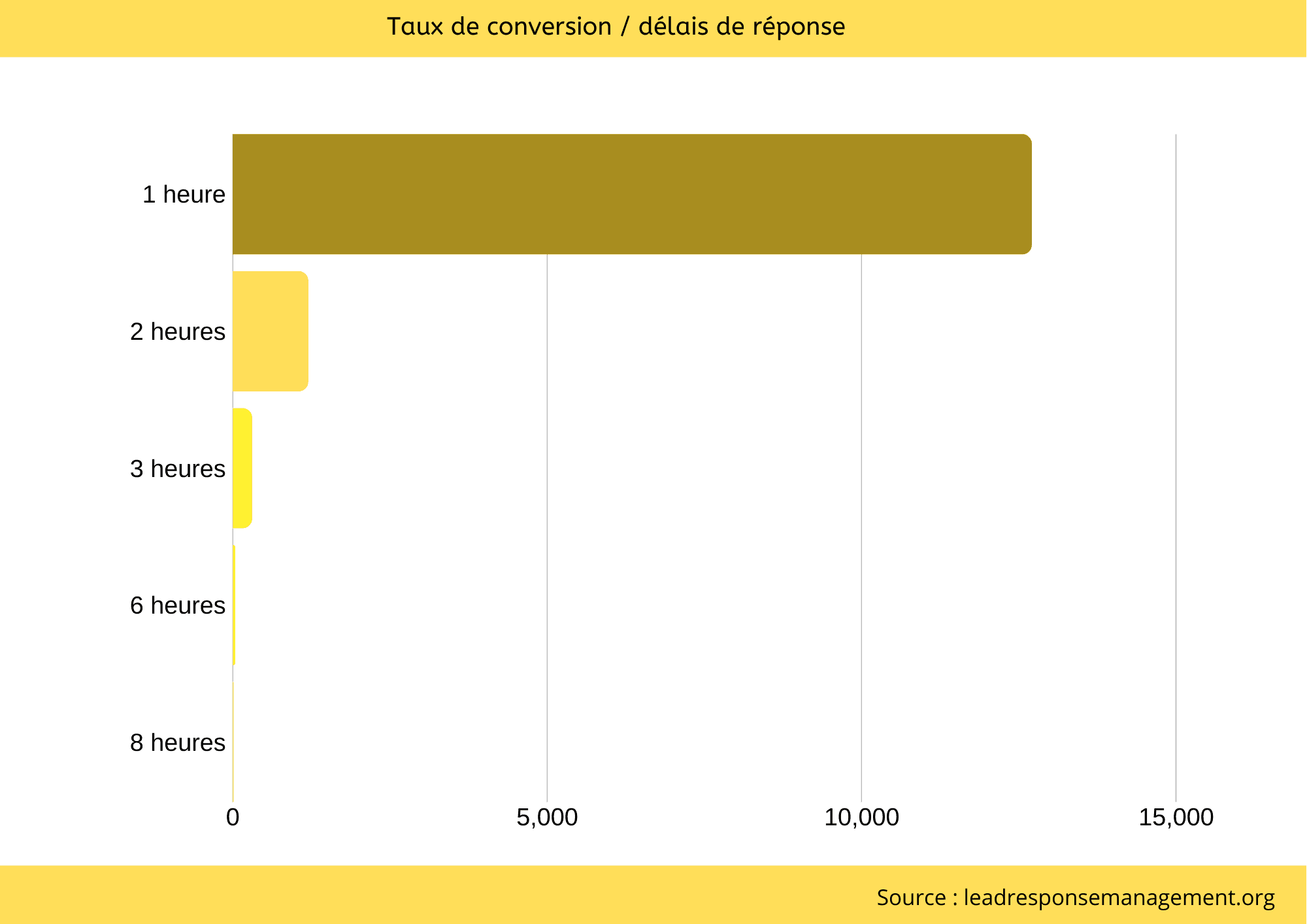
A prospect who comes to you is a prospect who has already done part of the work. If there is one detail to focus on with inbound sales calls, it is response time. Inbound prospecting calls must be handled very quickly, because being responsive is fundamental to increasing your chances of turning the prospect into a future customer.
If the prospect took the step of contacting you, it means they already know what you offer and want more information, or want to make the relationship concrete. Being available to answer their requests quickly is crucial.
The longer the response time, the more likely you are to see your prospect lose interest in you.
Good to knowAfter an 8-hour wait, the chance of qualifying the prospect becomes almost zero. Past that point, the prospect may already be in the arms of a competitor who answered faster.
In a competitive market, our prospect has almost certainly sent the same request to several players, and whoever is fastest and most convincing will win. Being the first to respond is therefore crucial to get a better probability of conversion.
Read alsoFind out how to qualify your prospect in 10 questions.
2. Outbound prospecting calls
To make your sales calls more effective and avoid wasting time, you need to plan your cold calling approach.
Beyond making your work less tedious, planning your calls will help you reduce the rate of negative answers.
Choosing your moment
Read alsoExamples of sales opening lines
Whether you are calling to get a meeting or to close a sale, you need to call your prospects at the moment most favorable to the message being well received. There are moments in a day when your prospects will be more receptive to your call than others. Not all hours are equal in terms of call quality and prospect attention.
Let’s focus on the moments when our target seems most available.
Try to focus your prospecting calls at the start of the day or at the end of the day to catch your prospect’s attention outside their working day.
- Between 8 and 9 a.m., the time when we head to work and are therefore open to other requests.
- The same goes for the 4 to 6 p.m. slot, the period known as the “afternoon slump”. This is when the mind starts to wander and looks for a way to disconnect from the same daily task. Your prospects will then be more inclined to hear your offer.
Not every day of the week is equal when it comes to sparking a prospect’s interest in you. Monday, for example, is probably the worst day for cold calling. Most workers will be very busy between planning their schedule, meetings and so on, and they won’t really have time to listen to you. Concentrate your prospecting calls in the middle of the week.
- Tuesday and Thursday afternoons seem to be the best times for cold calling, because the people we talk to appear to have more time and listen to us more carefully.
However, every call can be different depending on the target you are trying to reach.
Know your target and split it by industry to reach your goals as well as possible.
So segment your prospecting calls by industry, because each prospect’s availability differs according to their line of work. Salespeople or tradespeople will naturally be more available in the evening, once their day in the field is over.
Once you have defined segments by time slot, chain your calls by industry, because repetition is what trains your pitch.
The entry cost
Another aspect to build into your prospecting processes is the entry cost of cold calling. Making one cold call every two hours will almost never let you improve.
Concentrate your calls to get the most out of the previous call, and ideally create a collective momentum (a floor during a cold call session sounds a bit like marching drums).
TipSet up one or two sessions per week, ideally at fixed times, during which your teams focus entirely on cold calling. You can even take it further by organizing your weeks around these sessions: preparation, email follow-up, etc.
Not only will you perform better at pure cold calling, it is also a great way to structure your sales processes. If cold call sessions are at fixed times, follow-up emails have to go out before the end of the week so they are sent before the next session. Unless you only call every other week…? And there you go: you have created a systematic process for handling your leads (to be refined, of course).
3. Increasing your response rate
To maximize your chances of getting a positive answer, and above all an answer at all, to your cold calling, you need to refine a quality customer file. To do this, make sure you have the right contact and gather as much information as possible about the prospect.
Information is power
Try to learn as much as you can about your target: their exact identity, profession, position, etc.
TipThere is nothing worse than a salesperson who mangles your name or thinks you are the head of a family when you are single!
Also check that you have the right number and the right email address, so you don’t waste time calling the wrong person who would brush you off. Prefer a mobile number whenever possible, because the person will be easier to reach, especially if you want to call outside their working hours.
It is then useful to know their lifestyle and work habits, etc., to find the right moment when they will be able to answer. Since you will have all the necessary information, it will be easier for you to slot them into the time window you have defined (previous point).
Good to knowPlanning and research are by far the most important aspects of cold calling. You need to have clearly identified the prospects to qualify in order to improve your chances of bringing them value.
This refining technique will let you identify your prospects as precisely as possible. Calling someone who does not match your criteria wastes their time. On the other hand, if you call someone you are certain can benefit from your offer or your help, you can help improve their life or their company’s.
Diversify your approach
If the prospect came to you directly through your website or downloaded your white paper, you will have collected important information about them that has filled your database.
In that case you have probably collected their email address, which you can use to let them know about your upcoming call. This keeps the prospect informed of the process and also lets them learn more about the product or service offered. That way they can choose a time slot when they are fully available, and both parties save time.
TipThere is no point wearing yourself out calling the same prospect every day at the same time!
They are probably not available at that time. So set up a smart rotation system to vary the times of your prospecting calls for the same contact. By refining this technique, easy to run with a simple Excel spreadsheet, you will get positive results and make your time in these slots pay off. If you really can’t reach your prospect, you can send them back to your marketing teams so they can add them to lead nurturing loops.
The questions we get over and over.
What is the best time of day for a prospecting call?
At the start or end of the day: between 8 and 9 a.m., when people are heading to work, and between 4 and 6 p.m., the “afternoon slump” when the mind looks to switch off from its daily task.
Which days of the week should you call prospects?
Mid-week. Monday is probably the worst day, between schedule planning and meetings. Tuesday and Thursday afternoons seem to be the best times.
How quickly should you call back an inbound prospect?
As fast as possible. After an 8-hour delay, the chance of qualifying the prospect becomes almost zero: they may already be with a competitor who answered faster.
Should you spread your prospecting calls over the week?
No. One cold call every two hours almost never lets you improve. It is better to set up one or two sessions per week, at fixed times, during which the team focuses entirely on cold calling.
What should you do if a prospect never answers?
Vary the call times with a rotation system, which a simple Excel spreadsheet is enough to manage. If the prospect remains unreachable, send them back to the marketing teams so they can add them to lead nurturing loops.


What the community says.