



- A short form converts better: enrichment later retrieves the data you no longer ask for.
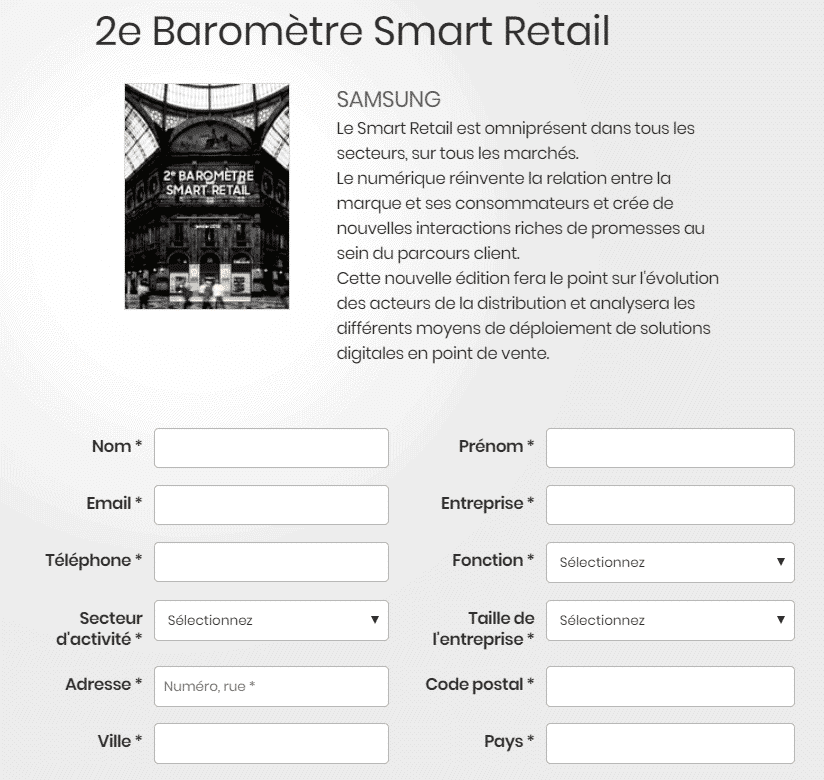
- Asking for the phone number costs a form 5% of conversion on average, according to an Unbounce study.
- Enriched data feeds segmentation, email personalization and lead scoring.
- A piece of information such as the company’s B2B or B2C target is enough to sort the contacts gathered at a trade show.
- Lost lead lists keep their value: companies’ budgets, priorities and organization change.
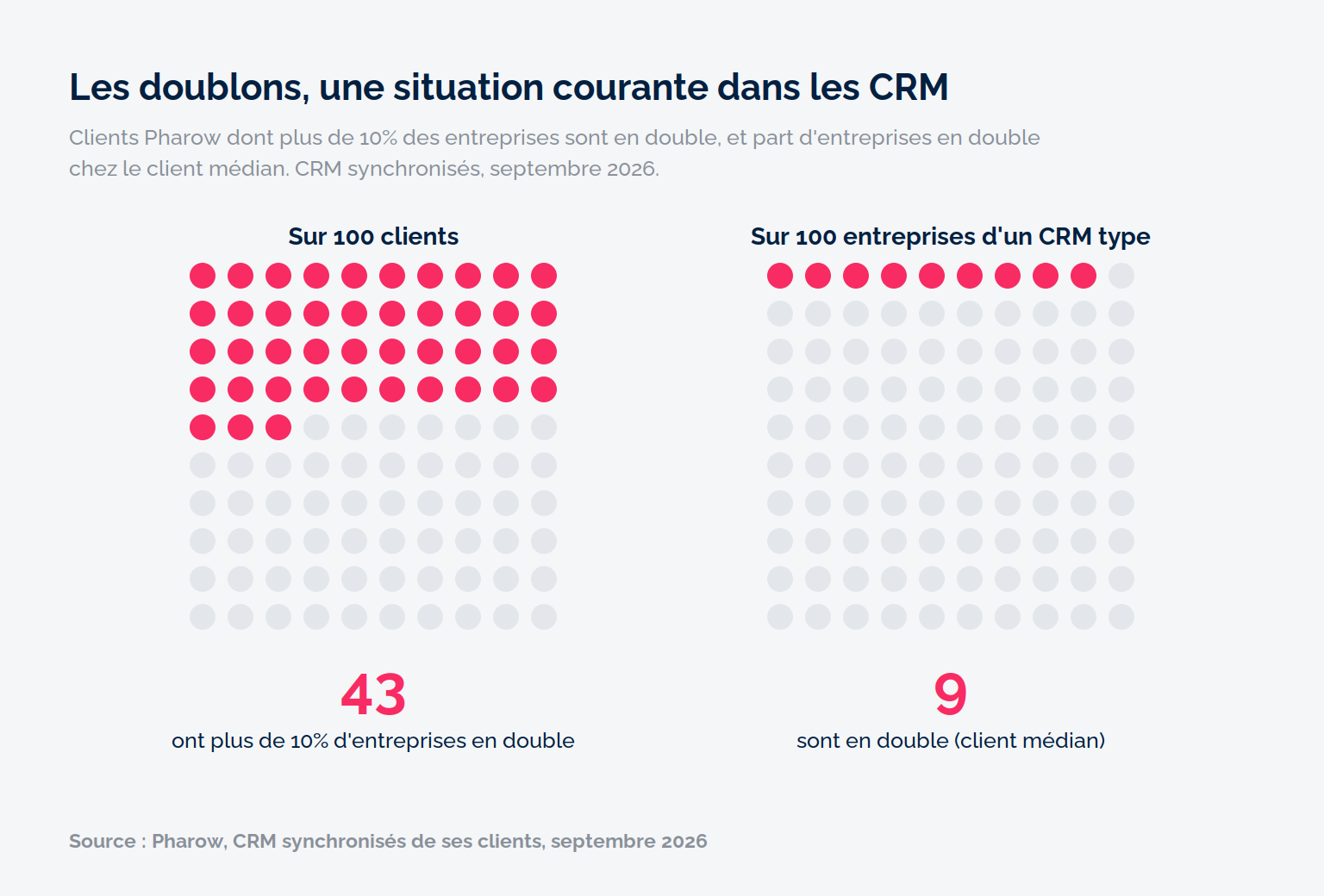
84% of marketing databases are of poor quality and therefore hard to use. That is the finding of a NetProspex report. According to the same report, basic data such as industry, revenue or number of employees is missing from 88% of files.
At the same time, the marketing technology (MarTech) landscape has been growing very strongly for several years. Yet despite the rise of these technologies, B2B marketers keep seeing the ROI of their actions weakened by incomplete customer data.
Forms don’t let you collect all the data you need. If you want to get more out of your Marketing Automation software and improve your marketing performance, you need to enrich your leads by retrieving more data about them. Enriching your lead data is something essential today in an inbound marketing strategy.
We’ll start with a quick reminder of what lead enrichment is. Then we’ll present 8 lead enrichment use cases. Enjoy the read.
What is data enrichment?
Contact enrichment refers to all the techniques aimed at enriching the information you have about your contacts. Once you have captured a contact / lead, you necessarily have information about them: last name, first name, email, company, and sometimes other information about the company and its needs. But this information is often insufficient. The more data you have on your contacts, the better you can qualify them, understand their needs and expectations, and refine your Marketing Automation scenarios / your email campaigns. So it is absolutely decisive to try to enrich the data about your contacts.
Lead enrichment can be done:
- Manually. Example: by calling the lead to ask about their company, their need, their goals…
- Automatically, using lead enrichment software combined with third-party data providers.
Whichever way you organize your lead enrichment, it is necessarily concerned by the following 8 use cases.
Also readDiscover the best tools to generate leads from LinkedIn.
1. Reduce the length of your forms
It’s well known: the shorter a form, the higher its conversion rate (all other things being equal). A form with 15 fields will always have a lower conversion rate than the same form with only the 5 main fields. Every A/B test proves it. And often, the conversion gap is huge. So it is advisable to limit the number of questions in your forms, focusing on priority data: last name, first name, email, company website, job title, etc. Yet, as everyone will agree, your sales reps need more data to qualify leads: phone, number of employees, address, industry, CMS used, etc.
There is indeed a dilemma. Less data collected in forms means more leads collected but potentially lower lead-to-customer conversion rates. Your Marketing Automation platform needs high-quality data, and lots of it, to run at full power. Having less data can reduce the effectiveness of your marketing actions. There is a balance to strike. But one thing is certain: lead enrichment lets you collect information later, and therefore reduce the length of your forms without missing essential data.
2. Identify and remove fields that hurt conversion
An Unbounce study showed that asking for the phone number reduced the form’s conversion rate by 5% on average. There is a certain amount of information that leads are reluctant to give: revenue, Twitter and LinkedIn accounts, address, age, etc. Removing unnecessary fields can considerably increase form conversion rates and potentially earn you a lot of money. You can run A/B tests to analyze the impact of your different fields on conversion, comparing forms with and without them. Don’t forget, once again, that there are other ways to collect information about your leads: removing a few fields from your landing page form can be offset by using lead enrichment techniques or technologies.
Also readDiscover our complete guide to lead qualification.
3. Collect more information about your leads to better personalize your messages
Emails with a personalized subject line have an open rate 50% higher than emails with a generic subject line. Yet some companies have still not got into the habit of personalizing their mailings. Why? Marketers today have the tools needed to set up this personalization. They have the technology. They have the know-how. They are themselves convinced of the importance of personalization. 75% of marketers think content personalization is very important. What are they missing? Data. The data that makes the difference and that will let you both segment your file better and personalize the content of messages sent via custom fields as much as possible.
4. Recognize the IP address of your website visitors
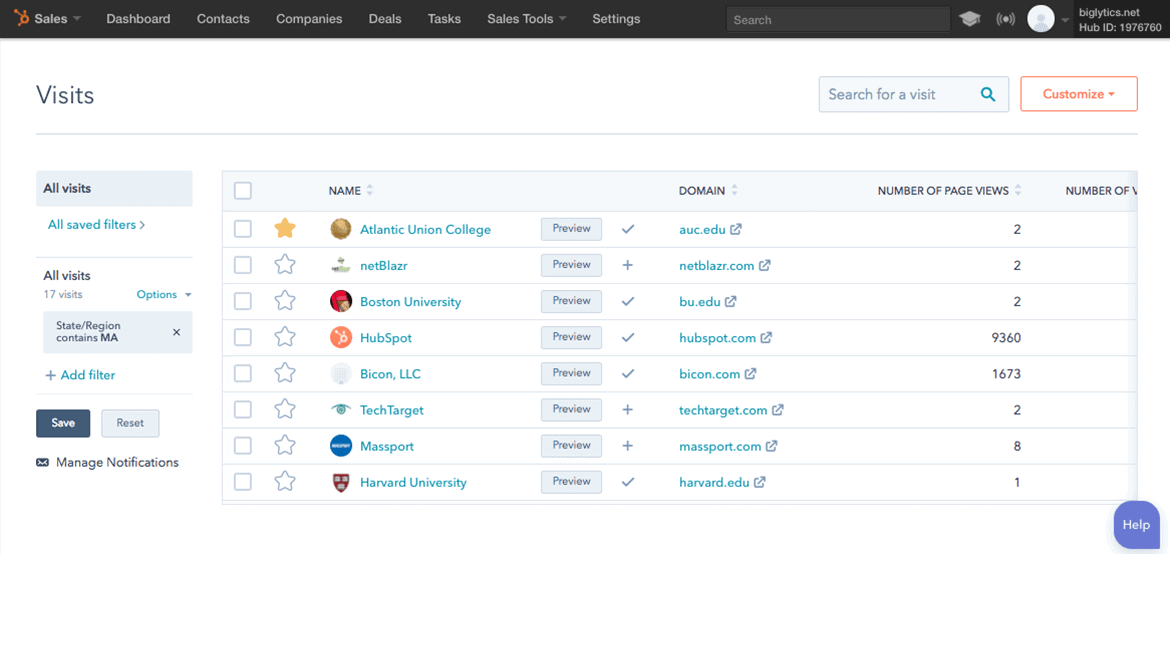
Most Marketing Automation and web analytics tools let you see and analyze the behavior of unidentified visitors, complete unknowns. HubSpot Prospects is one of these tools. It recognizes visitors’ IP addresses and, from there, retrieves a lot of information about your unidentified visitors: company name, location, number of visits… Once you have identified a few dozen recent visitors to your site who have the characteristics of your target customers, you can try to reach them through outbound campaigns.
Also readDiscover 20 high-potential Lead Generation techniques.
5. Set up a Lead Scoring system
Lead Scoring means ranking leads according to their value and their level of maturity. This ranking is based on a number of criteria related to:
- Lead behavior: pages viewed, time spent on the site, videos watched, clicks, etc.
- Their firmographic and demographic profile: company, department, job title, company size, address, industry, revenue, etc.
Only a small share of new leads are ready to buy. In most cases, someone who has become a lead (by downloading content, for example) is not « sales-ready ». That’s why leads need qualification work, nurturing (= warming up) as they say. This work is handled by marketing. This nurturing phase feeds on the information you have about your leads, hence, once again, the value of lead enrichment. This information lets you personalize content sharing and messages, but also refine the scoring.
Also readDiscover how to build a Lead Scoring strategy.
6. Identify the right qualification criteria to improve the quality of your leads
Let’s say you regularly attend trade shows. Thousands of people came to your booth, you gained hundreds of contacts. Half are B2B contacts, the other half B2C contacts. Except, problem: you only sell to B2B customers. How long will it take your sales reps to separate B2B contacts from B2C ones? They will have to visit each website, but sometimes they will also have to call, because it isn’t always obvious from its website whether a company is B2B or B2C. The real solution: set up a system, techniques that attract only leads matching your target, leads likely to become customers of the company. Improving the quality of incoming leads will necessarily have a positive impact on your conversion rates and therefore on the productivity of your sales team.
All this to get to this point: lead enrichment makes it much easier to discriminate between leads and focus only on the « good leads ». To go back to the example above, retrieving information about the company’s type of target (B2B or B2C) will let you do some much-needed sorting among the generated leads right from the start.
7. Give your sales reps the key data
It is estimated that sales reps spend on average only a third of their working time selling, that is, doing their actual job… Several studies on the subject are published regularly. And the results are almost always the same. What do they do the rest of the time? How do they spend their time? Mainly doing manual research on prospects and data entry. Before a call, a sales rep does two things: type the company name into Google and go on LinkedIn. Using data enrichment technologies frees up a considerable amount of time for your sales reps and helps them focus on the activity where they truly add value: selling.
Also readDiscover how to write the perfect prospecting email.
8. Give your lost leads a new life
You may have a lead file called « Lost leads ». They are probably gathering dust while you read this article! Budget, timing, competition, etc. A lot of things can change over time. Companies raise funds, marketing priorities shift, new contact channels are developed, the company’s organization changes. The product or service offering can also change, and the target customers along with it. What should you do with your old lists? Undoubtedly, they still have value, provided you know how to use them. Lead enrichment can be used to find out who is behind these lists of abandoned leads and how to use them for new purposes.
As you can see, lead enrichment can only benefit your organization and your company’s sales performance. These use cases give a sense of some of the possible uses of this technique. We hope this article has shed some light on the practice of lead enrichment.
The questions we get over and over.
What is data enrichment?
Contact enrichment refers to all the techniques aimed at enriching the information you have about your contacts: beyond last name, first name, email and company, the goal is to qualify them better, understand their needs and refine your marketing automation scenarios and email campaigns.
How do you enrich your leads?
Manually, for example by calling the lead to ask about their company, their need and their goals. Or automatically, with lead enrichment software combined with third-party data providers.
Why does enrichment let you reduce the length of forms?
The shorter a form, the higher its conversion rate. Enrichment later collects the information sales reps need, such as phone number, number of employees or industry, without asking for it in the form.
What is the link between data enrichment and lead scoring?
Lead scoring ranks leads according to their behavior and their firmographic and demographic profile. The nurturing phase that prepares leads to buy feeds on the information you have about them: enrichment lets you personalize content and messages, and refine the scoring.
What should you do with lost leads?
Enrich them. Companies' budgets, timing, marketing priorities and organization change over time. Enrichment helps you find out who is behind these lists of abandoned leads and use them for new purposes.


What the community says.