



- Nothing is as effective as an offer suited to each buying stage: a guide at the top of the funnel, a trial or a demo for the prospect ready to buy.
- In a community, build your credibility for 2 or 3 months before posting anything at all.
- Spend 80% of the time devoted to content on distribution and 20% on production.
- On review platforms, a steady flow beats bursts: send your most engaged customers to G2, the others to Trustpilot.
- After a trade show, follow up with every lead within 7 days, through every channel.
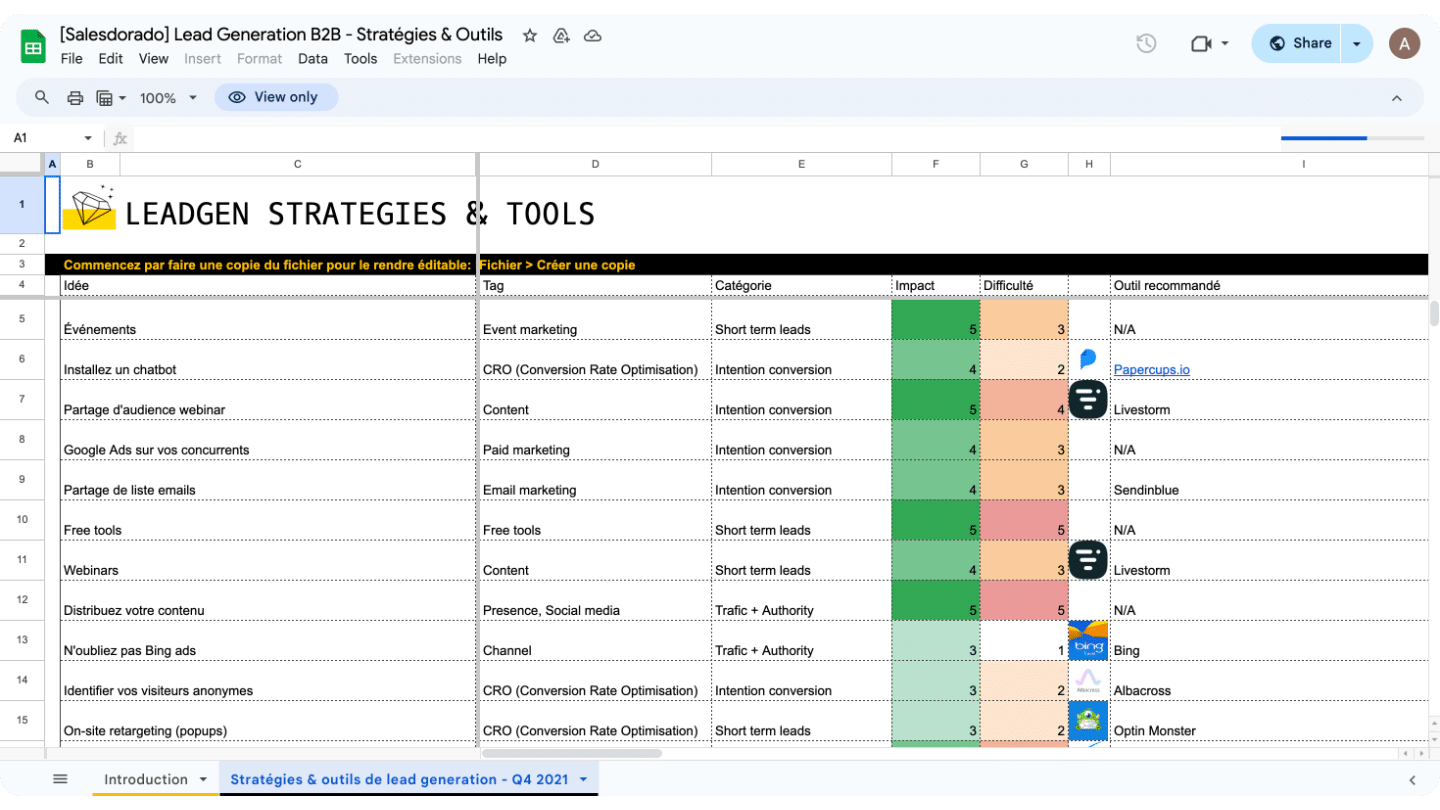
The idea was to avoid “simply” listing the approaches and methods for generating B2B leads.
Here we focused on working methods for generating leads, picking the 15 strategies that seem the most important to us, with examples to put them into practice at small, medium and large scale.
For each lead generation strategy, we give you our advice on how to test it, exploit it and scale it.
1. Work on your offer
Instead of having a generic, somewhat vague value proposition, you’re better off segmenting your traffic sources and putting an offer in front of each one that people can’t refuse.
The idea behind this advice is that you can optimize whatever you like in marketing, but nothing has as much impact as a great offer.
The great offer is the one that fits the targeted audience perfectly: to get there, an effective strategy is to create different offers depending on the buying stage.
For example, there’s almost always a “Contact us” button on a website. But not every prospect is ready to take that step, and many prefer to keep doing their own research.
Someone at the top of the sales funnel is potentially more interested in an informational document such as a guide or an ebook, while a prospect ready to buy is more interested in a free trial or a demo.
To test: nothing forces you to choose right away – you can create offers for each stage of the sales cycle, and include a primary CTA and a secondary CTA for these offers.
To exploit: segmentation then lets you refine the offer where most of your traffic sees it. Work first on the page that brings in most of your SEO traffic. If most of your requests come from your LinkedIn profile, that’s where you need to work on your offer.
Read alsoComparison of the best LinkedIn training courses
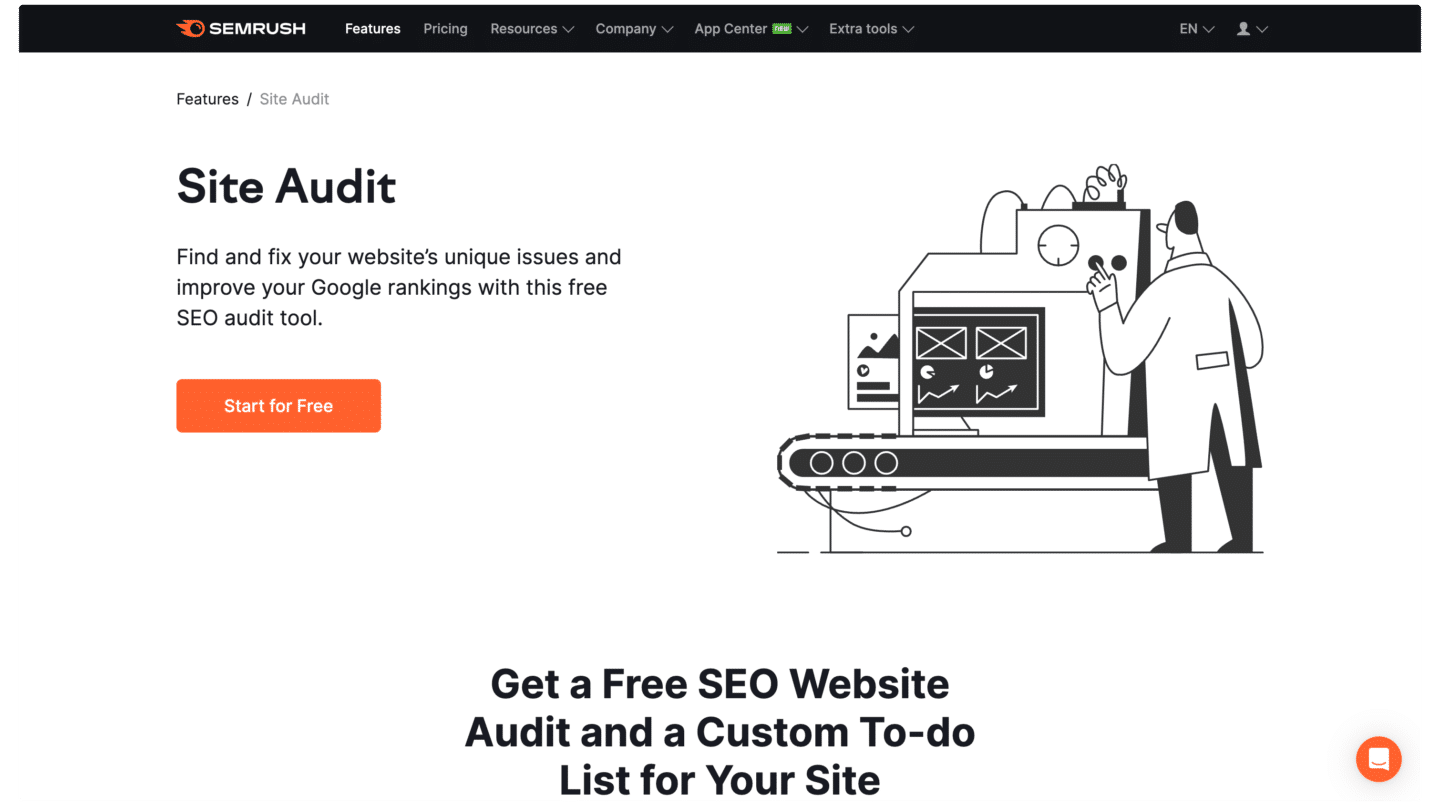
To scale: take the example of SEMrush, one of the recognized lead generation tools on the market. SEMrush offers a set of SEO tools: technical audit, keyword analysis, backlink analysis, competitive analysis, local SEO, etc.
To generate leads efficiently, they built a whole funnel for each tool – and each tool matches a very specific buying intent. In our example, they offer a free technical audit with a to-do list to optimize your site.
2. Build a presence in communities
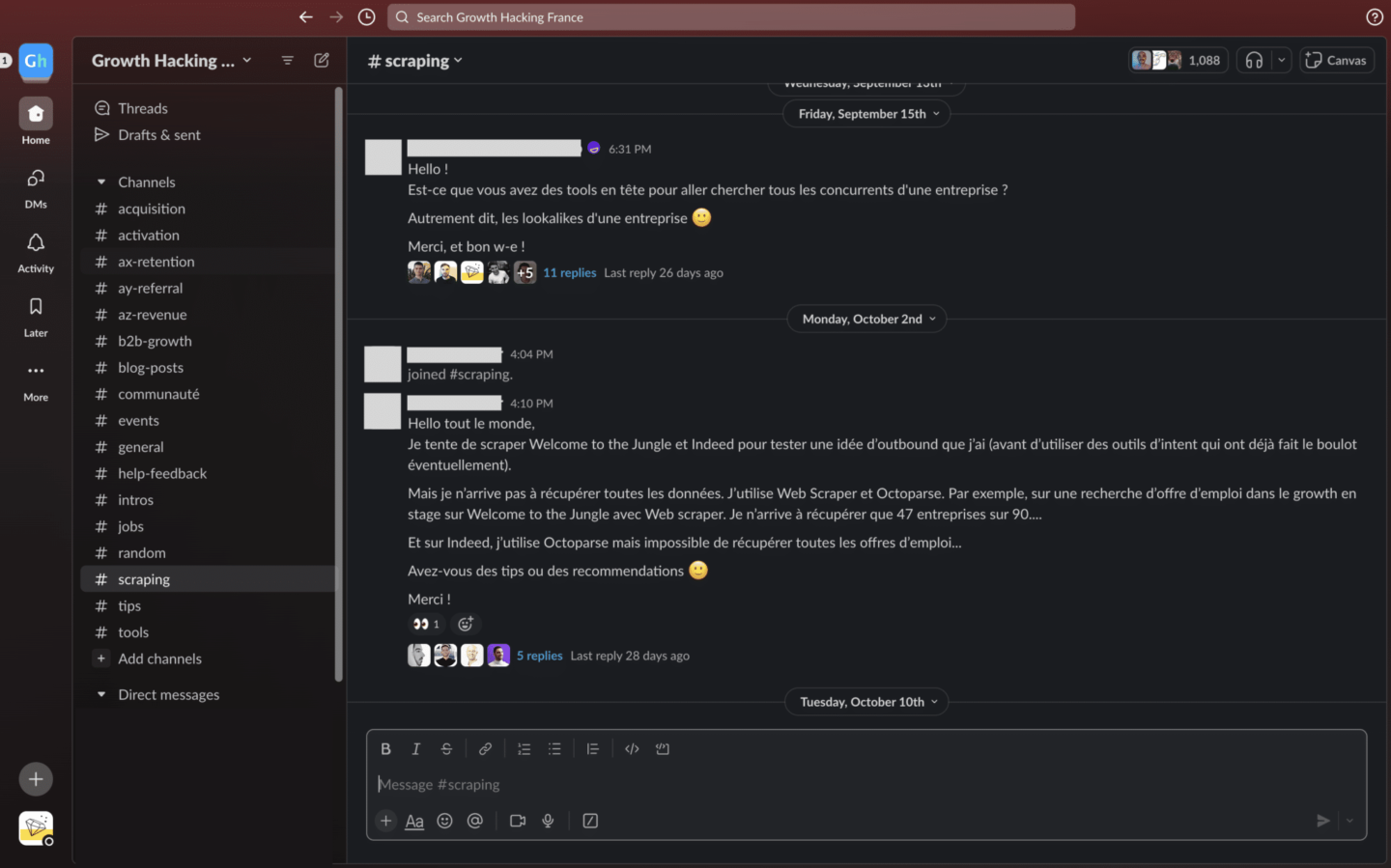
If you dig into the idea of segmenting your targets properly, it also applies to your online presence. Build your presence in well-targeted communities where you have real interactions.
The idea is not at all to join as many groups as possible, post a link and cross your fingers (the “Spray and Pray” technique). Before posting anything, you need to have made a few friends, who will interact with your post, ask questions, go and have a look, etc.
The goal really is to build human relationships, even if you do it on a virtual network.
Among the different online communities, there are:
- Forums: Slack communities (under thirty in general, middle managers), Discord (younger, or more development-oriented in general), or “old-school” forums like growthhacking.fr for example.
- Facebook groups – Some are extremely active and relevant, but that’s a bit rarer. Overall, the average age is higher.
- Reddit – Reddit is a job in its own right, and it’s hard.
To test: start by testing one community. Pick just one, and answer at least one question a week. Keep adding value for 2 or 3 months, and try to be present in every conversation where you can add value.
The goal is to build credibility on your favorite topics. Be careful, it takes a lot of discipline and a lot of time, so you’d better enjoy it.
To exploit: exploitation is when you use these communities to extract information about your prospects. You can join other, fairly close communities. Try to find members you know through other communities, and start engaging in conversation more.
Stay very focused on your expertise, but don’t hesitate to ask off-topic questions too, to benefit from other people’s expertise.
To scale while staying relevant, there are social listening tools like Syften, which lets you monitor the use of certain keywords across all these communities (Slack, Reddit, Discord, …) and therefore see everything that’s being said about your product.
The advantage is that you can step in at every stage of the buying cycle: reply immediately when someone mentions your product, and boost the articles or posts that talk about it.
But also hunt for prospects by tracking the technical terms your customers use, to generate new prospects. Syften offers an entry plan at $29.95 a month to monitor 3 keywords, which you can try for free.
3. Build an organic presence on Google
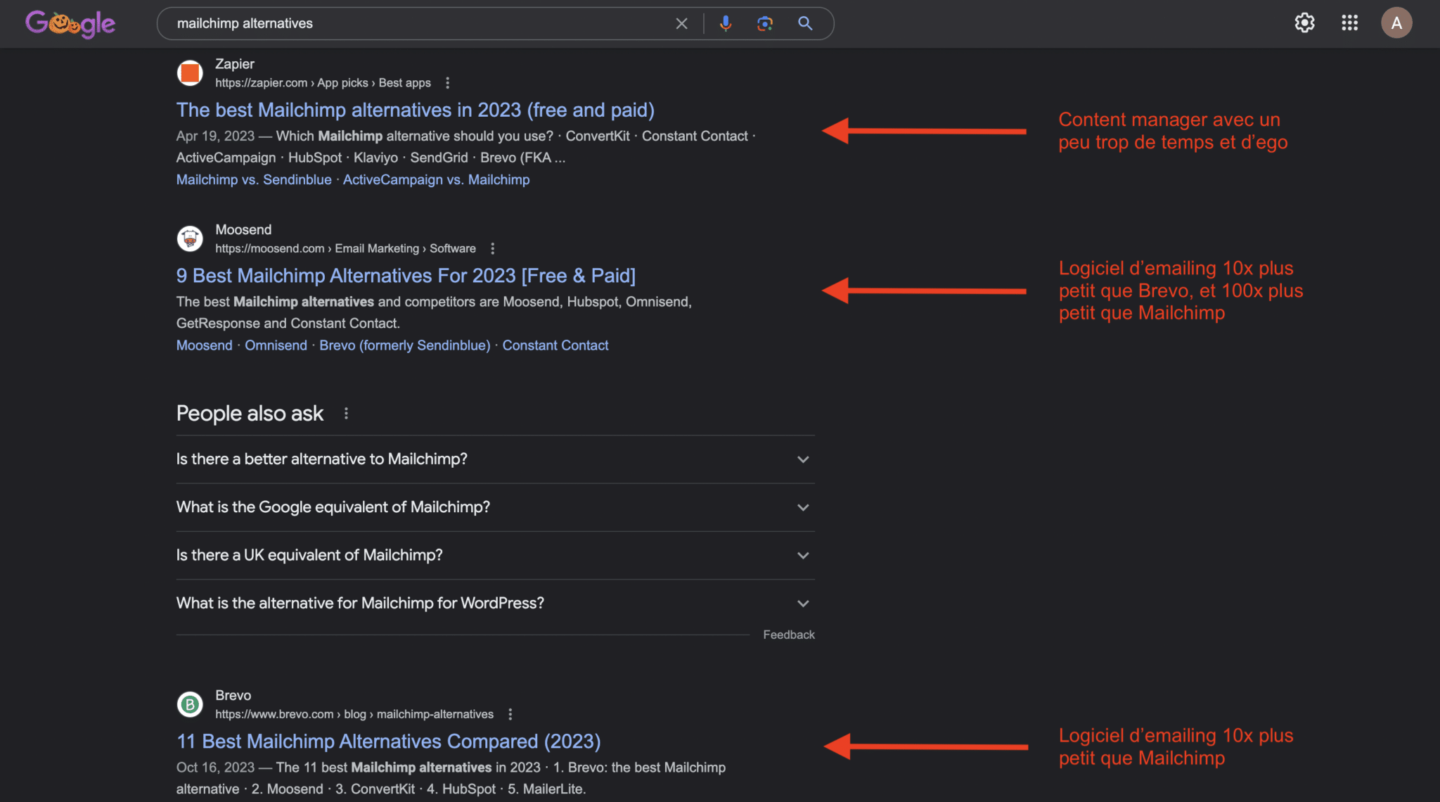
SEO is not (at all) something that takes time, a long-term thing, and all the other nonsense incompetent agencies tell you to justify their fees and their abusive clauses.
SEO is a matter of relative legitimacy. If you’ve never published anything about email marketing, and you hope to rank for a generic keyword like email marketing software, then yes, you’ll have to build legitimacy on email marketing, and that does take time, it’s true.
But if you want to rank for a very specific intent, a keyword on which you’re legitimate from the outset, if only because you talk about it, then it’s possible (and relatively easy) from day one.
To test: start for example with “Customize Gumroad confirmation email” or “super.so newsletter software”.
4. Buy yourself a direct presence on Google
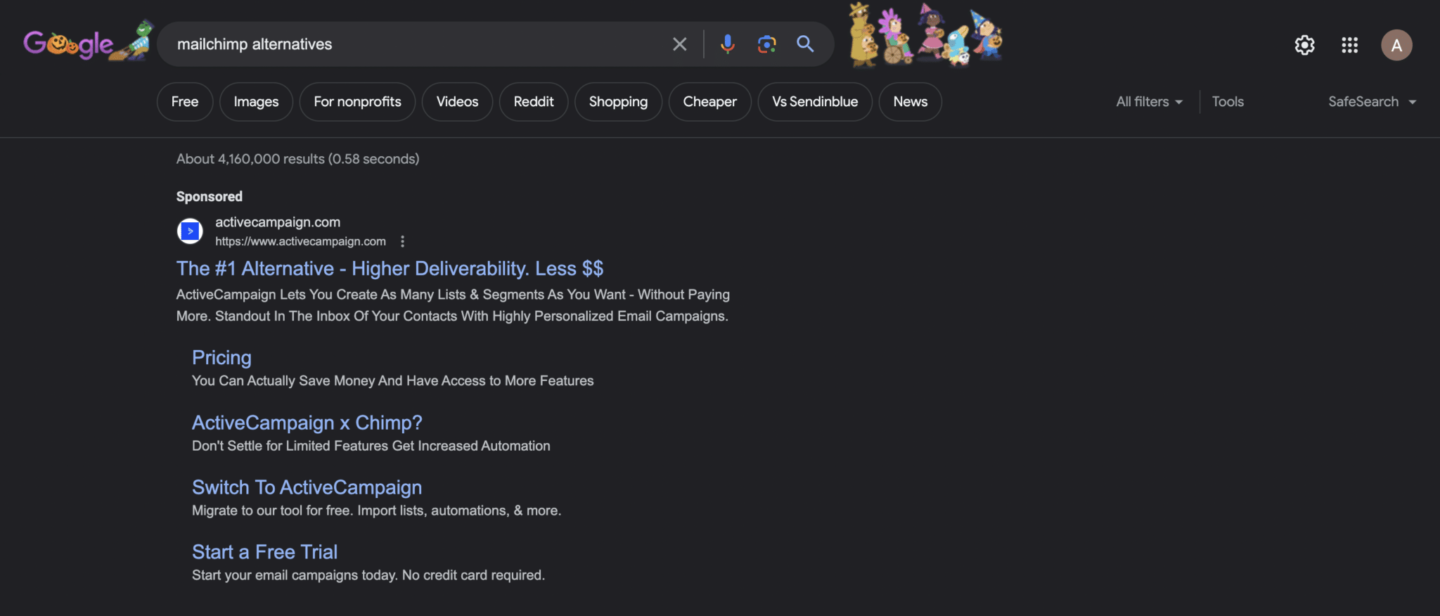
Google’s huge strength lies in transactional, “bottom of the funnel” queries. With Google Ads, you can rank from day one on extremely transactional keywords, and record your first sales.
To test: for example, take an established phrase like “Email marketing software”. Whoever typed the keyword knows what to expect, knows what they’re looking for, and wants to buy a solution. If you’re there at that moment, you have a chance of winning the sale. It’s that simple.
With Google Ads, you can buy yourself a presence on that keyword from day one, provided you have a relevant offer and a budget.
Read alsoOur selection of the best Google Ads training courses
We won’t go on at length here about managing a Google Ads account. But the gist of it is that you have to monitor the account continuously to adapt to the competition. It’s work, don’t think you can put campaigns on autopilot.
But you should never lose sight of “common sense”. If you sell email marketing software, it’s almost impossible for “email marketing software” not to be profitable.
5. Buy yourself an indirect presence on Google

Since it’s hard to rank for the big keywords (like “email marketing software”), plenty of sites take care of it for you, and sell you visibility and traffic coming from those keywords. Salesdorado is one of them, but so are platforms like Capterra or G2.
To test: Define a list of 10 keywords – genuinely different ones, not bogus variations with or without an S – that point to a very strong buying intent. Try to rank by buying ads on Google.
To exploit: Expand your keyword list, and use your Google Ads costs to work out the much less competitive keywords that perform well, so you can start working on them in SEO. You’ll take 2 results out of 12 – 15 per Google results page.
To scale: Contact all the “neutral” sites ranking for these keywords to buy a presence.
You’ll take 7 – 8 results out of 12 – 15 per page. The next step is to be among the first every time.
For review platforms like Capterra and G2, you need to work on customer reviews, we cover that further down in this article.
6. Make the most of LinkedIn
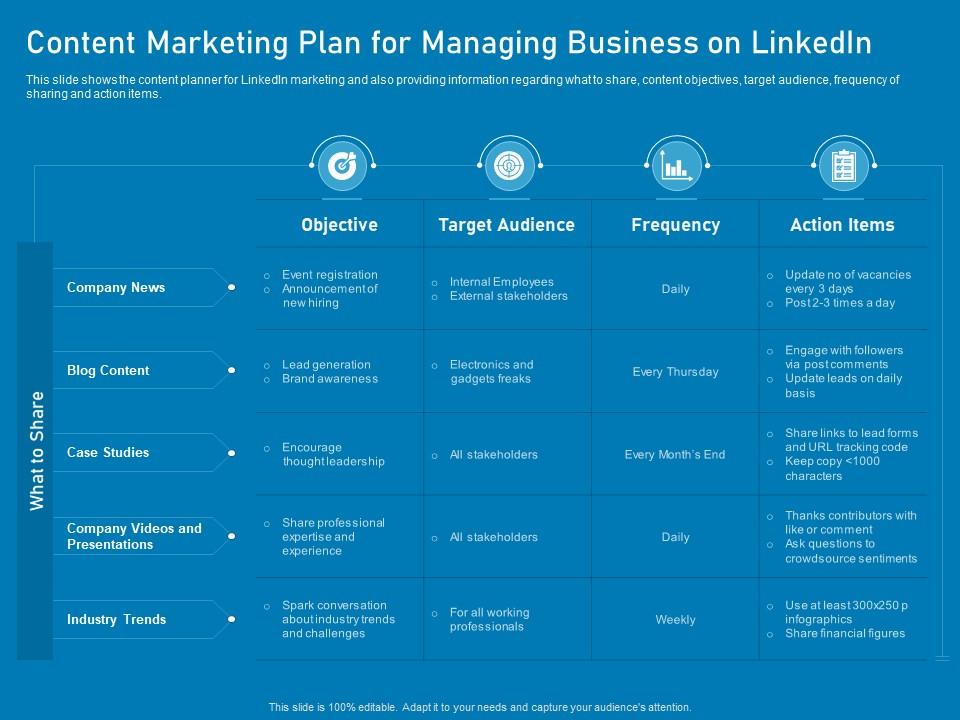
Use your LinkedIn account to share content from your website. Above all, only share high value-added content, to build legitimacy and come across as an authority.
On LinkedIn, you can also target subsections of the user base by location (if a region matters for your business) or by posting in specific groups linked to your industry.
To test – a few best practices to follow:
- Post regularly – The algorithm overvalues the quantity of content. Careful though, people (humans, that is) read what shows up in their feed. If you post any old nonsense, it can do a lot of damage. The right balance, in my opinion, is between 2 and 4 posts a week. Beyond that it’s too hard to keep the quality up, and below that it’s too infrequent.
- Really encourage your teams to build a personal brand and use it for your company. Including with financial incentives.
7. Get your customers to recommend you
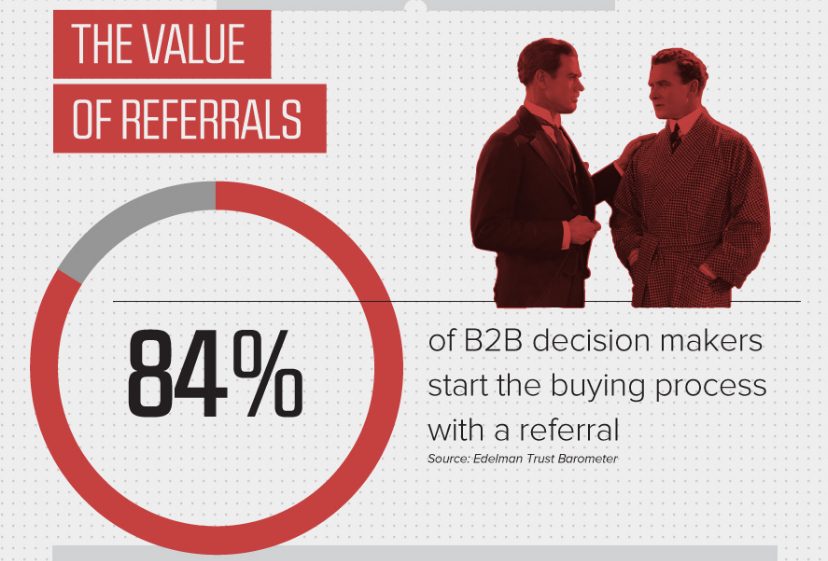
A recommendation is an extremely effective source of conversion.
But don’t wait for recommendations to happen on their own.
To test: ask your current customers directly whether they’d be willing to recommend you publicly. That lets you post their testimonials on your website.
A few ideas to showcase recommendations:
- Present them as press releases
- Create social media posts, as images for example, to highlight the praise
- Build case studies around the customer testimonial – as gated content to generate leads.
- Display your best customer reviews on your website with a tool like reviewflowz
- Give your sales reps a bank of testimonials so they can easily find relevant ones to send to their prospects
- Include them in your onboarding emails
To exploit: a recommendation is also a good way to get introduced to a new customer, for example by asking your current customer to send an email to the prospect you’re interested in, briefly introducing you.
Once you have their contact details, you can send them content regularly – case studies, press releases or an industry watch. So that they keep you in mind when they need you.
8. Get influencers to recommend you
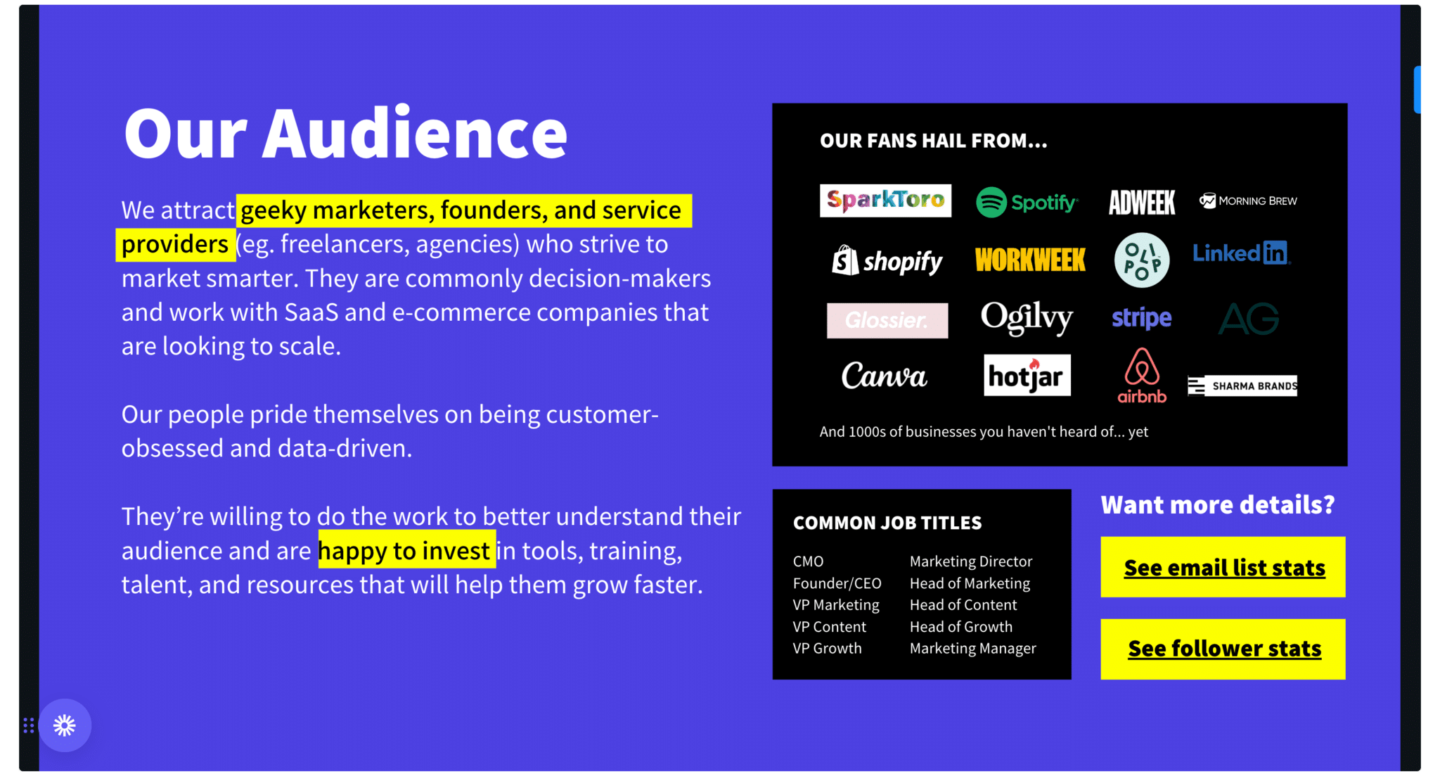
The influencer market keeps growing and can be a smart lead generation strategy for SMBs to reach new audiences.
Done well, it’s an inexpensive way to promote your business. Many influencers are willing to work on a performance-based model, where you only pay them according to the number of leads or sales generated.
In France, we’ve seen Folk use and abuse this method to build a presence in an already very mature market (CRM). An example of a post that is clearly sponsored.

Careful though: as in B2C, these influencers flirt with the law, and in fact rarely disclose when a post is sponsored. This LinkedIn post, for example, talks about a campaign organized by Emma, a mattress company sentenced by the commercial court for abusive commercial practices. On paper, you might think it’s well executed. And to be honest, it’s probably very profitable. The credibility of these “influencers” is frankly damaged, judging by the comments on the post. Not great to be the one who comes next.
To test: identify the influencers relevant to your business: find the people active in your industry or niche and analyze their number of followers and their engagement rate to make sure they’re a good fit for you.
Then put together a clear and compelling offer to convince them to promote your brand to their followers: free products or services, commission on sales, etc.
A good strategy, for example, is to sponsor their newsletter rather than buy “ephemeral” LinkedIn posts. A content creator’s newsletter is often of very good quality, and they have a very strong bond with their subscribers – so these newsletters perform very well
9. Produce less content

The main idea is that you should spend 80% of your “content” time on distribution, and only 20% on production.
If you apply the 80/20 principle to content marketing, 80% of leads come from 20% of the content. If you manage to identify the 20% of content that works best, you’ll get 80% of the results for only 20% of the effort.
That’s where low-frequency content marketing comes in.
To test: instead of creating content every day or every week, slow down. Spend at least 40 hours on each piece of content you produce, and make it exceptional.
If your dream customers are Salesforce consultants, create the ultimate marketing guide for Salesforce consultants. Keep improving this content so that it’s 10 times better than the next best piece of content on the subject.
10. Make the most of review platforms
As we saw above, customer review platforms are an excellent way to give your company visibility.
That means choosing the right platforms.
We recommend picking 2 or 3 at most: either platforms with which you have a key integration & that bring in high-LTV customers, or the platforms that rank well on Google when people type your keywords and your brand name.
Favor a steady flow of reviews over bursts: review platforms overweight review frequency. Over a month, having sent 20 reviews today on Capterra will be about as useful as having sent 2 reviews a week over the following 30 days.
So you need to be able to set up a constant flow of positive reviews if you’re after efficiency. If you just send review requests to your customer base every six months, stop doing it.
You need to segment properly: for every review you get on G2, you can get 10 on Trustpilot. We recommend sending your most engaged customers to G2, and sending less engaged (but satisfied) customers to the other platforms. If you send the least engaged ones to G2 or Capterra (or Salesforce Appexchange, etc.), you won’t get any results.
11. Build a partner ecosystem
To attract the highest-value customers, you need either a referral network or word of mouth. Ideally, both. Since word of mouth is a bit harder to set up, focus on building a partner ecosystem.
To test – a few examples of partners to get in touch with:
- Upstream services: If you’re a digital marketing agency, an upstream service can be a web design agency, a PR agency, a venture capital firm or a marketing training company. Turn them into referrers.
- Competitors: Even if it seems counter-intuitive, they can be an excellent source of leads. First, because if your competitors’ offer doesn’t suit a customer, that customer may turn to you. And conversely, if you’re at full capacity, you can (smartly) recommend your competitors to a customer. Identify the competitors who are complementary and who play along, without necessarily formalizing it. We’re far from antitrust law in most cases, but still.
- Niche partners: If you specialize in consulting for hotels, look for organizations and associations with good connections in the hotel industry, whether media or companies whose business is completely different from yours.
- Schools: Large groups like Accor partner with schools to boost their appeal (as an employer in particular). But it’s also a way to increase your visibility with potential future customers. Speaking at a school, or at recruitment fairs, can make a lot of sense in some niches.
To exploit: Avoid 14-hour brainstorming sessions that produce loads of ideas nobody ever executes. To start with, I recommend a solution as old as the hills but very effective: email list sharing. Very quick to set up, you just suggest to a partner that they send a promotional email to their email base, to promote an offer or a service. In return, you send an email to your customer base promoting your partner’s service.
Salesdorado’s tipIf you don’t know which partner to turn to, we recommend talking to your contacts in the market, or even to the customers you work well with.
To scale: you can also try sharing webinars. A bit like the email swap, you prepare a webinar with a partner and you both (three, four, … that works too!) commit to sharing it widely with your customers & leads.
Creating webinars can take a lot of time, and you’ll need to find a topic & content that’s relevant to your respective audiences. It’s much more time-consuming, but it can work very well.
12. Build a free tool
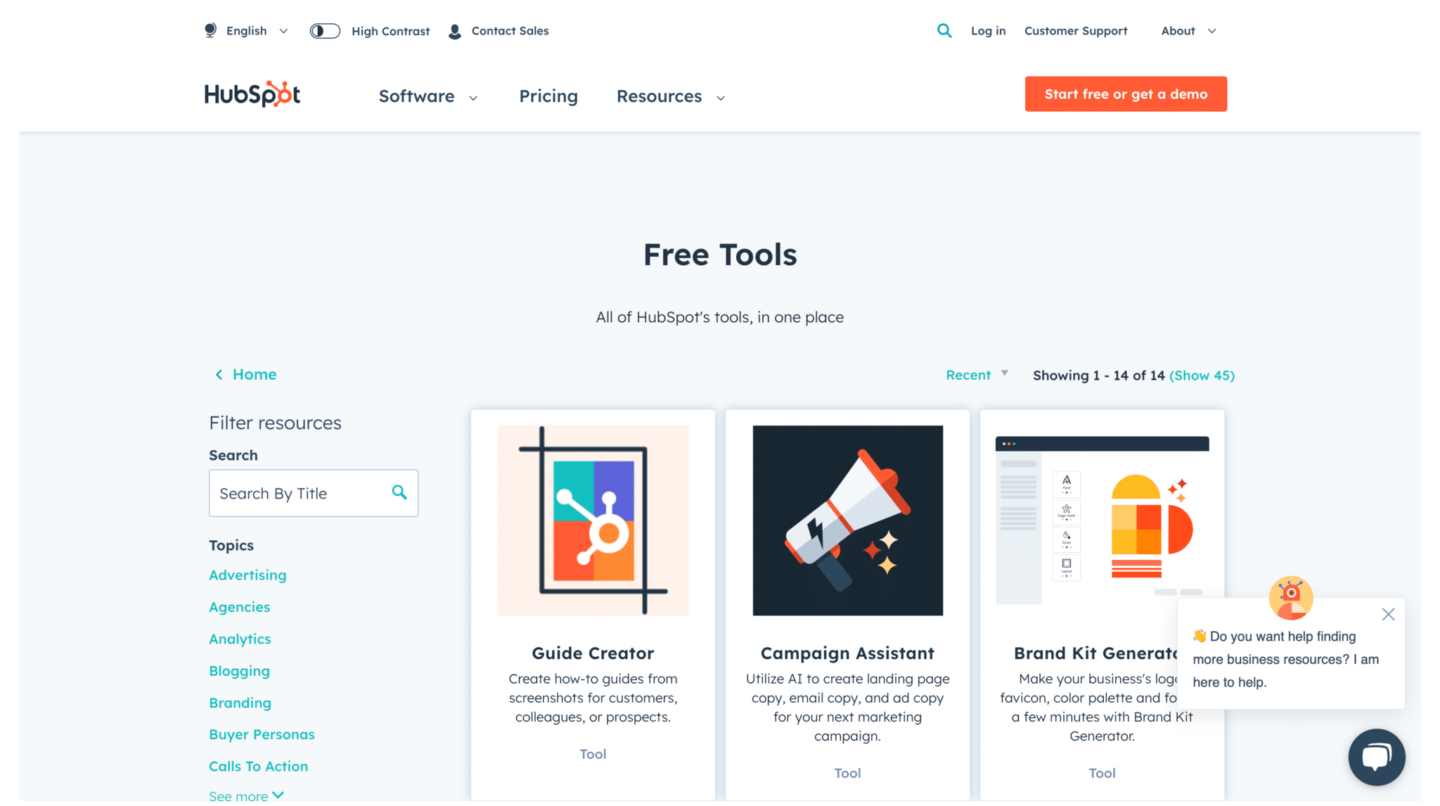
If you’re in SaaS, offering free tools or trials can be one of the most effective lead generation techniques.
It attracts people likely to be interested in your solution. And it offers them real value.
To test: the risk with this kind of strategy is precisely testing at too small a scale. The myth of the indie hacker who hacked something together on a spreadsheet and got overtaken by a Reddit post that blew up. Maybe that existed 10 years ago, but the web today is far more advanced. Nobody wants to try something that’s hard to understand or looks like nothing. To really test, you have to invest enough time to build a real mini-tool. Stay agile, MVP, all that, obviously, and make as few assumptions as possible before getting customer feedback – but don’t fall into the opposite trap.
To exploit: Distribution is the name of the game, even when it’s free. Try your hand at platforms like Product Hunt, Reddit, Indie Hackers, etc. and try to find relays who will share your tool (bloggers, newsletters, “influencers”)…
It’s a strategy that can really pay off if you manage to build a free tool that has its own value proposition and can exist “on its own”. noCRM’s sales script generator, for example, lets you create your call script for free to qualify your prospects properly on the phone.
HubSpot also offers a fairly impressive list of free tools: around ten tools are available to users. For example, Make My Persona, to define your personas, an email signature generator, and plenty of others that let a prospect discover their world and therefore the HubSpot solution.
13. B2B trade shows
Trade shows are still a very good way to meet future customers. But it takes some discipline to get the most out of them.
To test: a trade show is prepared in advance – don’t neglect the look of your trade show booth.
Responsiveness is the key to success. The rule of thumb is to follow up with a lead no more than 7 days after they visited you at the B2B event. And don’t limit yourself to an email follow-up: anything goes, social networks, WhatsApp, cold calling, … this is the time to send your best sequences.
Choose the right trade shows to generate leads: while it’s true that speaking at well-established marketing events is excellent for credibility, these conferences are often ineffective at attracting future customers.
Not only are there too many competitors trying to catch the prospect’s attention, but above all, most attendees assume you’ll be busy after your talk, and don’t come to speak to you. Whatever your performance metrics, you’re unlikely to generate interesting leads after a big, well-known trade show.
On the other hand, at a small event bringing together 50 to 100 people, you’re seen as more approachable. As a result, you’ll have more conversations (and deeper ones), which are all good leads and therefore future customers.
The holy grail is small sector events, often specific to one industry.
14. Install a chatbot on your website
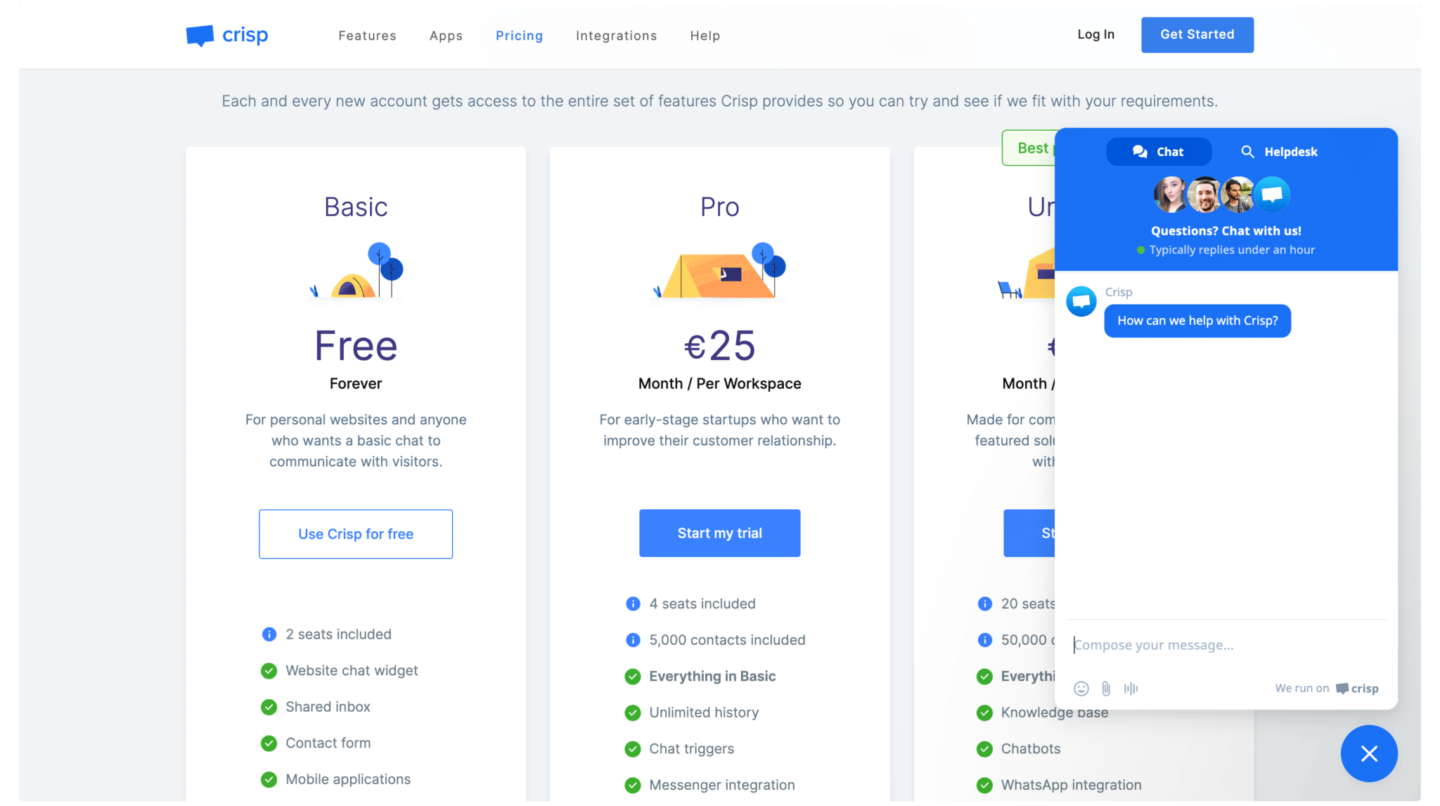
Nothing could be simpler than installing a chatbot to guide visitors by offering them a conversational interface. It’s a very effective tool, quick to develop and to implement on your site.
To test: Install Crisp (free plan and 14-day premium trial), and route requests to your Slack. After 14 days, if you have some volume, pay to keep Slack, and otherwise stay on the free plan and handle conversations from your browser.
Brevo’s chatbot (formerly Sendinblue) is also of fairly good quality, and fairly easy to install. As a bonus, it will be connected out of the box to your marketing automation or email marketing software if you use Brevo.
15. Use video
Videos have become a marketing must-have: they grab the audience’s attention in a more dynamic and more visual way.
To test: you can try out different formats.
- Explainer videos – short and animated, ideal for explaining your product or service.
- Customer testimonials – to feature satisfied customers sharing their experience.
- How-to videos – Step-by-step instructions on using a product or service, demonstrating its value.
- Product demos – showcasing the features and benefits of a product or service
- Brand presentation: to tell the story of your brand, its mission and its values, to build an emotional bond with your customers.
A high-quality, visually appealing video brings real added value to your target audience and is far more engaging.
To scale: invest in tools to take the quality of your videos up a notch. The advantage today is that it’s much easier to make very high-quality videos, especially with AI tools:
- With tools like ScreenStudio (for explainers and how-tos)
- Loom and its Chrome extension for product demos
- Livestorm to run webinars
- PlayPlay to promote content on social networks or create ads
Watch outDon’t forget the main goal of your video – capturing leads – by including clear CTAs or contact forms in your videos.
Go further
- To scale (even more): you can opt for a lead generation agency.
- For what comes next, see our guide to sales qualification.
The questions we get over and over.
How do you test a lead generation strategy?
For each strategy, the article distinguishes three stages: test at small scale, exploit what works, then scale. For offers, for example, you can create one offer per stage of the sales cycle, with a primary CTA and a secondary CTA.
Does SEO necessarily take time?
No. Ranking for a generic keyword like “email marketing software” requires building legitimacy, which takes time. But on a very specific intent, a keyword on which you’re legitimate from the outset, it’s possible from day one.
How many LinkedIn posts should you publish per week?
Between 2 and 4 posts a week. Beyond that, it’s too hard to keep the quality up; below that, it’s too infrequent.
Which review platforms should you focus your efforts on?
On 2 or 3 platforms at most: those with which you have a key integration and that bring in high-LTV customers, or those that rank well on Google for your keywords and your brand name.
Which trade shows should you choose to generate leads?
Small events of 50 to 100 people rather, often specific to one industry. At a big, well-known trade show, there are too many competitors and attendees rarely come to talk to a speaker.



What the community says.