



- Beyond 40 words, your email is too long.
- Set a specific goal: for a meeting, suggest dates, time slots and a length.
- A question at the end of the email makes the reader want to answer it.
- Following up is not an act of desperation: space out your follow-up emails and automate them.
- A sale is rarely closed by email: the first written contact paves the way for the call or the meeting.
Cold prospecting is a very tough exercise, on the phone but perhaps even more so by email. Who replies to sales prospecting emails from complete strangers? It’s increasingly rare, probably the result of too much sales pressure in recent years.
And yet, I can assure you that some salespeople still manage to land meetings through email prospecting. How do they get replies? We interviewed several salespeople and cross-checked the best English-speaking practices to bring you 12 simple tips for writing the perfect prospecting email.
1. Your email must be short and get straight to the point
Nobody likes reading long business emails. When it comes to prospecting emails, length is not an advantage. Writing a long email is the best way to get your prospects to delete or ignore your messages. Our first tip: write short, simple emails that get straight to the point. Ideally, your prospects should be able to read the entire content of your emails without having to scroll. Always keep in mind that your prospects receive dozens of emails every day and don’t have time to spend 10 minutes reading and understanding yours. Especially if it’s the first email you send them and they don’t know you yet…
If there are more than 40 words in your email, something is wrong. Many studies suggest that a perfect prospecting email should contain no more than five sentences. Imagine receiving a 2,000-word email about a product you don’t know. Are you really going to read it all? Probably not. Keep that famous 40-word limit in mind for your next emails. It’s one of the keys if you want to run an email sales prospecting campaign.
Because a lot of emails are read on mobile, also make sure your email is suited to smartphone screens. Finally, your prospecting emails must be clean and tidy: check that they contain no spelling mistakes. Use a spell checker if needed to make sure.
Example of a punchy emailHello $firstname,
I’ve tried to reach you several times to give you some ideas for improving (BUSINESS NEEDS), but I haven’t heard back from you, which leads me to think three things:
1. You’ve managed to solve (BUSINESS NEEDS). In that case, I’ll stop bothering you.
2. You’re still interested, but you haven’t had time to get back to me yet.
3. You’ve fallen and can’t get up. In that case, let me know and I’ll call someone to help you.
Which situation are you in?
Best regards,
John Smith
2. Skip the introduction
Get straight to the point! One of the first things you can do when writing your prospecting email is to skip the introduction, often « boring » and « run-of-the-mill », and start directly with what you have to offer. Some email apps such as Gmail give the recipient a preview of the first few words. Use that space to present what you’re offering. Also write a subject line that will grab their attention immediately.
A number to know about email prospecting47% of people decide whether or not to open an email based on the subject line alone.
Next, start with words that interest them enough to click on your email. Finally, don’t forget your company’s contact details in your signature so they can easily reach you if needed. We’ll come back to this a little later.
3. Be specific
Be specific in your pitch. Once again, get straight to the point. You know your prospects’ pain points and, above all, you know the solutions you can offer them. People often waste a lot of time building a relationship before presenting their solution. That’s the best way to lose your prospect along the way. Everyone’s time is precious, and don’t forget that your prospect may already have received dozens of emails today. You also don’t want important, relevant information to get lost in the middle of small talk. Take on the challenge, bring a solution and wait for a reply.
4. Write the way you speak
That doesn’t mean writing word for word what you’d say. It simply means you need to be direct, clear and concise in expressing exactly what you want, as you would out loud. Keep in mind that the potential customer you’re addressing may not speak the same language as you, or share the same enthusiasm. The only thing that will make or break the deal is the words you write. Make sure they really count!
Salesdorado’s tipWe firmly believe you should add a dash of your personality to your prospecting email. It helps your message stand out, and that human touch makes the recipient want to know more. Even if the answer is no, you’re more likely to get a reply when you stay yourself.
5. Your prospecting email must have a very clear goal
If you’re writing a prospecting email, you normally expect a reaction from your recipient. While writing your email, ask yourself these two questions:
- Why are you sending this email?
- What do you expect from the prospect? What do you want them to do?
If, for example, you’re trying to get a meeting, suggest dates and time slots to your prospect, giving a few details, in particular the target length of the meeting. For example: « I suggest we have lunch together so I can show you in detail how our solution can help you generate more qualified leads. Would you be available next Monday or Wednesday between 12 and 1 pm? ».
6. Try to end your email with a question

The best way to end a prospecting email is to ask a question. The goal is to start a conversation before trying to sell anything. Adding a question near the end plays on the reader’s psychology and makes them want to answer it, which increases your chances of getting a reply.
Are you ready to give your company a boost?
Time is running out. Are you going to make the most of our services while there’s still time?
7. Don’t hesitate to set deadlines
If you send your prospect a sales proposal and you’re waiting for their feedback, don’t hesitate to include a deadline in your email. Of course, do it tactfully: you don’t want to give your prospect the impression that you’re holding a gun to their head. Your deadline shouldn’t come across as an ultimatum, even if it has to create a sense of urgency. Here’s an example message:
« Please find attached our proposal, in which we go over the details discussed during our meeting yesterday afternoon. The terms of this proposal are valid until Thursday. Looking forward to your reply… ».
Read alsoTo increase your lead conversion rate, check out our complete guide to lead qualification.
8. Take advantage of new technologies
There are now plenty of tools on the market that make your email communication more effective, such as Tilkee. Tilkee lets you know how your prospects read your proposals and sales documents, how much time they spend on them, which sections/pages they spend the most time on, etc. From this you can infer your prospects’ level of interest and the areas they have questions about.

More traditionally, you can also use emailing software that will tell you whether your prospecting emails have been opened, how many times they were opened, whether your prospects clicked the link, whether they forwarded it to colleagues, how much time they spent on the email, etc. There are several very good emailing tools, such as Mailchimp, Brevo or Positive User (formerly Sarbacane).
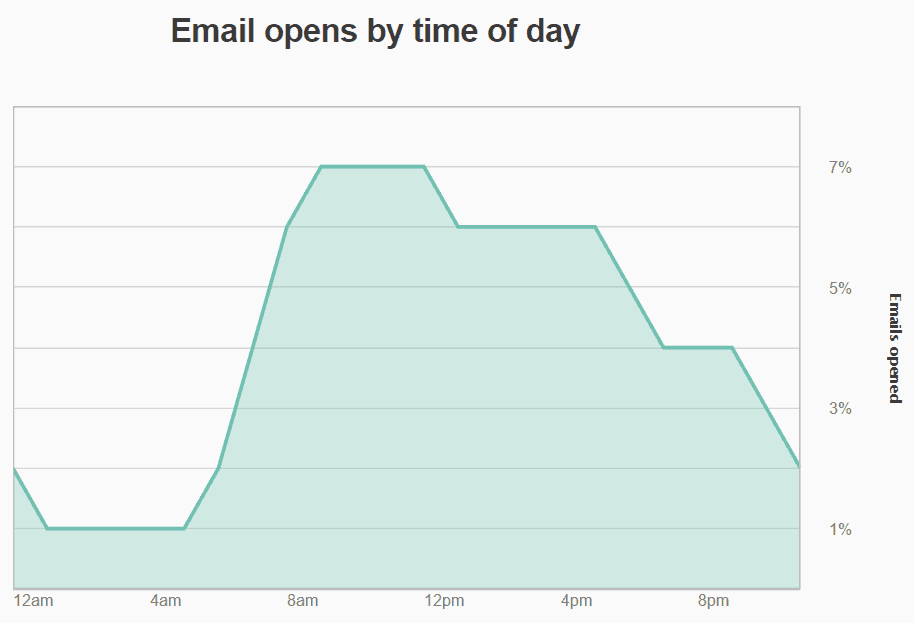
The performance indicators of your prospecting email campaigns will also help you work out the best times and days to send your emails.
9. Follow up a lot, but not too often
Before you ask, the answer is no. Following up is not an act of desperation if you keep a few things in mind. You’ve sent your prospecting email, you haven’t heard back, now it’s time to send a follow-up email. Quite simply because each of us receives hundreds of emails a day, and you can’t really blame your prospect for missing yours. We recommend spacing out your follow-up emails so you don’t bombard the prospect. You should consider automating this task with the best email prospecting tools such as Woodpecker or Reply.io. You’ll see that following up can really pay off when it comes to closing some deals.
Read alsoB2B cold emailing: the bible
10. Your emails must be personalized
Even if you’re sending 10 or 20 prospecting emails, don’t turn into a robot. Your prospecting emails need to be as personalized as possible, even if that obviously takes more time than sending the same email to everyone. To personalize your emails: draw on the exchanges you’ve already had with the prospect, take a look at their social profiles (to see what they’ve tweeted recently, for example), research the company on Google…
When you send a prospect information about your product or service, make sure your email doesn’t just share information that’s already available on your company’s website. Your email should go further and include additional information likely to interest your recipients, in line with the specific need of the companies you’re targeting. Show your prospects that you’re interested in them, that you genuinely want to help them improve their performance and solve their current problems. Don’t hesitate to include statistics showing the good results your current customers have achieved with your product.
Using templates for your email campaigns is fine, but nothing beats personal touches in your prospecting emails. Since this is the first time you’re « knocking on » someone’s door, you need to give them a reason to lift the latch. You need to show them how different you are from the others. So personalize your email with small, highly visible touches. Here are a few tips for personalizing your prospecting emails:
- Use « you » to address the recipient,
- Speak in the first person,
- Use GIFs,
- Drop the fancy templates,
- Mimic the way you write a handwritten letter.
The more personalized your prospecting email, the more likely you are to hit the bullseye and catch your recipient’s attention.
11. Polish your signature

How do you create a good-looking professional email signature? Make sure you include all your contact details, including your website address and your company’s physical address. That way, you show your recipient how professional you are in what you do. You also share all the information they need if they want to get in touch with you when they’re ready to buy.
Salesdorado’s tipInclude a photo of yourself in your email signature instead of just adding your company logo. Let the recipient know that a person is addressing them « personally » and not through a mass emailing campaign. Once again, your recipient will be reassured to know there’s a human on the other end.
12. Don’t just send emails, pick up the phone
Prospecting goes through email, but doesn’t stop there. The prospecting process should go through two phases, which correspond to two channels:
- A first contact by email, where the goal is to build your prospects’ interest, schedule a meeting (call or in-person meeting) or send a quote.
- A second contact by phone, which lets you get closer to your prospects and develop your full sales pitch in detail.
A sale is rarely closed by email alone: a phone call or a meeting is often the culmination of the sales process. Hence our advice: don’t make email the be-all and end-all of prospecting, pick up the phone and meet your prospects.
To wrap up and round out the tips covered above, let’s point out that to be perfect, a prospecting email must contain three sections:
- A hook, which aims to grab your prospects’ attention from the very first lines (and the subject line) of your emails and encourage them to take the time to read on.
- The value proposition, which is the heart of your email, its central element. In your email, you need to highlight the benefits of your product or service for the target company. Your prospects need to think: « Interesting, this product could actually help me solve my problem with… ». Your value proposition must be clear, specific and personalized.
- A call to action, which tells the prospect what you want them to do.
The questions we get over and over.
How long should a prospecting email be?
Short, simple and straight to the point. Ideally, your prospects should be able to read the entire content of the email without having to scroll. If there are more than 40 words in your email, something is wrong. Many studies suggest that a prospecting email should contain no more than five sentences.
How do you start a prospecting email?
By skipping the introduction and starting directly with what you have to offer. Some email apps such as Gmail show a preview of the first few words: use that space to present your offer.
How do you personalize a prospecting email?
By drawing on the exchanges you've already had with the prospect, looking at their social profiles (what they've tweeted recently, for example) and researching the company on Google.
How do you end a prospecting email?
With a question. The goal is to start a conversation before trying to sell, and a question at the end of the email makes the reader want to answer it.
Should you follow up with a prospect who doesn't reply?
Yes. Everyone receives hundreds of emails a day and your prospect may have missed yours. Space out your follow-up emails so you don't bombard them, and automate follow-ups with an email prospecting tool.
Is email enough for prospecting?
No. The first contact by email serves to spark interest, schedule a meeting or send a quote. The second contact, by phone, lets you develop the sales pitch in detail.



What the community says.