


On April 2, 2026, Odoo and Partena Professional announced an agreement that is making waves in the business software world. The two Belgian companies are joining forces to build a fully unified HR and payroll platform designed for SMEs. Odoo’s CEO himself described the contract as ten times larger than his biggest current customer. Worth a closer look.
Key takeaways
- Odoo and Partena Professional are launching the first integrated HR + payroll solution on the Belgian market
- The offer primarily targets SMEs with fewer than 200 employees that fall under joint committees CP 200 and CP 302
- Three plans available: Basic, Essentials, Relax, at a fixed price per employee
- Commercial launch is planned for early 2027
- The contract is described as the biggest deal Odoo has ever signed
- Extension to other joint committees is planned from 2027 onwards
Who are the two companies behind this partnership?
Odoo is a business software publisher of Belgian origin, founded in Louvain-la-Neuve, whose open source ERP suite is now used by more than 20% of entrepreneurs in Belgium. The company made its name worldwide with a modular approach covering CRM, accounting, inventory, website and many other business functions. Its model relies on native integration between all its applications, which sets it apart from suites assembled through successive acquisitions.
Partena Professional, for its part, is one of Belgium’s main social secretariats. It supports more than 51,000 companies and 135,000 self-employed workers, and handles around 920,000 payslips every month. Its strength lies in recognized expertise in Belgian labor law, a particularly complex field: 262 joint committees, distinct regional regulations, layer upon layer of collective agreements. That complexity is precisely what makes payroll in Belgium so hard to automate.
Why this partnership, and why now?
The logic is easy to follow once you know both players. Odoo was looking for a partner to strengthen its payroll module on the Belgian market, one of the most demanding in Europe in this area. Partena, on its side, wanted to replace its existing tools with a more modern, more integrated platform. The two agendas met at the right time.
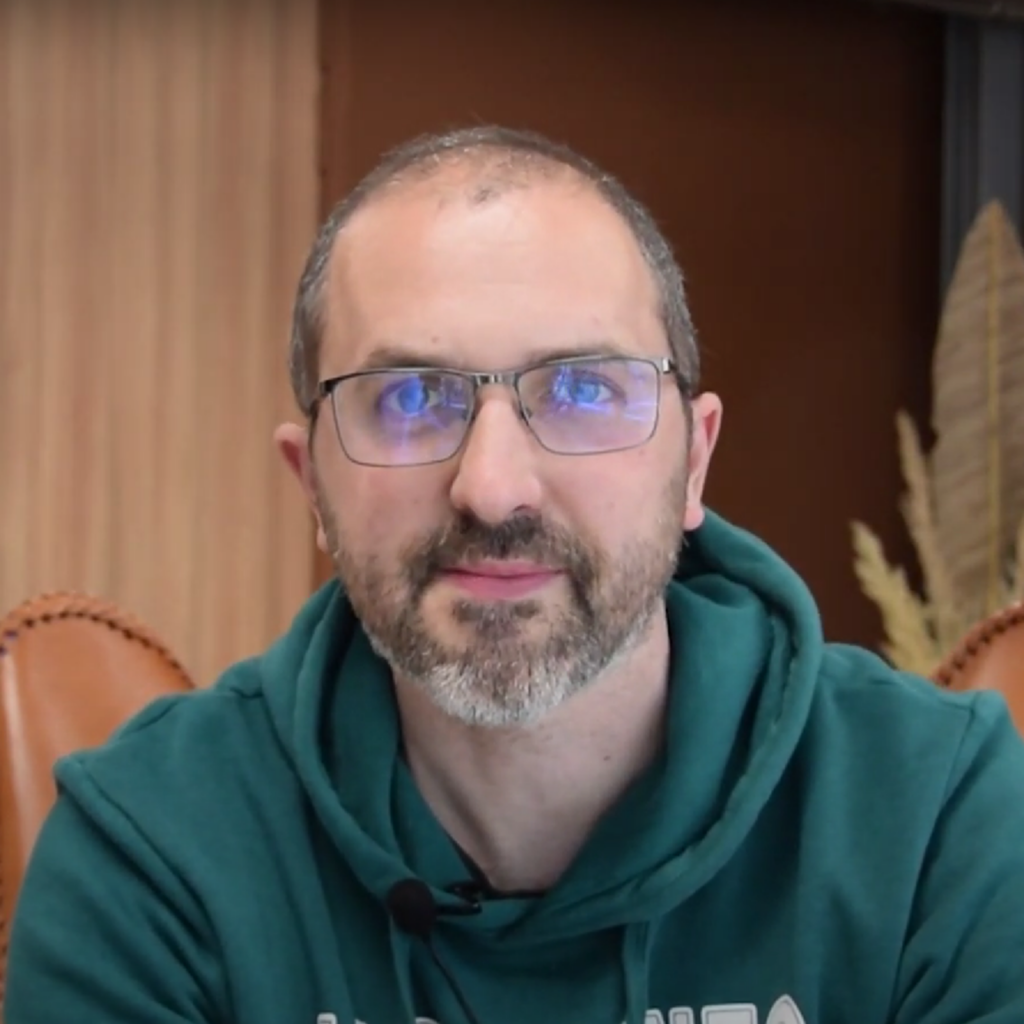
Fabien Pinckaers, CEO of Odoo, put it bluntly at the press conference: “It’s a services market. We were looking for a player to complete Odoo’s offer. Partena was thinking about replacing its tools, so the timing was right.” The agreement goes beyond a technical integration between two existing products. The two companies are building a shared tool from scratch, on a blank page. That is what separates this partnership from a simple distribution deal.
Partena openly claims this choice to start over on its product page: “Not optimizing what exists… but starting from a blank page.” For SMEs, this means a platform designed from the outset to move data without breaks between leave management, HR approval, payroll calculation and processing by Partena’s account managers.
What does it look like in practice?
The offer comes in three plans under the “Simplicity First” brand, each built for a different level of HR maturity. Pricing is fixed per employee and per payslip, with no hidden costs. A strong argument for SME managers used to opaque billing from traditional social secretariats.
| Plan | Positioning | Payroll | Legal expertise |
|---|---|---|---|
| Basic | Simple, compliant payroll | Basic operations | Optional |
| Essentials | The all-in-one solution | Most common operations | Included |
| Relax | A comprehensive approach | Most common operations | Included and dedicated |
The platform also includes AI assistance to answer questions in real time, an employee self-service module, and the option to grow later into a full ERP covering CRM, accounting, inventory and website. The ambition is broad: start with payroll, then gradually bring the whole of business management onto Odoo.
Who is covered at first?
Initially, the offer is reserved for companies with fewer than 200 employees that fall exclusively under joint committee 200 (white-collar employees) or CP 302 (hospitality). These are the two most common joint committees in Belgium, which represents a very significant number of SMEs. Companies whose employees are spread across several joint committees will have to wait for the next rollout phase.
Accountants are also targeted directly by Partena, which gives them a dedicated section on its product page. The argument: SME clients who are better equipped and more autonomous in their data entry, which frees up time for higher-value advisory work. It is a smart distribution angle, since Partena already has an established relationship with the Belgian accounting ecosystem.
The actual launch of the offer is planned for early 2027. Interested companies can already submit a contact form on the Partena Professional website to be informed first.
What this says about the HR and payroll software market in Belgium
This partnership comes at a time when several vendors are trying to unify HR management and payroll in a single interface. Cegedim, Cegid, Silae and Payfit have all developed similar approaches on the French market, with varying levels of integration. In Belgium, regulatory complexity has long held back this kind of initiative: social secretariats hold very specific expertise that generic software vendors struggle to reproduce on their own.
Odoo and Partena’s answer to this problem is structural: rather than selling an integration between two separate products, they are co-building a shared product. It is a different model, more ambitious, but also riskier in terms of delivery timelines and adoption in the field. Partena’s CEO, Roeland Van Dessel, summed up the ambition at the conference: “We have just revolutionized the market.”
For CIOs and software managers in Belgian SMEs, the question is simple: if you are under CP 200 or 302 and currently use several separate tools to manage payroll, leave and HR follow-up, this solution deserves a spot on your radar today, even if the offer will only be available in 2027.


What the community says.