



If you’ve ever looked for a comparison of B2B databases, you’ve surely landed on US articles written from a US point of view, with screenshots of English interfaces and use cases about targeting VPs of Sales in San Francisco. Fine. Except you’re prospecting French SMEs.
And there, the picture changes completely. LinkedIn headcounts don’t match real headcounts (an SME with 45 employees can show 12 on its LinkedIn page). The SIREN number, indispensable for avoiding duplicates in your CRM, simply doesn’t exist in international tools. Neither do NAF codes. And email enrichment rates drop as soon as you leave the English-speaking market.
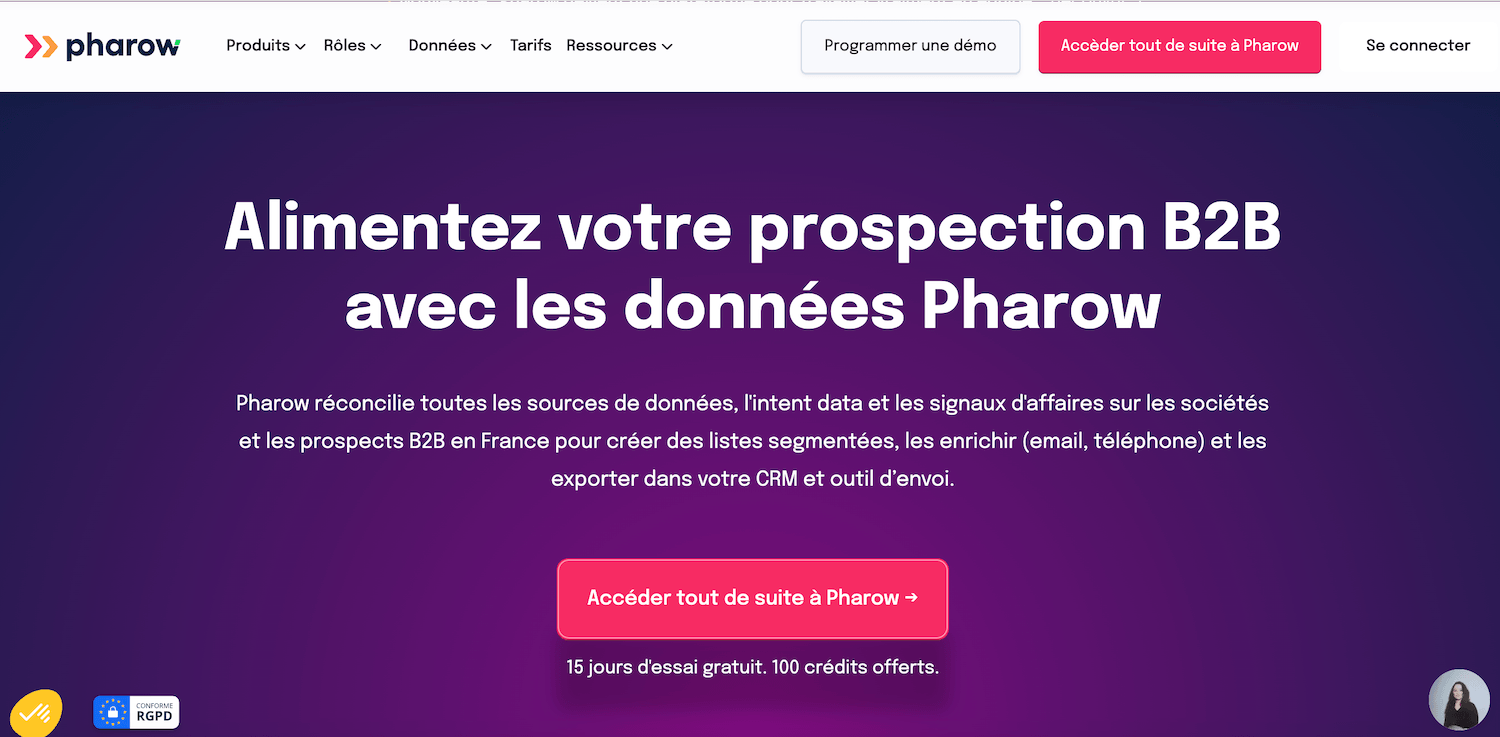
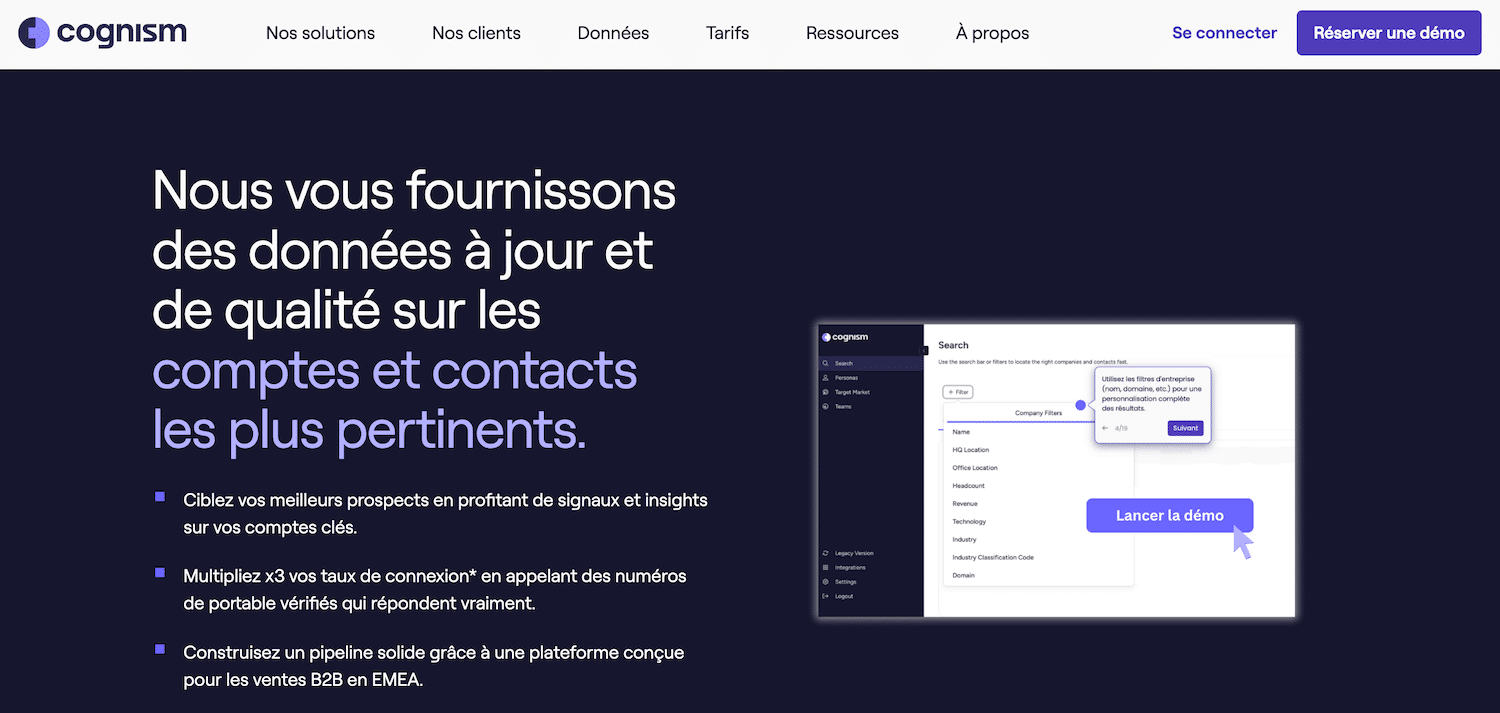
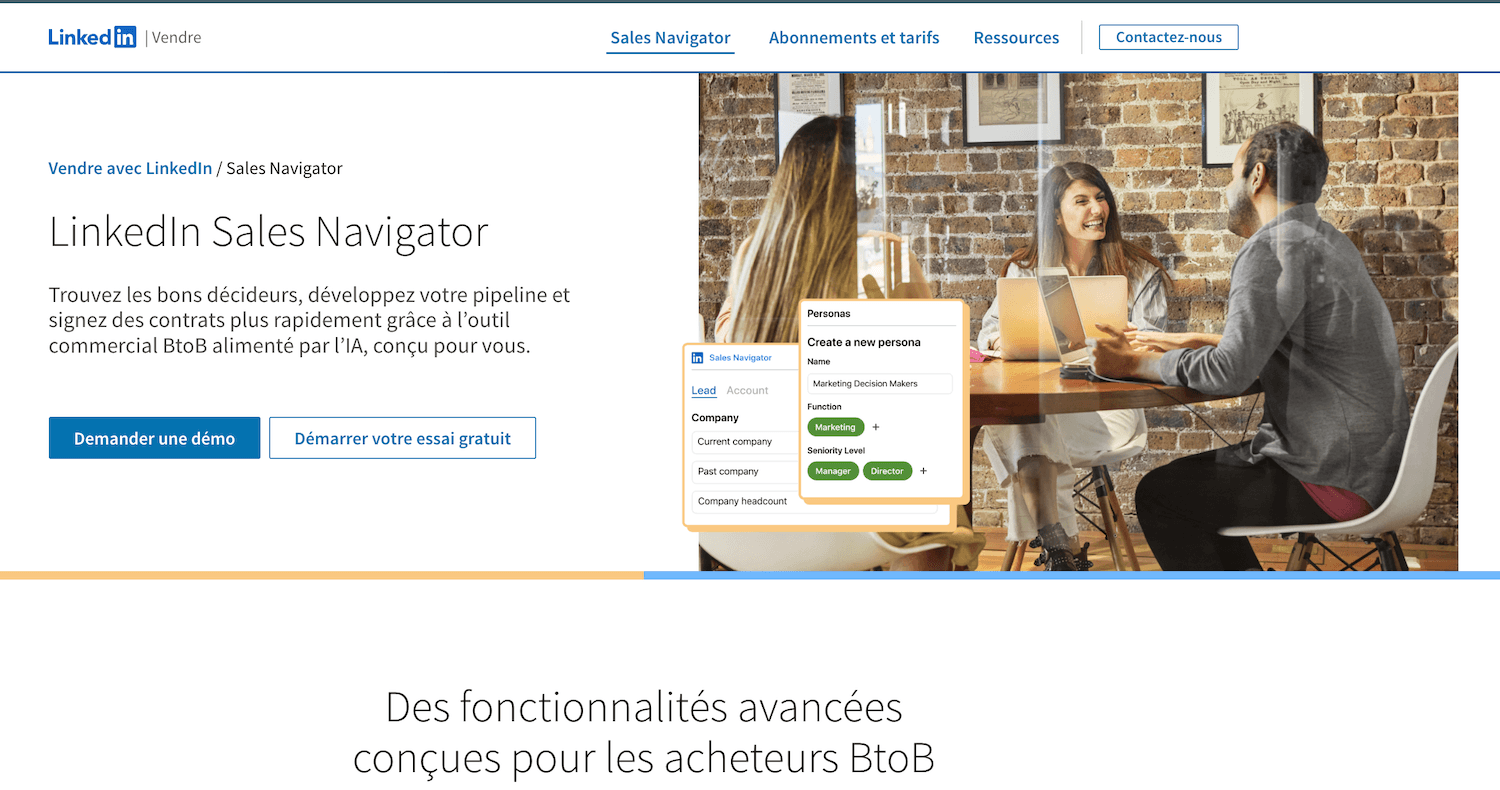
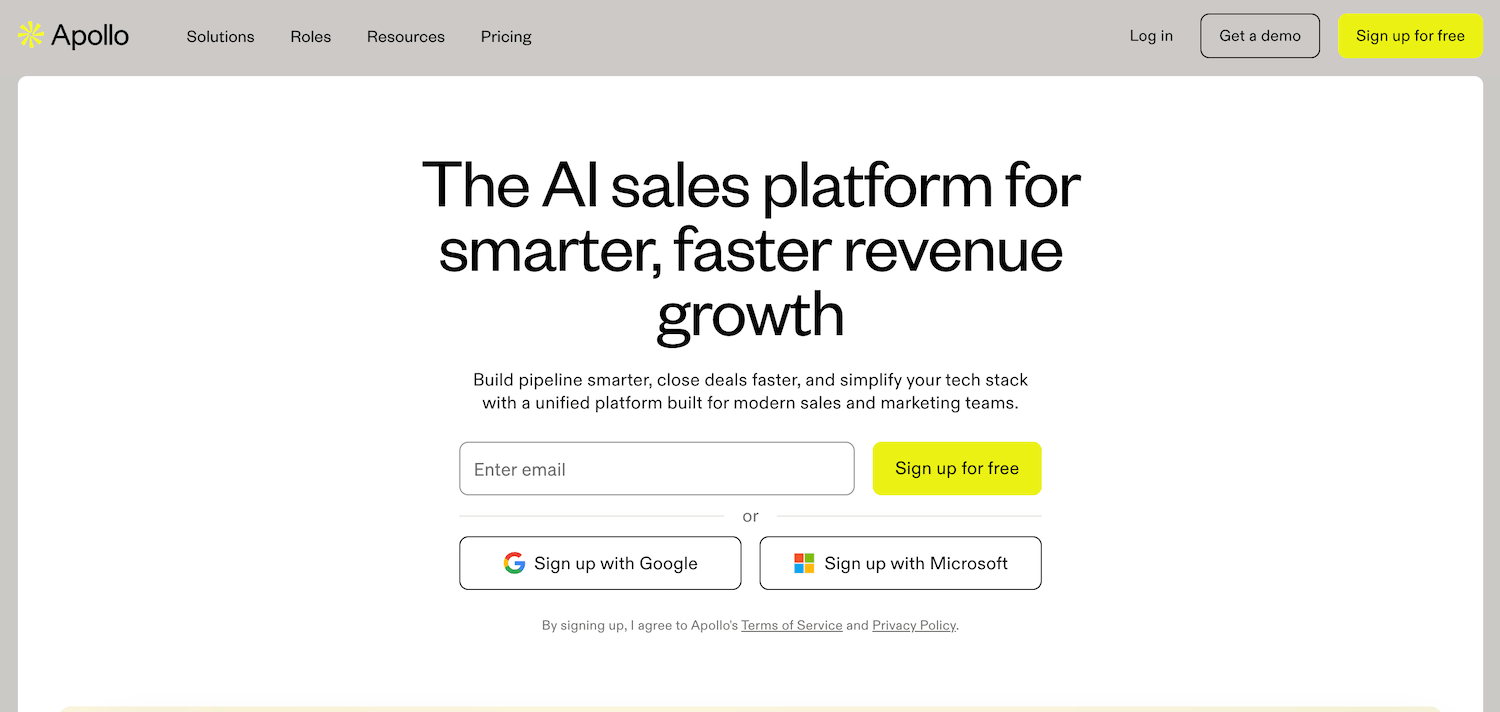
We compared four tools that come up systematically in these discussions: Pharow, Cognism, LinkedIn Sales Navigator and Apollo. Each has real strengths. But at Salesdorado, we’re not going to pretend to be neutral: for prospecting in France, Pharow is the tool that convinced us most. We explain why, feature by feature, with comparison tables and a clear verdict per profile.
These four tools don’t play on the same field: Pharow specializes in France, Cognism targets premium Europe, Sales Navigator exploits the LinkedIn network and Apollo attempts the international all-in-one at an accessible price.
Company data coverage: who really knows the French market?
This is the criterion that most clearly separates tools designed for France from international tools, and it’s where Pharow pulls ahead.
The issue isn’t the total number of contacts in the database, it’s the depth and reliability of the data on the French companies you target. A tool that shows 275 million profiles worldwide but can’t find half the SMEs in your market is of no use to you.
| Company data | Pharow | Cognism | Sales Navigator | Apollo |
|---|---|---|---|---|
| French companies | 4 million (all active companies) | Estimated between 600,000 and 1 million | All LinkedIn company pages active in France | Partial coverage (30 million companies worldwide, no figure for France) |
| Data sources | INSEE/INPI legal data + LinkedIn + web + business signals | Proprietary sources + LinkedIn + data partnerships + human verification | LinkedIn profiles (self-reported, updated by users) | LinkedIn + crowdsourcing + web scraping + public sources |
| SIREN | Yes | No | No | No |
| NAF/APE code | Yes (732 codes, official INSEE classification) | No (English-speaking SIC/NAICS classifications) | No (LinkedIn industry categories, very broad) | No (English-speaking SIC classifications) |
| Financial data | Real revenue, net income, margin (accounts filed with the commercial court registries) | Revenue bands estimated by algorithm | Self-reported revenue bands (LinkedIn profile) | Revenue bands estimated by algorithm |
| Number of establishments | Yes (INSEE data, head office/establishment distinction) | No | No | No |
| Technologies used | Yes (detected by scraping the website) | Yes (database of more than 20,000 technologies) | No | Yes (technographic detection through web scraping) |
| Data freshness | 84% of profiles refreshed in under 4 months, prioritized by likelihood of job change | Refreshed every 30 days for Director+ profiles | Real time (users update their own profiles) | Frequency not disclosed, community data + periodic scraping |
The point that changes everything when prospecting in France is the SIREN. It’s the unique legal identifier of each company, assigned by INSEE. Without it, the same company can appear three times in your CRM under different names. With the SIREN, deduplication is automatic.
The other major difference is the precision of the industry filters. On LinkedIn or Apollo, “Software” lumps together SaaS vendors, IT services firms, web agencies and freelancers. With Pharow’s NAF code, you can target a software publisher precisely (6201Z) and exclude an IT consulting firm (6202A). If you sell to less digitized sectors (construction, manufacturing, food processing), this precision becomes indispensable.
Salesdorado’s takePharow is the only tool in this comparison to provide the SIREN natively. If your CRM is full of duplicates, it’s probably because your prospecting tool doesn’t handle this identifier. This feature alone justifies testing Pharow on your customer file.
Contact enrichment: emails and phone numbers, who really delivers?
This is the crux of the matter. You can have the best company database in the world: if you don’t have the contact details of the right people, you’re not prospecting.
And this is where the differences speak loudest. Sales Navigator, however powerful for targeting, provides absolutely no contact details. Zero emails, zero phone numbers. For real outbound prospecting, you have to add a third-party tool, which obviously changes the pricing equation radically.
| Contact enrichment | Pharow | Cognism | Sales Navigator | Apollo |
|---|---|---|---|---|
| Work email included | Yes, without using credits (Dropcontact + FullEnrich + Zerobounce verification) | Yes, included in the license (200M+ emails verified in-house) | No. No emails provided, third-party tool required. | Yes, but uses 1 credit per email revealed |
| Email coverage in France | 78.7% (measured in real conditions over four months) | No figure published for France. | N/A | No figure published for France. Mixed field feedback on French SMEs. |
| Mobile phone | Included in the subscription via FullEnrich (10 credits per mobile, deducted only if a number is found). You can connect your own FullEnrich, Kaspr or BetterContact API key. | Diamond Data®: mobiles verified by phone by a human team. Connection rate 3x higher. | No. Third-party tool required (Kaspr, Lusha, etc.) | Yes, but 8 credits per mobile. At most 312 mobiles per month on the Basic plan (2,500 credits). |
| Phone coverage in France | 76% (measured in real conditions over four months) | Very strong in UK/DACH for Director+. Less deep in France. | N/A | Not disclosed. Lower than US/UK markets according to user feedback. |
| Email verification | Zerobounce included (verification before export) | Multi-step internal verification (Cortex engine) | N/A | Internal verification at the time of reveal |
| GDPR compliance | 100% GDPR via Dropcontact (algorithm, no stored database) | Best-in-class: checks against 16 do-not-call (DNC) lists, including France’s, SOC 2, ISO 27001/27701 | Data self-reported by the users themselves | GDPR documentation available. Partly crowdsourced sourcing, fewer guarantees. |
Pharow’s big advantage here is that email enrichment is included in every subscription. You add a prospect to a list, and their work email is searched for and verified automatically. No extra credit, no third-party tool to plug in. For mobile phones, enrichment is available directly from the platform (10 credits spent only if a number is found).
Cognism plays in another register: Diamond Data® is formidable for cold calling. A human team calls each number to verify it’s correct. The connection rate is 3x higher than standard databases. But that quality comes at a high price, and coverage of France is less deep than of the UK or DACH.
Apollo offers enrichment that works, but the credit system can sting: a mobile number costs 8 credits. On the Basic plan (2,500 credits per month), that limits you to 312 mobiles per month if you do nothing else.
Salesdorado’s takeAlways think about the total cost of your stack. Sales Navigator at €120.99/month seems affordable. Add Kaspr for emails (€59/month) and Evaboot for export ($29/month), and you’re over €200 per month with company data less precise than Pharow, which includes everything natively at €139/month. The math is quickly done.
Targeting filters and business signals: which allows the finest targeting?
200 highly qualified prospects are worth infinitely more than 10,000 vaguely targeted contacts. And the ability to filter finely is what makes the difference between the two.
| Targeting and signals | Pharow | Cognism | Sales Navigator | Apollo |
|---|---|---|---|---|
| Industry filters | NAF code (732 official codes) + business themes | SIC/NAICS classifications (less fine-grained in France) | LinkedIn categories (self-reported industries, very broad) | SIC classifications + internal tags |
| Size / revenue filters | Real headcount (INSEE) + real revenue + net income + margin | Estimated headcount + revenue bands | LinkedIn headcount + self-reported revenue bands | Estimated headcount + revenue bands |
| Job function filters | Department + seniority level + smart suggestions | Department + seniority + job title | Function + seniority + powerful Boolean search | Free-text title + seniority + advanced mode |
| Boolean search | Yes (Boolean operators in free search, on top of smart suggestions) | Yes | Yes (historic strength) | Yes |
| Current hiring | Yes (updated every 2 weeks) | Yes (hiring trends) | Yes (“hiring on LinkedIn” filter) | Yes (job postings filter) |
| Funding rounds | Yes (updated every 2 weeks) | Yes (funding alerts) | No | Yes (funding stage + amount filter) |
| Job changes | Yes | Yes | Yes, this is THE strength. The news often appears there first. | Yes |
| Intent data | No | Yes, Bombora intent data (Pro plan). Identifies companies in a buying phase. | Buyer Intent Signals (Advanced+ plan) | Yes (intent topics and filters from the Basic plan) |
| Website visitors | Yes (10 companies per week on Essentiel, 20 on Avancé) | No | No | Yes (100 companies per month from the Basic plan) |
| Technologies used | Yes (updated every 3 months) | Yes (more than 20,000 technologies) | No | Yes |
Where Cognism stands out is Bombora intent data. Being able to identify companies actively looking for solutions like yours is quite useful for teams doing ABM. Pharow doesn’t offer this feature, but makes up for it by detecting companies that visit your website and through the depth of its French filters.
Sales Navigator remains the leader for real-time LinkedIn signals. When a prospect changes jobs, that’s often where the news appears first. Makes sense…
Salesdorado’s takeIf your ICP is defined by industry, being able to filter by NAF code is a game changer. Example: you sell to manufacturers. On LinkedIn, “Manufacturing” mixes everything, from the craft boilermaker to the aerospace group. The NAF code lets you target “manufacture of metal structures” (2511Z) and exclude “aerospace manufacturing” (3030Z). It’s night and day.
Integrations and workflow: which tool fits best into your stack?
A prospecting tool that doesn’t talk to your CRM and your sending tool is a tool that generates manual work. The key question: how many clicks between the moment you identify a prospect and the moment they land in your sequence?
| Integrations and workflow | Pharow | Cognism | Sales Navigator | Apollo |
|---|---|---|---|---|
| HubSpot | Bidirectional sync + deduplication + lifecycle filters | Native integration, direct export | Advanced Plus only (on request) | Native integration from the Basic plan |
| Salesforce | Announced as coming soon (not yet available) | Native integration + compatible Chrome extension | Advanced Plus only (on request) | Native integration from the Basic plan |
| Pipedrive | Bidirectional sync + deduplication | Native integration | No | Not listed among Apollo’s integrations (Zapier possible) |
| CSV export | Yes, customizable fields | Yes, export and list enrichment by CSV | No. Third-party tool required (Evaboot, etc.) | Yes, but uses credits |
| Lemlist / La Growth Machine | Native 1-click export to both, no CSV | Via CSV or via Outreach/SalesLoft | Via CSV + third-party tool (Evaboot, then import) | Via CSV or Zapier |
| Chrome extension | No | Yes (browser extension, on LinkedIn and many sites) | Yes (native to LinkedIn) | Yes (LinkedIn + websites) |
| Built-in email sequencer | No (designed for Lemlist or LGM) | No (designed for Outreach or SalesLoft) | InMails only (50/month) | Yes, built-in multichannel sequences |
| Built-in dialer | No | No | No | Yes (US dialer from the Basic plan, international with the Advanced Dialer add-on) |
| CRM deduplication | CRM sync: deduplication, enrichment, updates and export with field mapping | CRM filter via Salesforce import | CRM Sync only on Advanced Plus | Detection via native CRM integration |
This is where the all-in-one vs best-of-breed question comes up. Apollo offers database + sequencer + dialer in one subscription. It’s practical when you’re starting out, but each component performs less well than a specialist tool.
If you use Lemlist or La Growth Machine, Pharow is a good choice: the native 1-click export eliminates all CSV handling. If your stack centers on Outreach or SalesLoft, Cognism will integrate better.
And as for Sales Navigator: no native export. You need a Chrome scraper on top of the enrichment tool. That makes three tools where Pharow + Lemlist are enough.
Pricing: how much does it really cost?
Let’s talk prices:
- Pharow publishes its prices: €105 excl. VAT/month billed annually, €139 excl. VAT/month with no commitment (Essentiel plan, 1,000 credits per month). Email enrichment included, credits roll over, cancel at any time. It’s simple, transparent and predictable.
- Cognism doesn’t publish its prices: its two plans, Standard and Pro, are on request, with 5 licenses included. Intent data and on-demand mobile verification are reserved for the Pro plan. It’s a serious investment that’s justified if you prospect intensively in the UK/Germany/Austria/Benelux.
- Sales Navigator costs €120.99 per month (Core), but that’s only part of the bill: add an enrichment tool and an export tool and the real cost climbs to €200-300/month per user.
- Apollo is the most accessible, with a free plan to test it, then $49 per seat per month on Basic (billed annually, $65 monthly). The trap is the mobile credits at 8 credits per number, which run out fast, and unused credits that expire every month.
| Scenario | Pharow | Cognism | Sales Nav + enrichment tool | Apollo |
|---|---|---|---|---|
| Solo SDR, 500 prospects/month, France | €105-139 excl. VAT/month all-inclusive (Essentiel, 1,000 credits) | On request (5 licenses included) | €180-230/month (Core + Kaspr + Evaboot) | $49-65/month (Basic) |
| Team of 3, 2,000 prospects/month, France | €200-260 excl. VAT/month (Essentiel 2,000 credits + 2 users) | On request (5 licenses included) | €500-700/month (3 full stacks) | $150-240/month |
| 5 sales reps, 5,000 prospects/month, France + Europe | €540-670 excl. VAT/month (Avancé 4,000 credits, pack of 1,000 credits and 4 users; France only, second tool needed for international) | On request (Pro plan for intent data) | €900-1,300/month (5 full stacks) | $400-600/month |
Our verdict: which tool to choose for your situation?
Each tool has its playing field. Here are our recommendations by profile.
You only prospect in France: Pharow
This is the case for most French SMEs and mid-sized companies. Legal data, business signals, enrichment included: it’s all there for €105-139 excl. VAT/month. No need to stack 3 tools.
You also prospect in Europe: Cognism or Pharow + Apollo
If international cold calling is a critical channel and the budget is there, Cognism is the best choice. Diamond Data® makes the difference in the UK and Germany. Otherwise, a Pharow (France) + Apollo (international) stack offers a fairly good compromise.
You’re starting on a small budget: Apollo
Apollo is the most accessible entry point. Free plan, then $49 per seat per month. Perfect for validating an outbound channel. But as soon as your requirements grow on the French market, migrate to Pharow.
Your approach centers on LinkedIn: Sales Navigator
For pure social selling, Sales Navigator remains the tool of choice. Complement it with Kaspr for contact details and Waalaxy or La Growth Machine for automation.
You want a single tool: Apollo, or better: Pharow + Lemlist
Apollo does everything in one subscription. It’s practical. But on the French market, Pharow + Lemlist will deliver better results: more reliable data, more complete enrichment, better-performing sequences.
Our final verdictFor prospecting in France, Pharow offers the best balance of data quality, enrichment and price. The 15-day free trial (100 free credits) lets you test it on your own targeting criteria. That’s the best way to form an opinion.