



- In B2B, one detailed, credible review outweighs an avalanche of ratings: target customers who got concrete results.
- Ask for the review after a positive milestone (go-live, goal reached), triggered from the CRM if possible.
- The NF ISO 20488 standard governs the collection, moderation and display of reviews, and European directives require you to state whether reviews are verified or were given in exchange for something.
- Connected to the CRM, reviews feed scoring and flag churn risks and advocate customers.
- Track the quality, freshness and distribution of reviews by segment, and respond to negative reviews.
For a long time, customer reviews were a B2C topic. To say things have changed since then is an understatement!
In B2B, the mechanics have changed: prospects are looking for proof. And in a landscape where offers look alike and keep multiplying, customer reviews have become one of the main reference points for your potential customers.
The success of platforms like Capterra, G2 or Trustpilot, which we look at very closely when we write reviews of B2B software, shows how much customer reviews matter. And therefore how much « review management » matters, meaning the art and craft of collecting, managing and using customer reviews.
In this article, we show you how to move from simply handling reviews to a real review management strategy, and which tools to choose to turn your customer feedback into a driver of brand awareness and revenue.
To start with, what is review management?
Review management is the set of practices and tools used to collect, moderate, analyze and publish customer reviews.
Review management covers several stages:
- Collection, which covers every method for requesting feedback right away or later on, via email, in-app, form, third-party review platform or structured interview.
- Moderation, which means overseeing verification, fighting fake reviews and applying clear publication rules.
- Analysis, which gives depth to verbatims through segmentation, scoring and extraction of recurring themes that are useful to teams.
- Publication, which means putting social proof to work where it really influences the buying journey. Think product pages, specialized comparison sites, sales presentations or nurturing campaigns.
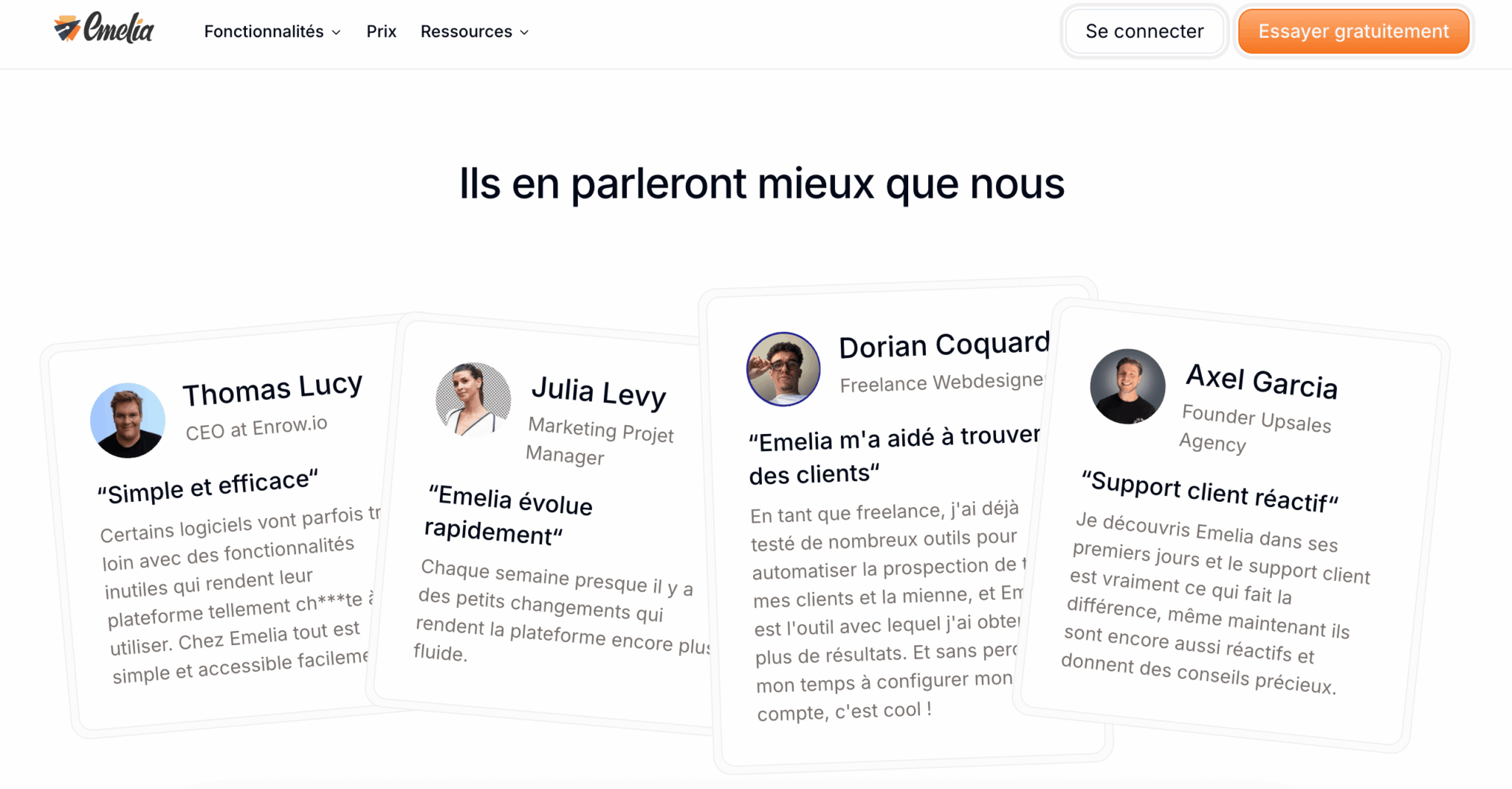
In B2C, review volume and visibility often come first, because the decision is quick and highly sensitive to social signals. In B2B, the focus shifts to quality, precise use cases and the author’s credibility.
| Criterion | B2C approach | B2B approach |
|---|---|---|
| Goal | Fast visibility and large-scale conversion | Validating the choice, reducing risk and proving ROI |
| Review format | Rating and short comment | Detailed testimonial, customer case, impact metrics |
| Weight of one review | Low individual impact, volume effect | High individual impact, professional credibility |
| Role in the cycle | Discovery and immediate reassurance | Qualification, due diligence, faster negotiations |
Why review management has become strategic in B2B
B2B buyers increasingly research like consumers, but their decisions commit budgets, teams and timelines.
In this context, a detailed customer review acts as proof of value: it reduces uncertainty and speeds up the decision. It also prepares the ground ahead of the first sales meeting and raises the quality of the leads that reach sales.
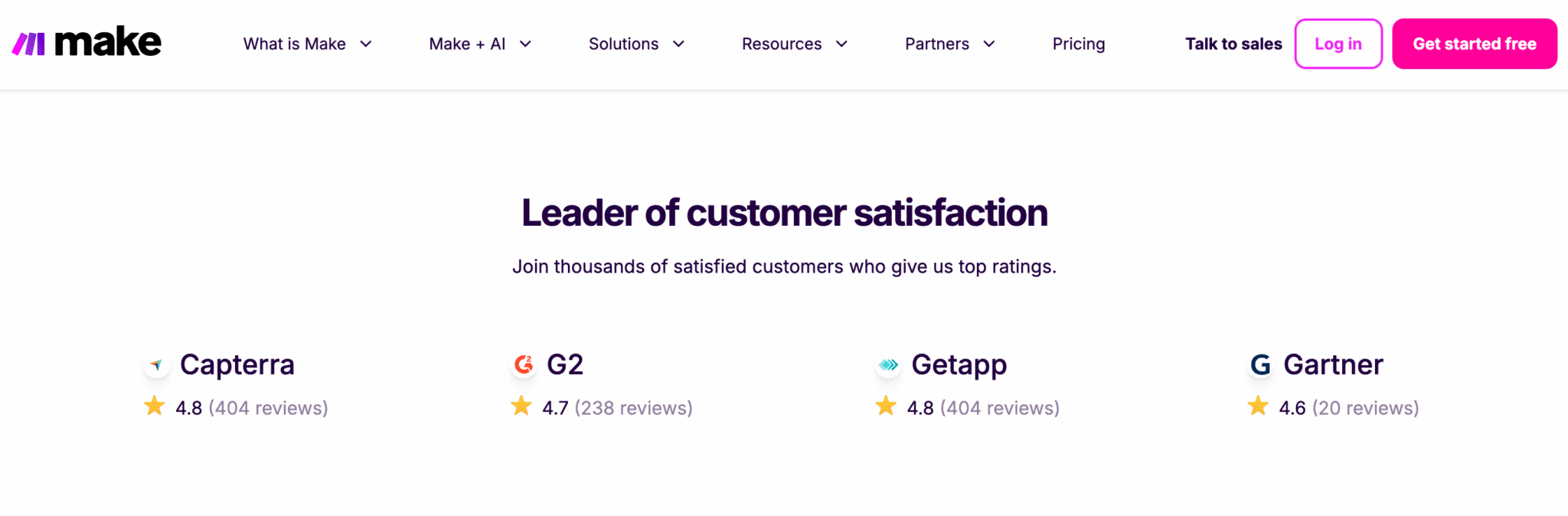
Well-used reviews act as a qualification filter. A prospect who has read a customer case close to their own situation already understands the value proposition, the implementation constraints and the expected results. Downstream, this means fewer basic objections, more technical conversations and a shorter sales cycle.
Integrated into the CRM and automation tools, review management becomes a RevOps building block. Signals from reviews feed scoring, help detect churn risk and identify advocate customers for upsells or industry references. It is actionable data that serves marketing, sales and customer success alike.
Economically, social proof lowers acquisition costs and improves conversion rates at every stage. It strengthens credibility in tenders, secures your place on the shortlist and saves time in negotiation. At scale, this translates into better sales velocity and a more predictable sales pipeline.
Review management should also be seen as a reusable editorial asset. Testimonials, quotes, case studies and aggregated ratings can feed your product pages, nurturing sequences, sales proposals and pre-sales materials.
Authenticity and compliance: the rules of the game in France
If you collect or publish customer reviews, transparency is not optional. In a context where trust is becoming a deciding factor in B2B, guaranteeing the authenticity of your reviews is key to making your sales pitch credible and reassuring your prospects.
In France, the regulatory framework now strictly governs how you can request, moderate and publish your customers’ feedback.
The AFNOR NF ISO 20488 standard, published in 2018, sets the rules of the game. It defines three main stages: collecting, moderating and displaying reviews.
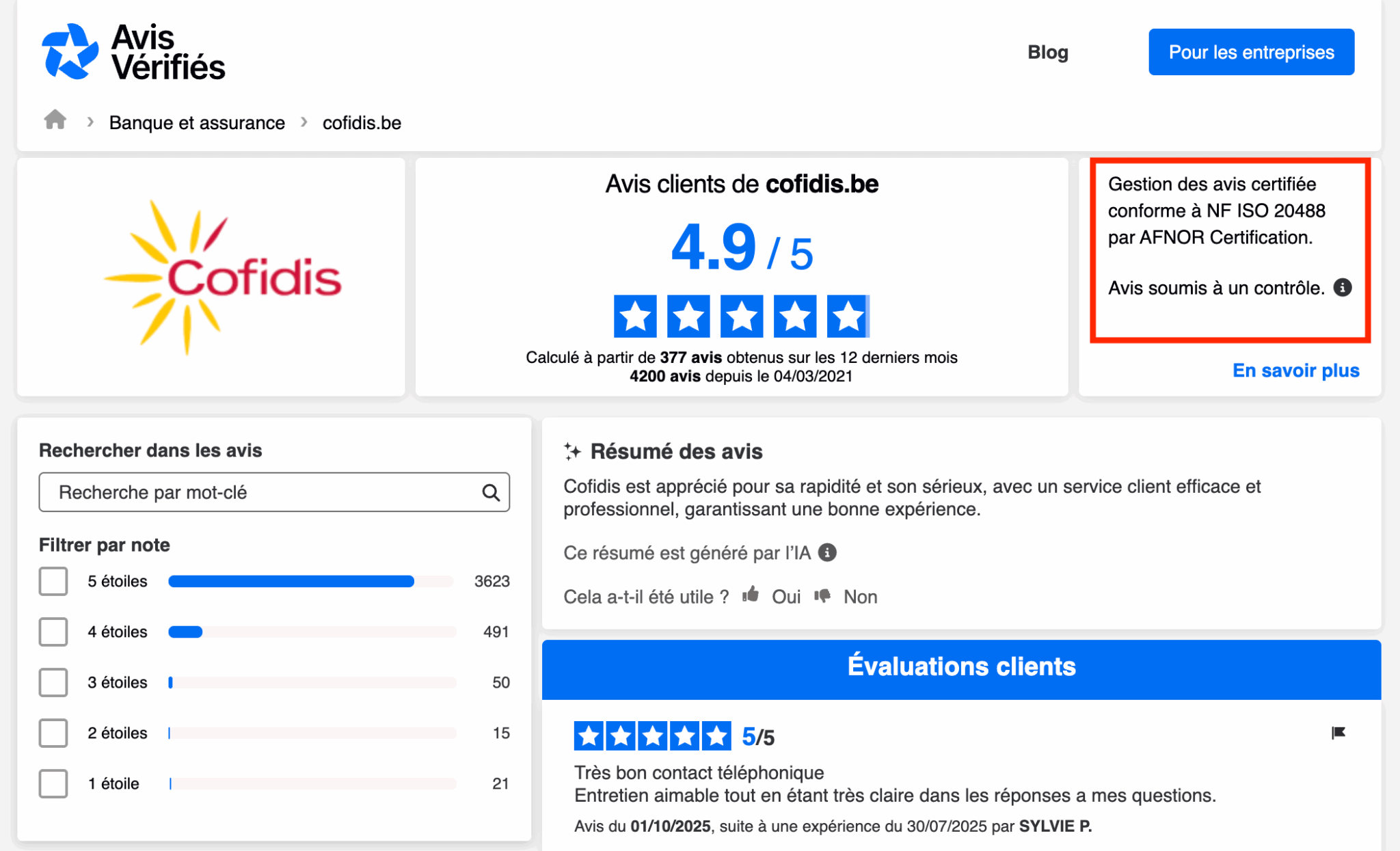
Its aim is to prove that each review comes from a real customer, that its content has not been tampered with and that the displayed rating reflects a genuine experience.
Here are the main rules that follow from this standard:
- Collection: you must make sure the review’s author actually had a purchase or usage experience. This rule did a lot to drive the rise of « post-purchase » reviews, which are now the benchmark.
- Moderation: only contributions that are clearly inappropriate, defamatory or off-topic can be removed. Moderation criteria must be clear and documented.
- Display: the rules for calculating ratings, the chronology and the publication conditions must be transparent to all users.
European directives point the same way and require explicit information for consumers. You must state whether reviews have been verified, whether they come from a trusted third party or whether they were given in exchange for something (discount, gift, loyalty program).
These obligations also apply to B2B, and failing to comply can lead to penalties, but above all to a lasting loss of credibility.
Go further
- Read our article on How to get good customer reviews (and why)?
- 20 examples of satisfaction survey emails analyzed in detail to maximize your review collection rates
Setting up an effective B2B review management strategy
1. Choose the right customers and the right moment
The secret of good review management is relevance. You don’t need an avalanche of reviews, but targeted testimonials from customers who can illustrate your solution’s value in specific contexts.
Identify your most satisfied customers, those who got concrete results, or the « power users » who make full use of your product. Their feedback will be rich, credible and meaningful for your future prospects.
The timing of the request matters just as much. Asking for a review at the wrong moment (too early… or too late) often leads to lukewarm or incomplete feedback.
The ideal is to wait for a positive milestone: a successful go-live, a goal reached, a strategic step completed… If you use a CRM like HubSpot or Salesforce, you can automate these requests with defined triggers, whether that is the close of a project or a high satisfaction score.
2. Vary your collection formats
In B2B, content quality beats quantity. Rather than multiplying forms, favor formats that make it easy for your customers to speak up.
A short, well-designed questionnaire is often enough to get interesting verbatims, but you can go further by running a 15-minute interview that you then write up as a testimonial for the customer to approve. This « assisted » format yields much richer feedback while making life easier for the people you talk to.
Also consider the collaborative testimonial: you write an article or case study with your customer, which they can then share on their own channels. It’s a win-win approach: your customer showcases their project and you get credible, concrete and authentic content to reuse in your sales materials.
3. Integrate your customer reviews into your CRM ecosystem
Review management really pays off when it is connected to your business tools. By integrating your reviews into the CRM, you create a virtuous loop: data from customer feedback feeds your dashboards, refines your scoring and guides your sales priorities.
You can, for example, identify advocate accounts, spot weak signals of dissatisfaction or track satisfaction by segment.
Note that many review management solutions (such as Reviewflowz, Avis Vérifiés or Guest Suite) offer two-way integrations. This simply means your reviews can automatically trigger actions: a notification to a salesperson, a reactivation campaign or a customer reference request.
4. Showcase your reviews in your customer journeys
A customer review only has an impact if it is visible in the right place. Publishing detailed testimonials on your product pages, in your case studies or in your sales proposals is an excellent way to make your pitch more credible.
Don’t neglect external publication either. Review platforms like G2, Capterra or Trustpilot have become a must in the B2B buying journey. Many decision-makers check them before even contacting a salesperson.
Being present, well rated and active on these platforms boosts your visibility and credibility. You can even sync your reviews with your Google Ads campaigns or landing pages to maximize the impact on conversion.
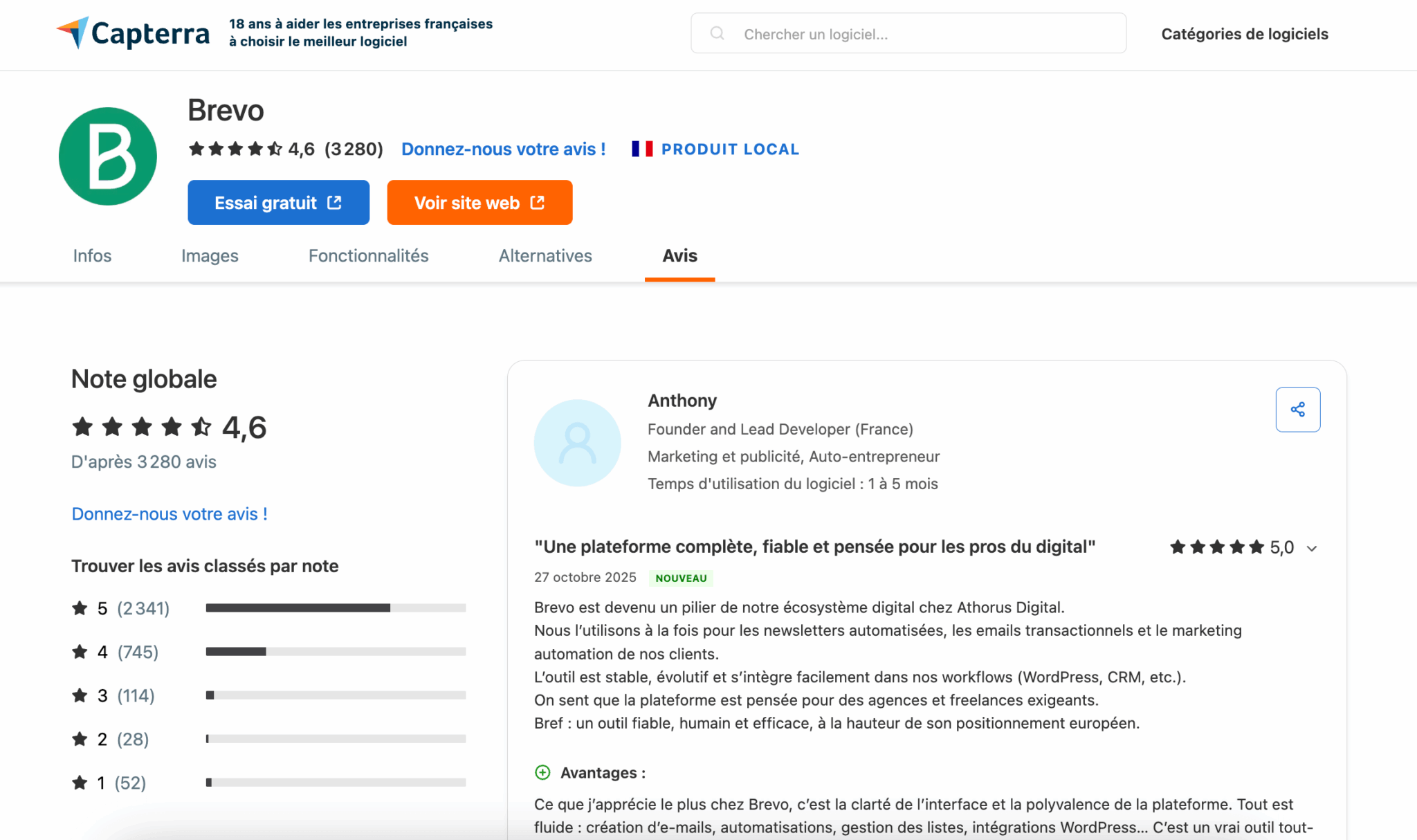
Above all, keep your message consistent. Your marketing promises, case studies and customer feedback must tell the same story. An authentic customer testimonial is worth more than a sales pitch: it proves by example the value you deliver.
5. Measure, adjust and build on it
Like any marketing or sales strategy, review management needs follow-up. The right metrics are not only quantitative.
Yes, the number of reviews counts, but what matters most is their quality, freshness and distribution by segment. You can track the response rate, the share of positive reviews, the update frequency, but also the correlation between customer satisfaction and sales performance (renewal, upsell, conversion).
Also learn to make the most of negative reviews. An unhappy customer can be a valuable source of learning. By responding professionally and with empathy, you prove your responsiveness and your ability to improve. These interactions, often public, strengthen your credibility. And in some cases, they even let you win a customer back.
Finally, use feedback to inform your decisions. If several customers raise the same request or point to a recurring usability issue, that is a strong signal for your product roadmap or your onboarding strategy. Review management then becomes a real customer intelligence tool, serving all your teams.
The best review management tools for B2B
1. Trustpilot: the global benchmark for visibility and credibility
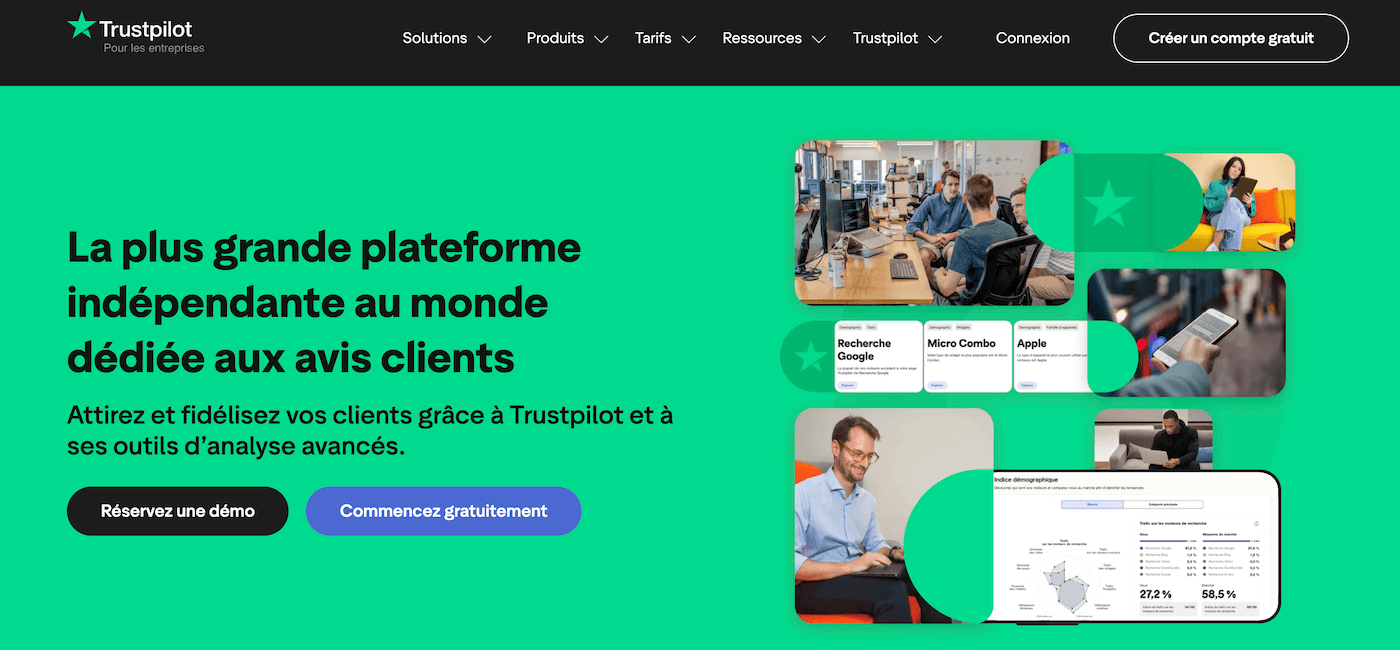
You can’t talk about review management without mentioning Trustpilot. The tool has established itself as an international standard, and its reputation inspires trust in buyers and partners alike. In B2B, it is a formidable platform for strengthening your brand’s credibility and improving your SEO by distributing reviews on Google and search engines.
Trustpilot lets you automate review collection from your CRM (Salesforce, HubSpot) or your emailing tools. You can also create custom widgets to display your best ratings on your website. Its centralized dashboard helps you follow trends and measure satisfaction by product, market or customer type.
Plans start at €169 per month, a price that reflects the strength of the brand and the depth of its integrations. It’s a smart choice if you want to boost your international visibility while keeping a high level of reliability and control.
Who is Trustpilot for?B2B companies that want to maximize their online visibility and display a globally recognized label.
2. Avis Vérifiés by Skeepers: the French champion
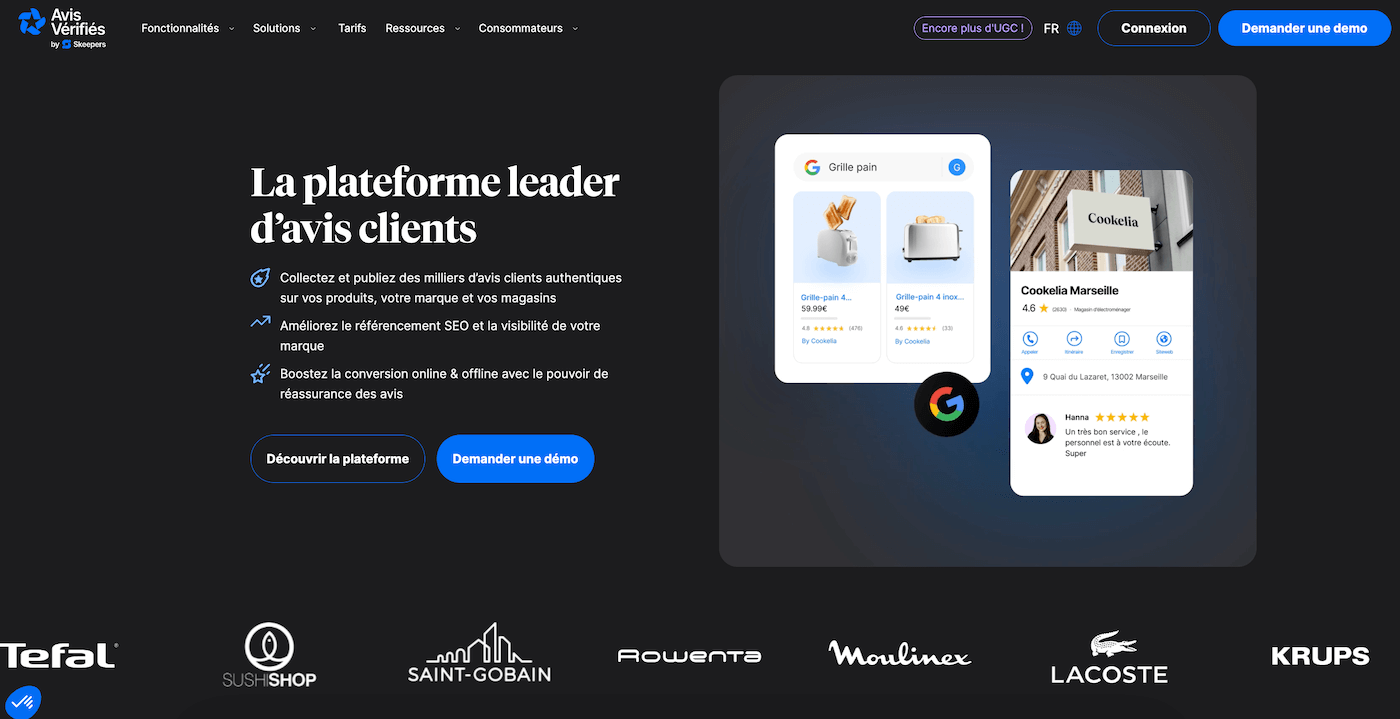
Avis Vérifiés is probably the most recognized solution in France for guaranteeing the authenticity of customer feedback. Certified AFNOR NF Z74-501, it offers full transparency in the collection, moderation and publication of reviews. It is a solution well suited to B2B companies that want to combine marketing performance and regulatory compliance.
The tool lets you customize your post-purchase questionnaires, analyze feedback in real time and automate its publication on Google, your website or your product pages. Avis Vérifiés also uses artificial intelligence to classify verbatims, spot weak signals and detect improvement opportunities.
With plans starting at €35 per month, it offers excellent value for money for French SMEs and mid-sized companies. Several large groups have already adopted it, including Total Energies and Decathlon Pro, to manage their customer satisfaction in a centralized, structured way.
Who is Avis Vérifiés for?Companies that want to increase transparency, reassure their prospects and prove the reliability of their reviews while staying compliant with the French standard.
3. Reviewflowz: the tool built for SaaS and scale-ups
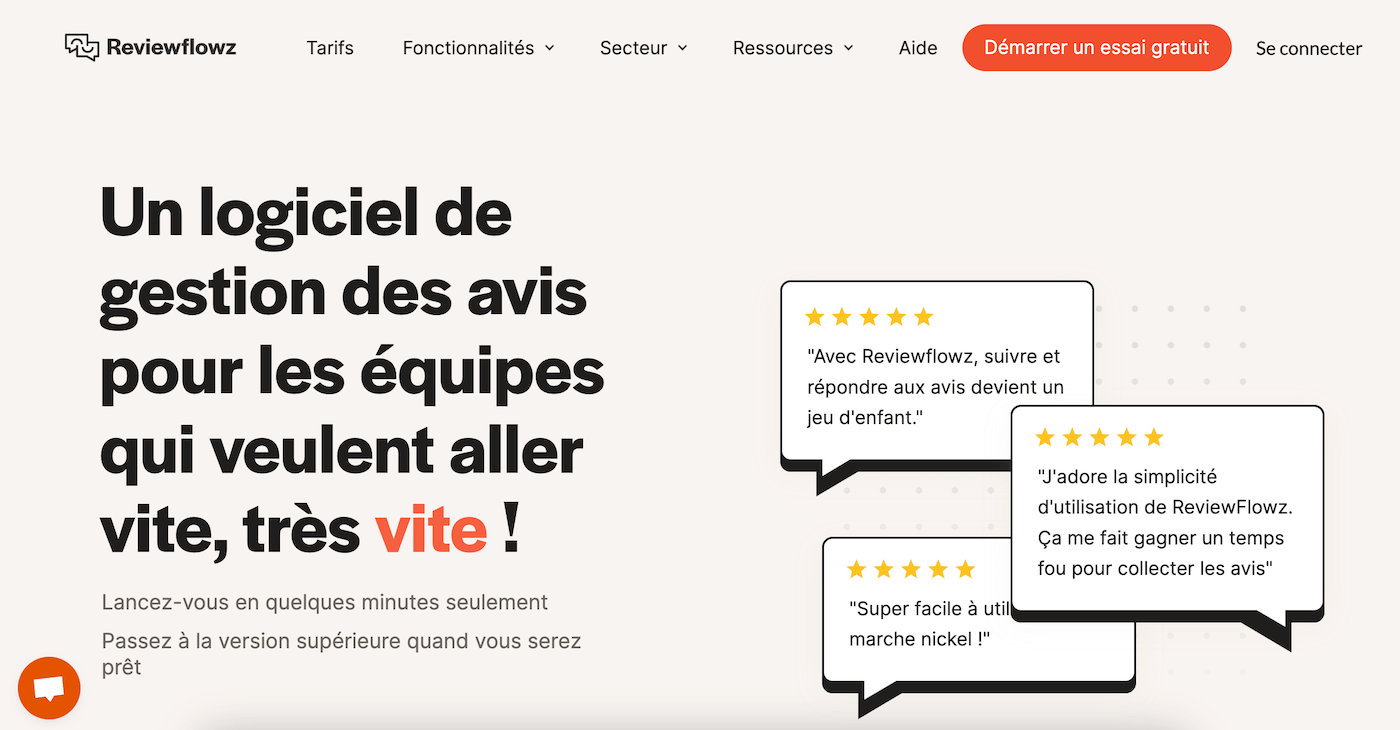
Founded by Axel Lavergne, co-founder of Salesdorado (yes, really!), Reviewflowz is aimed first and foremost at software vendors and SaaS companies. It is a lightweight, modern tool designed to automate review management on platforms like G2, Capterra or TrustRadius. It helps you collect, track and analyze product reviews without weighing down your tech stack.
One of Reviewflowz’s big strengths is its integration with the tools you already use: Slack, Teams, Zapier, Webhooks, HubSpot…
You can get new reviews in real time, respond directly from your internal channels and track how your reputation evolves on the key comparison sites. The tool also provides sentiment analysis and trend reports to better understand how your product is perceived in the market.
Reviewflowz pricing is designed to adapt to the size and maturity of your company. The model is based on the number of review profiles tracked: the Lite plan starts at around $12 per profile per month (about $60 for 5 profiles).
For organizations that need API access or large-scale data use, a custom plan is available on quote.
Who is Reviewflowz for?B2B software vendors, start-ups and scale-ups that want to automate the management of their reviews on G2, Capterra and other SaaS comparison sites.
4. Guest Suite: the ideal solution for multi-site companies
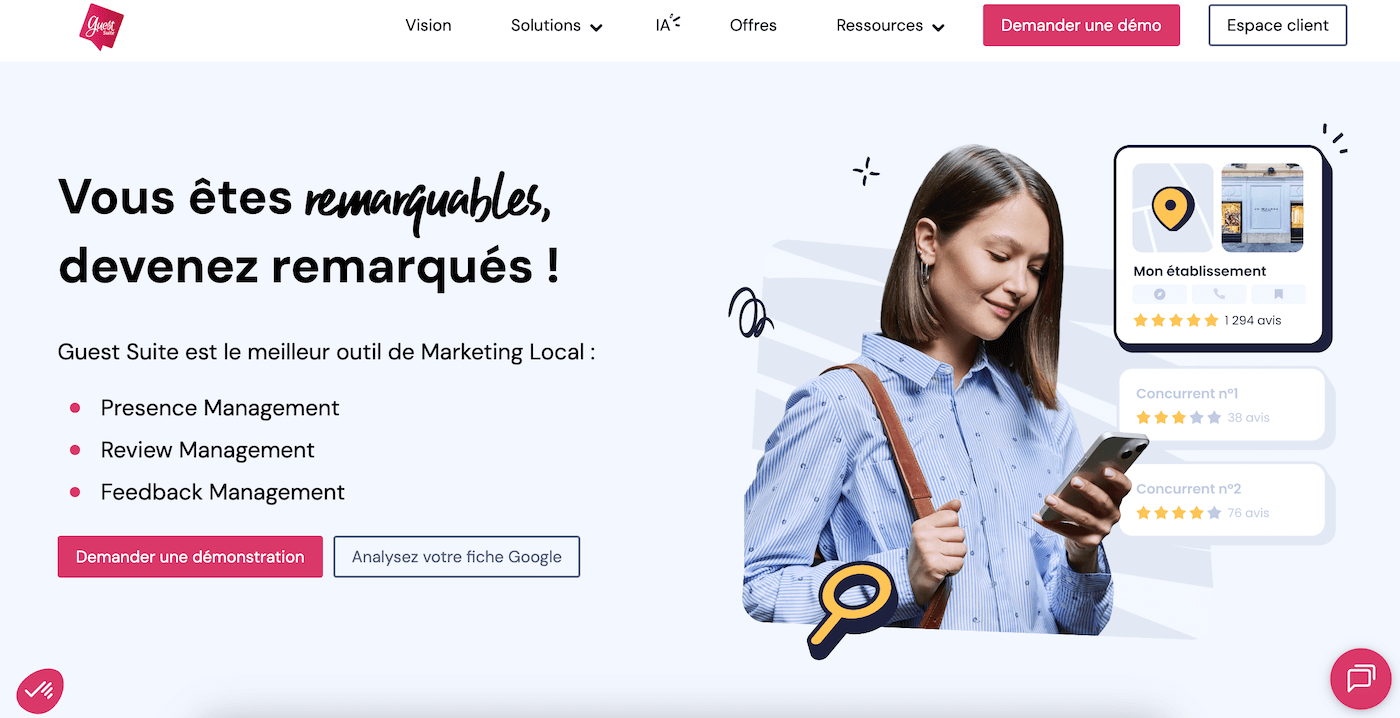
If you manage a network of branches, points of sale or regional offices, Guest Suite is probably the solution you need. The tool was designed to centralize review management across multiple locations while improving your local visibility on Google Business Profile. It is particularly popular with service companies, banks and B2B networks with a strong field presence.
Guest Suite lets you customize your questionnaires, choose the right moment to request a review and automatically publish feedback on your key platforms. You can track results by branch, by region or overall, with a simple, visual dashboard. The team also offers support with setting up the strategy and monitoring satisfaction.
Pricing varies with the size of the network and the number of locations, but remains competitive. It’s a complete solution for managing the reputation of several entities while keeping your brand consistent.
Who is Guest Suite for?Branch networks, franchises or B2B groups that want to professionalize their review management and optimize their local presence on Google.
5. Custplace: the French SaaS solution focused on customer experience
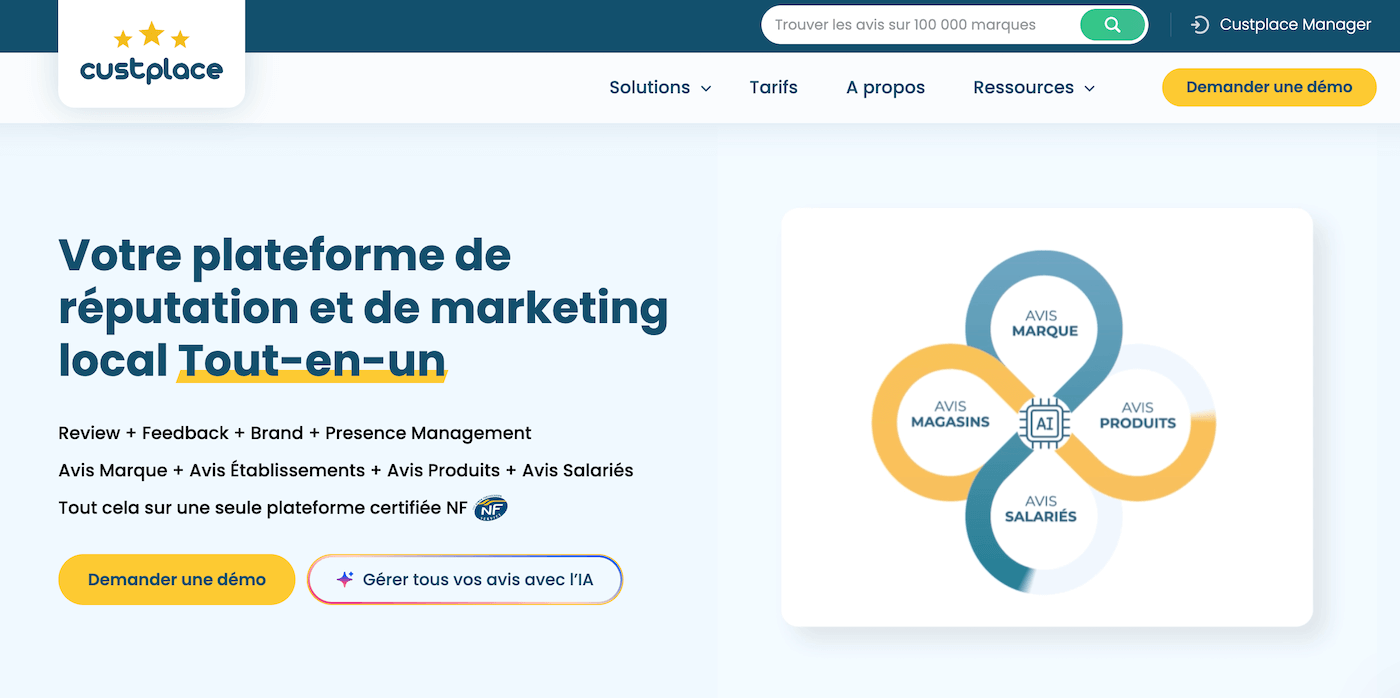
Custplace takes a broader approach to review management, combining reputation management and customer experience improvement. The platform centralizes the reviews you collect across different channels (Google, Facebook, partner sites, internal surveys) and gives you rich, customizable dashboards.
Features include moderation, semantic analysis, segmentation and automated publication. You can filter your feedback by product, channel or customer. Custplace integrates with most CRMs and automation tools on the market, which makes it easier to sync data between your marketing, sales and support teams.
Pricing starts at €100 excl. VAT per month for SMEs. What sets Custplace apart is the quality of its support: the team helps structure your e-reputation strategy and professionalize your responses to reviews, a real asset for organizations looking to mature.
Who is Custplace for?B2B companies that want to centralize the management of their customer feedback while relying on expert support and a 100% French solution.
The questions we get over and over.
What is review management?
It is the set of practices and tools used to collect, moderate, analyze and publish customer reviews.
How does review management differ between B2C and B2B?
In B2C, review volume and visibility come first, because the decision is quick. In B2B, the focus shifts to quality, precise use cases and the author's credibility: a single review has a high impact and serves to validate the choice and reduce risk.
Which standard governs customer reviews in France?
The AFNOR NF ISO 20488 standard, published in 2018. It defines three main stages: collecting, moderating and displaying reviews, and aims to prove that each review comes from a real customer and has not been tampered with.
When should you ask a B2B customer for a review?
After a positive milestone: a successful go-live, a goal reached, a strategic step completed. Too early or too late, the request often leads to lukewarm or incomplete feedback.
Which review management tools should you choose in B2B?
Trustpilot for international visibility, Avis Vérifiés for compliance and authenticity, Reviewflowz for SaaS vendors listed on G2 or Capterra, Guest Suite for multi-site networks and Custplace to centralize feedback with hands-on support.



What the community says.