



- Testimonials are the most used and most effective social proof in B2B: 24% of B2B marketers rank them first in terms of ROI.
- Positive reviews on external review platforms carry more weight than on your own site.
- A case study tells a real story the prospect can identify with, but you have to convince the customer to share it.
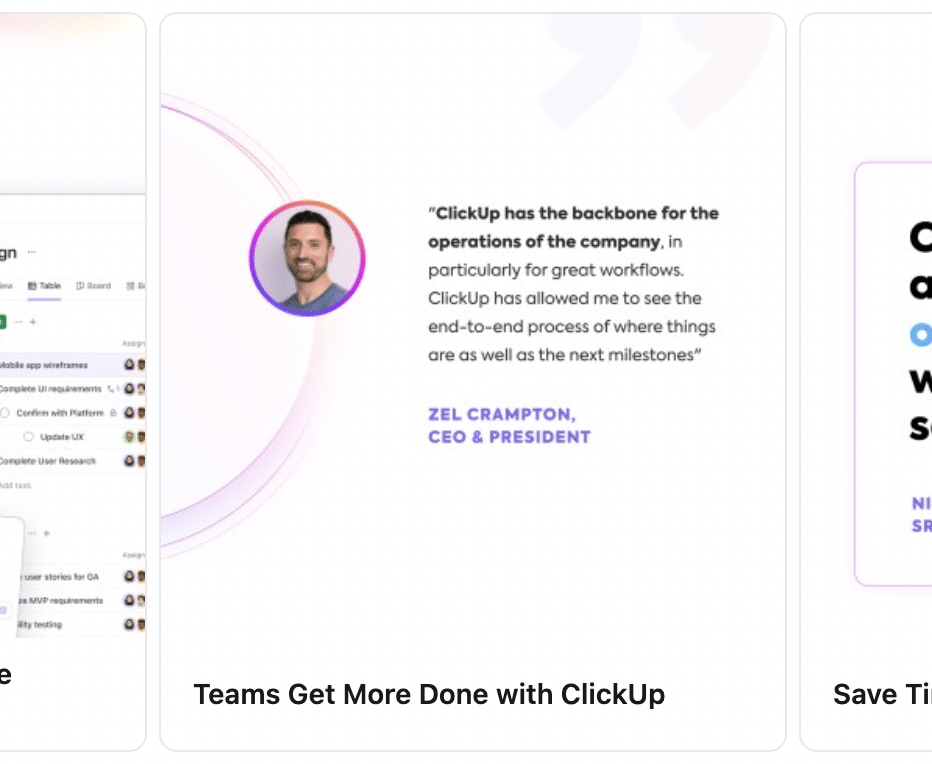
- Always share the job title and name of a testimonial’s author.
- Measure key indicators before and after a campaign to judge the effect of social proof.
Monkey see, monkey do.
Broadly speaking, when we take a risk – like buying something – we like to tell ourselves that people like us took that risk before us, and that it went well.
That is what social proof is.
As a seller, social proof means showing that loads of people are really happy with your product or service. Ideally, loads of people who look a lot like your prospects.
As a buyer, social proof lets you picture yourself in the buying experience, through identification.
For it to work, social proof has to be convincing, specific, and come from people your buyers can identify with.
In this article, I give you 5 examples of social proof that work in a B2B context.
1. Customer testimonials and reviews
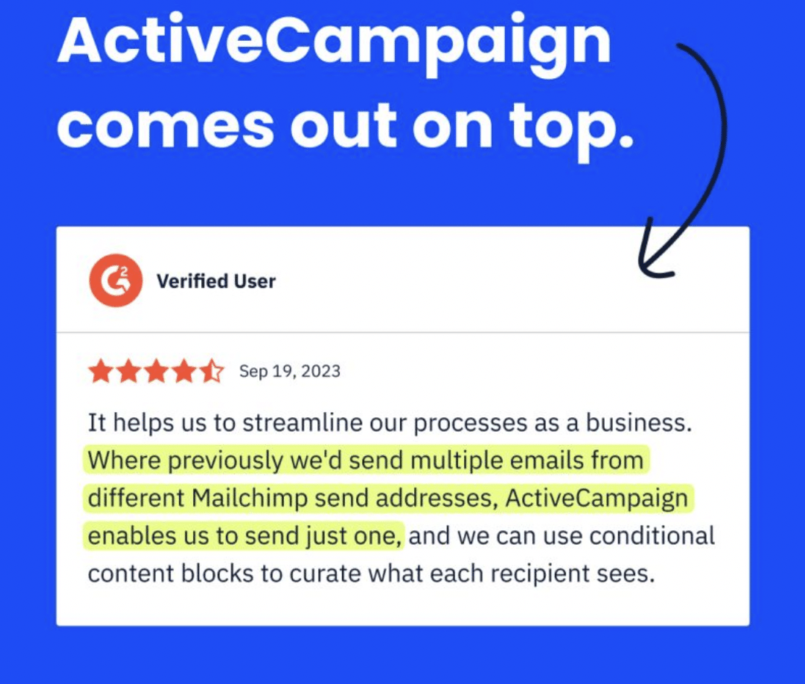
Testimonials are both the most used and the most effective form of social proof for B2B companies: they show that other customers have trusted you and still trust you.
24% of B2B marketers say that displaying customer testimonials on their channels is the most effective strategy for building social proof, based on the return on investment generated.
A testimonial lets a customer share, in their own words, their experience with your company.
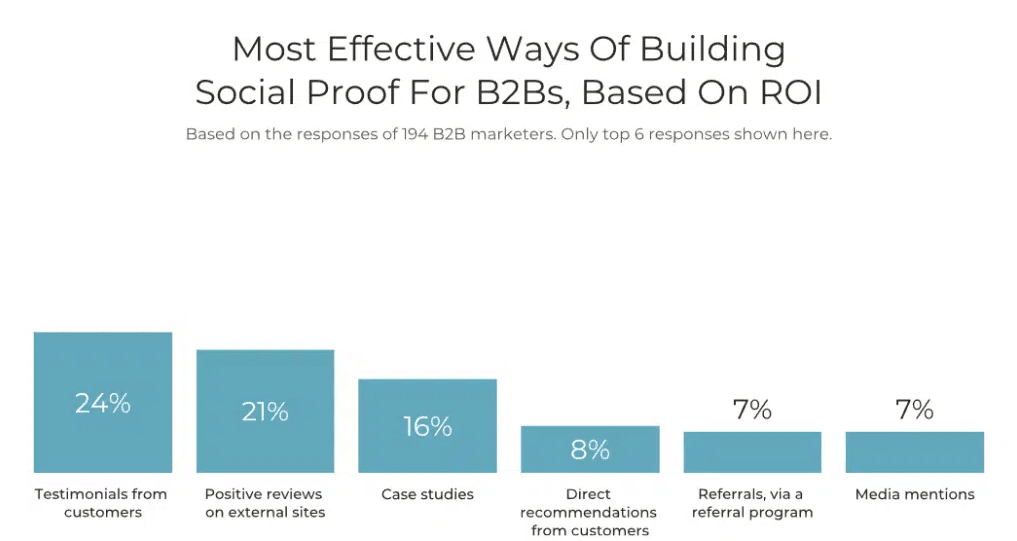
Customer reviews come second: 21% of B2B marketers say positive ratings (on external sites) are the most effective way to build social proof.
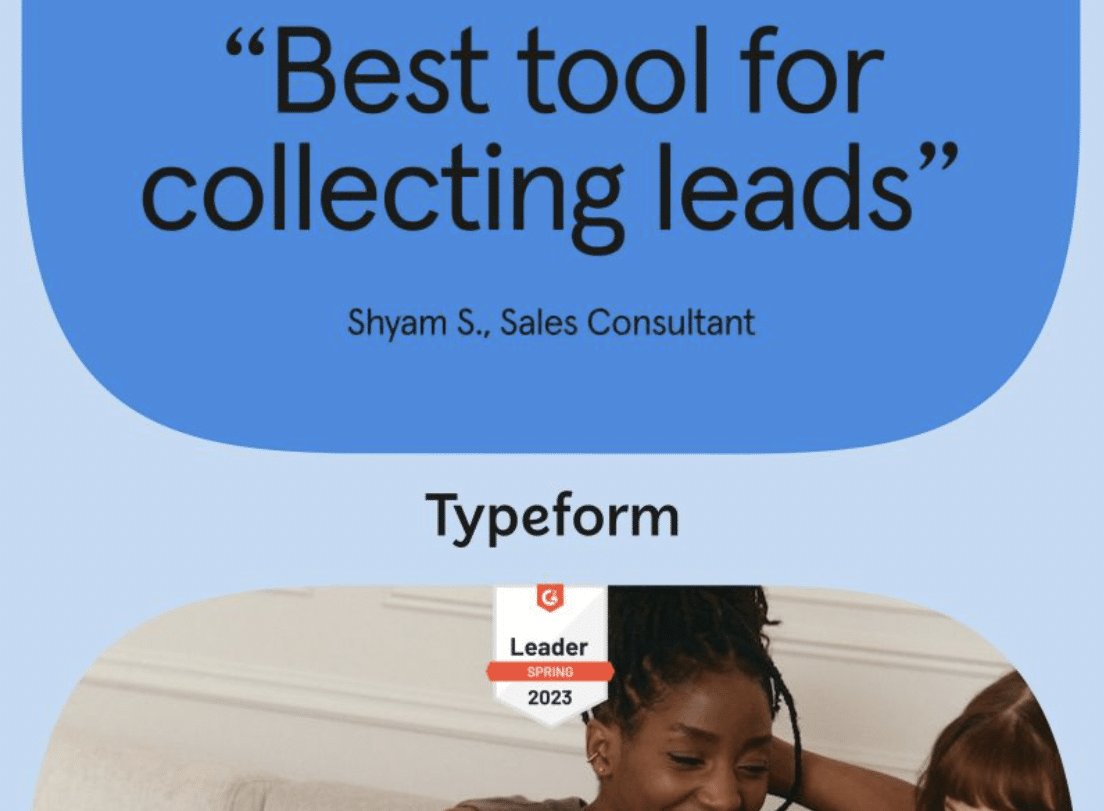
The main goals: more appeal, more traffic and reassurance.
How and where should you showcase them?
- External website: positive reviews on customer review platforms carry more weight than on your own site. And you can then refer to those sites in your sales proposals and other exchanges with your customers.
- Website / landing page: on your site, you can display your customers’ logos, to show the companies that trust you and strengthen your credibility.
- Social media: spread your customers’ testimonials beyond your website. Share them on social media, with images or visuals to make them stand out.
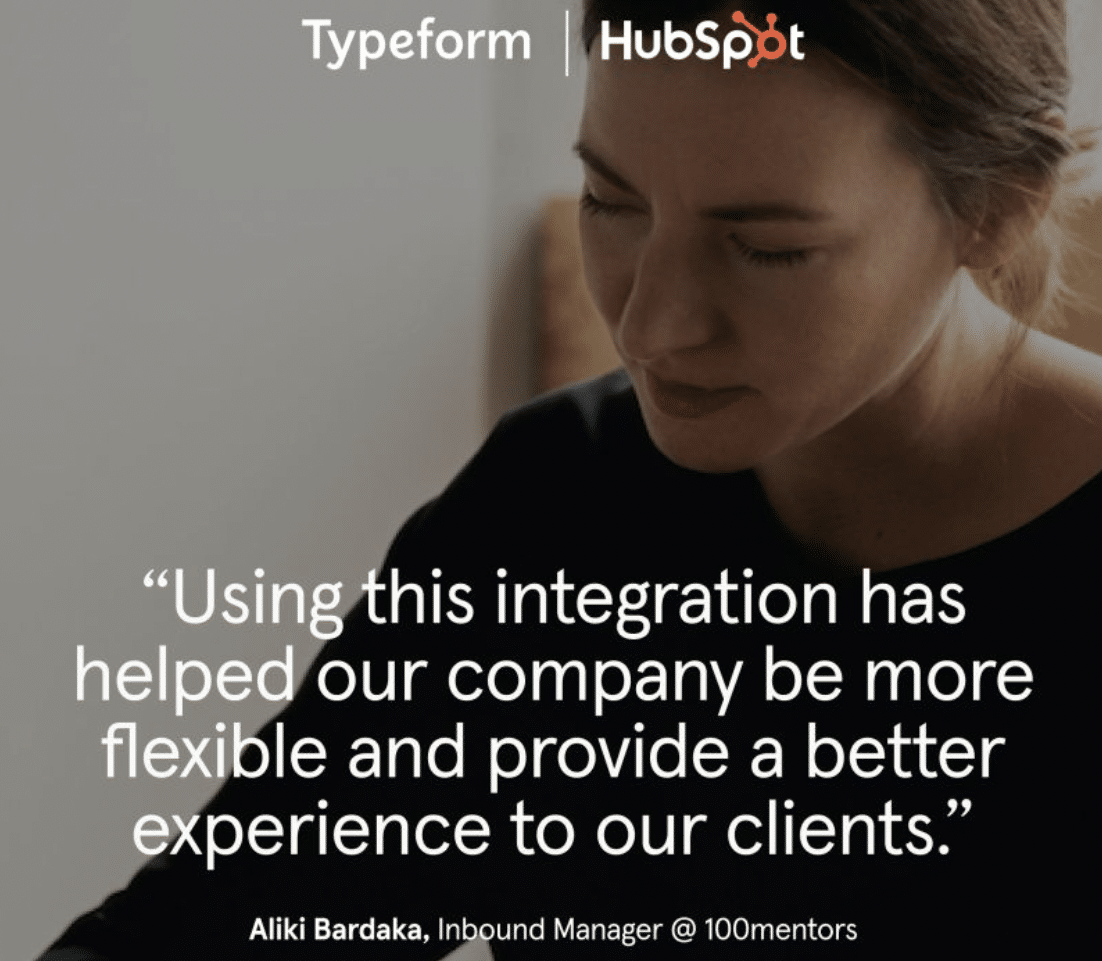
The Salesdorado tipAlways share the job title and name of the testimonial’s author to strengthen your credibility.
2. Case studies
41% of B2B marketers use case studies as social proof, according to ReferralRock, to share the results their customers achieved with their product. And 16% of them consider it the best social proof in terms of ROI.
Case studies let you expand on customer reviews, walking through their experience and detailing their satisfaction. The advantage is that you can play on feelings and engage the emotional side of a prospect’s decision-making process: a case study tells a real story that prospects can identify with – and therefore identify with the success of the customer telling their story.
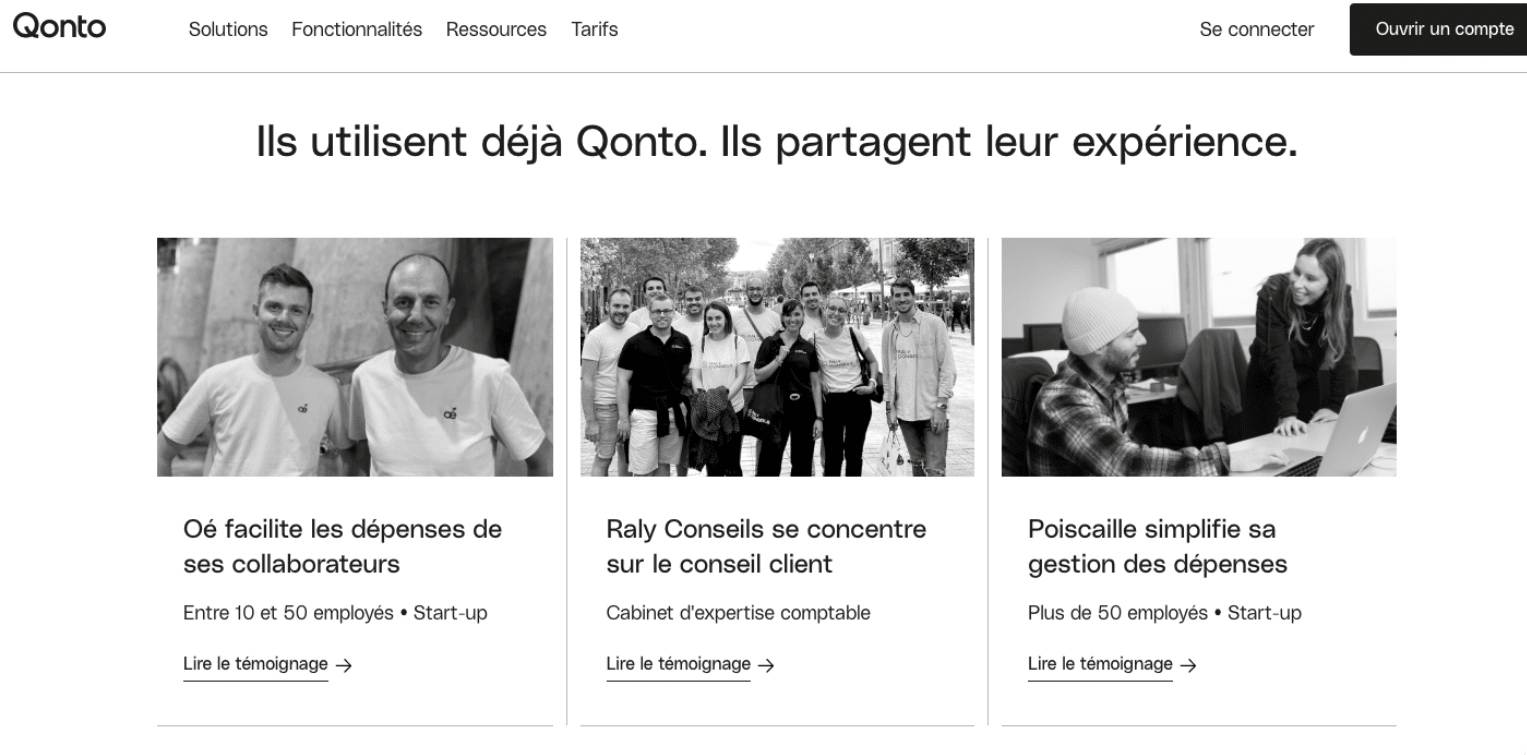
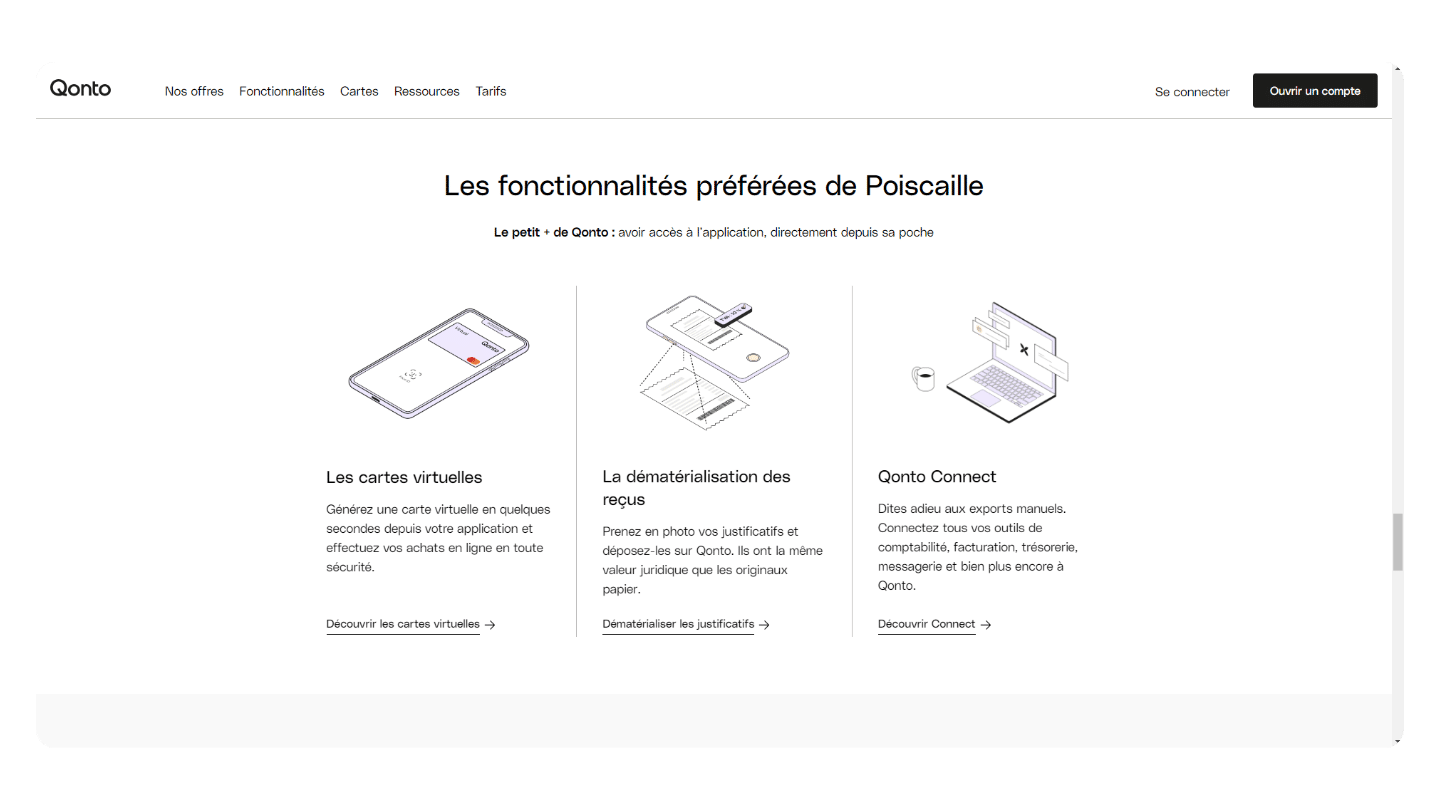
A case study also shows how your product is used in practice and helps companies understand the problem it solves. Case studies let you mix statistics, concrete explanations of how the product works and creative storytelling. Take Qonto: its case studies are sorted by company type and number of employees, and above all by the problem solved and the method used. Your prospects know what to expect when working with you and are more inclined to buy.
Marketing teams use case studies to promote your product on your site or social media; salespeople can highlight them in their sales discovery plans. Case studies also improve your SEO, because they attract visitors with appealing content.
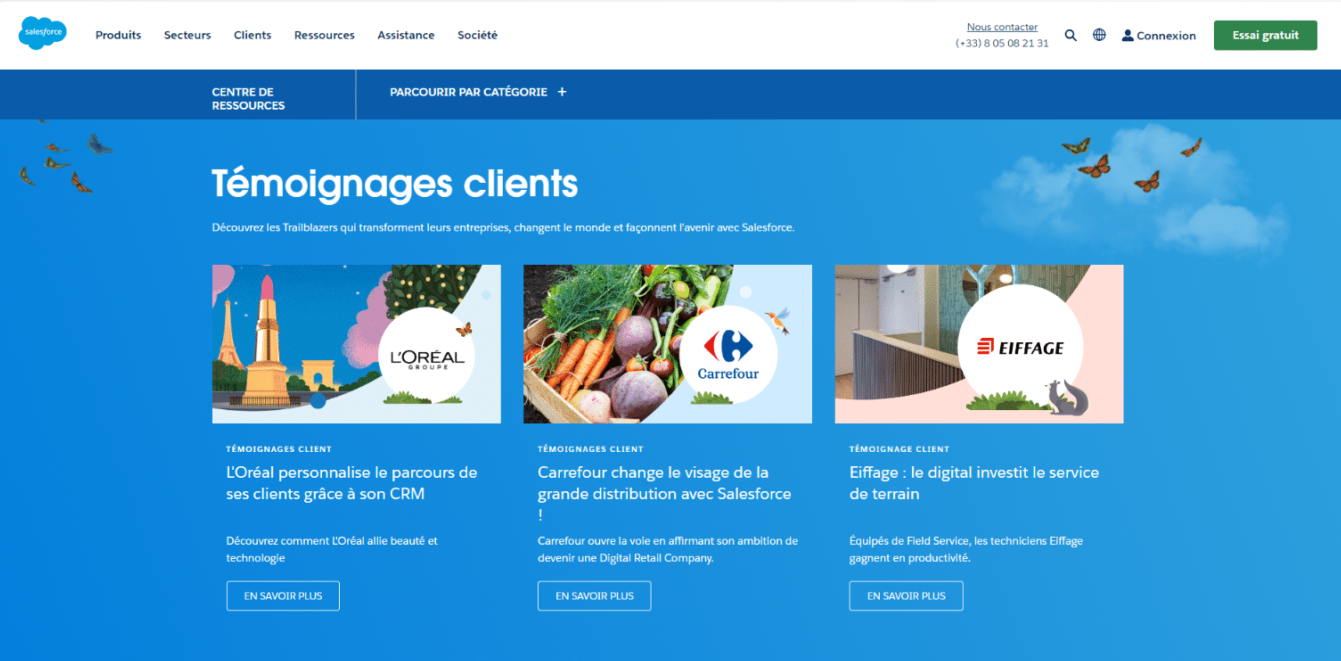
The difficulty with a case study is that you have to convince the customer, even a satisfied one, to agree to share and detail their experience with you.
3. Expert mentions
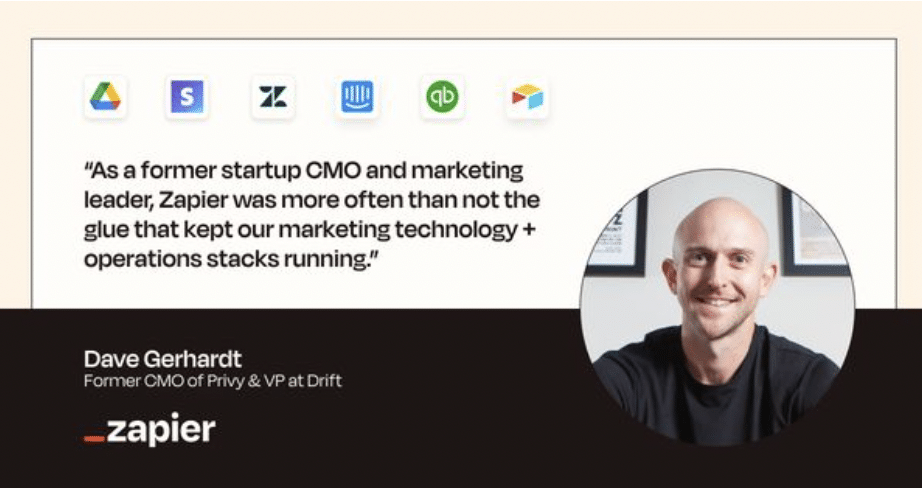
7% of marketers say media mentions deliver the best ROI for their B2B company, compared with other forms of social proof. Expert mentions raise your brand awareness and get you noticed by new prospects. For a potential customer, an expert’s endorsement is a sign of approval and reinforces the idea that you offer a high-quality product – and therefore your credibility.
Even if the mentions are not directly related to your product or service, simply seeing your company’s name cited in an article is a mark of reliability – or your own name if you take part in a webinar.
But getting mentioned by an expert is not the easiest thing. Build a network with the experts in your industry. For example, join the same Twitter chats as them. It is an excellent way to make contact and show your expertise by answering questions in the chat.
You can also create a newsletter with high added value on a topic related to your industry. Focus on sharing experiences. For example, what you learned from an A/B test you ran.
The idea is to get experts interested so they subscribe to you – if they like your content, they will end up talking about you.
Take part in conferences, round tables or webinars. You can even launch your own podcast. The goal is the same: build relationships with experts – ideally impressing them with your knowledge along the way. The more you build your authority, the more experts will talk about you and help you get known.
Watch outDo not spread yourself too thin. Choose the right experts and give them a consistent message.
4. Customer recommendations
A telling example: on the growthhacking.fr forum, a user got banned from LinkedIn because of an overly aggressive use of automation tools, and thinks it is down to the tool.
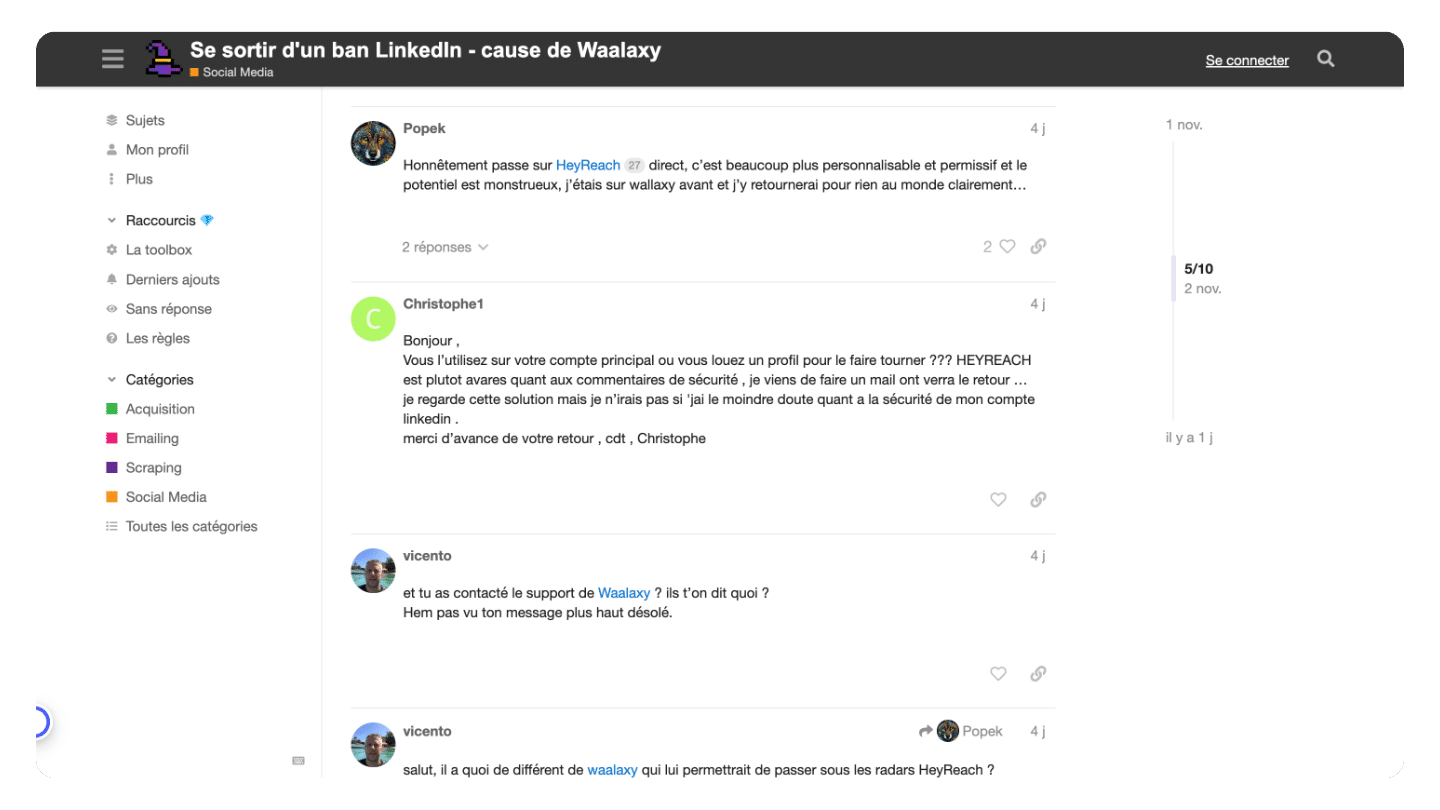
And a satisfied customer of another tool (HeyReach) tells him to switch to their tool, which is much better. A little later, they even take the time to explain in detail why they think it is better.
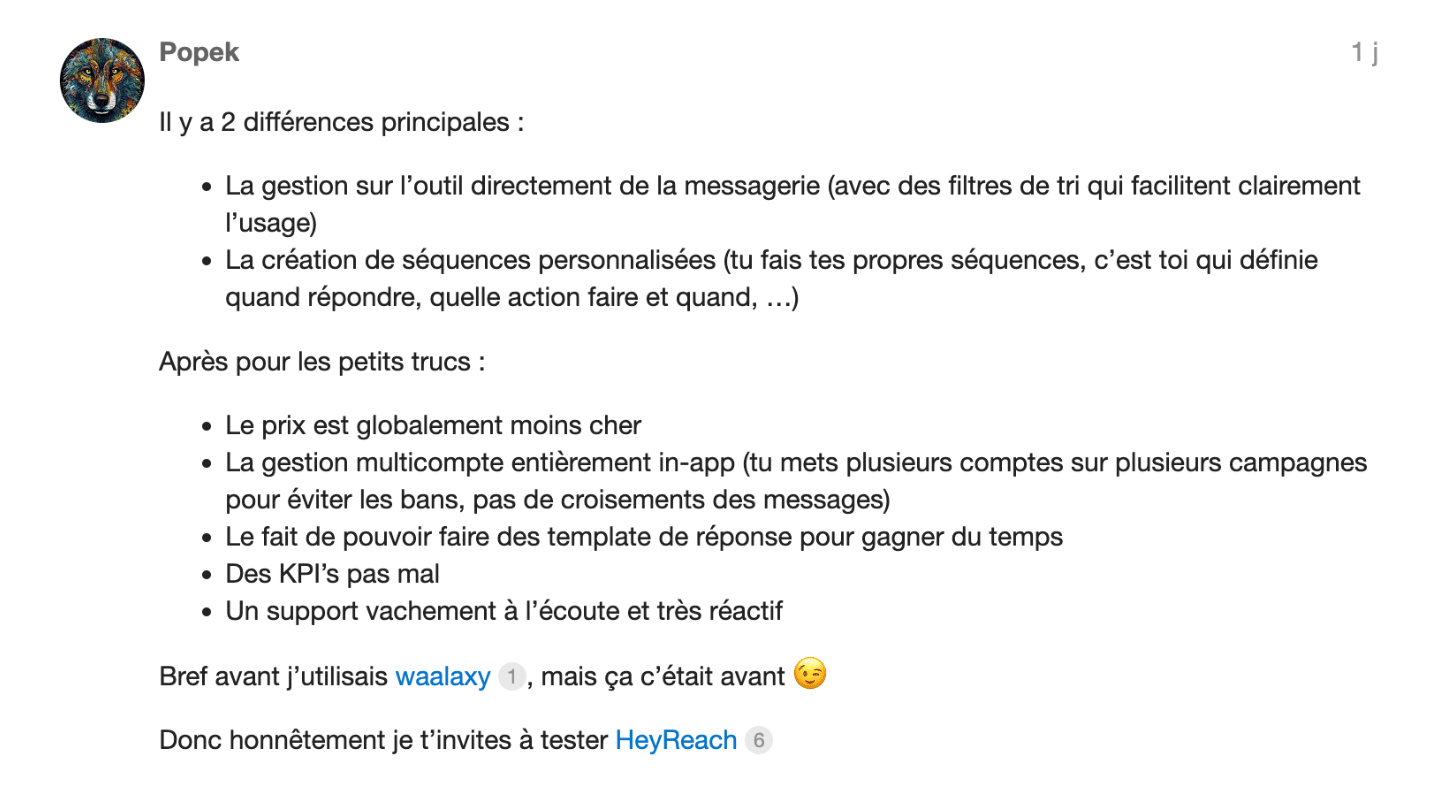
Clearly, this does not address the ban problem in the original question at all, and it is not relevant at all for a user who is not an agency with 20 LinkedIn accounts, but it is still the most clicked post in the thread.
In case you doubted how effective social proof is.
The idea is to build a strong community of loyal customers who will stand up for your brand. It is a foolproof way to collect testimonials and reviews – and to grow your mentions on social media.
To build this community, you need to drive engagement among your customers, through social media or at events.
The Salesdorado tipIf your customers are small companies nobody has heard of, the goal is to emphasize universal needs or common use cases so every reader can still recognize themselves in the testimonial.
5. Referral marketing or loyalty programs
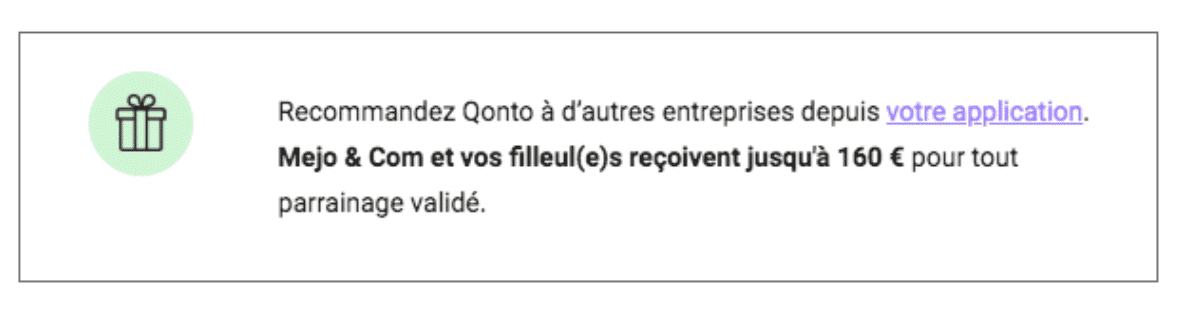
A loyalty or referral program is built on word of mouth: the company encourages one of its customers to recommend its products or services to people they know. With a reward for both the referrer and the referee when a transaction is completed.
Read alsoTop 10 customer loyalty tools
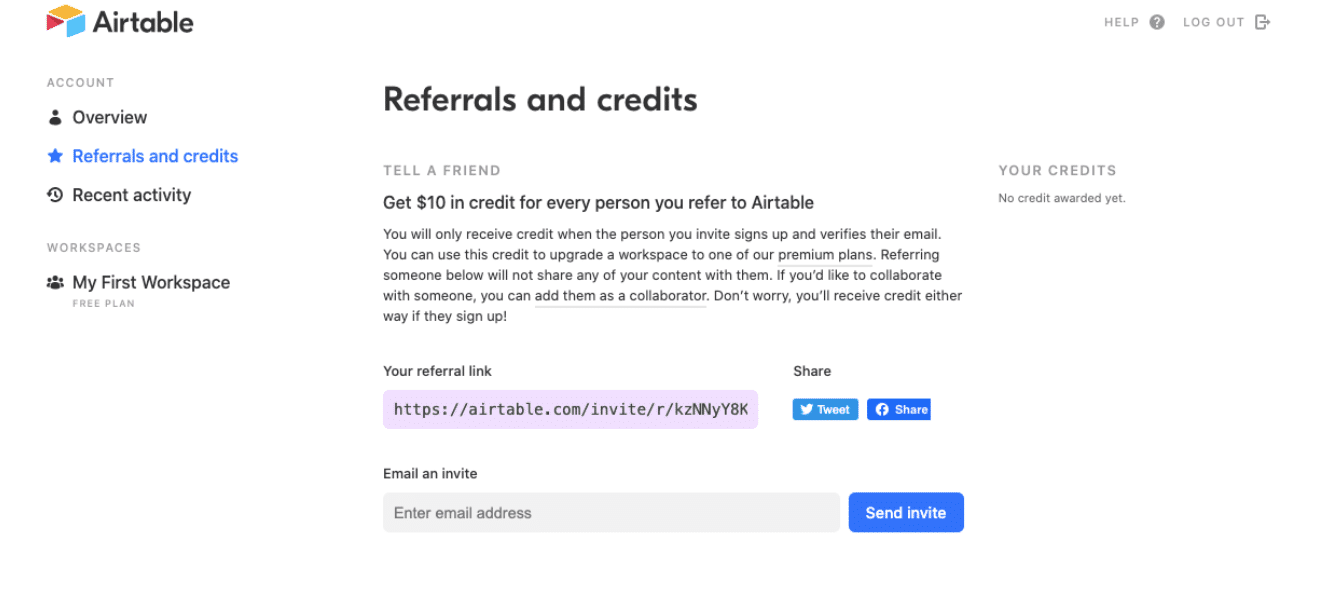
The goal is to push your customers to make direct recommendations.
The Salesdorado tipYou are better off using referral software, which streamlines the process, creates trackable referral links to hand out to customers, lets you customize a referral form or page, and instantly pays rewards to the customer who earned them. You will also be able to track the return on investment of referrals easily.
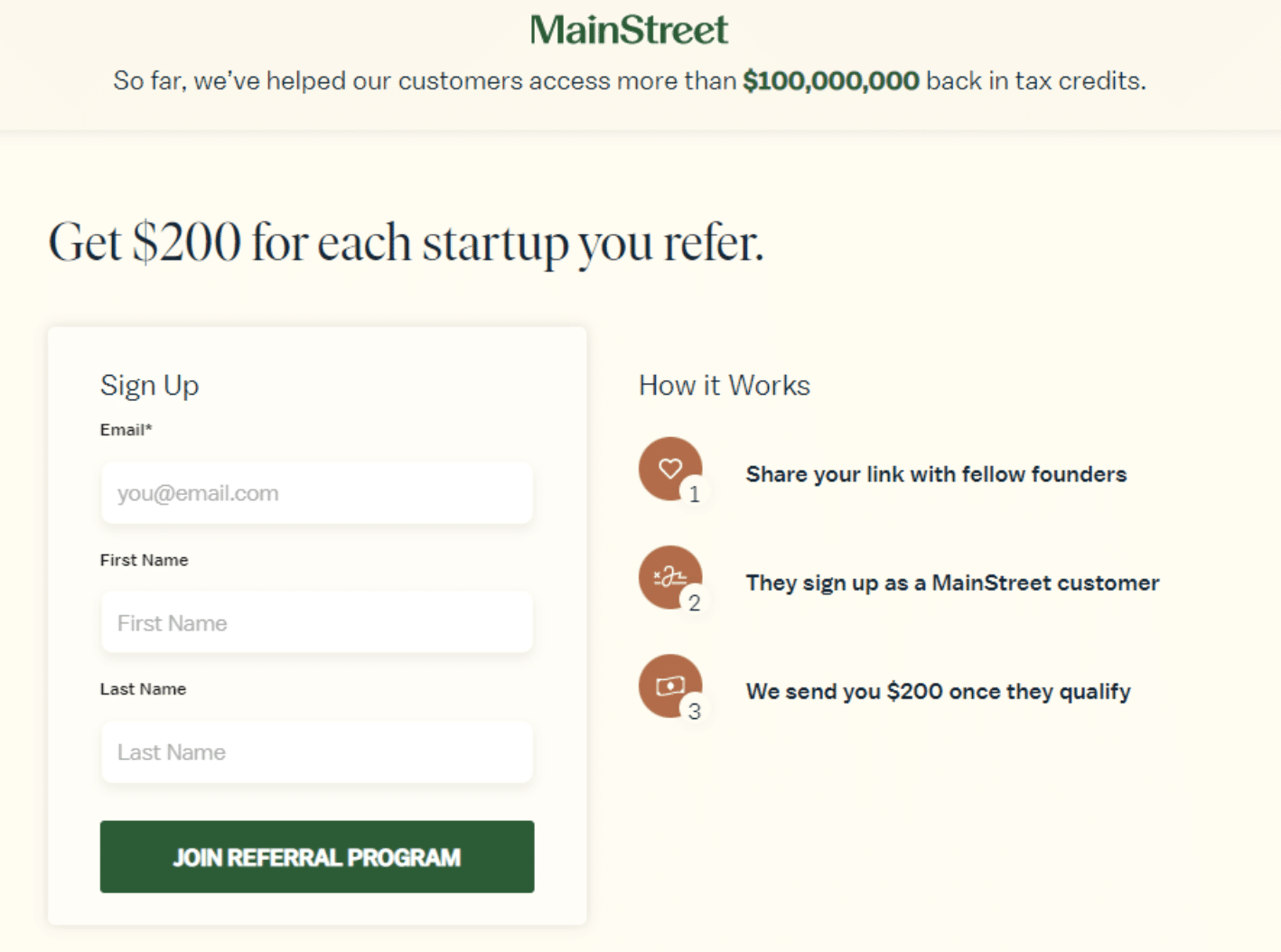
How do you get social proof?
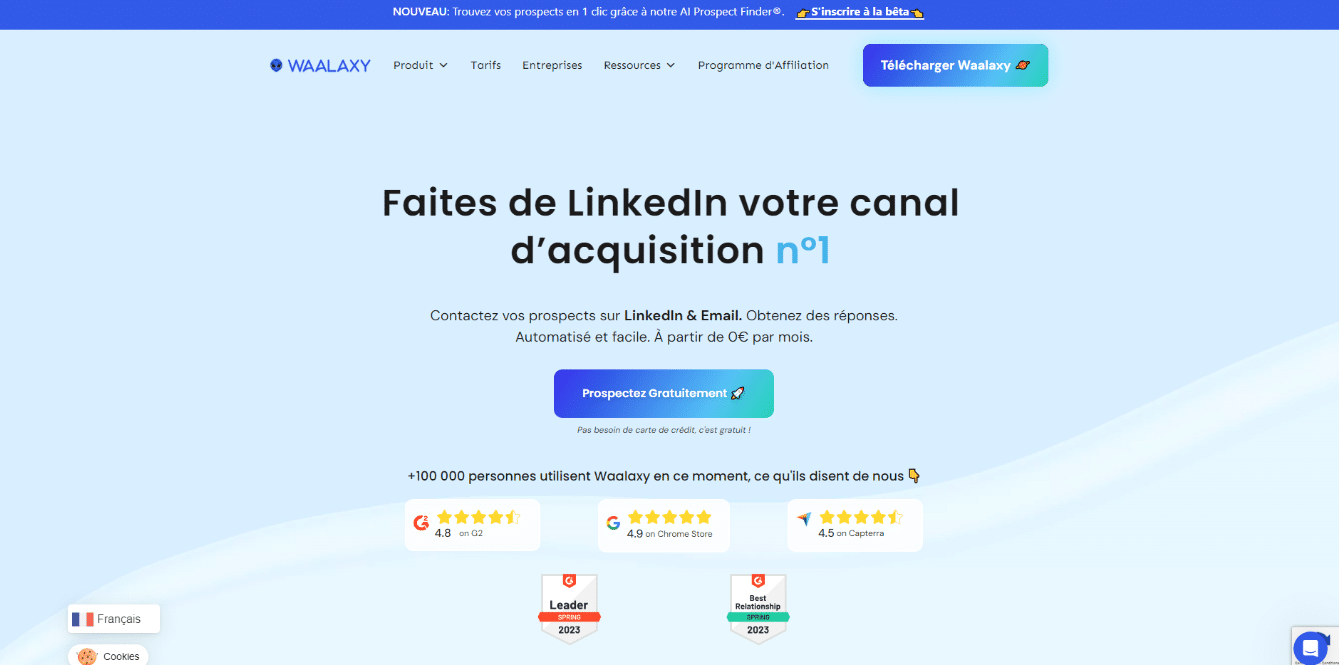
The first tip is to keep an eye out for your mentions online: hold on to every positive comment about your product.
1. Segment & ask your customers directly
How do you start collecting testimonials? A few tips:
- Survey customers to find out about their experience with your product or service.
- Ask your customers to rate you on Google or on another review site or social network (LinkedIn or Instagram).
- Contact the authors of the most satisfied reviews to get a more detailed testimonial. Ideally, turn it into a full case study.
- Ask their permission to feature their name and review on a testimonials page. To persuade them, offer a backlink to their site to give them visibility.
2. Get noticed by market experts
You need to find experts and build relationships with them.
To start, we recommend writing down the type of experts you are interested in and researching them in depth.
Get in touch with influencers: in B2B, they are often profiles interested in new solutions.
But they will never talk about you if they do not know you. Offer to introduce them to your company and your offer, or even let them test it directly. It is up to them whether they talk about it afterwards, but at least you will be on their radar from then on.
Make sure you are consistent in how you reach out and in your online presence. Give influencers the right brand message.
For paid partnerships, test a collaboration on a small pilot project to see how it will work. And let them be creative in their work.
3. Display and measure your social proof with the right tools
Several tools let you easily display social proof on your site.
For example, tools like reviewflowz.com let you:
- Get more feedback from private customers
- Get more customer reviews on customer review platforms (G2, Capterra, etc.)
- Access all your customer reviews so salespeople can search them by keyword, by use case, etc. (for sales proposals, for example)
- Show these customer reviews on your site or elsewhere (under the Widgets tab, for example as a “social wall” on your site).
Measuring social proof lets you check how effective a marketing campaign is and its impact on prospect conversion.
On social media, you can take the following into account:
- Likes
- Comments
- Retweets
- Followers
- Frequency of brand hashtags/keywords
You can also measure the number of positive reviews, impression and click-through rates, newsletter sign-ups, etc. Then compare them with, for example, the number of products sold and new customers.
For loyalty programs, Google Analytics lets you measure parameters related to your own site’s performance, including traffic from new users compared with returning users, conversions such as signing up for an email service, etc.
When you use social proof for marketing campaigns, record performance before and after the campaign so you can analyze the impact of social proof on the targeted key performance indicators.
Go further
- The inbound marketing guide.
- 15 lead generation strategies that really work in 2023.
- Sponsoring newsletters in B2B: the guide by Ouri Stopek.
The questions we get over and over.
What is social proof?
As a seller, social proof means showing that lots of people are very happy with your product or service, ideally people who look like your prospects. As a buyer, it lets you picture yourself in the buying experience, through identification.
What forms does social proof take in B2B?
The article covers five: customer testimonials and reviews, case studies, expert mentions, customer recommendations, and referral marketing, or referral programs.
Which social proof is most effective in B2B?
Customer testimonials: 24% of B2B marketers see them as the most effective strategy in terms of ROI. Next come customer reviews on external sites (21%), then case studies (16%). Media mentions get only 7%.
How do you get customer testimonials?
By surveying customers about their experience, asking them to rate you on Google or another platform, contacting the authors of the most satisfied reviews for a more detailed testimonial, then asking their permission to display their name and review, for example in exchange for a backlink to their site.
How do you measure the effect of social proof?
On social media, with likes, comments, shares, followers and the frequency of brand hashtags. You can also track the number of positive reviews, impression and click-through rates, newsletter sign-ups, and compare performance before and after a campaign.



What the community says.