



- A CRM centralizes interactions with customers: your customer database becomes usable, and used.
- The more precise data you enter, the more personalized your lead generation messages can be.
- Cloud-based, it keeps data up to date for the whole team, which works with the latest information collected.
- Emailing, lead scoring, chatbots: automated tasks free up time for more complex work.
- The CRM classifies contacts according to the stages of the sales funnel: leads, opportunities, sales.
In 2012, Tech News World published a study revealing that more than half of companies (54%) expected to boost their sales thanks to a CRM. But is that really the case? The statistics say « yes », since 2014 saw an 87% increase in the use of mobile CRM, which is particularly attractive for sales reps on the road.
In this article, we present the 9 main benefits of implementing a CRM in your company.
1. Make your customer database usable

Customer satisfaction is one of your main concerns, isn’t it?
A CRM helps organize all your customer-related actions: automated welcome messages, personalized service, all the way to checkout. By being able to understand what your customers expect from you, you’ll be able to provide flawless service.
Your customer database then becomes usable, and used to its full potential. On top of that, efficient customer service on every channel (email, phone, social networks, etc.) puts all the odds on your side to get a referral. You’ll grow your customer base using nothing more than what you’ve already invested.
2. Optimize your lead generation campaigns
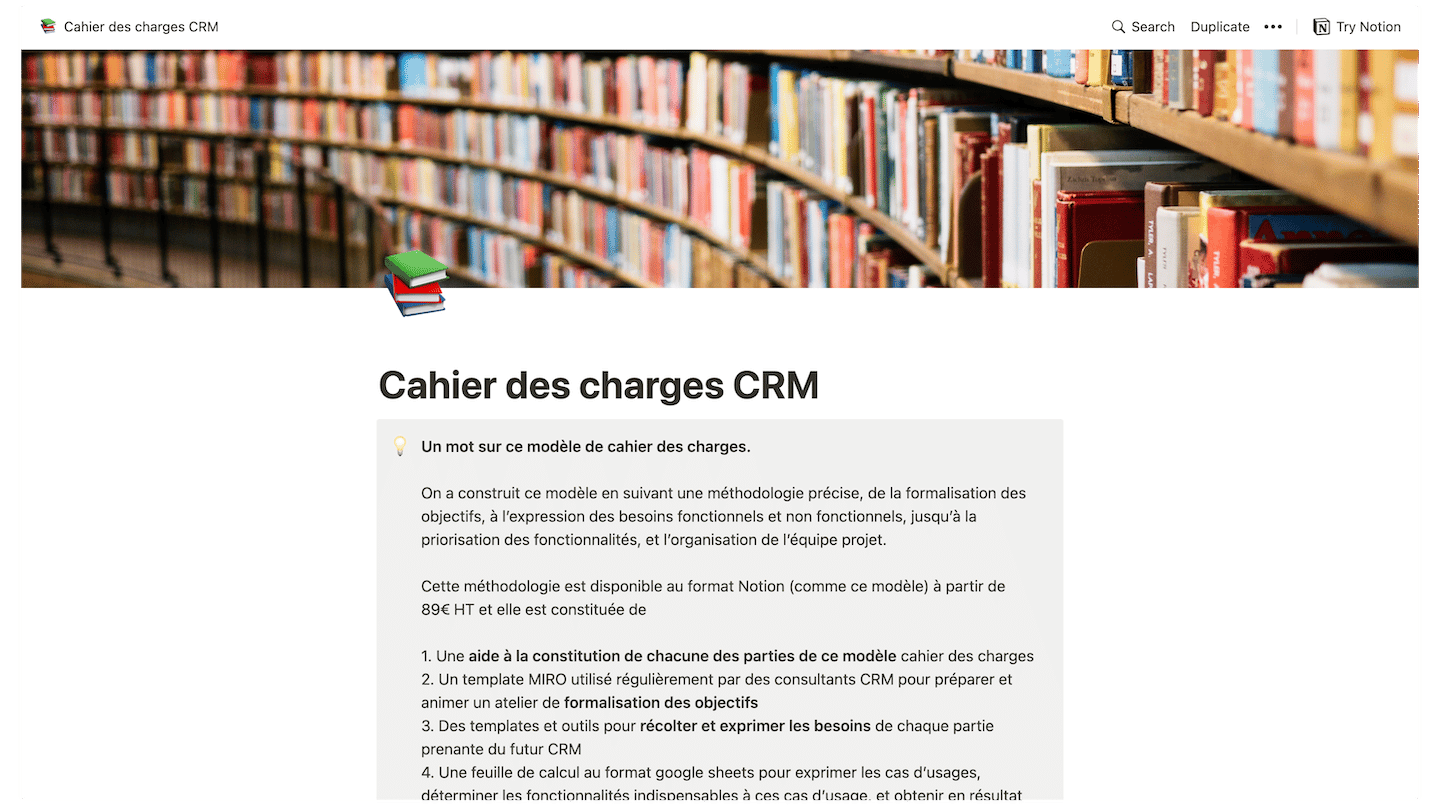
CRM specifications templateWe’ve prepared a complete CRM specifications template with a detailed example. The template has 6 parts:
- Presentation of the context
- Presentation of the current CRM setup
- Presentation of the project objectives
- Functional requirements grid
- Details of non-functional requirements
- Project organization
It’s free, and it’s right here 👇
By collecting data on your customers, your market or your industry, you’ll be able to better optimize your lead generation campaigns. As you enter more and more precise data and information, you’ll be able to create personalized and therefore more relevant messages.
Salesdorado’s tipThanks to dynamic content and automated messages, you can place people who share a significant similarity – for example, an interest in a niche product – into different nurturing campaigns.
This is the core value of marketing automation software. It lets you set up a series of automated messages aimed at a specific audience and triggered by specific actions. Nurturing campaigns can be used throughout the sales funnel.
3. Make collaboration easier

Your CRM software is used to record interactions, needs, contact details, etc. If it’s cloud-based, your data will always be up to date, which makes decision-making easier for your colleagues.
In addition, some CRM platforms have built-in collaboration tools that let several people work on the same file at the same time or track changes to a document, such as a quote.
Everyone who has access to the CRM can work collaboratively. For example, when a sales rep talks to a customer and gathers information, they can enter it directly into the customer file. This ensures the rest of the team works with the latest information collected.
4. Optimize your sales processes
To optimize your sales processes, most CRMs offer some task automation. It can include:
- Reducing the time needed to send email campaigns, but also nurturing leads through nurturing campaigns.
- Lead scoring, which lets the teams involved determine which leads are sales qualified (SQL) and which are marketing qualified (MQL).
- Answering a customer’s basic questions with chatbots or automated messages.
By automating certain sales processes, all the teams in your company (marketing, sales, customer service, etc.) have more time to devote to more complex tasks.
5. Improve the customer experience

If, thanks to your CRM, your sales team knows exactly what a particular customer is interested in, then you’ll hold all the cards to satisfy them.
By looking up customer data directly in your CRM, your sales and customer service teams will save time and make your current and potential customers feel important.
Salesdorado’s takeIt’s through proactive customer service and shorter problem resolution times that you’ll achieve greater customer satisfaction.
6. Align your sales & marketing teams
For your company to perform, you need to align your sales and marketing teams! A CRM can help you carry out this task.
Companies constantly carry out market research to identify the ideal customer profile, and then target it. CRMs help understand customer behaviour and respond to their specific needs.
Another job of the CRM is to determine the best time for the company to promote and present its services to customers. A tool like this will therefore help you target the right prospects at the right time and with the right resources.
7. Drive more upselling and cross-selling
CRM specifications templateWe’ve prepared a complete CRM specifications template with a detailed example. The template has 6 parts:
- Presentation of the context
- Presentation of the current CRM setup
- Presentation of the project objectives
- Functional requirements grid
- Details of non-functional requirements
- Project organization
It’s free, and it’s right here 👇
The ultimate goal of using a CRM is to close a sale, which is why the most complex CRM software, such as HubSpot or Salesforce, always supports practices like cross-selling and upselling.
For upselling, the software collects information about the purchase the customer made in order to draw their attention to similar products from the range above.
As for cross-selling, the software collects information about a customer’s previous purchases in order to suggest complementary products. All the details are then stored in a centralized database.
A good CRM will take care of spotting and exploiting every opportunity, which will translate into higher revenue.
8. Optimize sales operations individually
Many business leaders rely on their CRM to understand their sales reps’ performance and develop strategies on how to assign leads and tasks.
It’s also thanks to the CRM that they know which reps are available and can assign sales tasks. In practice, the CRM makes each employee’s schedule visible and lets you compare who closes the most (or the fewest) deals.
Did you know?Recently, CRM developers have been exploring the concept of gamification. It lets administrators reward the best-performing employees with bonuses, points or even promotions.
9. Better customer knowledge

It’s nothing new: the data you collect is a major asset for companies. The advantage of a CRM is that you can see who interacts with your company and how.
For example, a prospect who successfully fills in a form on a landing page after seeing an ad on social networks. With this customer data, you can set up a classification in your CRM based on the stages of the sales funnel:
- Leads: people who have shown an interest in your company (form filled in, pages visited, etc.)
- Opportunities: prospects who, at some point, go further into your sales funnel and are close to buying. For example, they may have spoken to a member of your sales team and asked for a demo.
- Sales: when someone becomes a customer, it doesn’t mean your work is over. The additional data you collect on post-purchase habits will help you better understand your buyers’ profile.
The Salesdorado bonusThe best CRM software doesn’t just tell you where a lead comes from. It can show you exactly what a person clicks on when you send them an email, how many times they’ve had conversations with your sales team, what they need, etc. In short, better knowledge of your customers.
The questions we get over and over.
What are the main benefits of a CRM?
Making the customer database usable, optimizing lead generation campaigns, making collaboration easier, optimizing sales processes, improving the customer experience, aligning sales and marketing teams, driving upselling and cross-selling, optimizing each rep's sales operations and getting to know your customers better.
Which tasks can a CRM automate?
Sending email campaigns and nurturing leads through nurturing campaigns, lead scoring, which separates sales qualified leads (SQL) from marketing qualified leads (MQL), and answering customers' basic questions with chatbots or automated messages.
How does a CRM help with upselling and cross-selling?
For upselling, the software collects information about the customer's purchase to draw their attention to similar products from the range above. For cross-selling, it relies on previous purchases to suggest complementary products.
How should you classify contacts in a CRM?
According to the stages of the sales funnel: leads, who have shown an interest in the company; opportunities, who are close to buying, for example after asking for a demo; and sales, the people who have become customers.


What the community says.