



- Without clear, measurable goals, there is no way to know whether the CRM implementation has succeeded.
- Bring in users from every team (role, region or department) as soon as you start selecting the solution.
- According to Forrester Research, lack of user adoption is responsible for 70% of CRM failures.
- Against dirty data: fewer clicks at data entry, mandatory fields, validation rules and conditional rendering.
- A CRM bought without the IT team exposes you to integration, customization, support and upgrade problems.
It’s no secret: implementing new business software is a risk, and CRMs are no exception. More than a decade of research has shown that 30 to 60% of CRM projects fail. Knowing the risks will help you avoid mistakes when rolling out your own CRM. In this article, we highlight the 5 most common reasons CRM projects fail.
1. Setting goals and expectations that are too vague
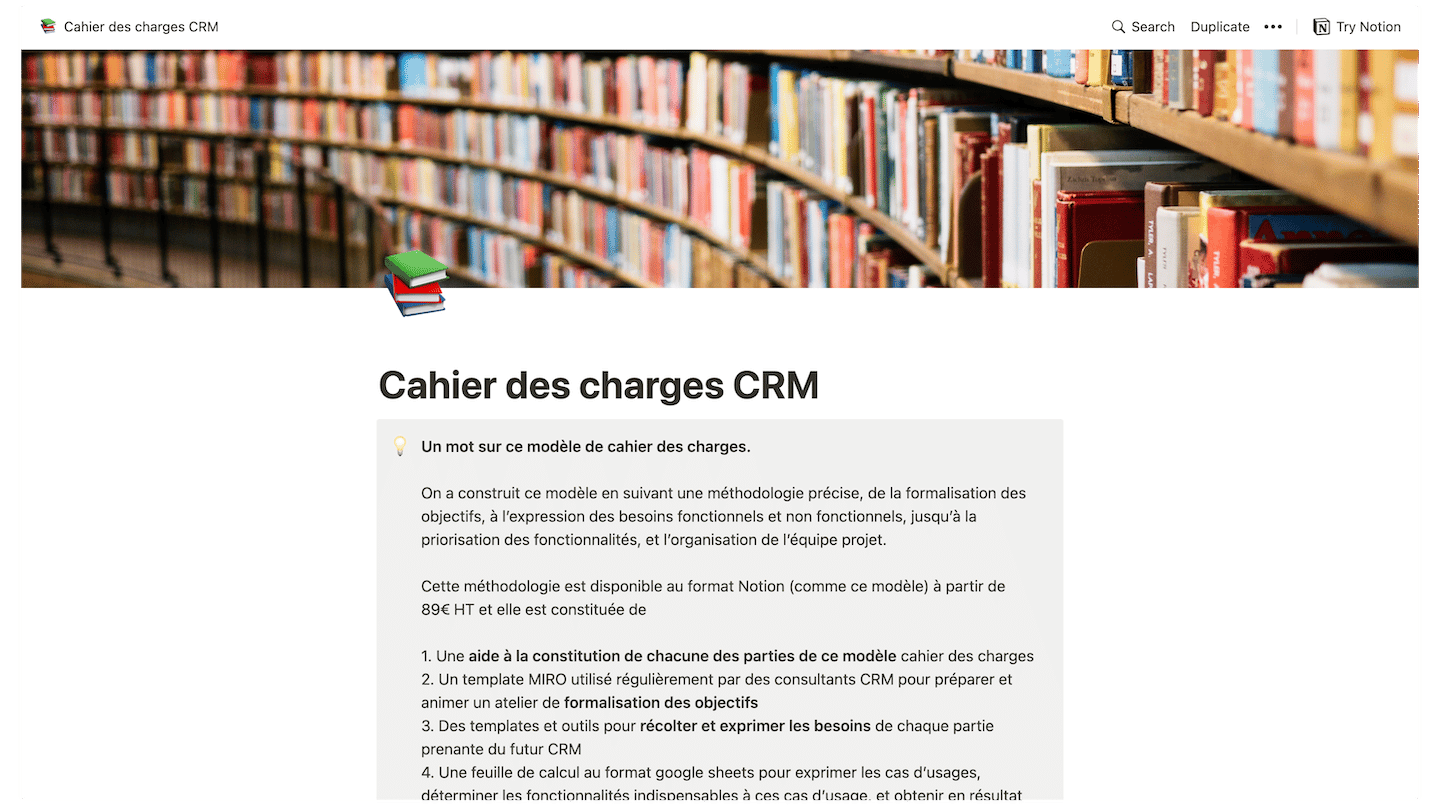
CRM requirements templateWe’ve put together a complete CRM requirements template with a detailed example. The template has 6 parts:
- Context overview
- Overview of the current CRM setup
- Overview of the project goals
- Functional requirements grid
- Non-functional requirements in detail
- Project organization
It’s free, and it’s right here 👇
The best CRM software can add value to many departments in your company. It’s normal for your expectations to be high, but when your CRM project is just getting started, a lack of focus can mean the project fails. Without clear, measurable goals, there is no way to know whether you have succeeded in implementing your new CRM.
Start by asking yourself what problem you are trying to solve with your new system. You will probably have more than one answer, which will help you set short- and long-term goals. To sum up this idea, here is what Darrell Rigby said in a Harvard Business Review article:
“If the objective isn’t truly strategic, the company will struggle to tackle its most entrenched sales processes and to reorganize its structure to get the expected returns. Before investing a single cent in CRM, executives must make sure they have the right objectives.”
2. Involving end users too late
The ultimate goal of a CRM project is to make life easier for your end users. Yet a surprising number of companies don’t involve end users until they are ready to roll out the CRM solution.
If you wait until your system is up and running to involve end users, they will be more likely to resist the change. Disengaged or unhappy users can jeopardize your CRM rollout. To avoid this, you can:
- Pick users from every team concerned across your company (by role, region or department)
- Have them take part in selecting and setting up the CRM solution.
“It’s essential to involve users in the development process and in the changes that follow,” explains Gregg Baxter, technical director of GBC, a sales force consulting firm.
Salesdorado’s tipThe best way to increase end-user CRM adoption is to let users tell you what they want in terms of user experience and interface, then adapt the solution accordingly.
If your CRM is already rolled out, don’t lose hope. Users want to feel heard and to see that their opinion is taken into account. Even though it can be hard to make changes after launch, adapting to feedback is essential. If users think the system is too “clunky” or poorly built, they won’t see any reason to use it. According to Forrester Research, lack of user adoption is responsible for 70% of CRM failures.
3. Lacking vision

Senior executives who take part in the implementation process need a precise vision of what the company can achieve by adopting a CRM. These executives commit to making customer relationship management a success, and so provide ongoing direction and guidance from the start, throughout the CRM rollout, and beyond.
Salesdorado’s tipThe more closely customer relationship management is tied to key business strategies, the more likely senior management is to see it as important.
4. Mismanaging and failing to anticipate data quality issues
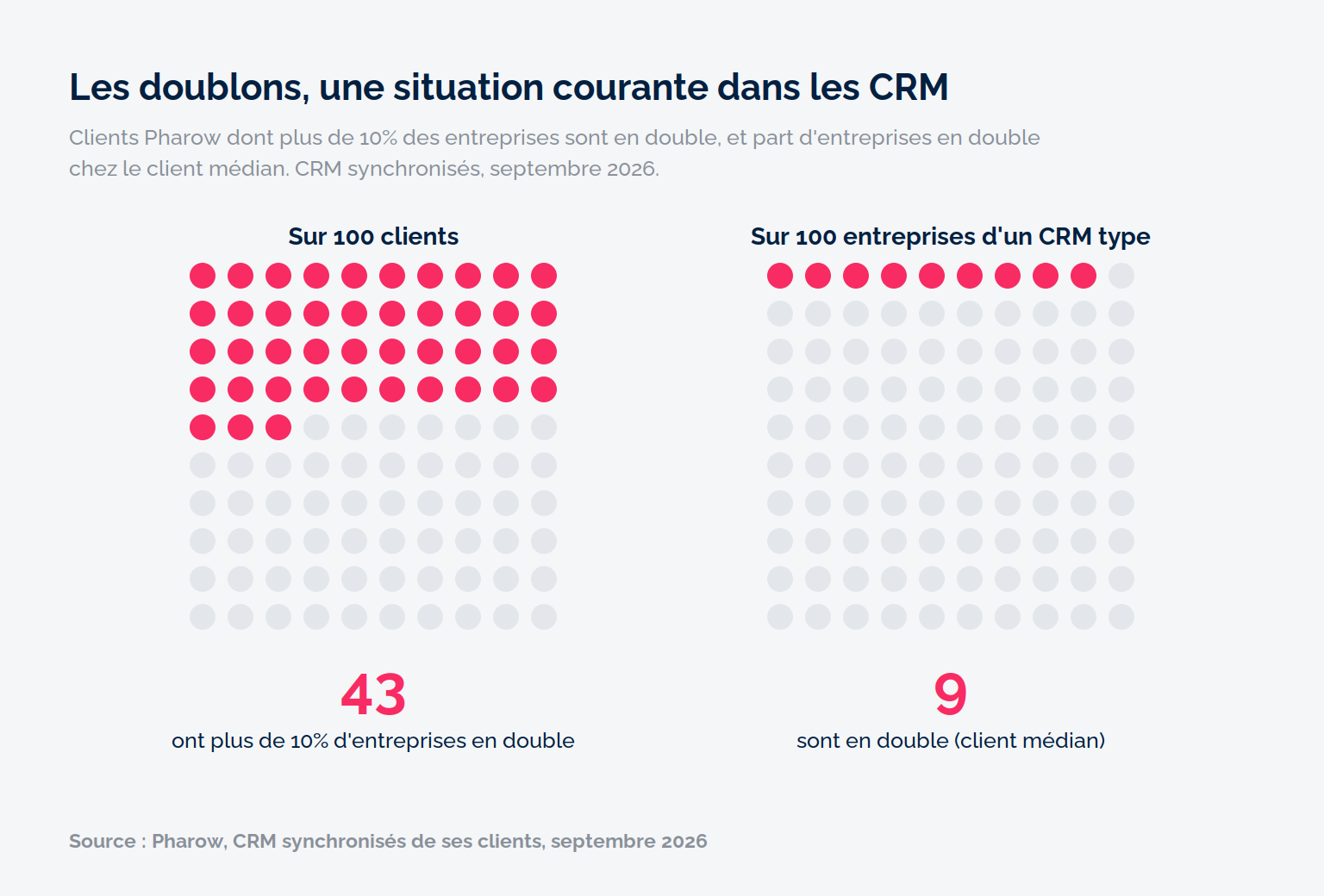
Too many CRM projects suffer from “dirty data”, a problem that shows up when you have duplicate, incomplete or incorrect data.
If users don’t trust the data in your CRM, they will be less inclined to enter new information correctly, which only makes the problem worse. Left unchecked, poor data quality can undermine your entire sales strategy (customer service, revenue forecasting, etc.).

Keeping a “clean” database is no easy task. It takes effort from end users, administrators and executives. To start on a sound footing, here are a few best practices to adopt today:
- Simplify the data entry process. How? By limiting the number of clicks your users need to make to enter essential data.
- Define mandatory fields.
- Use validation rules to make sure data is entered correctly.
- Use conditional rendering to display only the fields that are relevant to the user.
5. Being reluctant to involve your technical teams
CRM requirements templateWe’ve put together a complete CRM requirements template with a detailed example. The template has 6 parts:
- Context overview
- Overview of the current CRM setup
- Overview of the project goals
- Functional requirements grid
- Non-functional requirements in detail
- Project organization
It’s free, and it’s right here 👇
It’s crucial to take into account existing IT investments and infrastructure. According to a Gartner study, three quarters of all SaaS purchasing decisions are made by sales directors rather than IT managers, which suggests IT departments are rarely included in customer relationship management planning.
When business units acquire CRM systems without the IT department’s involvement, they are far more likely to run into integration, customization, support and upgrade problems. Even once your system is up and running, you will need to keep your data quality up over time.
To sum up, if your goals are clear and the users of your new system are fully involved, you will give yourself every chance of getting your business off the ground.
The questions we get over and over.
What share of CRM projects fail?
More than a decade of research has shown that 30 to 60% of CRM projects fail.
When should end users be involved in a CRM project?
From the selection and setup of the solution, by picking users from every team concerned (by role, region or department). If you wait until the system is up and running, they will be more likely to resist the change.
What if the CRM is already rolled out and barely used?
Listen to users and adapt to their feedback, even though it is harder to make changes after launch. If they think the system is too clunky or poorly built, they won’t see any reason to use it.
How do you improve data quality in a CRM?
By simplifying data entry (limiting the number of clicks for essential data), defining mandatory fields, using validation rules and using conditional rendering to display only the fields relevant to the user.
Why involve the IT team in a CRM project?
Business units that acquire a CRM without the IT department are far more likely to run into integration, customization, support and upgrade problems. Yet according to a Gartner study, three quarters of SaaS purchasing decisions are made by sales directors rather than IT managers.


What the community says.