


- Cross-selling completes the customer’s purchase, upselling sells them a more capable, more expensive version.
- Out of five cross-selling cases, one is unprofitable: spot the « bad apples » by segment.
- Limit your offers to a few products with an obvious benefit for the customer.
- Rewarding salespeople on the number of products sold rather than on revenue drives aggressive cross-selling.
- Set goals for each campaign and A/B test pages and emails.
Cross-selling should not be confused with upselling or downselling.
Upselling means selling a more capable, more expensive version of your product, or selling a larger quantity of it. Downselling is selling a cheaper product that better fits the customer’s budget: the point is to reduce churn. Rather than losing a customer entirely, you lose a percentage of their spend.
Cross-selling recommends products that complement the one being bought: you are not trying to change the customer’s choice, but to complete it. Think of suggesting a phone case to a customer who is buying a phone.
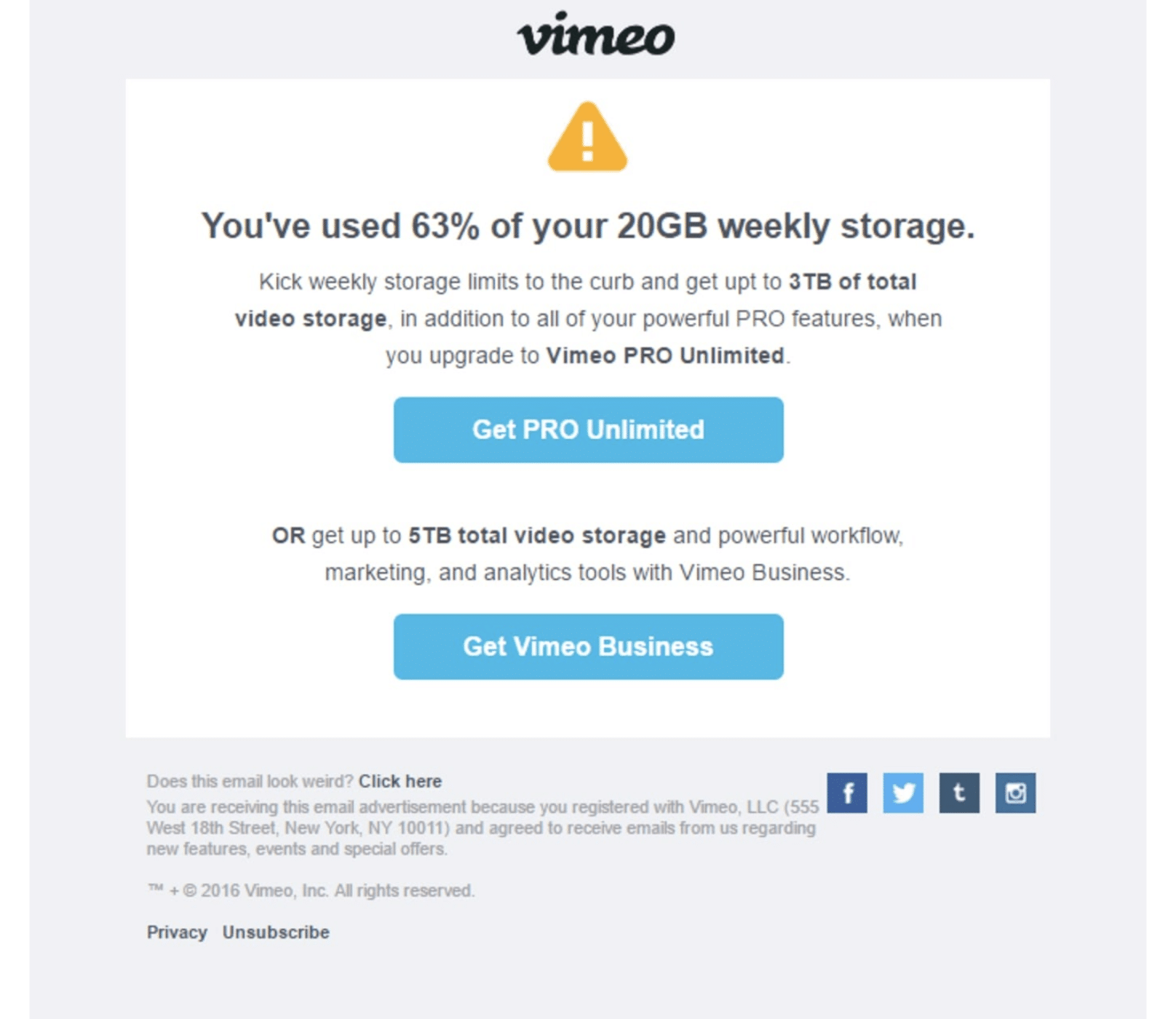
For example, Vimeo offers to increase storage capacity or to move to a plan that combines storage with a range of additional features.
1. Identify the right customers
Cross-selling is not profitable with every customer. That is what Denish Shah and V. Kumar show in their article The Dark Side of Cross-Selling (Harvard Business Review, December 2012).
There are always a few bad apples. The study shows that out of 5 cross-selling cases, one is always unprofitable. For example, a customer who abuses your customer service or product returns, another who cross-buys only to squeeze every promotion, or a buyer on a tight budget whose spending does not grow when they cross-buy.
Hence the need to understand your different buyer segments and your ICP, so you push cross-selling that matches each segment’s needs. Use the data you have, interview your best customers and track user journeys:
- Their favorite products and services
- How the different segments use your products
- The main challenges each segment faces
- The added value each segment might need
The Salesdorado tipAs you sell your products and get them out into the world, you will start to pick up the signals each segment sends, and spot the bad apples in the basket.
2. Keep it simple
Offering too many products or services at once can backfire by creating confusion. Teach your salespeople to limit their cross-selling to a selection of products with an obvious benefit for the customer.
Listing unrelated products during a sales pitch can immediately hurt the customer experience and make the customer feel you want them to buy anything at any cost. The customer may then shut the salesperson out.
Cross-selling opportunities come up naturally once the salesperson starts building a long-term relationship with the customer and understands their additional needs.
Also readGlossary of sales techniques
3. Invest in your customer service
A large segment of problem customers, the bad apples, can be a sign of gaps in the incentives (internal or external) of your marketing strategy.
For example, if you reward your salespeople for growth in the number of products each customer buys, rather than for growth in revenue. That can push them to cross-sell aggressively. In the end, your customers will simply spread their fixed spend with the company across a larger number of products and services.
Another example: a company with a very lenient return policy, which makes abuse easy. The Harvard Business Review cites the example of Best Buy, an electronics retailer: among frequent returners, they identified a subset of customers who brought items back without the packaging. The goal was to buy them again at a discount in store, since the packaging was open.
Best Buy now requires customers returning items to show photo ID and reserves the right to refuse a return based on the customer’s transaction history.
4. Offer the right products
One way to cross-sell to customers is to offer additional and, above all, complementary services. For example, a digital marketing agency offers SEM, SEO and content marketing services.
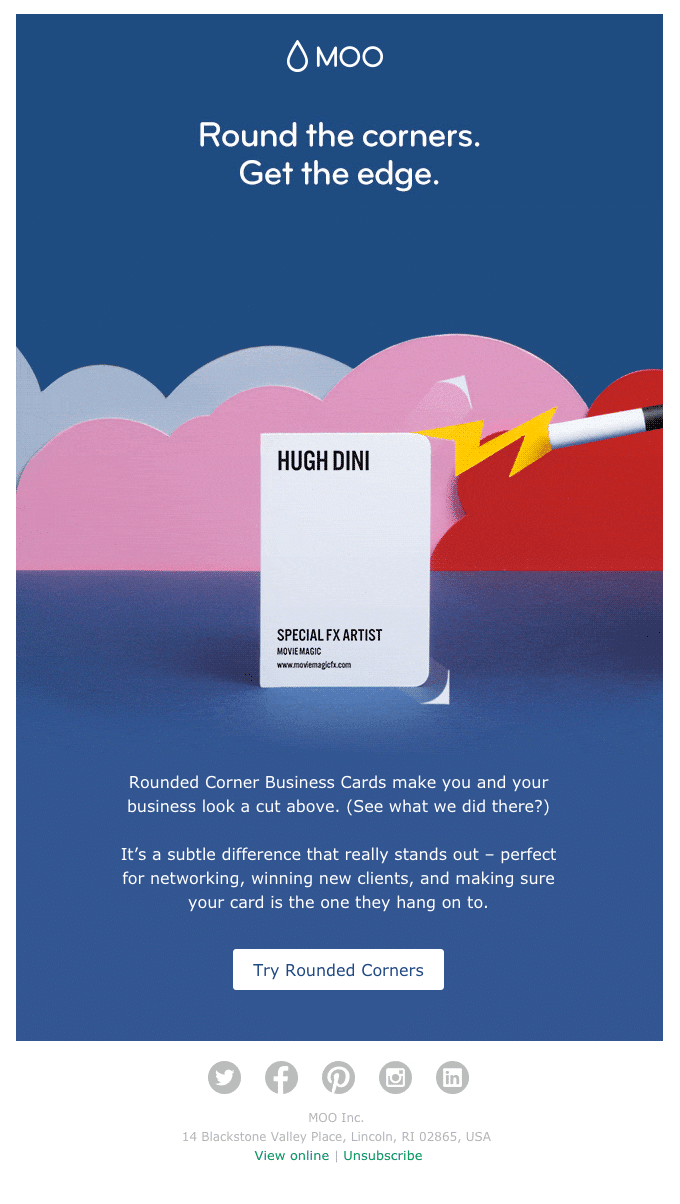
For example, in its newsletter, Moo, an online printer for businesses, promotes its rounded-corner business cards (instead of classic square corners) to its existing customers, presenting them as a solution to a specific problem they may have run into.
You still need to know your products well to offer the right ones. By mapping the product and service options sales reps can use when talking to a customer, you make it much easier for them to decide whether cross-selling or upselling is the better move for that customer.
With a clear plan to follow, sales reps are better equipped to sell more while keeping customer satisfaction in mind.
5. Promote your offers properly
The goal is to create an offer for every touchpoint with the prospect.
Chances are your customers found your company through different channels, through a Google search or a recommendation from someone close to them.
It is hard to keep track of all these channels and deliver a consistent experience on each one. Especially since customers can easily research your competitors on their own or get product comparisons.
The idea is to create, for every touchpoint with your potential customers, content tailored to the needs of the segments likely to use those channels. That makes promoting additional products much easier.
In practice, this means:
- Sharing blog posts about the pain points of different segments.
- Offering your customers a demo of a complementary product.
- Giving your sales team ebooks and videos that show how your products work and how they can complement each other.
- Creating case studies (or other forms of social proof) that highlight the needs of different segments.
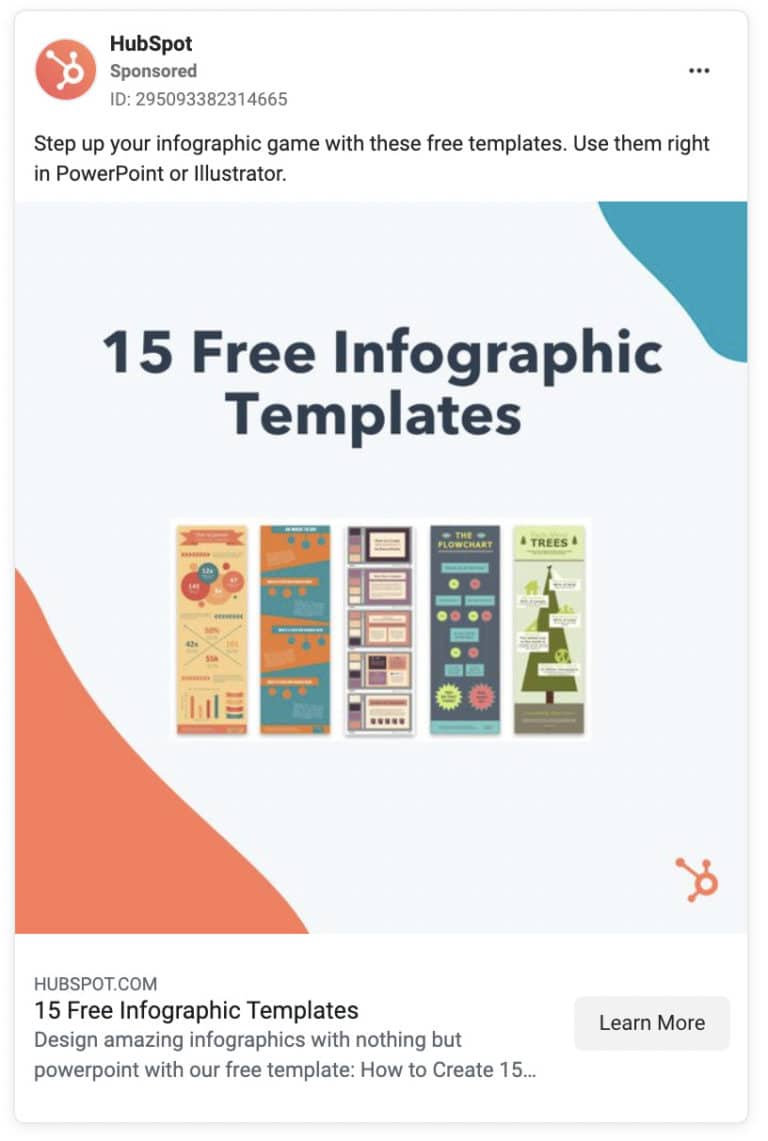
For example, Hubspot promotes its offers through targeted Facebook ads that give users templates.
6. Communicate about your new offers
The idea is to create desire for your additional products.
You need to tell all users about new products and paid features. Even if they are only available to users on the premium plan.
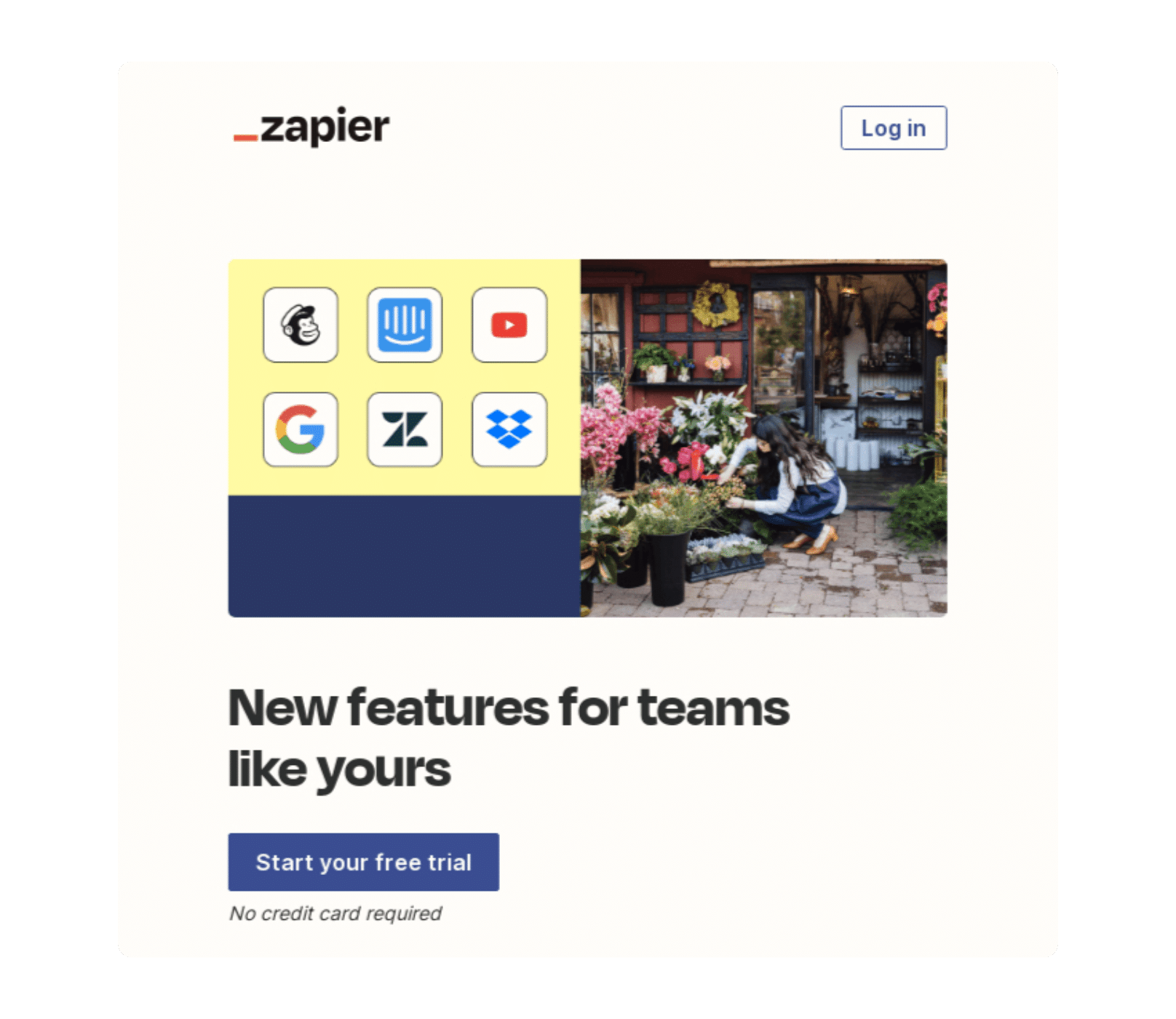
Showing the value of your new product can convince free-plan users to upgrade.
For example, if you release a new module that only premium members can access, promote it in your newsletter and include a CTA that lets free users move to a premium plan and easily buy the extra module. Just like Zapier does.
7. Pick the right timing for your cross-selling campaigns
The goal is to assess the customer lifecycle so you can offer an additional product at the right moment.
Upselling and cross-selling often happen at the end of the sales cycle, once buyers have already committed to buying. In complex sales, it is often better to build the upselling and cross-selling process into the whole customer experience.
For example, you can suggest to a customer in the middle of the sales cycle complementary products that improve the use of the first product they are interested in. It is a way to satisfy the customer while triggering an additional purchase.
8. Personalize product recommendations
About 80% of people are more likely to do business with a company that offers them a personalized experience. Define your customer segments clearly so you can tailor your offer to each of them and deliver the most personalized experience possible.
Here, Skillshare offers its customer a selection of courses based on the courses she has already taken and on her interests.

Think about each segment’s favorite products or services and how they use them. Ask yourself which complementary product would interest each segment: in other words, what its needs are.
9. Create a sense of urgency
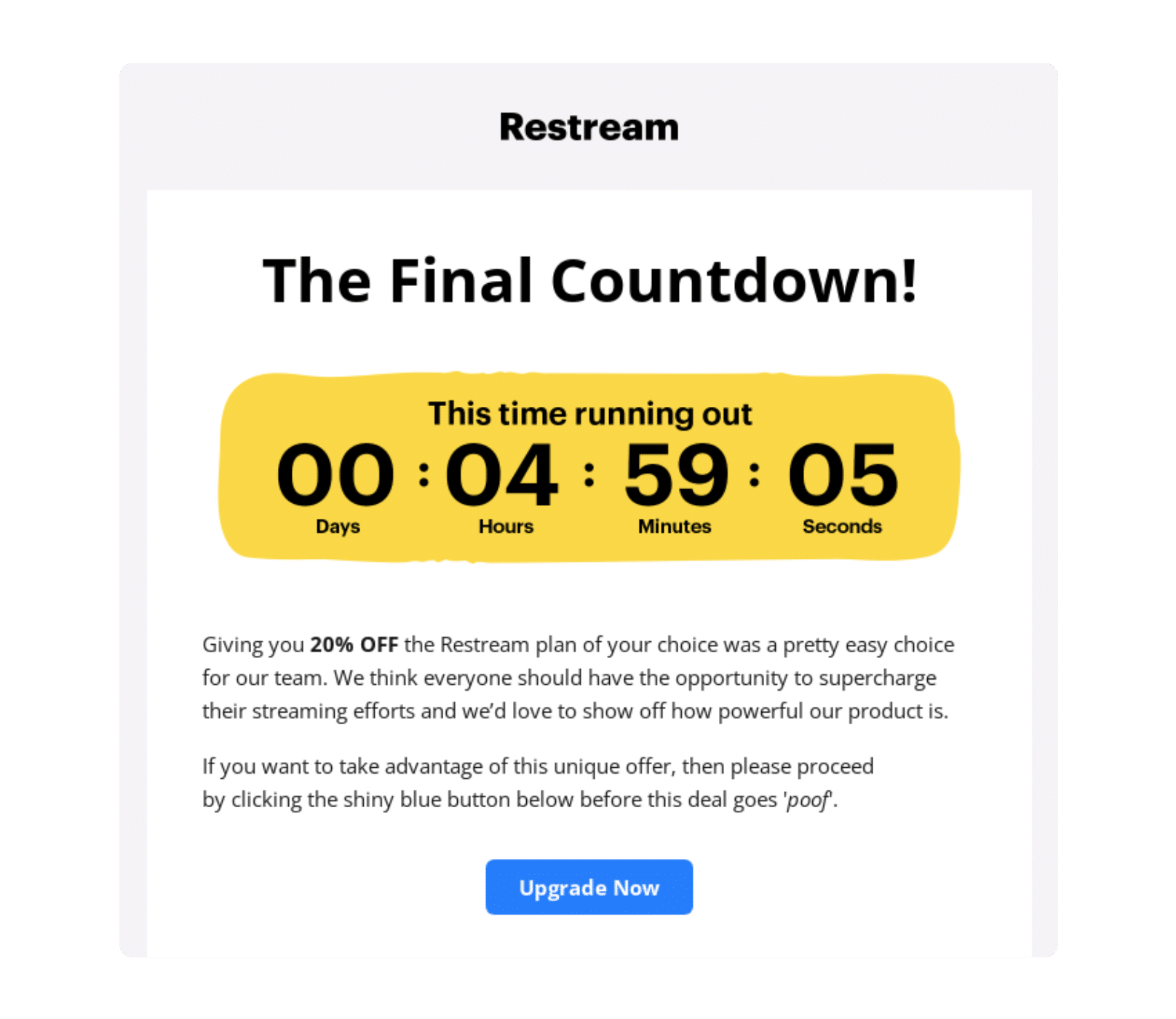
Creating a sense of urgency is an excellent way to encourage users to buy so they do not miss out on an offer.
You can run a one-day live event, remove content or products after a certain period, or offer a course only during the summer. You can also promote offers and discounts with expiry dates.
For example, Restream heightens the sense of urgency by showing, in a very visual way, a countdown to the end of its promotion, with a very clear CTA to push customers to upgrade.
10. Build customer loyalty
This technique aims to create structured opportunities for customers to earn benefits based on their buying habits.
Train your reps well on loyalty offers so they can use them effectively to cross-sell. Customers are more willing to buy complementary products as part of a loyalty program.
This approach reminds customers of the value of the product or service, while giving salespeople an upselling technique that takes minimal effort and can still increase sales.
11. Measure the impact of your campaigns
Set clear goals for your campaigns: for example, increasing customer lifetime value, raising product awareness or improving conversion rates. Then assess how much each piece of content contributes to the goal.
Run A/B tests on landing pages and emails to find out which copy, images, audio clips, CTAs and buttons perform best. Review every word, every color, the number of views on your videos; check whether adding social proof increases your conversion rate, and so on.
Go further
The questions we get over and over.
What is the difference between cross-selling, upselling and downselling?
Upselling sells a more capable, more expensive version of the product, or a larger quantity. Downselling sells a cheaper product that better fits the customer's budget, to reduce churn. Cross-selling recommends products that complement the one being bought, without changing the customer's choice.
Is cross-selling profitable with every customer?
No. According to the Harvard Business Review article The Dark Side of Cross-Selling, out of 5 cross-selling cases, one is unprofitable: customers who abuse customer service or returns, who squeeze every promotion or who have a limited budget.
When should you cross-sell?
It often happens at the end of the sales cycle, once the buyer has already committed. In a complex sale, you can build it into the whole customer experience, for example by suggesting, mid-cycle, complementary products that improve the use of the first one.
How do you measure the impact of a cross-selling campaign?
By setting clear goals (customer lifetime value, product awareness, conversion rate), assessing how much each piece of content contributes and A/B testing landing pages and emails.



What the community says.