



- Account Based Marketing targets high-potential accounts directly, with personalized content: it starts with visitor identification.
- IP based identifies the visitor’s company, not the person; the company’s data then comes from the Sirene database or from partners such as Kompass.
- Cookie based assigns an anonymous ID on the first visit, then links it to the visitor when they sign up.
- An ABM campaign targets several key contacts within the same organization, since B2B decisions are collective.
More than 95% of website visitors remain anonymous, and that is perfectly normal, because protecting the general public’s data matters. But what about identifying visitors in the context of their companies?
At a time when each visitor costs more and more, the vast majority of these visitors turn out to be useless. Yet companies are hungry for information about the sites they visit. In B2B, it is now possible to get information about the companies visiting you thanks to Cookie based and IP Based methods. Insert a simple script on your site to access a wide range of detailed information useful for your communication. This trend is part of ABM (Account Based Marketing), which focuses on a personalized, high value-added approach. But to be effective, ABM feeds on information that only visitor identification can provide. Various software and tools make this identification possible while complying with the GDPR.
Here we offer an analysis of the existing solutions to answer a not-so-technical question: how do you identify an anonymous visitor on a B2B website?
How do you identify Account Based Marketing visitors in B2B?
A reminder of Account Based Marketing fundamentals
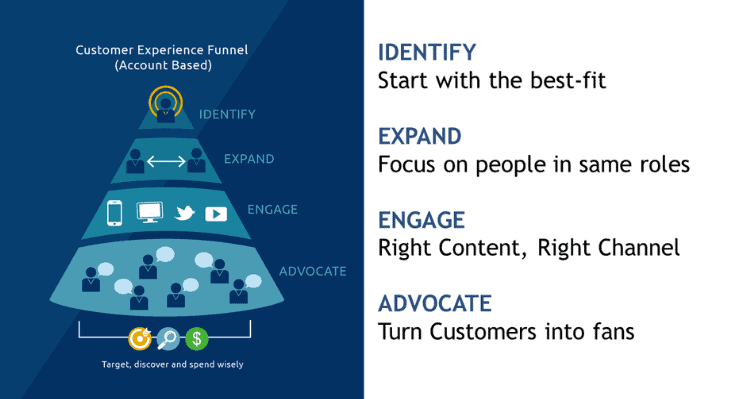
The current Account Based Marketing approach rests on a simple observation that any company can easily check: 20% of customers generate 80% of revenue. The classic Inbound marketing approach is to bring as many people as possible into the conversion funnel, then filter them and keep only the high-potential customers. Account Based Marketing flips this view and targets the top of the basket. You speak directly, and in a personalized way, to high-potential prospects. That means the content you send must be ultra-personalized to engage them. The two approaches remain similar: you provide content and do lead nurturing until you get a conversion and, finally, a customer. The main difference between ABM and Inbound lies in the nature and quality of the content sent.
The first step is to identify anonymous visitors and gather useful information.
Identifying anonymous visitors: how does it work?
Assuming the visitor accepts cookies on arrival, two methods are available today: IP based or Cookie based.
With IP based, the goal is not so much to get the visitor’s identity as to know which company they work for. A simple script captures the company’s IP, which identifies the company by cross-referencing partner databases or geolocation. Then you just retrieve that company’s information from the Sirene database or through specialized partners such as Kompass, DNB, etc. The icing on the cake comes with applications like Hunter to identify the contacts holding key positions in that company.
With the Cookie based method, identification happens through a DMP (Data Management Platform) on the first visit to the site. A cookie is placed on each visitor, who is assigned an anonymous ID number. When this visitor comes back and decides to sign up, their cookie lets us match the two journeys: the anonymous ID’s and the registered visitor’s. From then on, we can identify them on every visit, even before they sign up. The information is then enriched with partner cookies or by onboarding the CRM database.
Identifying anonymous visitors: how do you use it?
In B2B, decisions are mostly made collectively, so an ABM campaign must target several key contacts within an organization. That is where company identification comes in, the first stone of the ABM building: laying the foundations of a good database. It lets you tailor the right content to all the right people and make better use of pop-ups, chat and onsite personalization. You still need to find the right channels to distribute this content, and for that you must enrich this precious database: industry, company revenue, decision-making positions with names, emails, phone numbers, LinkedIn accounts, etc. All crucial information that will feed the creation of relevant, engaging content. Let’s take a look at identification tools specialized in B2B.
A closer look at tools to identify anonymous visitors
- Octolis
- Jabmo
- Lead Forensics
- GetQuanty
Octolis
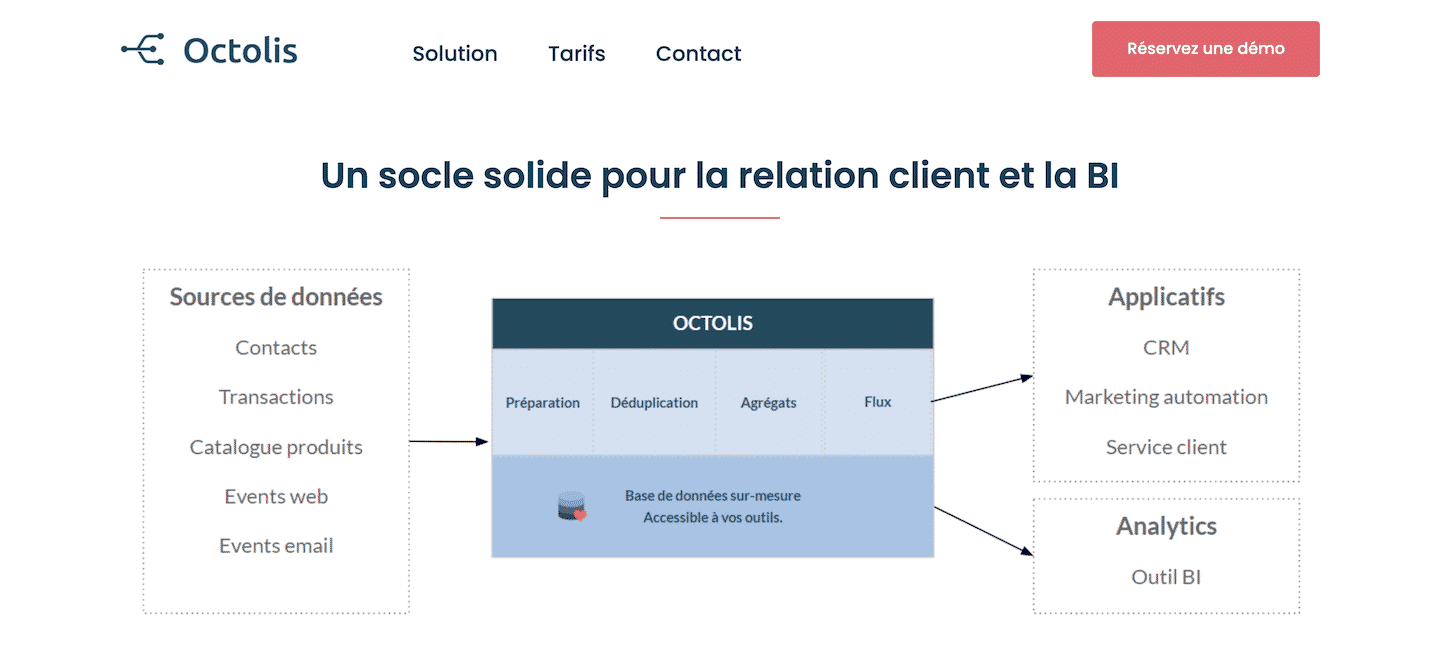
Developed by the consulting firm Cartelis, Octolis is a data platform. The solution cleans and then enriches your data in a single file. Last but not least, it dynamically distributes qualified results among sales reps, and even to a CRM. Octolis’s great strength remains lead qualification thanks to its built-in scoring system.
Jabmo
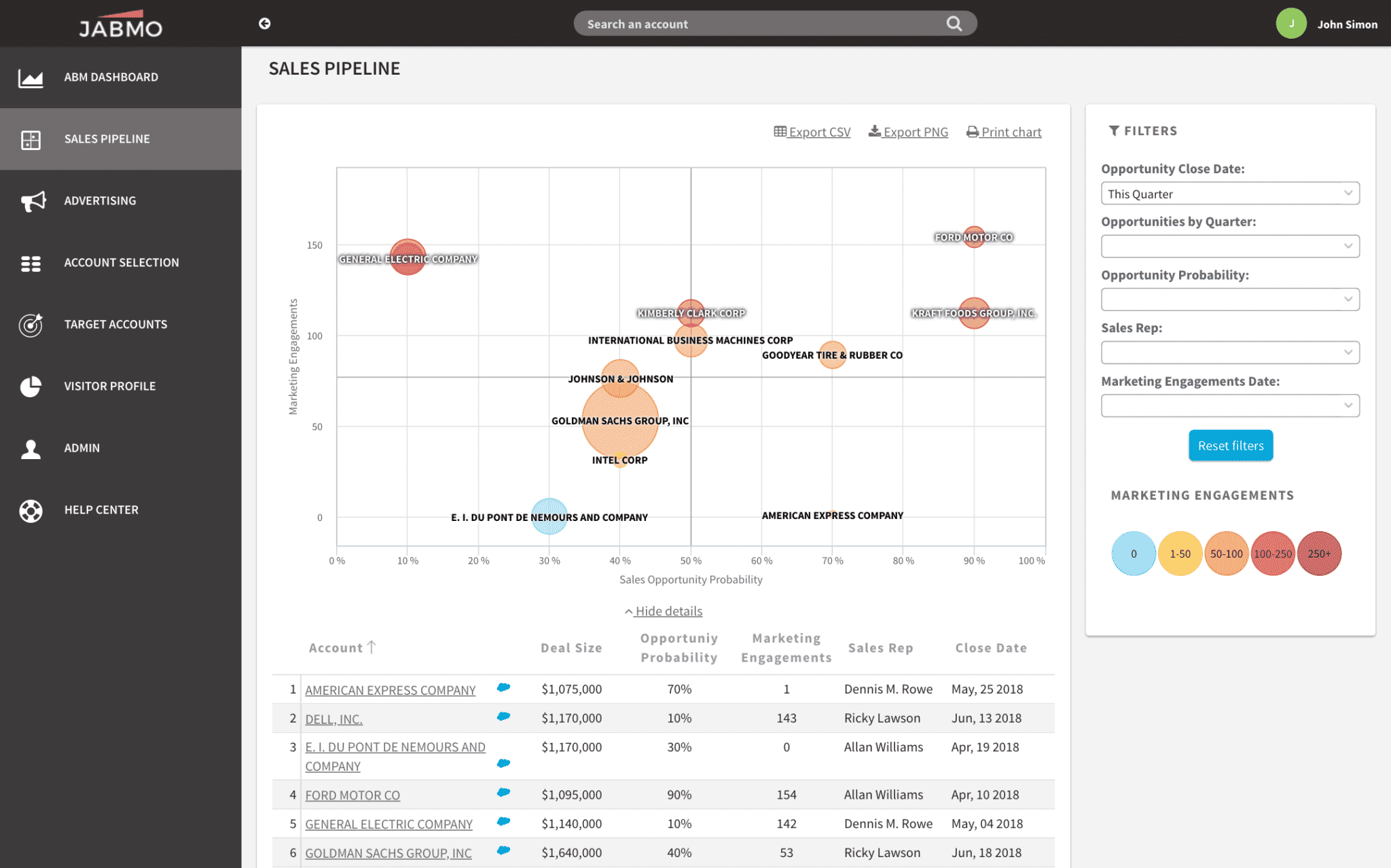
Jabmo is a French ABM platform offering an extended feature set, starting with identification, personalization and retargeting. Jabmo thrives on additions such as optimize sales timing or Marketing automation. The platform is easy to pick up, although you should plan its use carefully.
Lead Forensics
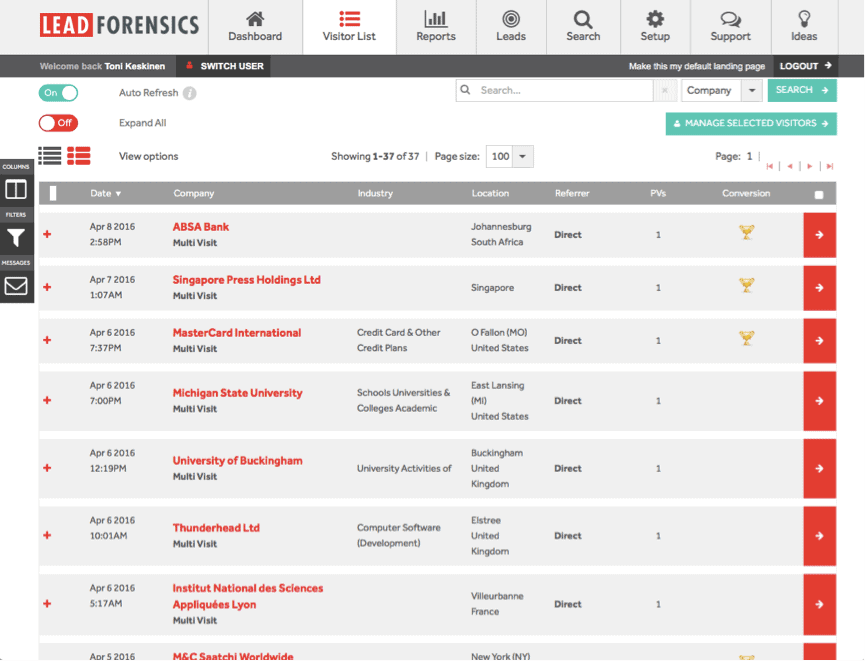
Founded in 2009 in the UK, Lead Forensics’s strength is its dynamic real-time dashboard. Qualified lead generation comes from very good visitor identification and segmentation. The platform seems to struggle to find information on companies outside the UK and US, which is a drawback for international use, and integrating other platforms can prove difficult.
GetQuanty
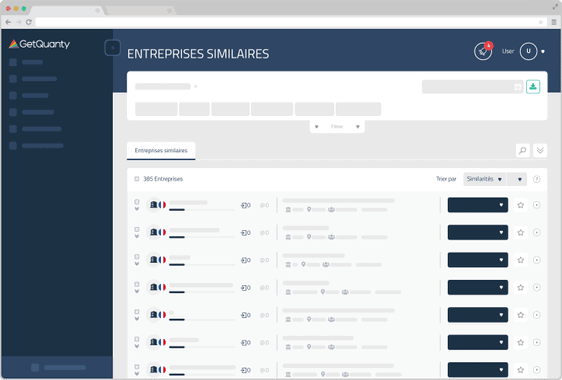
If you want to identify SMEs and mid-sized companies, GetQuanty meets that need. Like most identification tools, it accepts lists in CSV format and handles retargeting and real-time monitoring without any trouble. Behavioral scoring is a real plus, and the dashboard is easy to pick up.
To learn more on the topic:
- Top 10 email list cleaning tools
- Best sales practices to personalize your B2B prospecting emails
- Lead qualification by marketing or sales teams: MQL vs SQL
- Top B2B CRM & Marketing software with a free version
The questions we get over and over.
How do you identify an anonymous visitor on a B2B website?
With two methods: IP based, which identifies the visitor's company from their IP address, and Cookie based, which places a cookie with an anonymous ID and links it to the visitor when they sign up.
What does the IP based method tell you?
The goal is not so much to get the visitor's identity as to know which company they work for. The IP is linked to a company by cross-referencing partner databases or by geolocation, then the company's information is retrieved from the Sirene database or from partners such as Kompass or DNB.
How does Cookie based identification work?
It relies on a DMP (Data Management Platform). A cookie with an anonymous ID number is placed on the first visit. When the visitor comes back and signs up, the cookie links their anonymous journey to their registered journey, so they can be identified on every visit.
What is the link between visitor identification and Account Based Marketing?
ABM speaks directly to high-potential prospects with personalized content. It feeds on information that only visitor identification can provide: it is the first step of an ABM campaign.
Which tools identify anonymous visitors in B2B?
The article covers Octolis, Jabmo, Lead Forensics and GetQuanty.



What the community says.