


- Set yourself one main objective and no more than two secondary objectives, each tied to a metric.
- Lead generation is the first objective that comes to mind, but sales sometimes come in months after the show: watch out for attribution issues.
- To accelerate your pipeline, contact attendees before the show to book meetings.
- On the communication side, log your media coverage and track social media so you can compare one show with the next.
- Event payback depends on your attribution model: only the revenue attributed to the show counts.
Trade shows are pretty much a must in B2B, even if they had more or less disappeared during the pandemic. But they are also a big investment for a company, which is why you need to get the most out of them.
In this article, we look at your trade show’s performance indicators so you can estimate the cost of taking part and how profitable it is.
How do you define the objectives of a trade show?
The objectives of a trade show can vary enormously, from lead generation to strengthening customer relationships, but above all you need to set clear objectives that make sense for you. You can, however, sort them into these categories:
- Get a return on investment
- Build awareness
- Close sales, sign contracts or generate requests for proposals
- Carry out market research
- Break into a new market
- Enrich your database through well-run sales prospecting
- Generate qualified sales leads
- Influence the press or the financial community
- Launch a new product
- Recruit, train or motivate distribution partners, and new employees too
- Retain current customers, expand within existing accounts
- Support your industry or your community
Salesdorado’s tipTry to set yourself one main objective and no more than two secondary objectives. This lets you focus your efforts and so align every strategy, every tactic, with the objectives themselves. For every action linked to the event, ask yourself: “Does this help me reach my objective in one way or another?”
You also need to make these objectives as precise and measurable as possible. To do that, tie a metric to them: for example, 350 qualified prospects generated, 10 new business partners recruited, or a 20% increase in awareness of new products after the event.
| Main objectives | Associated metrics |
|---|---|
| Launch a new product |
|
| Generate sales leads |
|
| Collect new prospects |
|
| Break into a new market |
|
| Sales revenue |
|
| Awareness |
|
| Recruiting distribution partners |
|
1. Attending a trade show to generate qualified leads
This is usually the first objective that comes to mind.
Measuring lead generation performance at a trade show
There are a few ways to measure lead generation performance at a trade show: for example, you can wait 3, 6 or 9 months depending on your average sales cycle and look at the statistics after the fact, but watch out for attribution issues (we recommend this article to learn a bit more about attribution).
Should you give credit to the prospect discovering your company at the show, or rather to a demo or even a sale closed at the show?
There is no right answer, and it is generally better to look at the results from both angles (or more) to properly understand the value the show brought. Some shows will let you meet lots of interesting new prospects, others will rather help you establish your authority with an existing audience.
And to analyze these results, you can use these few KPIs:
- Traffic at your booth: the idea is to measure the number of people who stop at your booth divided by the number of people who walk past it, to assess how effective your marketing efforts at the show are.
WarningOf course, this will never be an exact science, because it is not easy to count the number of people walking past your booth, but it can give you an estimate of traffic.
- Qualified leads:
Before the show, you already have a clear idea of the most promising attendees (based on attendee demographics, company data, etc.). During the show, you can narrow this group down further based on the level of interest prospects show and any additional information they give you.
Once you have collected everything you could on your prospects, it is time to work out which ones have a good chance of turning into customers:
- Marketing Qualified Leads (MQL): they match your definition of an ideal prospect but need more follow-up.
- Sales Qualified Leads (SQL): they are your ideal buyers and are ready to meet your sales reps.
- Total value of opportunities generated: number of leads X average opportunity value. In practice, you will obviously only convert X% of these opportunities, but this KPI lets you estimate the total potential the show represents.
- Cost per lead: this indicator lets you anticipate the profitability of your lead generation campaigns (which therefore include trade shows) by calculating the cost of acquiring a lead. As it happens, we wrote an article on how to calculate cost per lead.
- New customers: this is the number of prospects generated by the show who actually become customers. Of course, depending on the length and complexity of your sales cycle, it may take you a while to find out.
Salesdorado’s tipTo maximize the value of the leads acquired at your event, it is often better to focus on following up and closing opportunities, rather than following up with every attendee.
- Acquisition cost (cost per customer): very close to cost per lead, it is the cost of acquiring one customer and lets you measure the profitability of your sales and marketing efforts. We explain everything in this article on how to calculate customer acquisition cost.
- Event payback: the aim is to estimate how long it takes to fully recoup the costs incurred for the show with the customers acquired at the show. Careful: you can only count the revenue you attribute directly to the show, so it structurally depends on your attribution model.
Go furtherHow do you generate more leads? Find our best advice:
2. Attending a trade show to convert and accelerate your sales pipeline
A trade show is also a chance to meet leads at various stages of your pipeline. But don’t expect buyers to visit your booth by magic: before the show, you need to introduce yourself to new potential buyers and try to book meetings.
Ideally, ask your representatives for a list of attendees (the show sometimes provides it a few weeks in advance): contact them to set up meetings.
Make sure you include a list of the products most likely to interest them, and give them a compelling reason to meet you at the show (touching/trying out the goods, getting a product demo or benefiting from special prices).
Measuring the show’s impact on engagement in your sales pipeline
The key metrics for this objective are:
- Number of invitations sent and engagement rate: based on the number of trade show invitation emails sent, you can then work out how many people opened them, how many clicked and then registered, and above all how many actually came.
- Number of meetings at the show
- Average sales cycle of prospects met at the show (prospects already in the pipeline only): the goal is to estimate the “time saved” thanks to the show.
- Number of new contacts gained in pipeline accounts
The idea is what is known as “account penetration”: with large customer or prospect accounts, you need to get as far into the company as possible, by better understanding what is at stake and getting to know as many people as you can.
Go further
3. Attending a trade show to communicate

Trade shows are a great pretext for communicating, and a great communication channel. Your goal really is to increase your company’s visibility with potential buyers. It’s also an excellent way to present a new product or service!
To do this, you really need to be careful to choose the right show: consider the show’s audience, format and location, and compare them with the customers you want to reach.
Next, your booth design is essential to raise your organization’s profile, especially if that is your main objective. You can find all our advice in our complete guide to trade shows, but here are the key points for your booth again:
- As much space as possible to tell your brand’s story and present your products.
- An open space that invites buyers to explore.
- You can create show-specific offers: not only does this attract prospects, it also lets you know afterwards which customers found you at the show.
- You may also prefer to invest in the show’s advertising opportunities.
In terms of objectives, you need to draw up a list of the prospects you are interested in, but also of media and influencers, and make sure they attend the show.
Among the other possible KPIs, you can track your organization’s social media figures, but also the increase in email newsletter subscriptions, or traffic to your website after the show.
Measuring the impact of a trade show on your communication
- Media coverage
Did you get positive media coverage before, during or after your show? Great news, but log it carefully: that way you can compare your media mentions from one show to the next.
- Impact on social media
You are very likely using social media to promote your company’s participation in a trade show. So why not use it as a KPI, especially to analyze the impression you made on attendees? You can track social media shares, likes, downloads, new followers, hashtags, etc.
- Gross impressions
This is the number of show attendees who saw your booth. To maximize this KPI, we suggest this article on how to get the most out of your trade show booth.
Go furtherWe wrote a complete guide to trade shows, where we share lots of advice to optimize communication around your show. Also check out our top 10 event agencies and our selection of the best promotional goodies for successful trade shows
4. Attending a trade show to become part of your ecosystem

The idea is fairly simple: trade shows are ideal opportunities to meet new partners of all kinds.
- Distributors
- Suppliers
- Direct partners: same customers, different problem
- Indirect partners: different customers, similar problem
- Keep an eye on the competition and the ecosystem in general
Measuring the impact of a trade show on your place in the ecosystem
The most measurable part is partner acquisition, especially in distribution.
You can also measure the impact on supplier relationships. In big negotiations, trade shows can be essential to move things forward.
5. The other benefits of attending a trade show
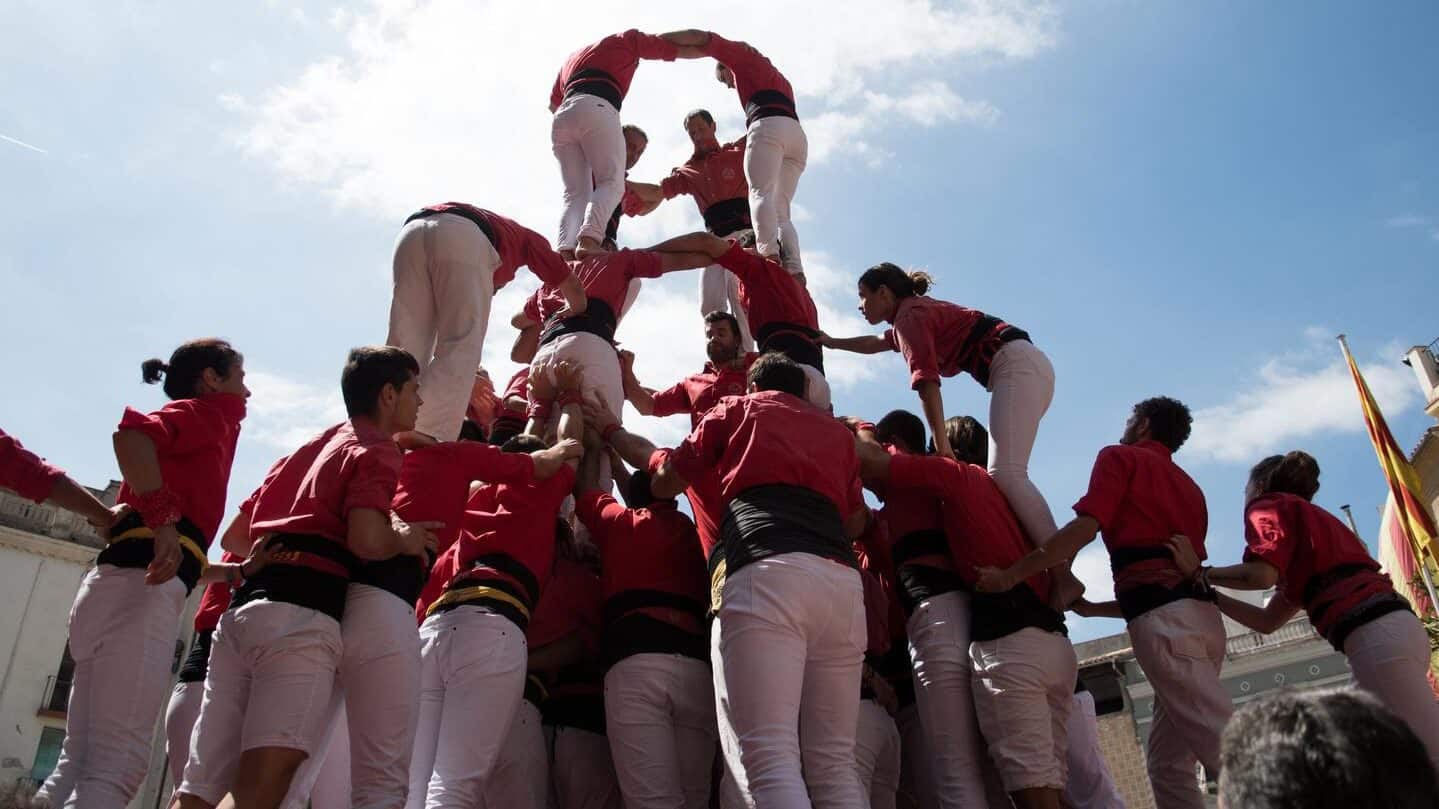
Mobilizing your teams
A trade show is also an opportunity to mobilize your teams, and especially your sales teams, around an important event for your organization. Don’t overlook this unifying aspect, and make the show an internal communication priority.
Humanizing your business relationships
Make the most of it: it’s a chance to talk with your various partners, customers and suppliers in an informal setting (feel free to suggest lunch or a drink) to strengthen your personal relationships with them. This is all the more important in a post-Covid context where the human side of professional relationships was put aside.
Building customer loyalty
Following on from the previous objective, a trade show is a good way to build customer loyalty: some visitors may already be your customers, so take the opportunity to build stronger relationships with them, for example by offering them show-specific deals. Here again, it’s a chance for less formal conversations. It potentially lets other people (on your side and on the customer’s side) meet, and perhaps start an additional relationship (business or otherwise).
On top of that, your customers see you at the show, which signals authority and presence.
Go furtherCheck out our series of articles on trade shows:
- The B2B trade show calendar
- Trade shows: 8 steps to get the most business out of them
- Trade show booths: 13 tips to get the most out of them
The questions we get over and over.
How many objectives should you set for a trade show?
One main objective and no more than two secondary objectives. This lets you focus your efforts and align every strategy, every tactic, with the objectives themselves. Tie a metric to each one: for example, 350 qualified prospects generated or 10 new business partners recruited.
How do you measure traffic at a trade show booth?
By dividing the number of people who stop at your booth by the number of people who walk past it. It's not an exact science, but it gives you an estimate of traffic.
What is trade show payback?
The time it takes to fully recoup the costs incurred for the show with the customers acquired at the show. You can only count revenue attributed directly to the show: so it depends on your attribution model.
Which indicators should you track for a show meant to accelerate your pipeline?
The number of invitations sent and the engagement rate, the number of meetings at the show, the average sales cycle of prospects met at the show and the number of new contacts gained in pipeline accounts.
How do you measure the impact of a trade show on your communication?
By logging the media coverage you got before, during and after the show, by tracking social media (shares, likes, new followers, hashtags) and by counting the attendees who saw your booth.



What the community says.