



- A CDP rests on four building blocks: collect, unify and deduplicate, prepare and enrich, push back to business tools.
- It does not replace the CRM or the marketing automation platform: it feeds them with cleaner data.
- In B2B, check that the CDP can handle relationships between accounts, contacts and opportunities.
- Without concrete, priority use cases, the project risks turning into a Rube Goldberg machine.
- Define one or two business indicators before you start, to measure the ROI.
Honestly, who today manages their customer data in a truly satisfactory way? Hardly anyone. Between the CRM, the website, LinkedIn, the marketing tools, support, the ERP, the prospecting tools and often a few stray Excel files, data is very often too fragmented and therefore poorly used.
This is precisely the problem the Customer Data Platform (CDP) tackles. Since the early 2020s, we have been hearing more and more about these platforms, and many companies are considering deploying one. Their promise, to put it simply, is to unify and prepare all your customer data so it can be activated in your everyday tools (CRM, marketing automation, media campaigns).
In this guide, find out what a Customer Data Platform actually is and what it offers B2B organizations.
A quick bit of context: why everyone is talking about CDPs today
Overall, organizations use a growing number of tools to manage their interactions with customers: the CRM to manage the sales pipeline, the emailing tool for campaigns, advertising platforms for acquisition, support software for customer service, analytics solutions for web tracking, and so on.
Each building block generates its own data, with its own rules and its own formats. Very quickly, you end up with a mass of information scattered across systems that do not always really talk to each other.
All this creates a structural data fragmentation problem. Most marketing and sales stacks are still rarely 100% unified.
Within the same customer file, some information is updated in the CRM, some in the emailing tool, and some in a shared Google Sheet. As a result, when it is time to launch a campaign or prepare a report, you realize the numbers do not add up, duplicates are piling up and nobody is sure they are working with the « right » data.
If this problem sounds familiar, you are in the right place!
This problem has become more visible since the early 2020s, as digital has spread to almost every interaction. Where ten years ago customer data was limited to a few touchpoints, today it is everywhere and multichannel: ad clicks, content downloads, LinkedIn interactions, attending a webinar, store visits, support calls. That makes for just as many valuable signals, provided you know how to connect them.
This challenge is precisely why there is so much talk about Customer Data Platforms (CDPs) today. These platforms aim to collect and unify all this scattered data to create a single, reliable and usable customer view. The goal is not just to « tidy up » the data, but above all to make it available to business tools (CRM, marketing automation, media campaigns) to make marketing and sales teams more effective.
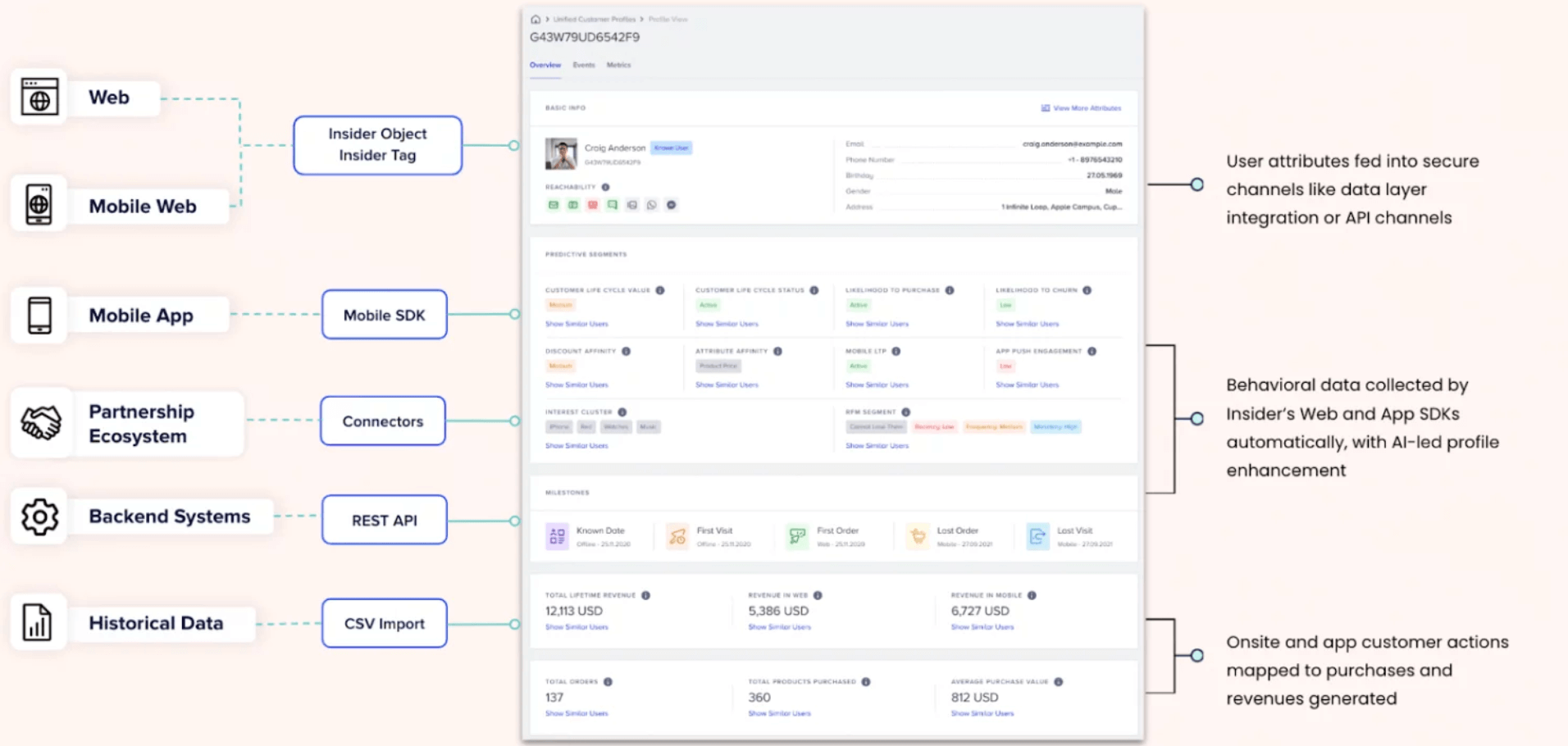
How does a Customer Data Platform actually work?
As we said: a Customer Data Platform (CDP) is used to unify and prepare customer data so it can be activated. But what does that mean in practice?
A CDP rests on four main functional building blocks, each of which addresses a very concrete problem that every organization runs into.
1. Collect scattered data
The first job of a CDP is to connect all customer data sources: CRM, emailing, website, digital advertising, customer support, ERP…
Each tool generates information, but often keeps it to itself. The CDP solves this problem by centralizing all these flows in one single platform.
Salesdorado’s adviceBefore connecting your tools to a CDP, map your existing data flows precisely. You will know which sources to connect first and you will avoid wasting time (and budget) on secondary integrations.
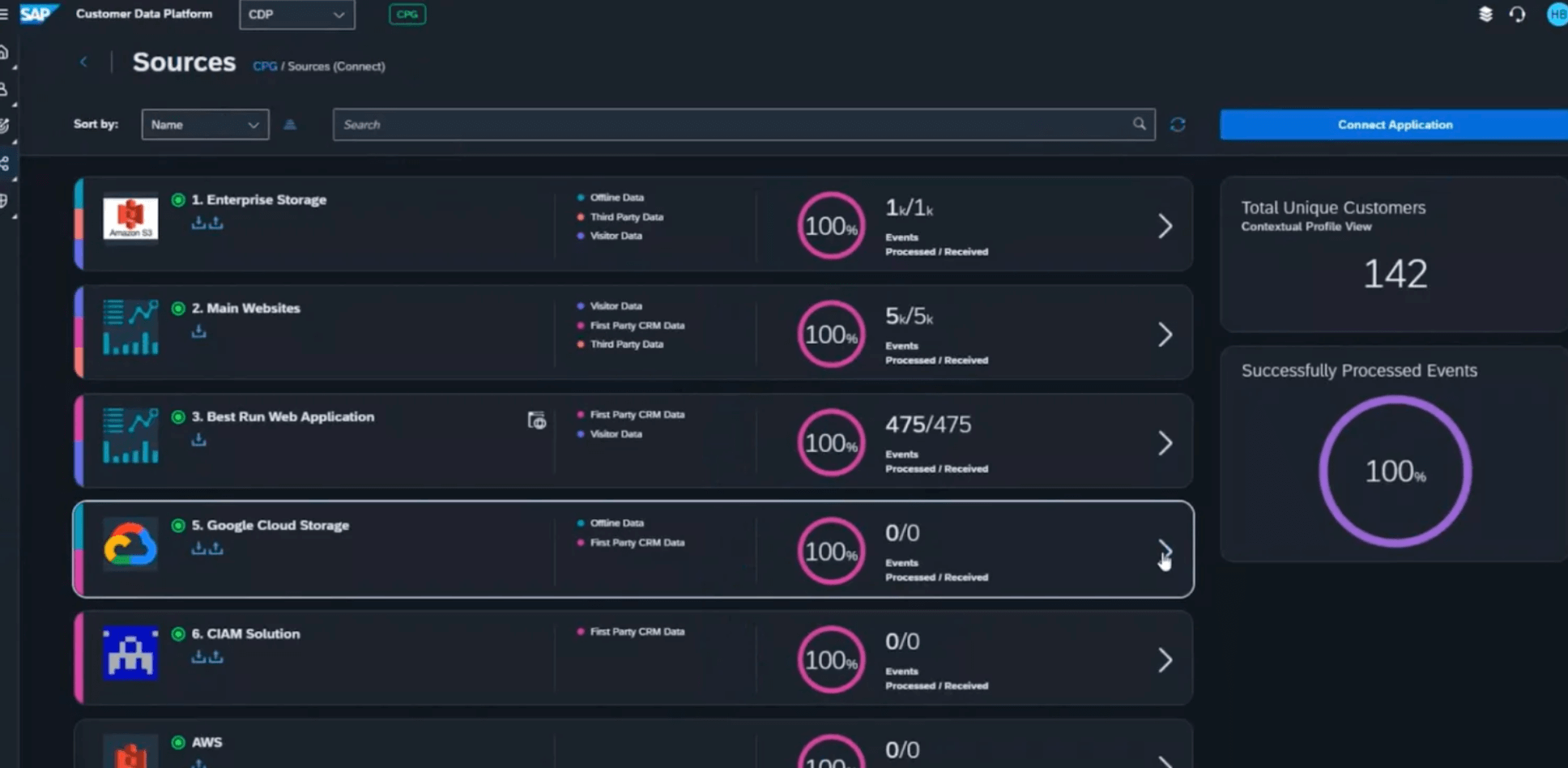
2. Unify and deduplicate
Once the data is collected, it still has to be made usable. That is where data deduplication and the unification process come in: the CDP matches information from different sources to build a single customer record, free of duplicates and continuously enriched.
This is what is called the Golden Record.
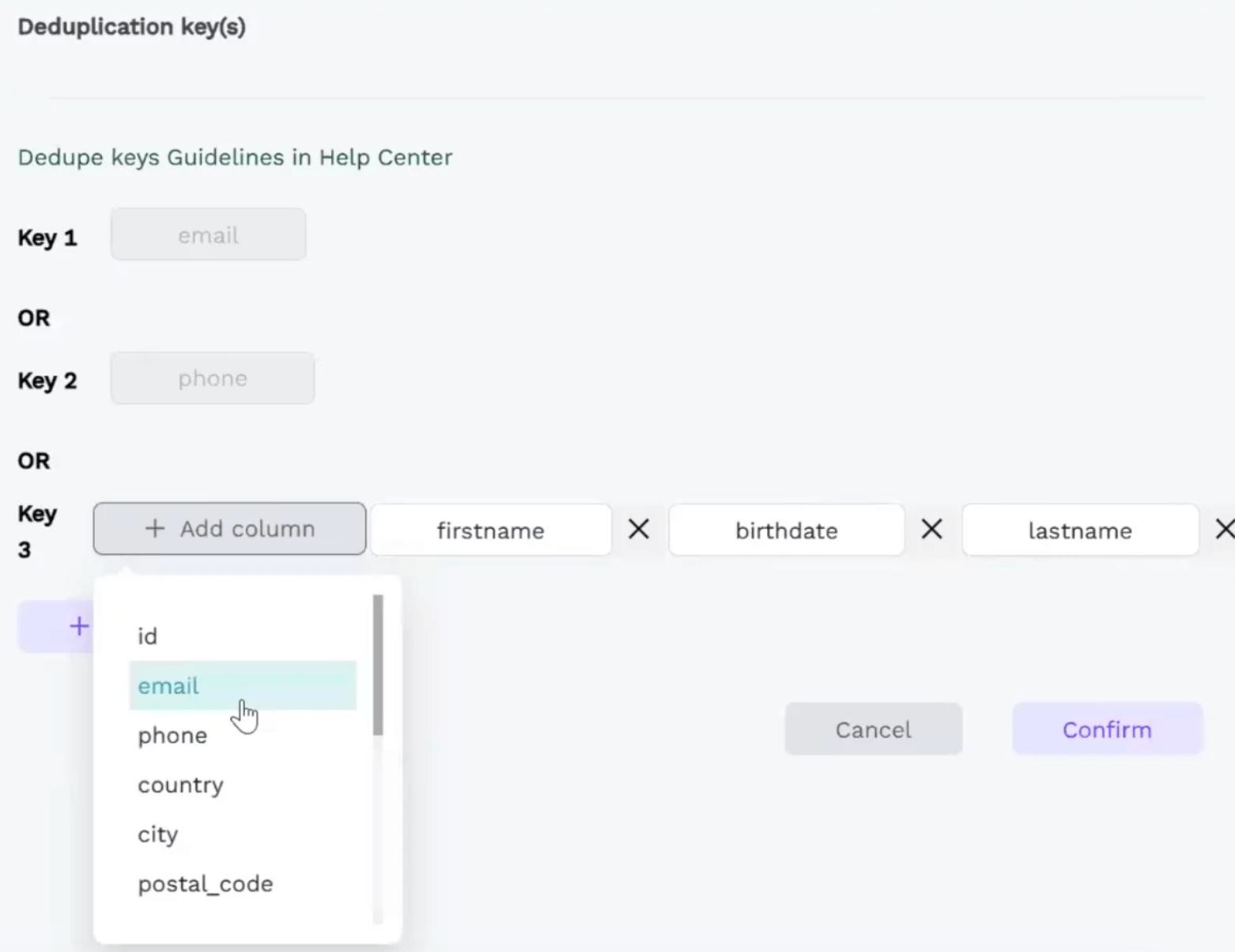
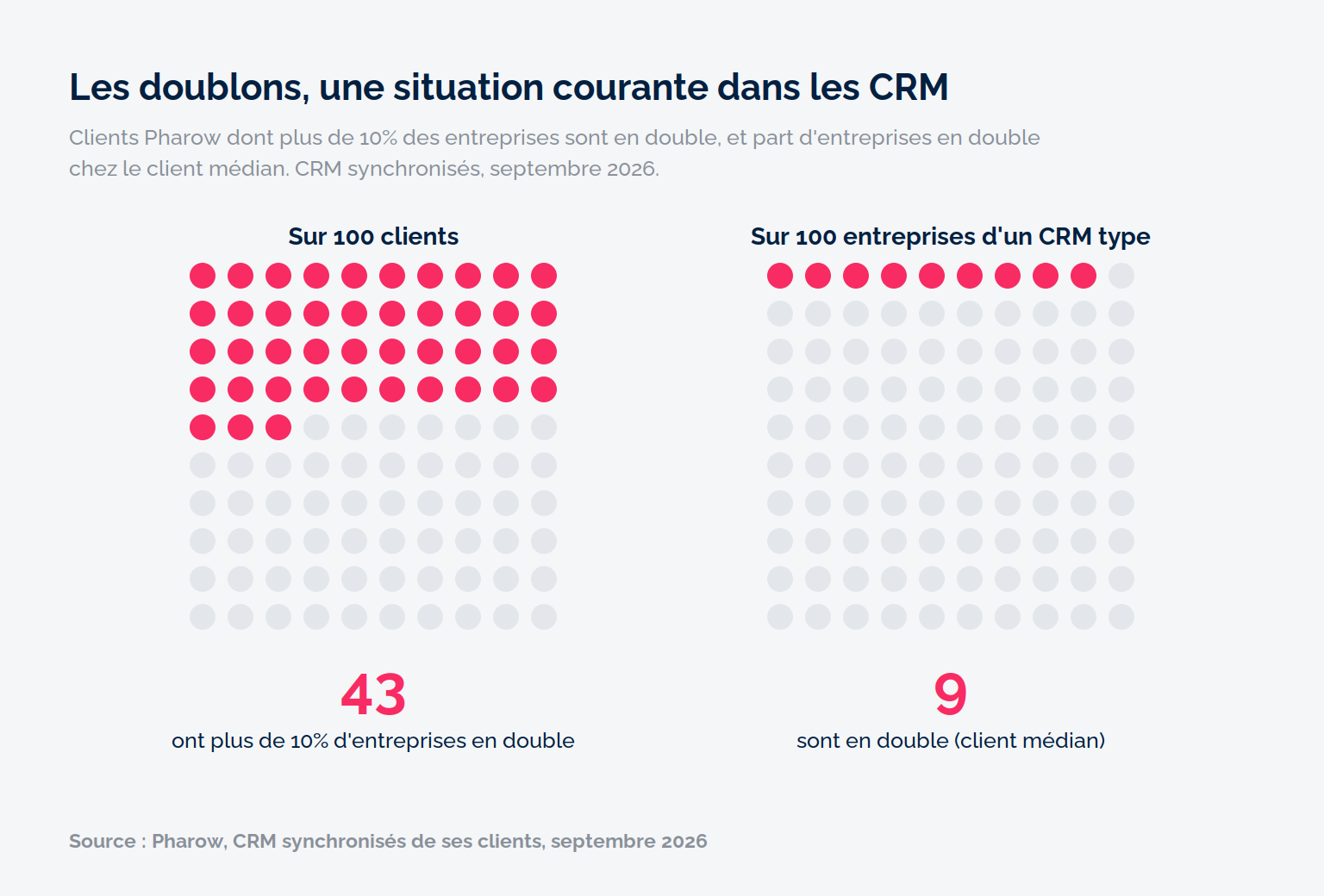
Without this unification (consolidation) step, a reliable view is impossible: the same customer can exist three times in your systems, with different email addresses and a partial history in each tool.
3. Prepare and enrich the data
Raw data is rarely usable as is. There can be inconsistent formats, missing information, input errors…
The CDP brings order to all that. It normalizes fields, calculates useful aggregates (customer lifetime value, purchase frequency, engagement score) and lets you segment the database dynamically.
Salesdorado’s adviceDo not let every team handle the data without a framework: put a data expert in charge of the CDP and define clear governance rules. Business teams must stay in control of using the data, but without steering the quality or enrichment rules on their own. Otherwise, your CDP will turn into an unspeakable mess…
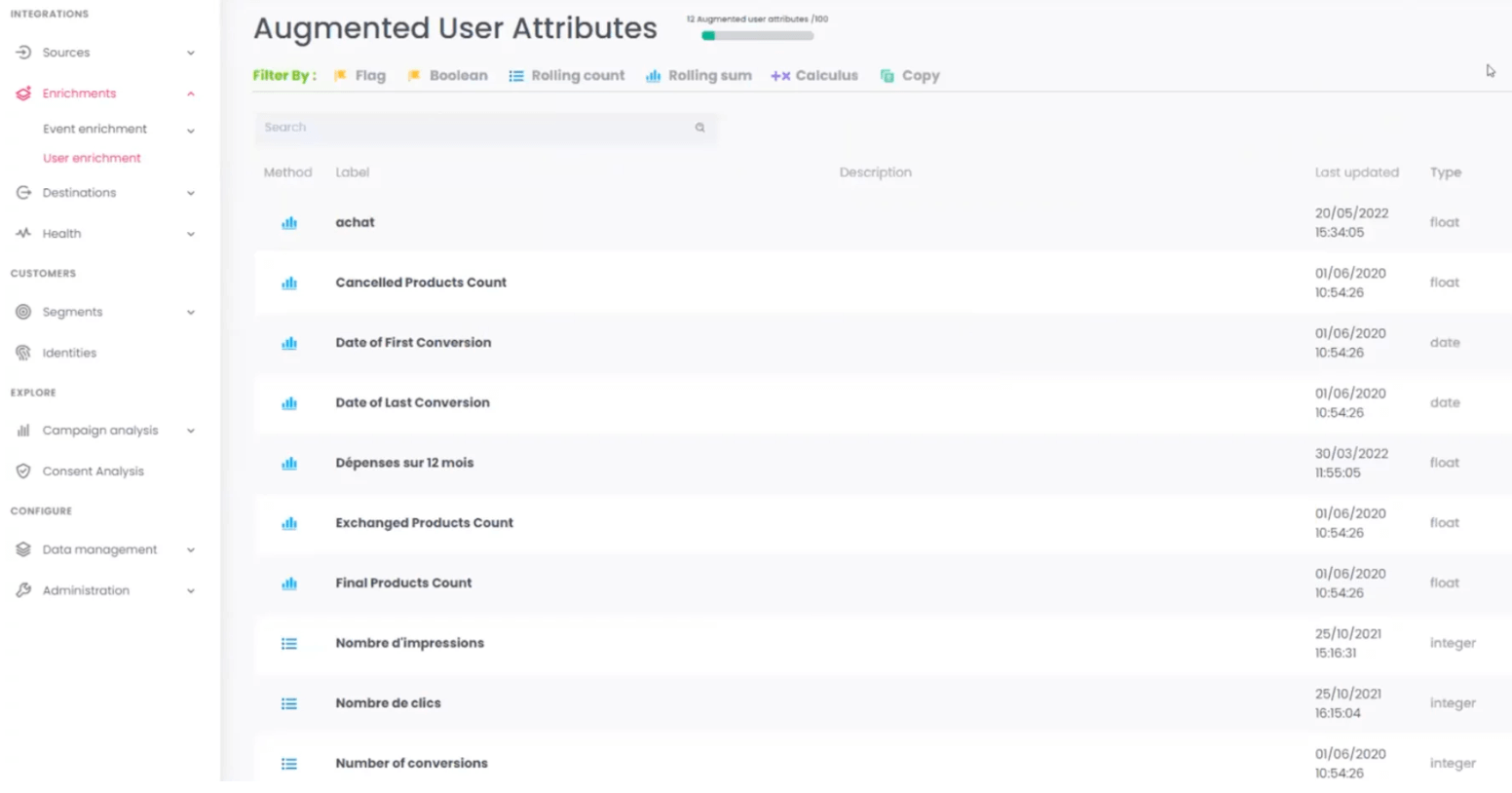
The challenge is to turn a heterogeneous raw material into a quality asset that business teams can use directly.
4. Push data back to business tools
A CDP is not meant to replace your CRM or your marketing automation platform. Its role is to feed them with cleaner, richer data.
Once collected, unified and enriched, the information is pushed back to the activation tools: CRM, media campaigns, automation, BI…
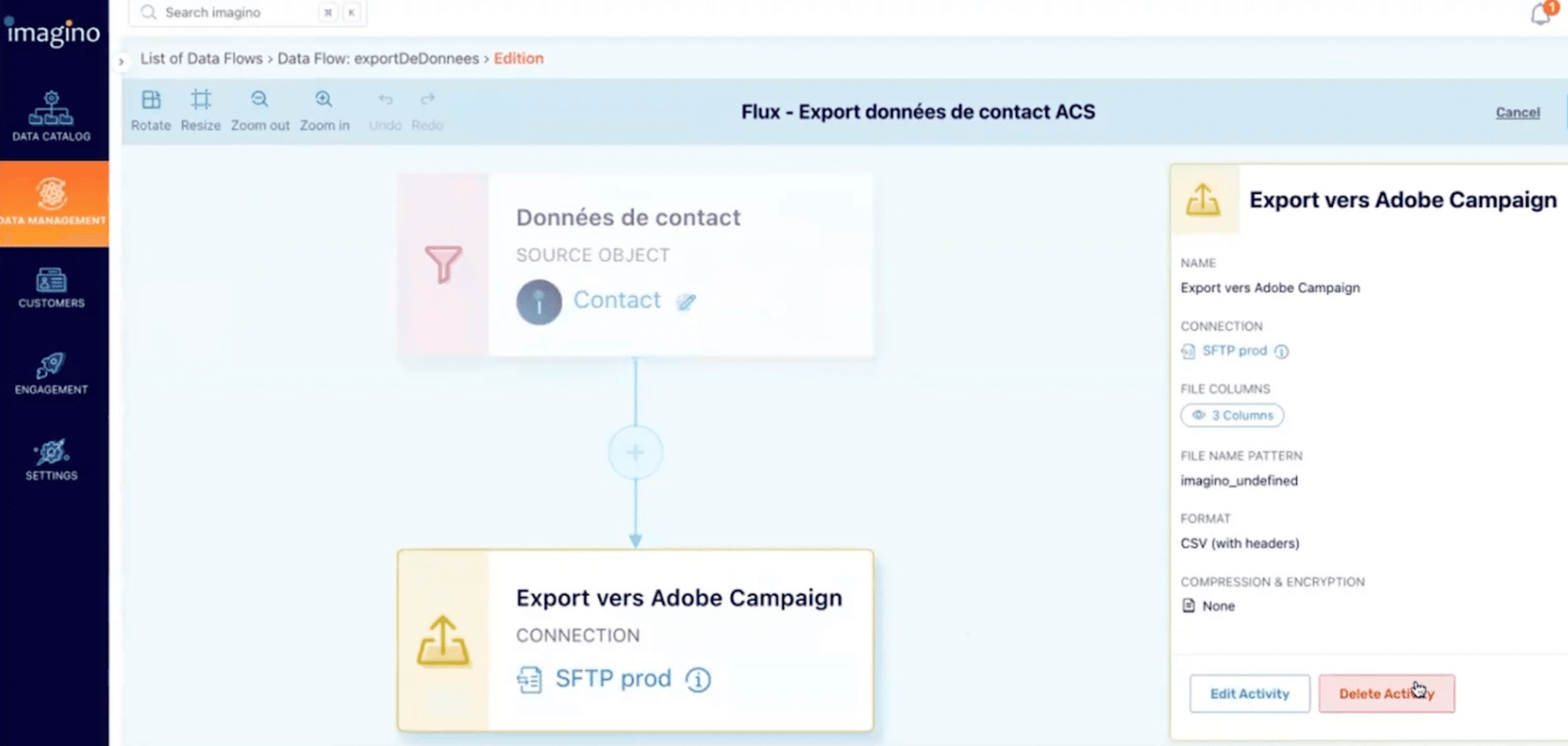
In practice, this means your sales reps have a complete, up-to-date history in the CRM, your advertising audiences update automatically, your marketing workflows finally use reliable segments, and so on.
The CDP ensures that all your business tools work from the same customer truth.
Customer Data Platform: the concrete impact on Sales & Marketing
Originally, Customer Data Platforms were mainly designed for B2C. And that is no accident: data volumes there are much larger (sometimes millions of customers, dozens of touchpoints per journey).
Most CDPs on the market were therefore built to handle these massive use cases centered on the individual consumer.
The problem: in B2B, customer data is structured differently. You always work with two levels: contacts (the people you deal with) and accounts (the companies). Not all CDPs can handle this data model.
You end up with platforms that are very solid in B2C but become unusable as soon as you need to correctly map relationships of the « one account > several contacts > several opportunities » type.
Fortunately, there are excellent Customer Data Platforms that handle B2B data models as well as B2C ones, including:
- Adobe Real-Time CDP: probably one of the most robust platforms on the market. Adobe chose to offer its CDP in two versions: one for B2C and one designed specifically for B2B, with the ability to manage relationships between accounts and contacts. A solution built for large organizations already equipped within the Adobe ecosystem.
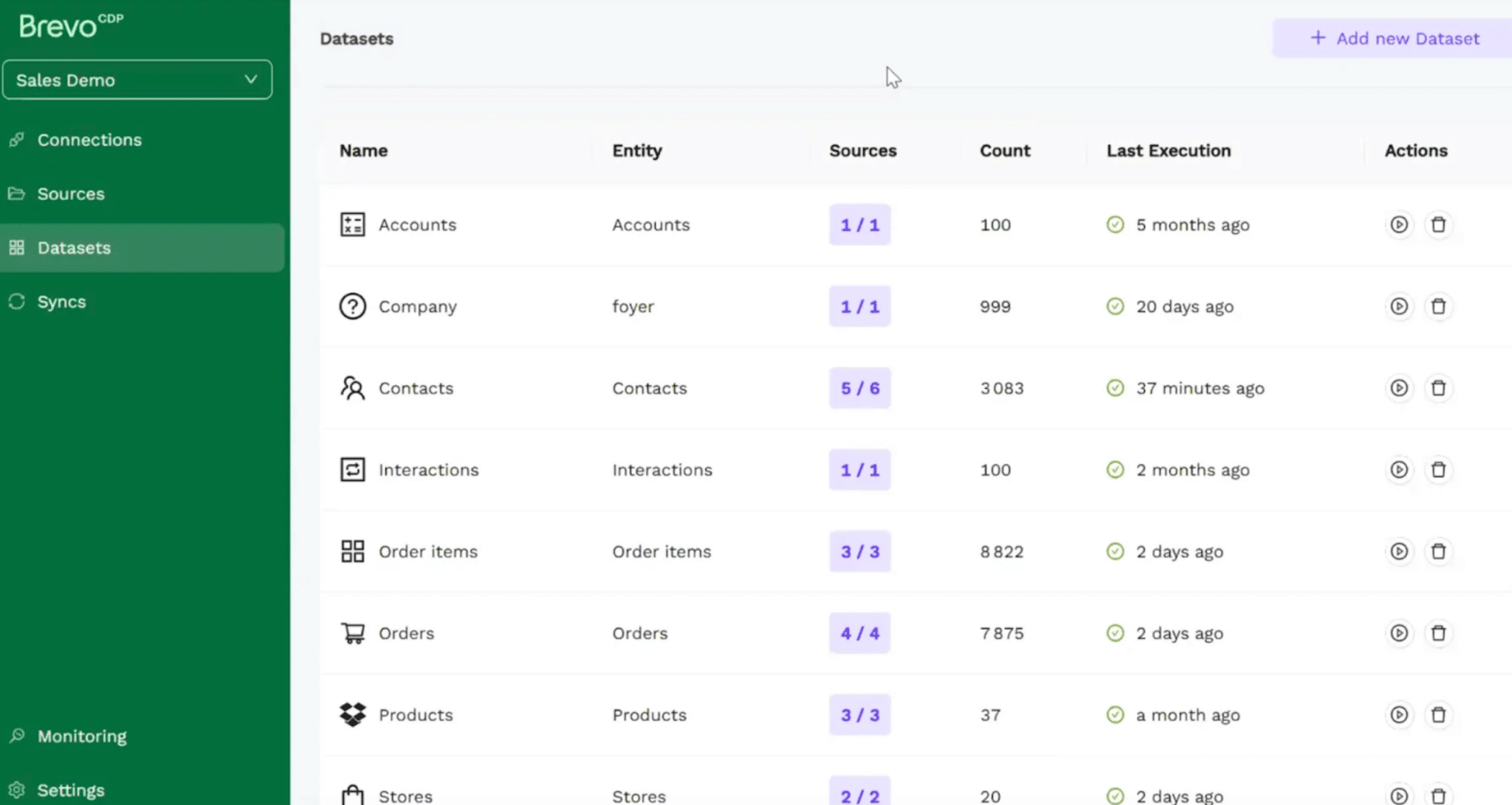
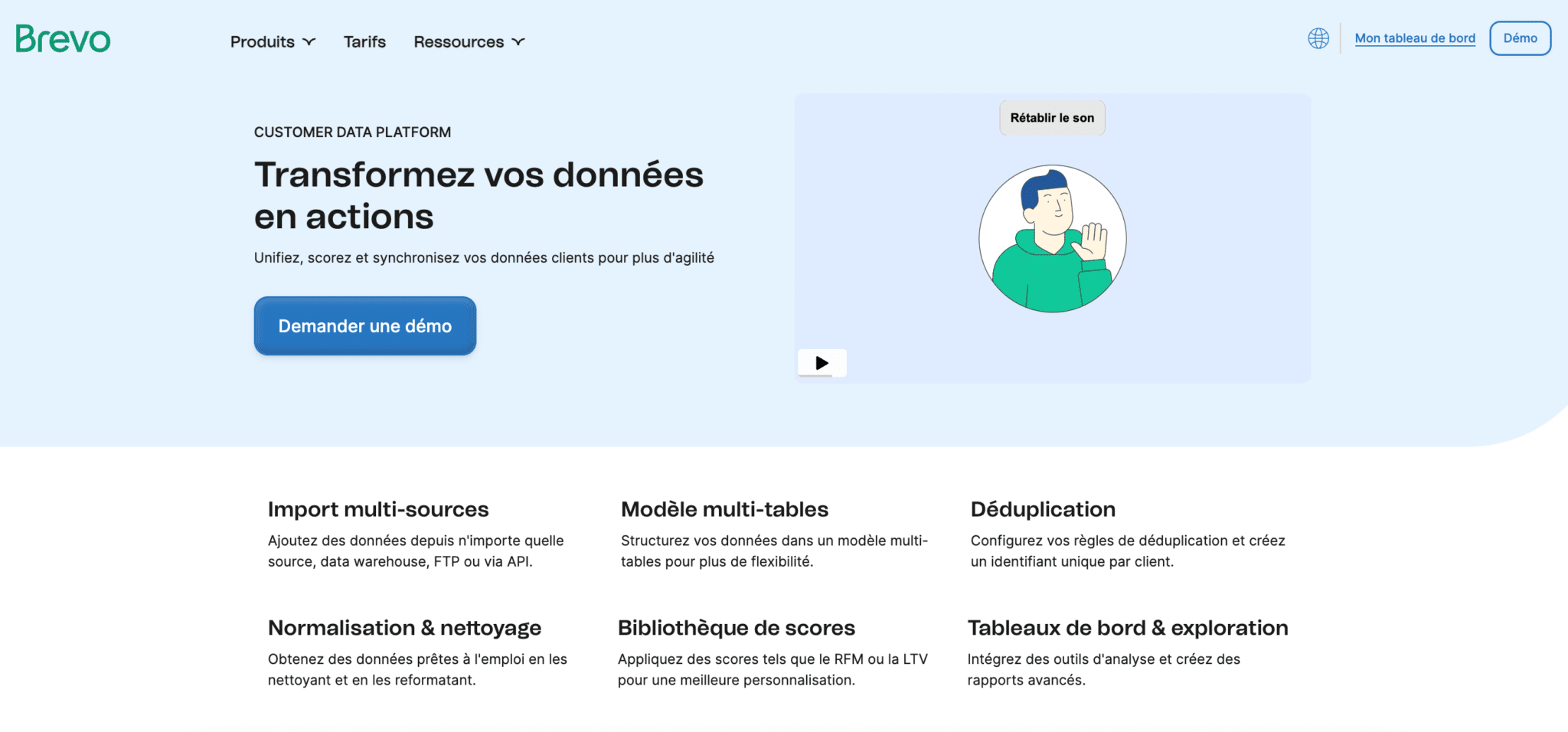
- Brevo CDP: the « CDP » building block from Brevo (Made in France) is fairly recent, but it is already very complete and handles B2B data models. Its advantage is its natural integration with the Brevo CRM and the marketing automation features. It is one of the CDPs best suited to mid-sized companies.
- Bloomreach: a US player that comes from the e-commerce world but has developed real expertise in complex, multi-source environments. Its CDP handles B2B models very well.
- imagino: a European (French) player offering a very CRM-oriented CDP that has been on the rise for a few years. The platform’s UX is really its big strength.
We could also mention Insider, which combines a CDP with real-time orchestration capabilities, Scal-e, a very flexible French solution that adapts well to complex data models, and Twilio Segment, one of the pioneers on the market, which grew out of Tag Management Systems.
The market has matured a lot, and there is now a solid offering that addresses the specific challenges of B2B.
Salesdorado’s adviceThe key to a CDP project is the use cases. But be careful: this is not about listing a few buzzwords (« personalization », « better customer knowledge ») to justify the tool. You need to clearly formalize business needs, work out how data can serve them and, above all, prioritize. It is real requirements work. Honestly, at this stage you are better off getting help from an outside consultant or expert: they will help you turn your hunches into solid, actionable and measurable use cases.
Questions to ask yourself before investing in a Customer Data Platform
A Customer Data Platform project is a structuring project, often a heavy one, that can transform the way your marketing and sales teams use data… but it can also quickly turn into a « Rube Goldberg machine » if you have no real use cases.
Before you get started, ask yourself these questions honestly.
Is your data really scattered?
A Customer Data Platform only makes sense if you genuinely suffer from a data fragmentation problem. Many organizations are still making do with a CRM, an emailing solution, an analytics tool, sometimes customer support, all linked by a few more or less solid integrations.
As long as that remains manageable, there is no point adding an extra layer. On the other hand, if your teams waste time exporting CSV files, cross-checking information in Excel, or if your reports come out differently depending on the source used, then a CDP may be the solution.
Do you need a unified customer view?
This is the heart of the CDP promise. Without it, each team only has a partial view of the customer: marketing sees email opens, sales sees CRM opportunities, support sees tickets, but nobody sees the customer as a whole.
A CDP lets you bring these touchpoints together to build a reliable view that feeds all business tools.
If your sales reps regularly ask « wait, has he already received this email? » or « has he already talked to support? », that is a sign you may need a CDP.
Do you have concrete, priority use cases?
This is probably the most important point. « Doing personalization » or « making better use of data » is not enough. A CDP should not be bought to tick a technology box, but to meet a business need.
Do you want to set up more accurate lead scoring? Launch an account-based marketing (ABM) strategy? Measure customer lifetime value? Feed the CRM in real time with digital signals from the website and campaigns?
It is these concrete use cases that will justify the investment and let you measure the return (ROI).
Can you measure the ROI?
Finally, you have to be clear-eyed: a CDP is an investment. Implementation, integration and operating costs are significant (several tens of thousands of euros minimum).
ROI is rarely measured in « cost reduction » but rather in revenue gains: better conversion rates, more effective campaigns, a shorter sales cycle, better retention.
Before you start, define your metrics: for example, increase the conversion rate by X% thanks to finer scoring, or reduce churn by Y% by detecting weak signals earlier.
Without that, your project risks lacking legitimacy.
Salesdorado’s adviceDo not try to measure everything. Focus on one or two business indicators directly affected by your use cases (e.g. conversion rate or churn rate). Show quick, tangible results: it is the best way to secure internal buy-in for the project.
The questions we get over and over.
What is a Customer Data Platform used for?
To unify and prepare all your customer data so it can be activated in your everyday tools: CRM, marketing automation, media campaigns.
What is the Golden Record?
It is the single customer record, free of duplicates and continuously enriched, that the CDP builds by matching information from different sources.
Does a CDP replace the CRM?
No. A CDP is not meant to replace your CRM or your marketing automation platform. Its role is to feed them with cleaner, richer data.
Why are not all CDPs suited to B2B?
They were first designed for B2C and its large data volumes. In B2B, you work with two levels, contacts and accounts, and not all CDPs can handle this data model.
How do I know if my company needs a CDP?
If your teams waste time exporting CSV files, cross-checking information in Excel, if your reports come out differently depending on the source used, or if your sales reps do not know whether a customer has already received an email or talked to support.


What the community says.