



- 57% of C-level and VP buyers prefer the phone to email, versus 51% of directors and 47% of managers.
- A 100% personalized pitch convinces 67% of buyers to accept a meeting.
- According to CallHippo, calling on Wednesday leads to 46% more conversions; Monday is a bad slot.
- A voicemail longer than 30 seconds stops being listened to.
- Follow up: only 30% of first calls are followed up.
For this article, we relied on several studies, including a Rain Group study that has been widely picked up by many of the articles we source.
Contrary to what many people think, cold calling is not dead: email is admittedly the number 1 sales medium today, but the phone remains necessary and buyers appreciate it.
The goal is to pin down the situations and methods in which phone prospecting still works.
Find the right providerNeed to outsource your prospecting? Find the provider that matches your real needs.
Find a provider
1. The phone is still B2B buyers’ 2nd favorite channel
You can absolutely succeed at phone prospecting: according to a Rain Group study on prospects’ preferred contact methods, the phone is still buyers’ second favorite method, after email.
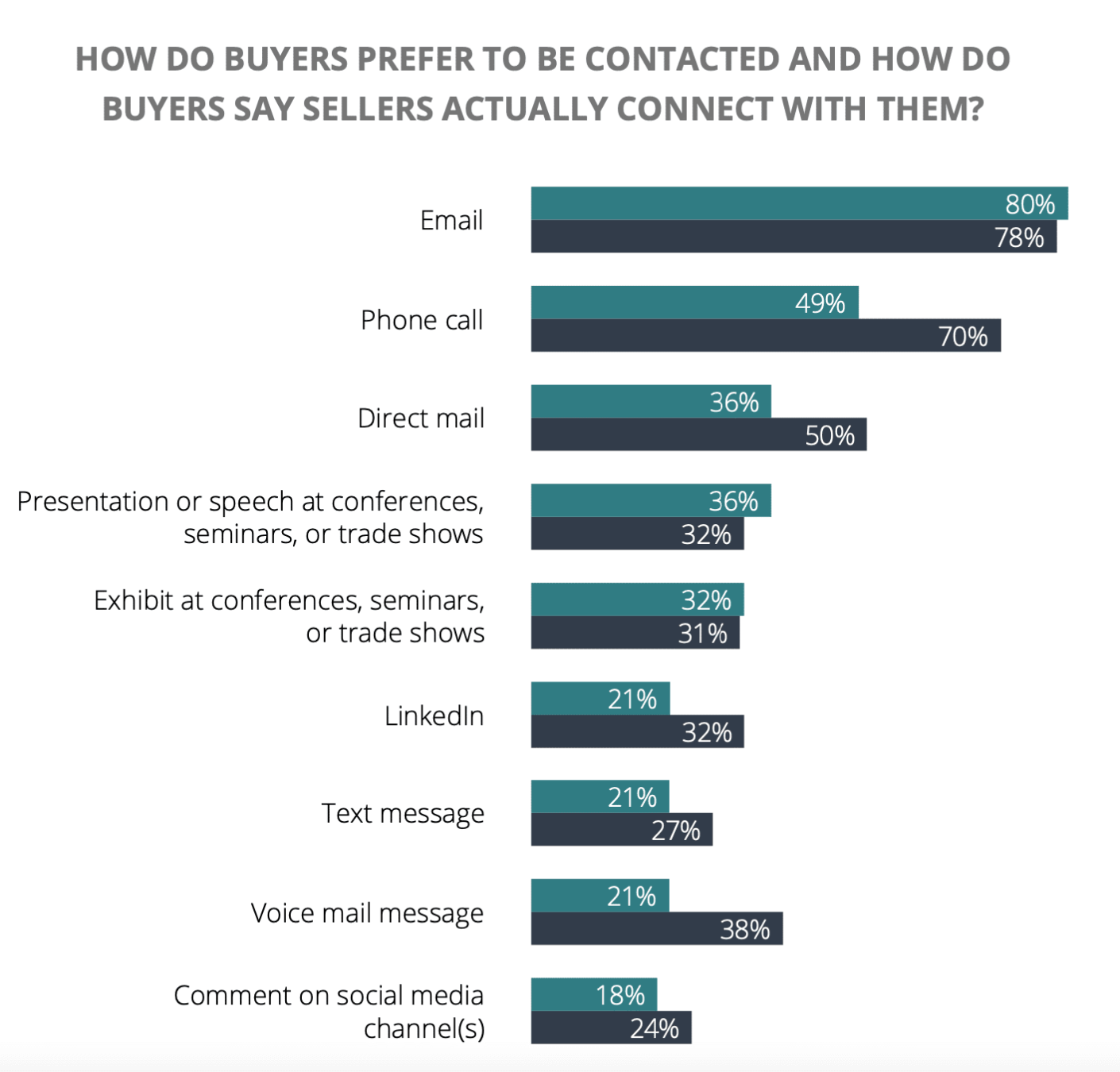
- Of the 15 most effective methods in the study, phone use accounts for 3 of the top 5 statistics (phone calls to existing customers, to former customers and to new contacts).
2. 57% of C-level and VP buyers prefer the phone to email
Still according to Rain Group,
- 57% of C-level and vice-president buyers, whatever their industry, prefer calls. That is more than directors (51%) and managers (47%).
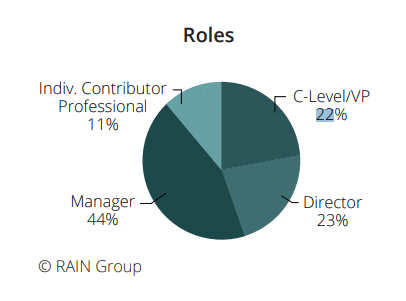
- According to the chart below, C-level and VP buyers account for 22% of sales.
If we look at the type of content they care about,
- 75% of them are likely to be persuaded to book a meeting or connect in some other way by ROI cases. For directors, that figure drops to 64%, and to 59% for administrators.
- The same goes for tailored content written specifically for them, which convinces 75% of C-level or VP buyers, versus 71% of directors and 63% of managers.
3. 69% of buyers took a call from a new vendor in the last 12 months
According to a study by Resourceful Selling, a team of sales experts, 69% of buyers say they took calls from new vendors in the past year.
And the Rain study sharpens this statistic: 82% of buyers say they agree to meet the sellers who reach out to them.
While many prospects prefer to be contacted by email, calls keep working as long as you use the right sales techniques.
Go further
4. Only 37% of prospects feel that the sellers who called them gave them information matching their needs
According to a HubSpot survey, summarized in the chart below, 37% of prospects who had bad sales experiences say the salesperson did not give them relevant information suited to their needs.
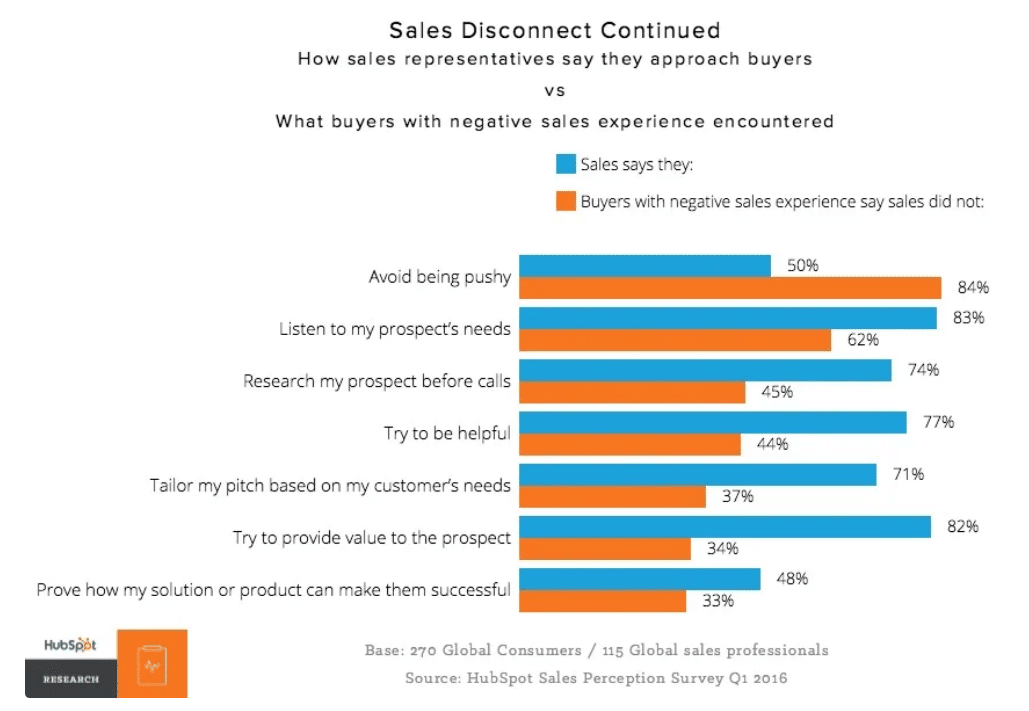
- And 53% of sales meetings bring no added value to the customer.
Yet the Rain chart below, on which prospecting call content is most likely to convince a buyer, shows that:
- 67% of buyers are ready to accept a meeting if the seller’s pitch is 100% personalized
- 66% if the call gives them an overview of how the products or services are used and how they can solve their problems.
- 63% if the call gives them information on new business trends or emerging market trends.
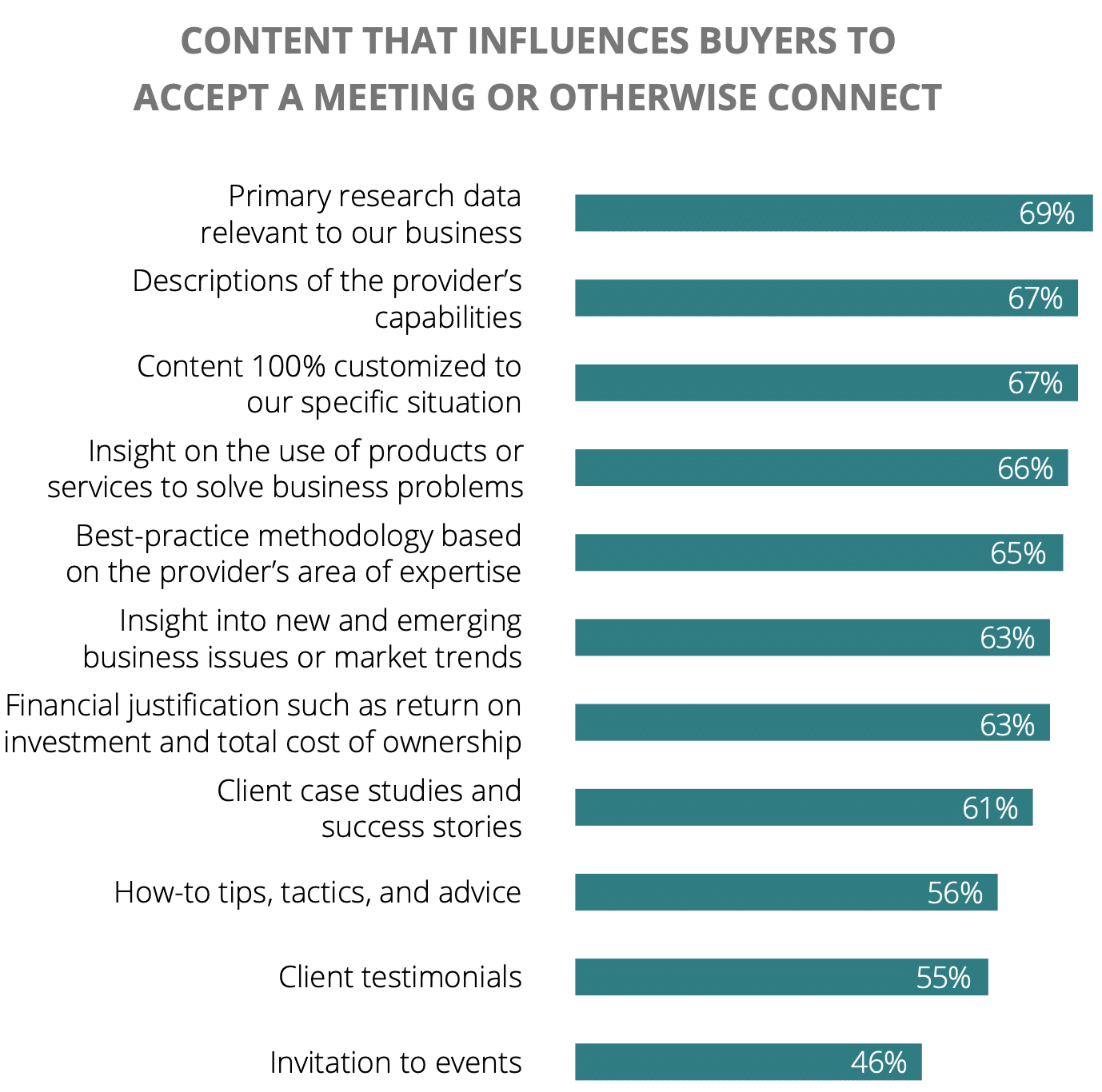
So personalize your content 100% to the prospect’s industry and specific needs, so you don’t roll out a generic pitch.
Bringing the prospect new information about their industry lets you:
- Capture and hold their attention
- Show that you can genuinely add value: you have expertise and you offer a product that truly matches the needs of their industry.
5. 46% more conversions on Wednesdays
According to a Call Hippo study on the best days and times to make your prospecting calls, calling on Wednesday leads to 46% more conversions than the other days of the week.
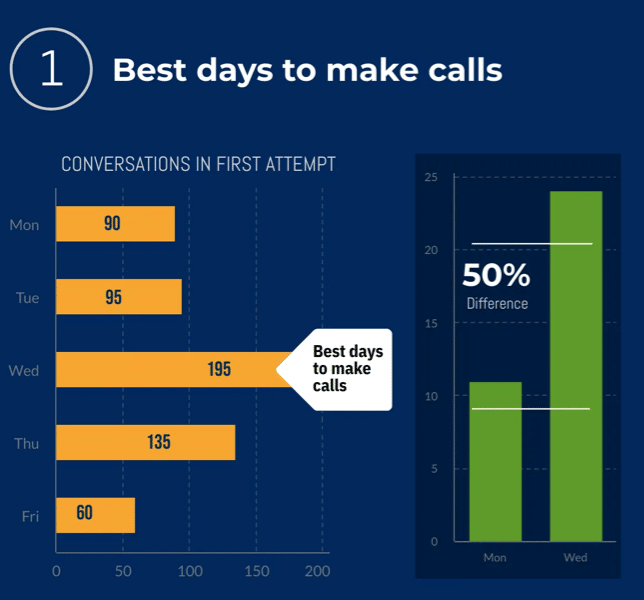
- Mondays are the busiest days and a bad slot.
- Between 4 and 5 pm, then from 11 am to noon: these are the best times for your prospecting calls.
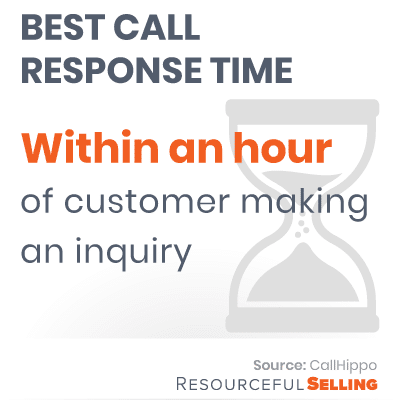
- According to Resourceful Selling, a call is all the more effective when it is made within 60 minutes of the prospect reaching out (downloading a document from your website, sending an email to ask a question, calling, etc.)
Go further
- Write your sales discovery plan for your phone prospecting.
- Learn more about call tracking.
- The call center comparison to outsource your phone prospecting.
6. 71% of buyers prefer sellers to reach out early in the buying process
The Rain study shows that buyers prefer to be contacted at the start of their buying process, when they are looking for new ideas to improve their results.
This is the moment when buyers are actively doing their own research, but also want to be offered new solutions, right from the start of the buying process: factor this in to nail your discovery calls.
7. 80% of calls go to voicemail
According to Resourceful Selling, whose study draws on Ringlead’s, the verdict is clear: you have very little chance of getting your prospect on the phone. 80% of calls end up in voicemail.
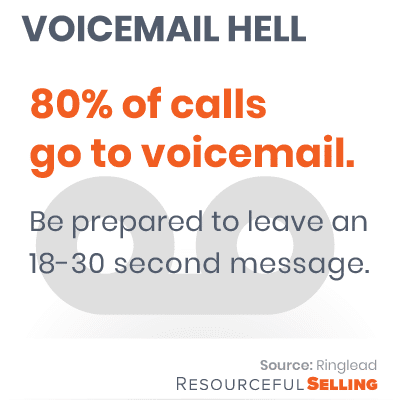
Hence the value of polishing your voicemail message:
- Prospects do not listen to a cold call message for more than 30 seconds, according to an Inside Sales study.
- Every extra second beyond your 30 seconds lowers your chances of reaching customers by 2%.
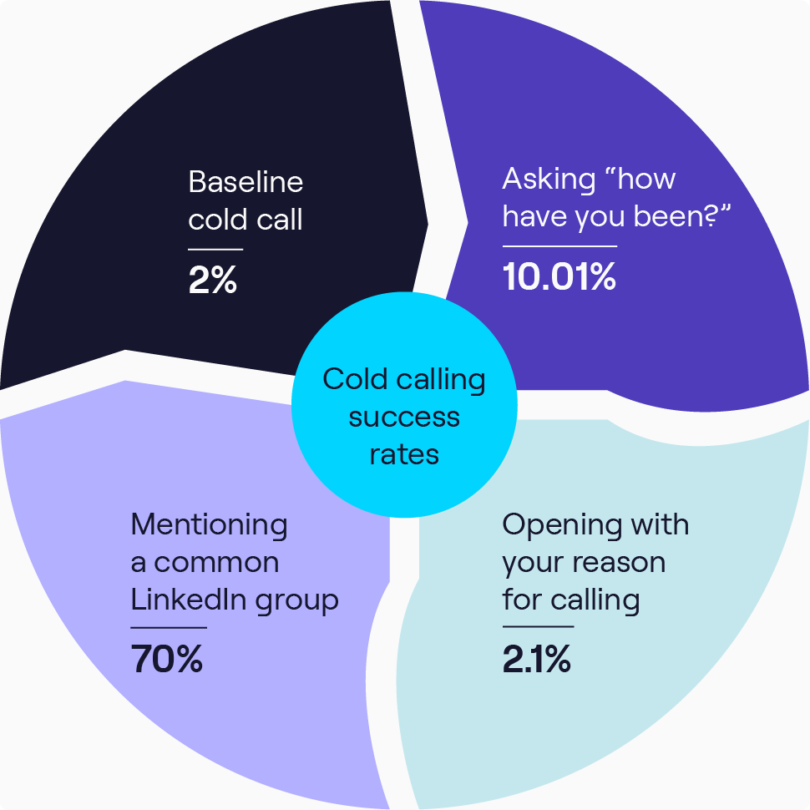
8. A call’s success rate rises to 70% if you mention a mutual connection on LinkedIn
According to Cognism, mentioning a mutual connection on LinkedIn is one of the main success factors of a prospecting call. This applies to LinkedIn but also to any other way of showing shared relationships.
The chart below shows that among the success factors of a prospecting call, mentioning a shared LinkedIn group accounts for 70%.
The Rain chart completes these figures by showing that among the factors that influence whether a buyer connects with a seller,
- 57% of respondents mention a recommendation of the vendor by someone in their company
- 49% point to having relationships in common.
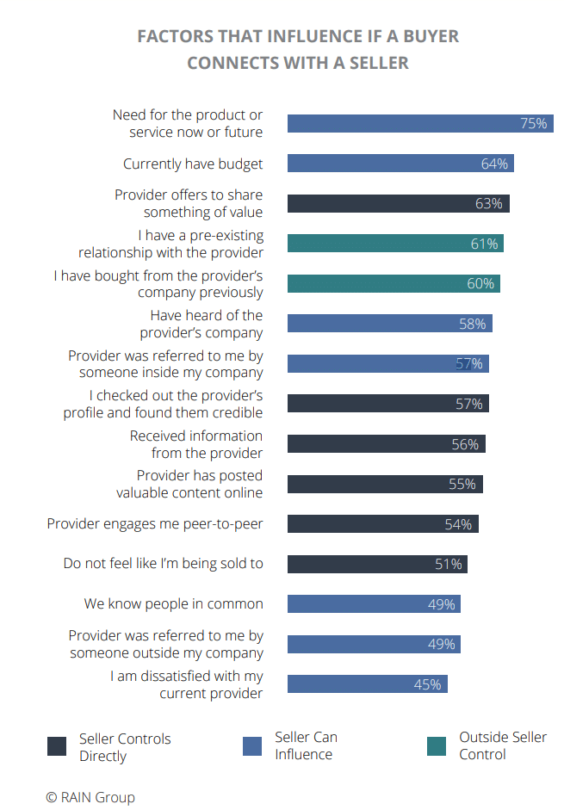
So take care of your LinkedIn and focus your efforts on growing your network: the more connections you have, the more likely you are to build relationships in common.
9. 82% of buyers check the seller’s LinkedIn profile
It is common knowledge that many buyers check the selling company’s online reputation before buying.
- 82% of buyers consider a company more trustworthy if it is active on social media, according to a BrandFog study, cited by Resourceful Selling.
- 90% of buyers say positive online reviews influence their buying decision, according to a Zendesk survey.
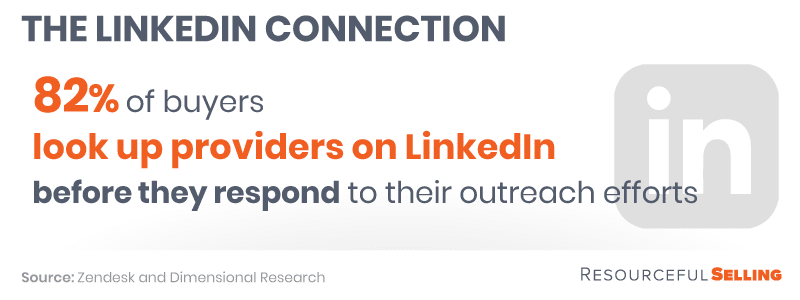
Among social networks, LinkedIn holds a special place: again according to the Rain study, 61% of buyers who frequently accept meetings with sellers first checked their LinkedIn profile.
The seller’s profile on professional networks like LinkedIn matters a lot. It should:
- Let the buyer quickly and clearly identify what the seller sells
- Show that the seller is credible
- And it is even better if the prospect finds mutual connections there (see our point 8)
10. It takes 6 calls on average to have a chance of reaching a prospect
The CallHippo chart below shows that you will need an average of 6 calls to have a chance of reaching a prospect.
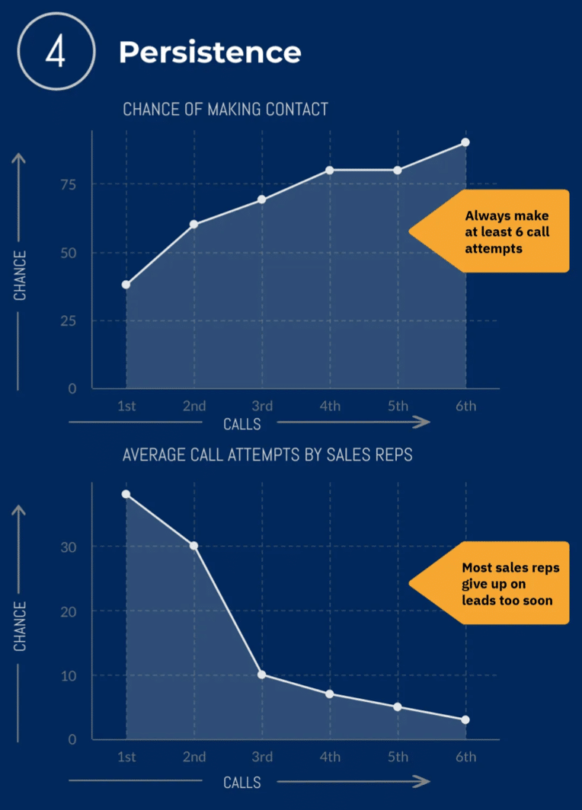
- Although follow-ups are key to converting a prospect, only 30% of first calls are followed up.
- The more you persist, the more you will stand out, because statistically 2/3 of your competitors won’t.
Go further
- The best phone prospecting training courses.
- How to qualify a prospect over the phone?
- Build phone prospecting into your sales prospecting plan.
- The Top 10 phoning software.
The questions we get over and over.
Is the phone still effective for B2B prospecting?
Yes. According to Rain Group, the phone is still buyers' second favorite method, after email, and 82% of buyers say they agree to meet the sellers who reach out to them.
What is the best day for a prospecting call?
Wednesday: according to a CallHippo study, calling that day leads to 46% more conversions than the other days of the week. Mondays are the busiest days.
How many calls does it take to reach a prospect?
An average of 6 calls to have a chance of reaching them, according to CallHippo. Yet only 30% of first calls are followed up.
How long should a prospecting voicemail be?
No more than 30 seconds: according to an Inside Sales study, prospects do not listen to a cold call message any longer, and every second beyond that lowers the chances of making contact by 2%.
What content pushes a buyer to accept a meeting?
According to Rain Group, 67% of buyers accept a meeting if the seller's pitch is 100% personalized, 66% if the call shows how the products can solve their problems, and 63% if it brings information on new trends in their market.



What the community says.