



- Start from your revenue goal: with an average deal size of 10,000 euros and a 10% conversion rate, 1 million euros in revenue takes 1,000 qualified leads over the year, or about 83 a month.
- The ICP describes the ideal company, the buyer personas the decision-makers who work there.
- A sequence has 6 to 12 touchpoints over 3 to 4 weeks, and each one has to bring the prospect something.
- Automate follow-ups and CRM updates, not discovery calls.
- Measure every day, every week and every month, and ask your prospects for their opinion too.
Sales prospecting is the lifeblood of any business.
And yet, how many startups and SMBs get started without a real sales prospecting plan? Because yes, prospecting is something you plan, something you organize, and it has to fit into a real strategy.
In this article, we’ll see how to structure a sales prospecting plan from A to Z.
Whether your team is a single salesperson or a few dozen, this guide will give you the tools to build an efficient, scalable prospecting machine. Gone are the days of shooting in the dark and hoping to hit your target. By following these 6 steps to build your prospecting plan, you’ll be able to set up a prospecting strategy that converts, can be measured and keeps improving.
Ready to build a solid lead machine? Let’s go!
Find the right providerNeed to outsource your prospecting? Find the provider that matches your real needs.
Find a provider
Step 1: Define your sales prospecting goals
Before diving headfirst into prospecting, take the time to define your goals clearly. It’s the foundation of any effective sales prospecting plan. Without precise goals, you risk flying blind and wasting time and resources.
Set goals using the SMART method
Your prospecting goals must be SMART, meaning: Specific, Measurable, Achievable, Realistic and Time-bound. Forget vague intentions like “I want more customers”. Aim instead for concrete goals such as “Get 20 qualified meetings per month with decision-makers at tech SMBs within the next 3 months”.
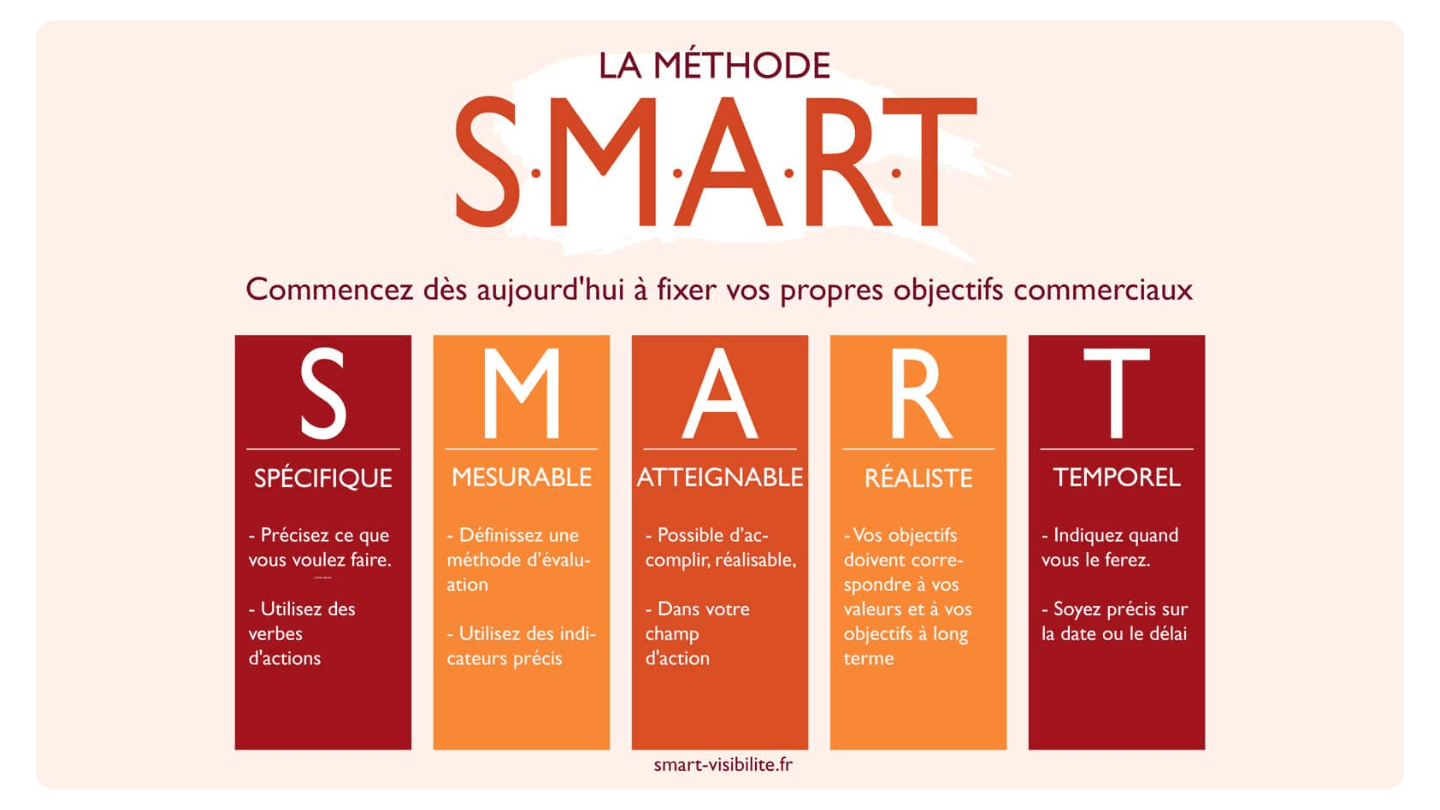
Here are a few examples of SMART goals for your prospecting:
- Generate 50 qualified leads per month via LinkedIn by the end of the quarter
- Raise the conversion rate of your prospecting emails from 2% to 5% in 2 months
- Land 10 meetings a week with prospects who match your ICP
For each goal, define intermediate sub-goals. For example, if you’re aiming for 50 qualified leads a month, set yourself a target of 15 leads a week. That way you can track your progress and adjust your strategy along the way if needed.
Align your prospecting goals with your overall sales goals
Your prospecting goals shouldn’t be disconnected from the reality of your business. They have to fit into your overall sales strategy. This is where a lot of startups and SMBs go wrong: they set prospecting goals without taking into account their real capacity to handle and convert the leads generated.
Ask yourself these key questions:
- What is your revenue goal for the year?
- How many new customers do you need to win to reach it?
- What is your average lead-to-customer conversion rate?
- What is the average value of a customer over their lifetime (LTV)?
- How many leads can your sales team handle effectively?
From there, you can work out how many qualified leads you need to generate each month, week or day to reach your goals.
A concrete example: let’s say your goal is to reach 1 million euros in revenue this year. Your average deal size is 10,000 euros, so you need 100 new customers. If your lead-to-customer conversion rate is 10%, that means you need to generate 1,000 qualified leads over the year, or about 83 a month.
Don’t settle for quantitative goals. Build qualitative goals into your sales prospecting plan as well. For example:
- Improve the qualification of your leads to raise your conversion rate
- Shorten the average time between first contact and signature
- Raise your prospects’ satisfaction with your sales process
Don’t be afraid to be ambitious, but stay realistic. Goals that are too easy won’t push you to outdo yourself, while unreachable goals risk demotivating your team.
Salesdorado’s tipDon’t underestimate how much this step matters! Taking the time to define clear, aligned goals lets you focus your efforts where it really counts. It’s the foundation of effective, profitable prospecting. Revisit your goals regularly (at least every quarter) to make sure they stay relevant as your market and your business change.
Step 2: Identify and segment your target
You’ve defined your goals, well done! Now you need to pin down exactly who you’re going to talk to. Effective prospecting is, first and foremost, targeted prospecting.
Create your Ideal Customer Profile (ICP)
The ICP (Ideal Customer Profile) is the identity card of the ideal company you want to sell to. It isn’t a person, but an organization that gets the most value out of your product or service.
To define your ICP, ask yourself these questions:
- What industry does this company operate in?
- What is its size (number of employees, revenue)?
- Where is it located geographically?
- What are its main challenges and goals?
- What is its level of technological maturity?
Salesdorado’s tipAnalyze your best current customers. What do they have in common? It’s an excellent basis for defining your ICP.
Develop your buyer personas
Once your ICP is defined, dig into the details by creating your buyer personas. This time, these are typical profiles of the decision-makers within your ICP. To fully understand the difference with the ICP and how the two fit together, we’ve written an article on the subject: ICP vs Buyer Personas.
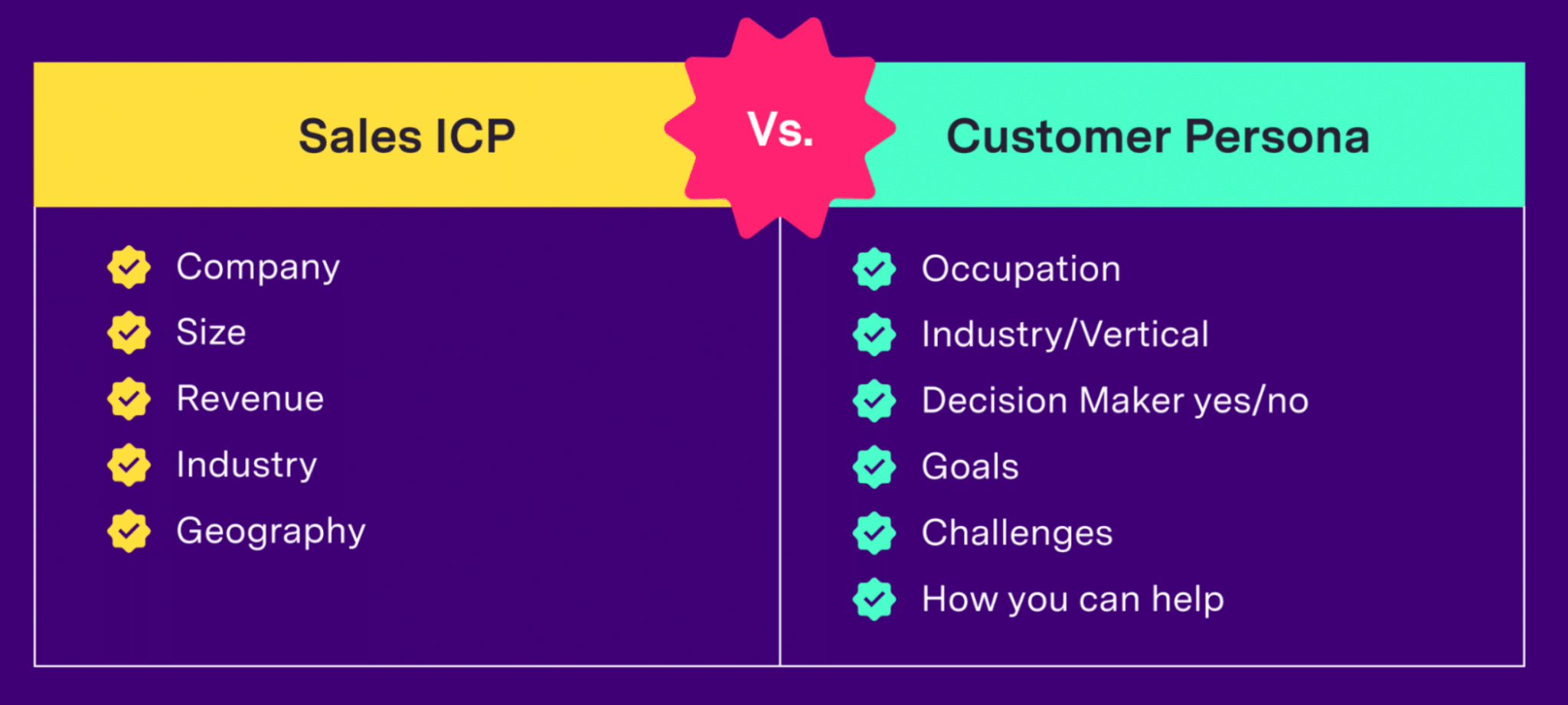
For each buyer persona, detail:
- Their job title and responsibilities
- Their professional and personal goals
- Their main day-to-day challenges
- Their purchase decision criteria
- Their preferred sources of information
Don’t hesitate to create several personas. In a company, several people can be involved in the buying process.
Segment your prospect database
Now that you have your ICP and your buyer personas, it’s time to segment your prospect database. Segmentation lets you adapt your approach to each group to maximize your chances of conversion.
A few segmentation criteria that are classic but remain the foundation in B2B:
- Company size (micro-businesses, SMBs, mid-market companies, enterprise accounts)
- Industry
- Geographic location
- Level of maturity regarding your offer
- Revenue potential
Salesdorado’s tipCreate a scoring system to prioritize your prospects. Assign points based on criteria such as fit with your ICP, urgency of the need, or available budget. And finally, focus first on the prospects with the highest score.
Step 3: Choose your prospecting channels
You now know who you’re targeting. The next step is to work out how to reach them effectively. That’s where prospecting channels come in.
Assess the different channels
There are many prospecting channels, each with its pros and cons:
- Cold calling is still a must: it offers a direct, personal exchange with your prospects, even if it can sometimes come across as intrusive when it isn’t handled well. To avoid falling into that trap, discover the keys to succeeding at phone prospecting.
- Email prospecting, for its part, has the advantage of being cheap and easy to automate, but it can suffer from low open rates in overloaded inboxes.
- Social selling, especially on LinkedIn, has become an excellent way to network and establish your expertise. But keep in mind that this approach takes time, since you have to build a credible online presence.
- Events and trade shows give you the opportunity to meet many qualified prospects in a short time, but they can turn out to be expensive and time-consuming.
- Finally, inbound marketing attracts prospects who are already interested in your area of expertise, but results can take a while to show.
Salesdorado’s tipDon’t limit yourself to a single channel. Combining several approaches is often the most effective way to maximize your impact and your chances of conversion.
Salesdorado’s tipFed up with Excel files? A good CRM software lets you take your prospecting up a real notch. Discover our selection of the best free CRM software.
Adopt a multichannel approach
The multichannel approach, which means using several channels in your prospecting efforts, increases your chances of reaching your prospects where they are most receptive.
Here is an example of a multichannel sequence:
- Day 1: LinkedIn connection + personalized message
- Day 3: Introduction email
- Day 5: Phone call
- Day 7: Sending a piece of valuable content by email
- Day 10: Follow-up call
Adapt your channels to your targets
Not every channel works the same way for every target. Use your buyer personas to determine the most relevant channels for each segment.
For example:
- Young startups are often more receptive on social media
- Enterprise accounts may require a more formal approach, combining emails and phone calls
- Independent professionals are sometimes easier to reach by phone
Test different combinations of channels and measure the results. Over time, you’ll identify the most effective sequences for each segment of your target. And don’t forget: whatever channel you choose, the quality of your message is paramount. Always make sure you bring value to your prospect, rather than simply selling them your product or service.
Choosing your channels is a key step in building a sales prospecting plan. It has to be thought through and aligned with your goals, your target and your resources. Obviously, feel free to experiment and adjust your approach based on the results you get. A testing culture should be at the heart of your prospecting strategy.
Step 4: Create your sales prospecting sequence
Now that you’ve identified your targets and chosen your channels, it’s time to structure your approach by creating what’s called a prospecting sequence. It’s a key part of your sales prospecting plan. A good sequence lets you interact with your prospects in a consistent, relevant way. It increases your chances of conversion.
Define the number and frequency of touchpoints
The first step is to decide how many times and how often you’re going to contact your prospects.
There’s no golden rule, but here are a few guidelines:
- Aim for 6 to 12 touchpoints over a period of 3 to 4 weeks.
- Space your interactions 2 to 3 days apart at first, then gradually increase the interval.
- Adapt the frequency to how your prospects react.
Salesdorado’s tipDon’t be afraid to be persistent, but stay professional. Most sales close after the 5th contact.
Create valuable content for each interaction
Every touchpoint in your sequence must bring value to your prospect. So don’t just repeat your sales pitch every time.
On the contrary, you need to vary your approaches. For example:
- First contact: You briefly introduce yourself and explain why you’re getting in touch.
- Second contact: You share a relevant piece of content (case study, white paper, blog post) related to your prospect’s challenges.
- Third contact: You suggest a discovery call to understand the prospect’s specific needs.
- Following contacts: You alternate between sharing content, asking for feedback and tailored value propositions.
Automate some steps of your sequence
Automation can greatly improve the efficiency of your prospecting, as long as it’s used wisely.
Among the classic elements you can automate:
- Sending follow-up emails
- Reminders for calls to make
- Updating prospect status in your CRM
- Sending personalized content based on the prospect’s actions
Be careful not to over-automate, though. Key interactions, such as discovery calls or answers to specific questions, should stay personal.
Salesdorado’s tipUse tools like HubSpot or Pipedrive to automate your sequences while keeping a personal touch.
Example of a B2B prospecting sequence:
- Day 1: Personalized introduction email
- Day 3: LinkedIn connection + personalized message
- Day 5: Phone call (if there’s no answer, leave a voicemail)
- Day 8: Email sharing a relevant piece of content (case study, white paper)
- Day 11: Follow-up call
- Day 15: Email proposing a discovery meeting
- Day 20: Last follow-up via LinkedIn or email
Don’t forget that a prospecting sequence isn’t set in stone. You need to test different approaches, analyze the results and keep adjusting. The key is to find the right balance between persistence and respect for the prospect.
A well-designed prospecting sequence lets you stay top of mind with your prospects throughout the sales cycle. It structures your approach, guarantees consistent follow-up and increases your chances of turning your leads into customers. Take the time to design it carefully, and don’t hesitate to refine it over time based on your results.
Salesdorado’s tipFed up with Excel files? A good CRM software lets you take your prospecting up a real notch. Discover our selection of the best free CRM software.
Step 5: Prepare your resources and tools
You’ve defined your goals, identified your targets, chosen your channels and created your prospecting sequence. Well done! But before you dive in headfirst, there’s one crucial step left: using the right prospecting tools and the right resources. It’s the lifeblood of effective, scalable prospecting.
Build your prospect database
Your database is the heart of your prospecting strategy. Without qualified prospects, even the best sequence in the world will be useless.
Here’s how to go about it:
- Identify your data sources: LinkedIn Sales Navigator, industry databases, business directories, etc.
- Enrich your data: Use tools like Clearbit to add relevant information (email, phone, exact job title) to the contacts in your database.
- Clean your database regularly: Remove duplicates and update outdated information. A clean database is the guarantee of effective prospecting.
Salesdorado’s tipGo for quality over quantity. 100 well-qualified prospects are worth more than 1,000 inaccurate contacts.
Select the right tools
The right tools can make the difference between tedious prospecting and a well-oiled machine. Here are the essentials:
- The CRM, which is the cockpit of your prospecting. HubSpot, Pipedrive or Salesforce are excellent options depending on your needs and your size.
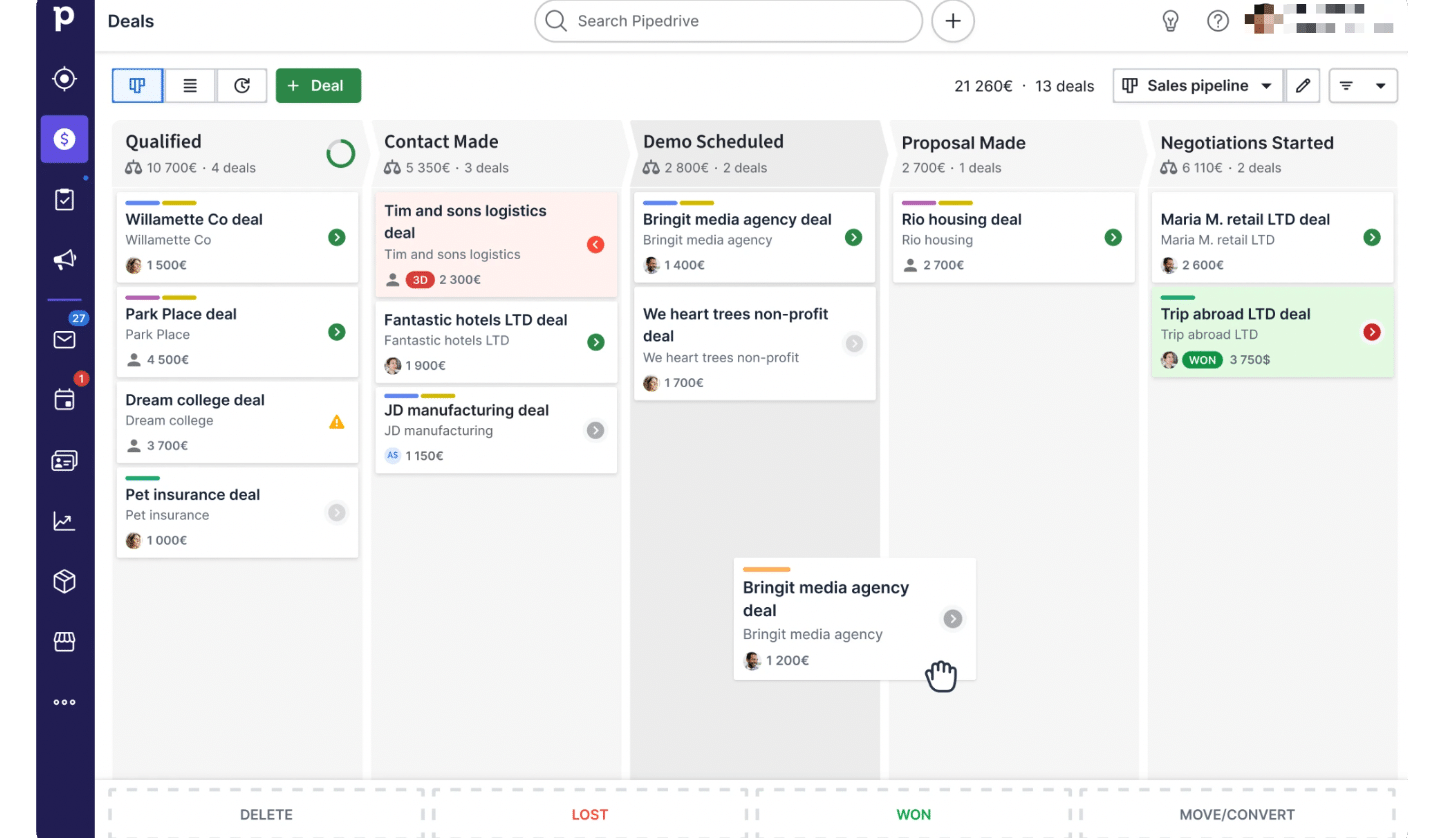
- Sales automation tools, to manage your prospecting sequences. Lemlist, Outreach or Reply.io are safe bets.
- Email signature tools, for professional, tracked signatures. If you’re interested, we’ve compared the main e-signature software.
- Meeting scheduling tools, to make life easier for your prospects.
- Data enrichment tools, to fill in missing information about your prospects.
A word of caution: make sure all your tools integrate well with each other. The goal is a smooth workflow, not spending your time juggling between different platforms.
Create your scripts and message templates
Having ready-to-use templates will save you precious time.
With that in mind, you can prepare:
- Call scripts, not to recite word for word, but to have an outline to follow.
- Email templates, for each step of your prospecting sequence.
- LinkedIn messages, for your connection requests and follow-ups (find out how to prospect on LinkedIn the right way).
- A company presentation, for example a clear, concise PDF document you can send to interested prospects.
Train your team
If you’re lucky enough to have a sales team, make sure it masters all the tools and resources you’ve put in place. Organize training sessions and create a best practices guide.
Keep in mind that preparation is the key to successful prospecting. Invest time in setting up your resources and tools, and you’ll reap the rewards very quickly. Don’t forget: a good salesperson spends more time preparing than prospecting!
Step 6: Measure and optimize your performance
You’re there! Your sales prospecting plan is in place, your sales reps are on deck and the first results are starting to come in. But don’t rest on your laurels: the key to high-performing prospecting over the long term is continuous measurement and optimization.
Define your prospecting KPIs
Without clear indicators, there’s no way to know whether your efforts are paying off.
Here are the essential KPIs to track:
- Response rate: How many prospects reply to your outreach?
- Qualification rate: Among the replies, how many actually match your ICP?
- Meeting conversion rate: How many qualified prospects accept a meeting?
- Opportunity conversion rate: How many meetings turn into sales opportunities?
- Cost per qualified lead: How much does it cost you to acquire a qualified lead?
Set up regular tracking
Measurement only makes sense if it’s regular.
Put tracking routines in place:
- Daily: Number of contacts made, replies received.
- Weekly: Response rate, number of meetings booked.
- Monthly: Conversion rate, cost per lead, trend analysis.
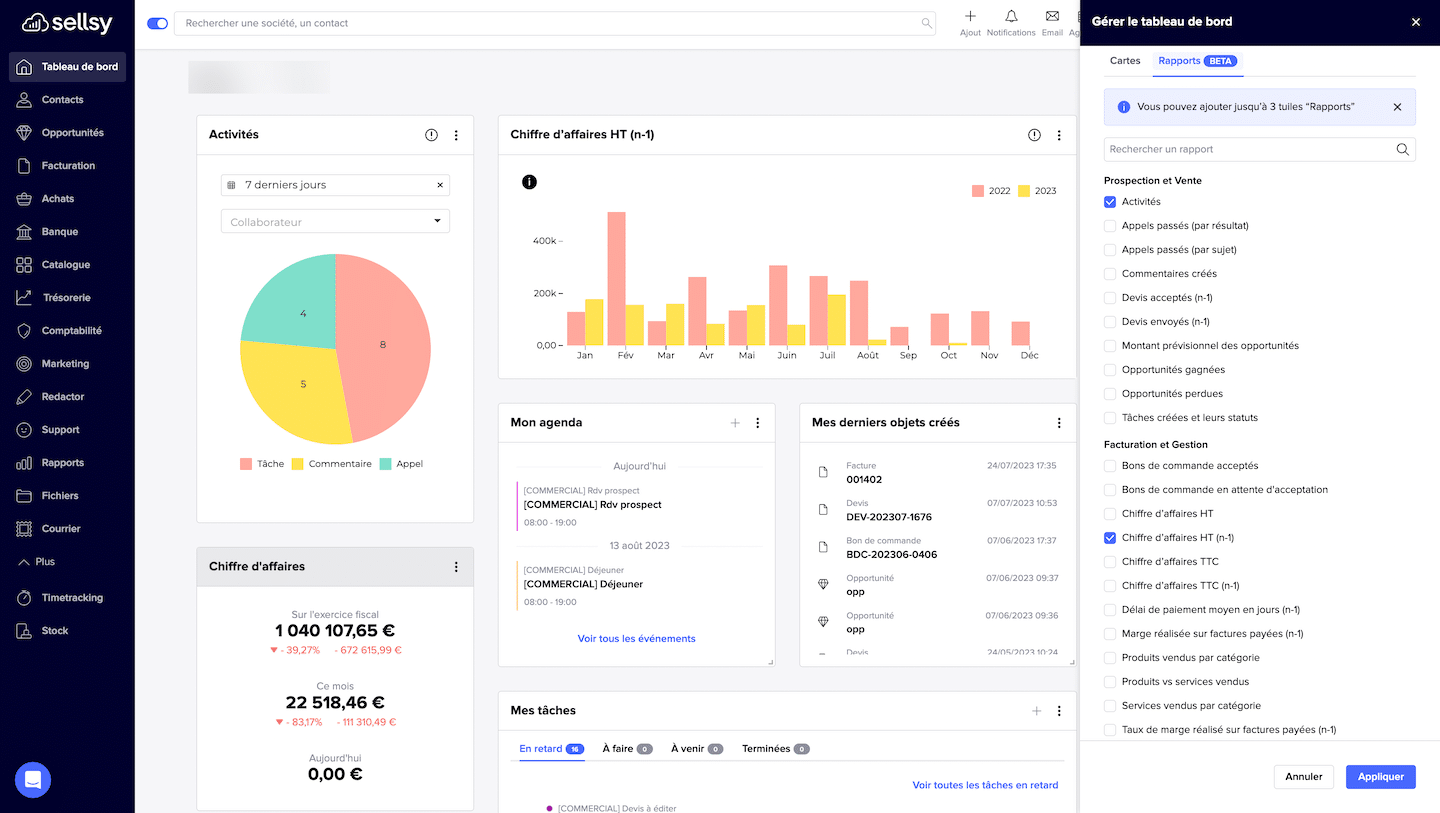
Use visual dashboards in your CRM to get an overview at a glance. A complete sales prospecting plan goes from planning the actions all the way to analyzing them.
Iterate and keep improving your plan
Prospecting isn’t an exact science. What works today may not work tomorrow. So you need a continuous improvement mindset. In your sales prospecting plan:
- Test different approaches: vary your hooks, your channels, your contact times.
- Analyze what works (and what doesn’t): identify the best practices of your top salespeople.
- Train your team continuously: share results and best practices in regular meetings.
Listen to your prospects and customers
Finally, don’t forget the most valuable source of information: your prospects and customers themselves. Ask them regularly for feedback on your prospecting process. What did they like? What annoyed them? Their feedback is a goldmine for optimizing your approach.
Conclusion
There you go! You now have all the keys to build a sales prospecting plan worthy of the name. From defining your goals to optimizing your performance, by way of identifying your targets and creating your sequence, you have all the ingredients to turn your prospecting into a real machine for generating qualified leads.
Remember: a good sales prospecting plan is never set in stone. It evolves, adapts and gets better over time. Don’t be afraid to experiment, to test new approaches, to question your habits. The key to success lies in your ability to adapt quickly to feedback from the market.
Finally, always keep in mind that behind every prospect there’s a human being. Sure, tools, processes and KPIs matter a lot. But never forget the importance of empathy, listening and personalization in your sales approach. We tend to forget it far too often, especially on digital channels!
The questions we get over and over.
What is a SMART prospecting goal?
A goal that is specific, measurable, achievable, realistic and time-bound. Rather than “I want more customers”, aim for example for “Get 20 qualified meetings per month with decision-makers at tech SMBs within the next 3 months”.
How many leads do you need to generate to reach your revenue goal?
Start from your target revenue, your average deal size and your conversion rate. For 1 million euros in revenue with an average deal size of 10,000 euros, you need 100 new customers; with a 10% lead-to-customer conversion rate, that makes 1,000 qualified leads over the year, or about 83 a month.
What is the difference between an ICP and a buyer persona?
The ICP (Ideal Customer Profile) is the identity card of the ideal company you want to sell to: an organization, not a person. Buyer personas are the typical profiles of the decision-makers within that ICP.
How many touchpoints should a prospecting sequence include?
Between 6 and 12 touchpoints over a period of 3 to 4 weeks. Space your interactions 2 to 3 days apart at first, then gradually increase the interval, adapting the frequency to how your prospects react.
Which KPIs should you track to measure your prospecting?
Response rate, qualification rate, meeting conversion rate, opportunity conversion rate and cost per qualified lead.



What the community says.