



- The B2B decision-maker identifies their problem, compares solutions online, reads reviews and runs trials before contacting a salesperson.
- Build a content library (guides, articles, white papers, case studies) that your salespeople share at the right moment in the journey.
- Salespeople who publish their own content position themselves as advisors, and win the trust of wary buyers.
- Marketing and sales must agree on the definition of a qualified lead, share the same content library and meet regularly.
It’s no secret: B2B sales have always been hard. But they may be even harder today. Salespeople feel they’ve lost control over the sales process. As studies show, B2B buyers increasingly prefer to research and select products themselves, without being influenced by a salesperson:
- Only 29% of buyers want to talk to a salesperson to learn more about the product.
- 57% of purchase decisions are made before any phone contact.
- 34% of salespeople admit that B2B sales have become harder.
But this isn’t inevitable. If you want to keep selling as much as you did in the past, you first need to understand the new dynamics and trends in B2B sales. Then you need to get familiar with the new sales strategies that will let you hit your sales targets.
That’s what this article is about. Find out how to adapt your B2B sales processes.
Today’s B2B buying process is not what it used to be
The B2B sales process has gone through major changes in recent years. Most of the sales strategies that worked in the past no longer work today. If you work in B2B sales, you’ve probably realized that processes are a lot harder today. Before, when a decision-maker needed a product or a solution, they got in touch with different vendors to have their offers presented and to negotiate. If they were happy with an offer, they bought. The process was fairly simple. Marketing was in charge of generating leads, of getting prospects into the conversion funnel. Salespeople were in charge of turning leads into customers. It was a predictable model.
The B2B customer journey has changed profoundly. Today, a B2B decision-maker goes through an impressive number of steps before buying:
- The decision-maker identifies the problem.
- They research online to qualify their problem.
- They keep researching online to identify all the potential solutions.
- They ask the people around them for recommendations and look at what people say about the proposed solutions on social networks, forums…
- For each existing solution, they type its name into Google and read reviews.
- They test the proposed solutions during a trial period.
- Along the way, they may click on an ad offering a solution to their problem.
- Once they’ve gathered all the information available, and only then, they contact the companies offering the solution or solutions they’ve shortlisted.
In short, the B2B decision-maker has become much more independent. One study showed that when the decision-maker contacted the company for the first time, between 60% and 70% of the decision-making process was already done. B2B salespeople seem to have much less of a grip. The decision-makers are the ones in a position of strength. These changes in the B2B buying journey have led to marketing becoming far more powerful. Marketing teams have a lot more work than before! They’re the ones who can influence potential buyers during their research phase, notably through content marketing. The role of salespeople has shrunk, even though it remains decisive in many cases for closing deals. These changes call for deep shifts in the way we think about B2B sales processes.
Also worth readingCheck out our guide on the art of setting up effective sales processes.
Portrait of the new B2B decision-maker / buyer
In a video published on YouTube, Google’s B2B director Hanne Tuomisto-Inch pointed out that the average age of B2B decision-makers had dropped a lot over time. Today, a large number of people aged 18 to 35 have the power to make purchasing decisions within their company. These young decision-makers grew up with new technologies. They use them every day to feed their decision process. These sociological changes have triggered a revolution in the act of buying B2B products or services. Many of these young decision-makers have gotten into the habit of searching online themselves, finding things out, reading content on their own rather than contacting companies. An Accenture study showed that 94% of B2B buyers said they researched online before making a decision. The same study shows that decision-makers draw on a huge number of digital sources to make their decisions: websites, search engines, media and blogs, social networks… That’s the first big change.
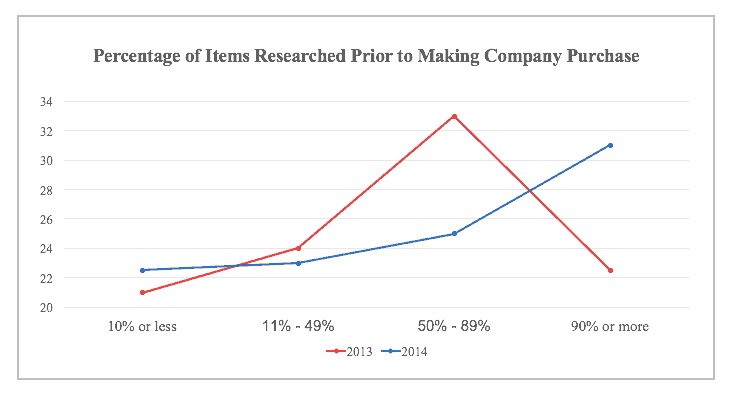
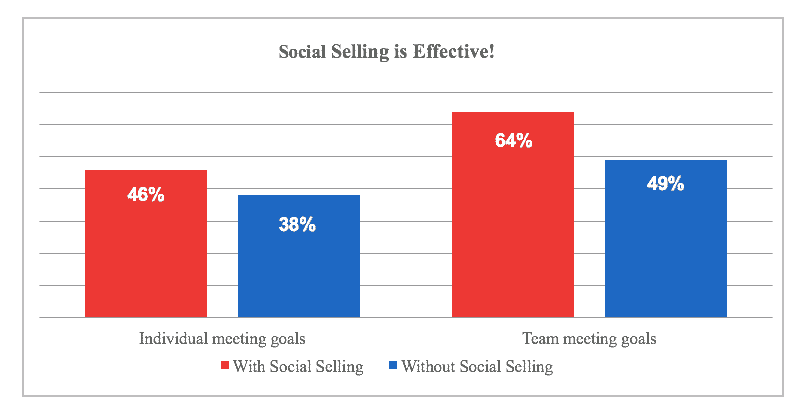
Second finding: the modern decision-maker has become much more skeptical of marketing and sales messages. A Forrester report showed that 59% of buyers preferred to do their research online rather than interact with a salesperson, reasoning that a salesperson’s goal is to sell more than to bring real solutions. The same study states, unsurprisingly, that for 68% of decision-makers, the priority is to be in touch with a salesperson who listens to their needs and brings them relevant information. The study also shows that salespeople who include a social selling dimension in their strategy tended to perform better.
Another major change: modern decision-makers take more time on average than before to make their purchase decision. The length of the sales cycle has increased in recent years. There are several explanations for this. First, more people are generally involved in the decision. Another explanation is that, once again, decision-makers have access to a lot more information. Going through all the information available takes time.
Another shift lies in the role of recommendations. Modern decision-makers give a lot of weight to recommendations from their peers. They increasingly use social networks, forums and review sites to find out what others think. A Forrester study showed that decision-makers could find 3 pieces of content about your company for every piece of content you create. And decision-makers attach great importance to this third-party content. More than ever, word of mouth is the biggest influencer.
All this to say that companies need to completely rethink their B2B sales approach and face the new challenges ahead:
- The growing amount of information available lets prospects move forward in the sales process on their own, without needing to interact with salespeople. As a result, salespeople have much less influence over the purchase decision than in the past.
- Marketing and sales teams tend to be less and less aligned. As B2B sales processes evolve and grow more complex, roles and responsibilities get blurred.
- Buyers are increasingly skeptical of marketing and sales messages. More generally, they trust what company representatives say less and less.
- While the influence of salespeople has dropped a lot, that of social networks and peers has grown a lot.
Also worth readingDiscover 10 major trends in the world of B2B CRM software.
How to adapt your B2B sales processes to the new demands of decision-makers?
Faced with these new demands from decision-makers, how do you adapt? How do you evolve your B2B sales processes? Let’s say it right away: you can meet these new challenges, it’s possible. Here are 3 effective approaches to generate better leads and hit your sales targets.
1. Guide prospects through their purchase decision with content marketing
Just because modern decision-makers prefer to do their own research online doesn’t mean they can’t end up interacting with you during the process. Quite the opposite. B2B buyers are heavy consumers of digital content. They look for and read content throughout the decision-making process. While information has become easy to access thanks to the internet, finding THE right information isn’t always easy.
This is exactly where your role begins, where you can step in. Create content that addresses the issues your prospects face at the different stages of their journey. We encourage you to build a content library, a resource center listing your guides, your articles, your white papers, your case studies…
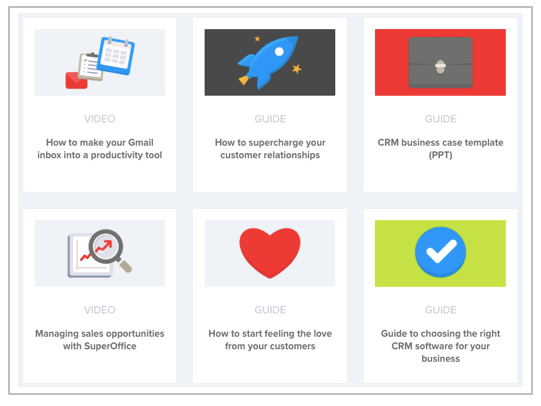
Your salespeople can share all this content with prospects when the time comes, to give them the information they need and nudge them further down the conversion funnel. Not convinced by this approach and the role of content? Here are a few statistics that might change your mind:
- 94% of B2B buyers view several pieces of content from the vendor they end up choosing.
- Consumers feel more positive about a brand when they’ve had the chance to consume content it offers.
- 82% of buyers read at least 5 pieces of content from the vendor they selected.
- Companies that put a content strategy in place get better sales performance.
Also worth readingFind out how to build a lead scoring strategy.
2. Turn your salespeople into experts in their field
Sending your prospects relevant content will help you close more deals, that’s for sure. But it’s not the only way to use content. Another approach is to turn your salespeople into experts in their field. As we’ve seen, B2B buyers have become more and more skeptical of marketing and sales messages. We’ve also seen that decision-makers want to interact with salespeople who listen to their needs and can help them by bringing relevant information.
Imagine salespeople able to turn into advisors and share content they’ve written themselves for your company blog? Imagine CRM consultants able to produce and publish high-value articles on changes in customer relationship management and give their advice on improving customer dialogue? Content not only lets you give your prospects information, it also positions your salespeople as experts. It’s the best way to win over your target customers and give them confidence in your brand.
Also worth readingFind out how to set up and promote webinars to generate more leads.
3. Align your marketing team and your sales team
According to several studies, poor alignment between marketing and sales can cost a company 10% or more of its annual revenue. No surprise there. The problems caused by misaligned teams are many:
- Failure to agree on the definition of a “qualified lead”, which leads marketing to hand over leads that salespeople can’t convert.
- No unified content library, which prevents salespeople from sending prospects relevant content at the right moment. And we’ve seen how important content sharing is.
- Poorly chosen KPIs that keep teams from progressing and improving their performance over time.
Conversely, 56% of companies with aligned teams manage to hit their sales targets (and 19% of them beat them). Beyond revenue, aligning marketing and sales brings other benefits in terms of brand awareness, average order value, etc.
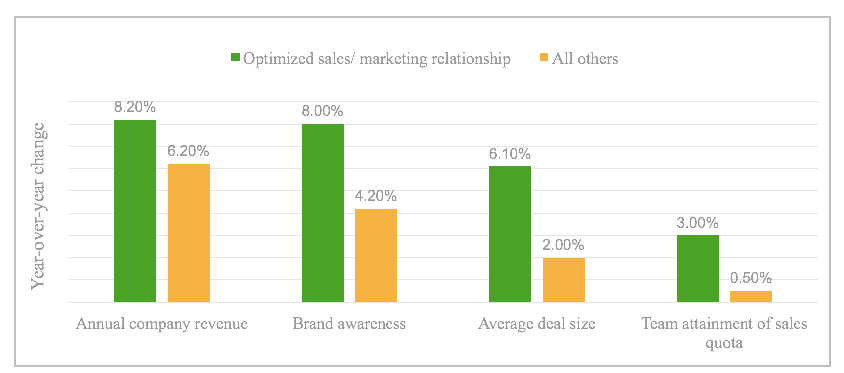
How do you get marketing and sales aligned? The answer may not surprise you: through content! Here’s how, in practice:
- Build a content library that gathers all the content aimed at your target, created by your marketers and your salespeople.
- Ask your marketing team to teach the sales team the best way to use the available content to drive engagement from prospects and move them down the conversion funnel.
- Ask your sales team to take part in creating content, whether by feeding ideas to the marketing team or by having your salespeople write content.
- Hold regular meetings with both teams to better coordinate the efforts made on each side.
B2B sales have changed profoundly over the last 5 to 10 years. The days when you could just wait for prospects to come to you are over. You need to be proactive, identify the channels where your prospects are and draw them to you by offering high-quality, relevant content (= content that addresses their issues and their needs). More than ever, salespeople need to work hand in hand with the marketing team and use content to move prospects through the pipeline. In an era dominated by information and its free flow, the key lies in a company’s ability to create content and make use of it.
To go furtherIf B2B sales interest you, I strongly encourage you to browse these articles:
The questions we get over and over.
How has the B2B buying journey changed?
Before, the decision-maker contacted several vendors, compared their offers and bought. Today, they qualify their problem online, look for possible solutions, ask for recommendations, read reviews and test during a trial period. They only contact companies after gathering all the information available.
How much of the purchase decision is made before the first contact?
According to a study cited in the article, between 60% and 70% of the decision-making process is already done when the decision-maker contacts the company for the first time.
Why are B2B sales cycles getting longer?
More people are generally involved in the decision, and decision-makers have access to a lot more information, which takes time to go through.
How do you adapt your sales processes to today's B2B decision-maker?
By guiding prospects through their purchase decision with content marketing, by turning salespeople into experts in their field who publish their own content, and by aligning the marketing team and the sales team.
How do you align marketing and sales?
Through content: a library shared by both teams, a marketing team that trains salespeople to use this content, salespeople who take part in creating it, and regular meetings between the two teams.


What the community says.