


- The choice between Waterfall and Agile depends on the nature of the project, the client’s needs and the team’s ability to adapt.
- How easy Salesforce is to configure encourages over-customization: every field added involves design choices, access rights and documentation.
- A CRM should be jointly governed by the CIO and the head of sales.
- Limit meetings to the people directly concerned: if two pizzas aren’t enough to feed the group, there are too many people.
- An integrator must be able to challenge the need and say no, rather than accept every request.
In the ever-changing world of IT, one often overlooked reality persists: an overwhelming majority of IT projects, despite technological progress, fail to reach their objectives.
69% of IT projects fail or go off track (source: Standish Group). And among the 31% that “succeed”, fewer than half deliver high value. So why is this failure rate so rarely discussed in the CRM world?
Before diving into the details, it is essential to understand what a “failed project” means.
Traditionally, IT projects are judged on three criteria:
- Budget (how much does it cost?)
- Scope (how much work has to be done?)
- And timeline (when is the project considered finished?).
But behind these criteria lies a complex reality, often hidden by strategies such as splitting the project into lots, which can mask underlying failures from the very start.
In this article, I explore the 10 main causes of these failures.
1. Choosing the right management method for the CRM project: Waterfall vs Agile
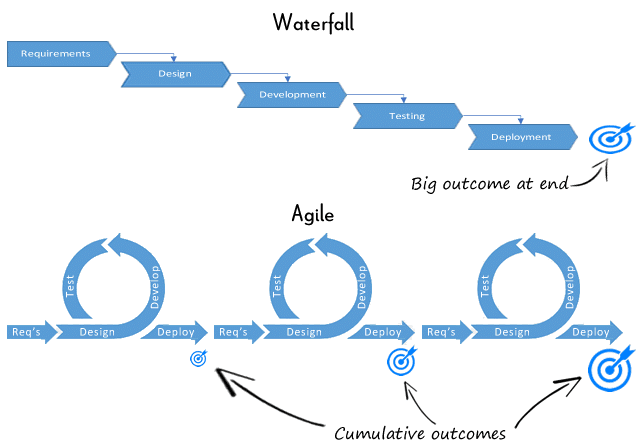
One of the first and main difficulties in managing IT projects lies in choosing the management method. There are essentially two dominant approaches: the traditional Waterfall method (or V-model) and the Agile method.
Waterfall: a predictive model with its challenges
In the Waterfall model, the project is structured in sequential phases, with a strong focus on defining the project scope up front and locking it.
This approach requires detailed planning and an exhaustive specification phase before any configuration or development. However, this rigidity can often lead to schedule and budget overruns.
A major challenge is the layer of abstraction in the specification phase, which can lead to misunderstandings and lacks the flexibility to adapt the project to unexpected changes, particularly in terms of ergonomics and user experience.
Agile: flexibility and iteration, but not without risks
On the other hand, the Agile method, with its iterative and flexible nature, strives to maximize scope while fixing costs and timelines. Divided into short cycles called sprints, this approach allows continuous adaptation to the client’s needs and to the realities of the project.
In theory, Agile offers greater flexibility and better responsiveness. Nevertheless, it is not free from criticism.
Some criticize Agile for its lack of structure and detailed specifications, which can sometimes lead to a blurry vision of the end goal and to misaligned expectations between teams and clients.
A critical choice for the project’s success
The choice between Waterfall and Agile should not be taken lightly. It must be based on the nature of the project, the client’s needs, and the team’s ability to adapt to one method or the other. In Salesforce projects, for example, where customization and scalability are key, this decision becomes even more crucial.
2. The double edge of powerful CRM tools
The paradoxical complexity of modern tools
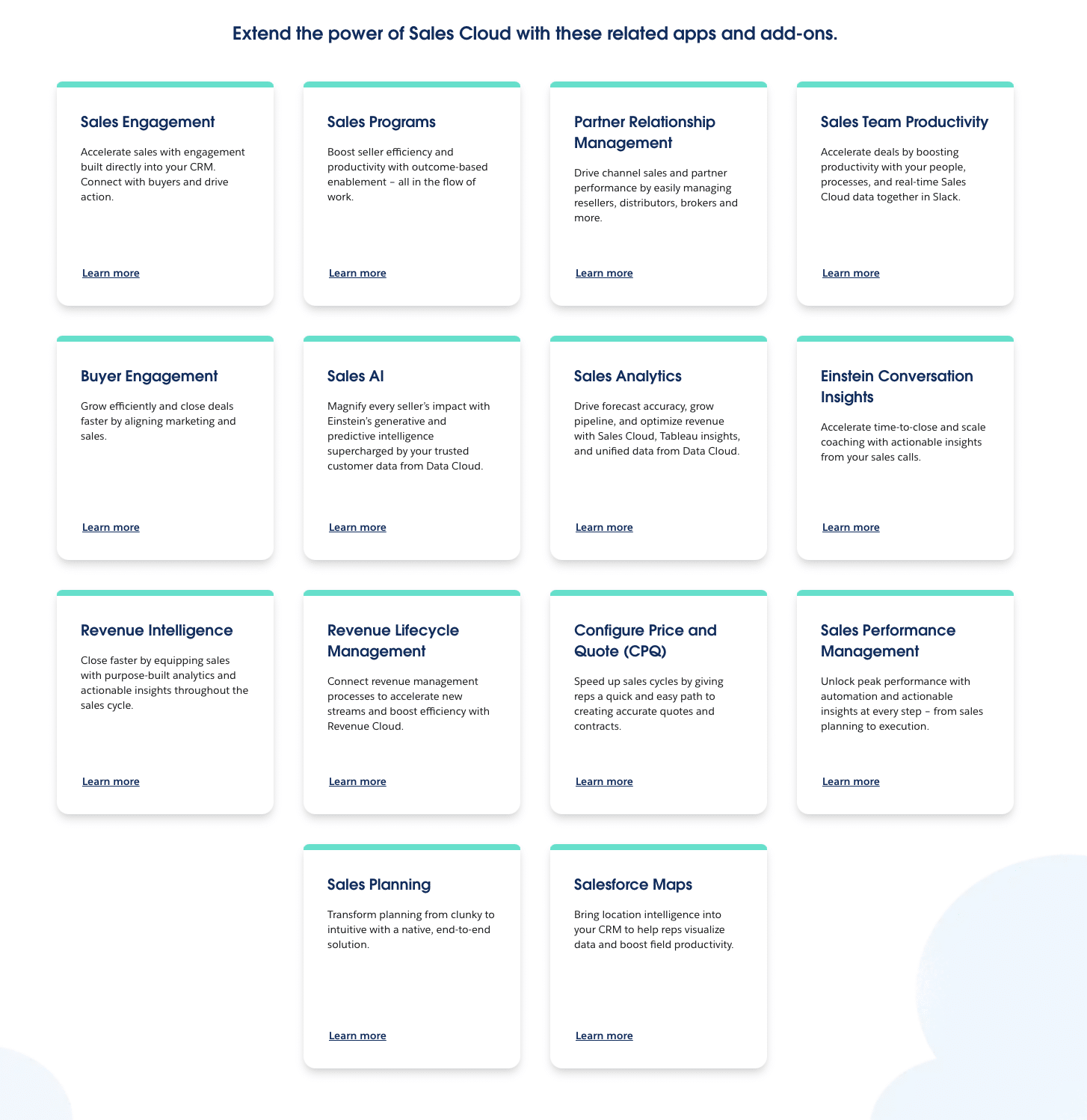
One of the most intriguing paradoxes in implementing CRM solutions like Salesforce lies in their power and flexibility.
At first glance, these characteristics seem to be undeniable advantages. However, they can also significantly increase the risk of losing control, particularly over the budget.
Salesforce: ease of use vs hidden complexity
Take Salesforce, a tool known for its ability to adapt to virtually any business need thanks to its fast and intuitive configuration.
Compared with older systems like Siebel, where every screen change took days of work, Salesforce allows instant changes with a simple drag and drop, without any service interruption.
This apparent simplicity can lead to underestimating the effort required. Behind every field added lie design decisions, access rights questions, and documentation in a data dictionary.
The risk of redundancy and overload
In my work auditing Salesforce projects in trouble, a frequent finding is pages overloaded with hundreds of useless or redundant fields.
Also worth readingHow to design an effective prospect record: tips & examples
I have already come across extreme cases with up to 800 fields on a single page. This overabundance raises the question: how can anyone effectively fill in and track that much information?
The need for thoughtful planning and design
This phenomenon illustrates a major flaw in the planning and design of CRM systems. The ease of adding and changing elements in powerful tools like Salesforce should go hand in hand with rigorous strategic thinking.
It is essential to understand that every element added has implications not only for the usability and performance of the system, but also for the clarity of the business processes it is supposed to support.
Toward optimized use of CRM tools
To avoid these pitfalls, a balanced approach is needed. This means resisting the temptation to over-customize, favoring a minimalist and functional design, and involving all stakeholders in the design process to make sure the system meets the company’s real needs without creating unnecessary complexity.
3. The impact of leadership on the success of CRM projects
Diffuse management and its consequences
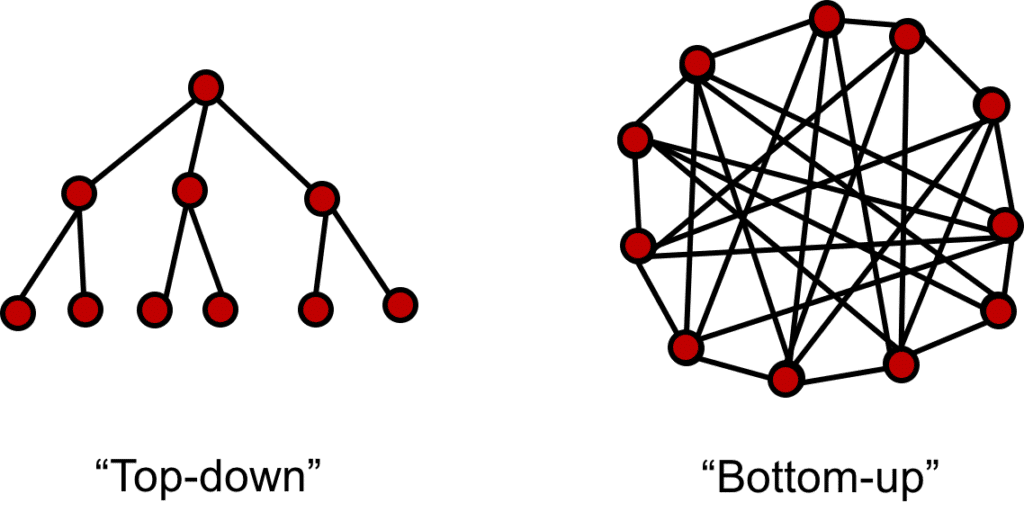
One of the major obstacles to deploying CRM systems such as Salesforce effectively is the lack of clear, decisive leadership within organizations.
Today, we are seeing a trend toward increasingly diffuse management, with vague job titles such as “Project Manager” or “Cross-functional Lead”. This ambiguity in leadership roles can lead to an absence of clear-cut decisions, which are essential to implementing a CRM system effectively.
The critical importance of CRM for organizations
Consider the strategic importance of CRM software: it sits at the heart of the sales force, directly affecting a company’s ability to generate revenue. A tool of this scale should, in theory, be jointly governed by the Chief Information Officer (CIO) and the Head of Sales.
The consequences of inadequate governance
In practice, however, the lack of strong, unified leadership can lead to situations where a company ends up with several Salesforce instances, not because of different needs, but because it was unable to build a legitimate team to implement a global CRM.
This phenomenon is not only inefficient, it can also lead to high costs, data fragmentation, and widespread confusion.
Go further
The call for strong, consistent leadership
To address this challenge, it is imperative to establish strong, consistent leadership. This leadership must be able to settle key decisions, bring the different stakeholders together, and ensure a unified vision for the CRM rollout.
It is also crucial to recognize the strategic importance of the CRM and to position it as a priority project within the organization.
4. Poor meeting management
The pitfall of oversized meetings
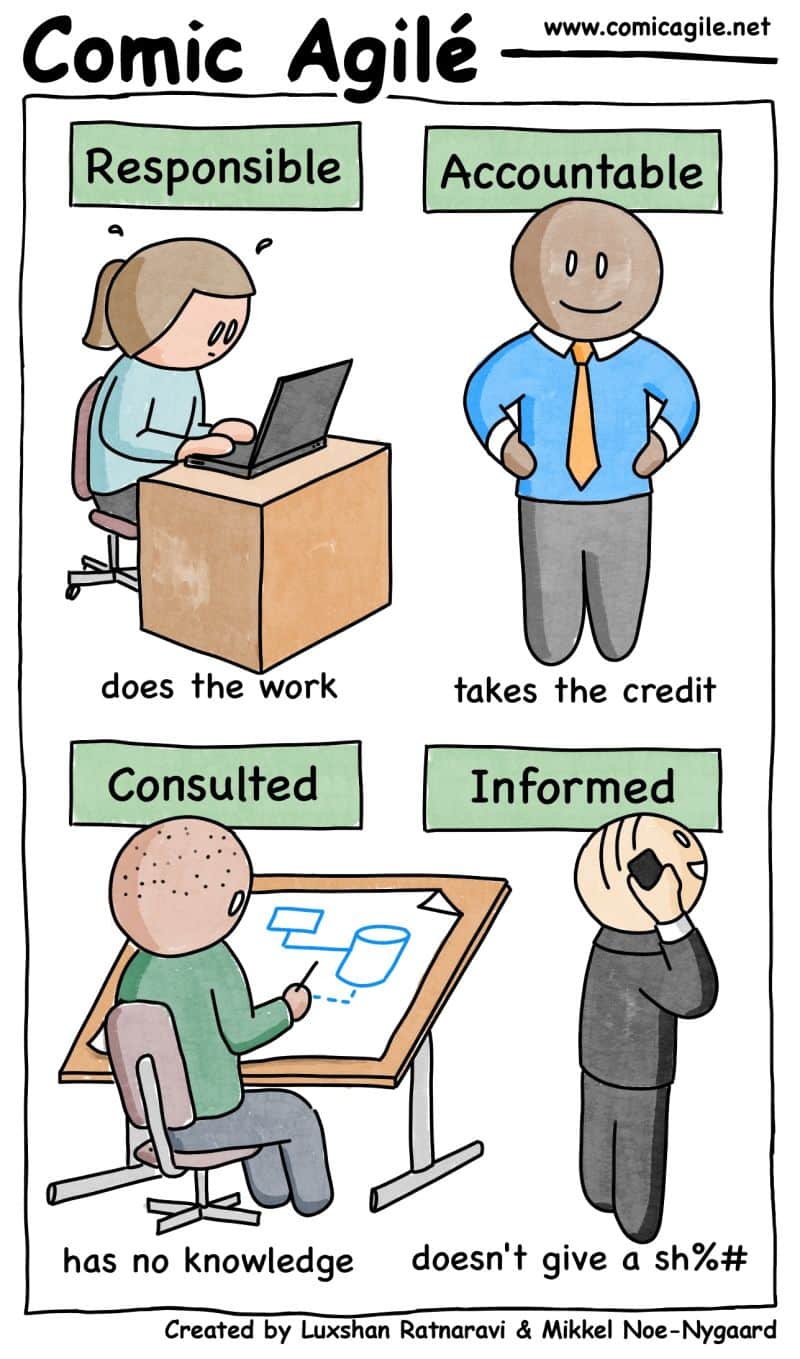
Another major obstacle to the success of CRM projects, closely tied to the lack of leadership, is the tendency to hold meetings with far too many participants.
In many organizations, for fear of offending certain colleagues, meetings turn into plenary assemblies where everyone is invited, regardless of what they actually bring to the topic at hand.
Jeff Bezos’s two-pizza rule
To illustrate a more effective model, take the “two pizza rule” applied by Jeff Bezos: if two pizzas are not enough to feed the whole group, there are too many people in the meeting. This approach aims to limit meetings to smaller, more manageable groups, generally no more than seven people.
This method stands in sharp contrast to the meetings of 15 people or more often seen in other organizations.
The inefficiency of large assemblies
In these large meetings, the problems are many: participants who don’t know why they are there, others who are distracted and disengaged, and often a glaring lack of efficiency.
These meetings turn out to be fertile ground for confusion and inefficiency, with discussions that drag on and decisions that are never made.
Video conferencing is not a miracle cure
The shift to virtual meetings, through collaboration platforms like Microsoft Teams, has not solved this problem.
The typical virtual meeting scenario often involves long minutes of waiting before everyone connects, followed by an unproductive discussion and the writing of minutes that, in most cases, go unread and lead nowhere.
I speak from experience here, about a problem I see in 70% of projects. Neither the integrator nor the client has an interest in the minutes drawing no criticism and no validation.
Toward more productive meetings
To remedy this situation, it is crucial to rethink how meetings are organized and run.
Meetings should be limited to the people directly involved in and concerned by the topic on the agenda. It is essential to clearly define the objective of each meeting, make sure participants are properly prepared, and commit to following up on the actions decided.
An effective meeting is one where every participant adds value, and where the decisions made are followed by concrete action.
5. The unexpected decision-maker
The sudden arrival of the outside decision-maker
A particularly baffling challenge in CRM project management, and one I have often come across in my career, is what I call the “DEUS EX DECIDER”.
Picture this scenario: after six months of work, during which every step of the project has been carefully validated and approved by the project team, a decision-maker who has never been involved in the process suddenly decides to get involved.
The consequences of a late intervention
This late appearance can have devastating consequences for the project. The decision-maker, often a member of senior management or an influential stakeholder, may call key elements of the project into question.
What is more problematic is that their senior position often deters other team members from challenging their opinions or suggestions, even when these go against decisions made earlier.
The impact on the project’s consistency and progress
This situation can lead to significant changes to the project along the way, affecting not only the schedule and budget but also the overall consistency of the solution.
This kind of late intervention can undermine the work already done, demoralize the team, and potentially jeopardize the project’s success.
As a countermeasure, one could simply ask for stakeholders to be involved from the start. Which is what you often read, by the way.
But what do you do if that information is unknown when the project starts?
6. The limits of ‘turnkey’ CRM projects
The illusion of ‘turnkey’ simplicity
In CRM projects, Salesforce in particular, a widespread tendency among some clients is to ask for “turnkey” solutions.
This usually means an all-inclusive package, delivered at a fixed price, with little or no involvement from the client’s teams beyond a few initial meetings and the final sign-off.
Although this approach may seem attractive for its simplicity and speed, it carries significant risks for the project’s success.
Client detachment and its consequences
One of the biggest challenges of turnkey projects is the client’s lack of involvement throughout the process.
The active engagement and contribution of end users, especially sales teams, are crucial to ensuring that the system meets the company’s real needs.
Without this close collaboration, the risk of building a system that does not match operational requirements or user expectations is high.
The importance of end-user involvement
Salespeople, who are often the main users of these CRM systems, play a key role in their successful design and implementation.
Their expertise and knowledge of sales processes are indispensable for steering the system’s development so that it is intuitive, efficient and aligned with existing sales practices.
If these key users are “swamped” and cannot get sufficiently involved, the project risks failing to meet expectations, being poorly accepted or even rejected by end users.
7. The influence of internal politics on CRM projects
The political factor
In CRM projects, an often neglected aspect that can have dramatic consequences is the internal political dynamics of organizations.
A striking example of this influence occurred recently in one of my projects. After spending six months turning around a CRM project in trouble, fixing many bugs and getting things back on track, a surprising decision was made at management level: an outside integrator with close ties to management was appointed to take over the project.
The repercussions of a sudden change
This situation raises several problems.
First, an abrupt change of integrator, especially after an intense period of fixes and adjustments, can hinder the continuity and effectiveness of the project. Moreover, such a change, made without proper communication or a planned transition, can cause confusion and frustration for both the team in place and the client.
Relationship management and transparency
This case illustrates the critical importance of managing relationships and communication in CRM projects.
When decisions are influenced by political or relational considerations, it is paramount that transitions be handled with great transparency and open communication to minimize disruption and maintain stakeholder trust.
8. The testing challenge in CRM projects
The essential but often underestimated role of testing
In the world of CRM projects, testing is a crucial phase that is often neglected or underfunded, despite its vital importance to the overall success of the project.
Testing is a complex and demanding job, and putting an effective testing strategy in place is a challenge in itself.
Bringing testers in too late
Ideally, testers should be involved from the specification-writing phase, in order to prepare tests that cover all the functional and technical aspects of the project.
However, for budget or scheduling reasons, this early involvement is rare. As a result, testers are often brought in late in the process, which limits their ability to identify and prevent potential problems.
Limiting testing to unit tests
Another common problem is testers’ tendency to focus only on the unit tests already carried out by the developers.
Although these tests are important, they are not enough to guarantee the robustness and performance of the CRM system as a whole. Unit tests do not capture the complex interactions between different modules or the problems that can arise in real-world usage scenarios.
The importance of the acceptance testing phase
The user acceptance testing phase is critical: the more bugs are identified and fixed at this stage, the fewer problems there will be in production.
It is therefore essential to allocate enough time and resources to this phase, and to make sure the tests are exhaustive and reflect real usage conditions.
9. Navigating unstable contacts in CRM projects
CRM requirements template & builderWe built a complete requirements document for a CRM project, with a detailed method for filling in each step.
The reality of long sales cycles and staff turnover
In CRM integration, we often face long sales cycles, during which staff changes can occur.
These changes can significantly affect how projects unfold and whether they succeed. Between the signing of the quote and the actual start of the project, key players can disappear, leaving a gap in communication and in the project’s continuity.
The example of losing key admins
Take the example of a project where, under an initial agreement, the client’s system administrator is expected to take an active part in the project for an effective knowledge transfer.
If this admin leaves the company before or during the project, it can create an unplanned workload for the integration team and compromise the planned knowledge transfer.
The consequences of unexpected departures
Similarly, during the design phase, agreements may be reached with certain people who then end up leaving the organization. These departures can cause delays, misunderstandings, or even require the project terms to be renegotiated with the new contacts.
10. The crucial importance of the integrator’s ability to say no
The trap of an overly accommodating integrator
In CRM projects, an often underestimated but critically important problem is the tendency of some integrators to never say no to the client’s requests.
This can be due to several reasons: the integrator may be too small, too dependent on this project for its financial survival, or lack consultants with the expertise needed to effectively challenge the client’s needs.
Go further
- Our pick of the best Salesforce integrators
- Choosing your CRM integrator – Guide & Benchmark
- Top 10 HubSpot integrators
The risks of unconditional acceptance
Unconditionally accepting every request and change from the client can lead to an overly complex project, budget overruns, and ultimately a CRM solution that does not meet the company’s real needs.
The integrator must not only be a technical executor, but also a strategic advisor who guides the client toward best practices and solutions.
The duty to propose the state of the art and to challenge the need
It is crucial that the integrator does not merely follow the client’s requests passively, but actively proposes the state of the art in CRM and challenges the needs expressed.
This approach means identifying what is essential to the project’s success and resisting the temptation to add superfluous features or ones that are not aligned with the strategic objectives.
The Pareto principle as a guiding rule
The 80/20 rule, or Pareto principle, is often quoted but rarely applied in a concrete way in CRM projects.
According to this principle, 80% of results come from 20% of efforts. Applying this rule can help focus resources on the most impactful aspects of the project, instead of getting scattered over less productive details.
The questions we get over and over.
How many IT projects fail?
According to the Standish Group, 69% of IT projects fail or go off track. And among the 31% that succeed, fewer than half deliver high value.
Should you choose Waterfall or Agile for a CRM project?
Waterfall locks the scope after an exhaustive specification phase, at the risk of overrunning schedule and budget. Agile moves forward in sprints and adapts continuously, at the risk of a blurry vision of the end goal. The choice depends on the nature of the project, the client’s needs and the team’s ability to adapt.
Why is a turnkey CRM project risky?
Because the client gets little involved, beyond a few initial meetings and the final sign-off. Without end users, especially salespeople, the system may not meet real needs, may be poorly accepted or even rejected.
What is the two-pizza rule?
It is the rule applied by Jeff Bezos: if two pizzas are not enough to feed the whole group, there are too many people in the meeting. It limits meetings to small groups, generally no more than seven people.
Why must a CRM integrator know how to say no?
Accepting every request and change from the client leads to an overly complex project, budget overruns and a solution that does not meet real needs. The integrator must propose the state of the art and challenge the needs expressed.


What the community says.